
Ruth 3:15
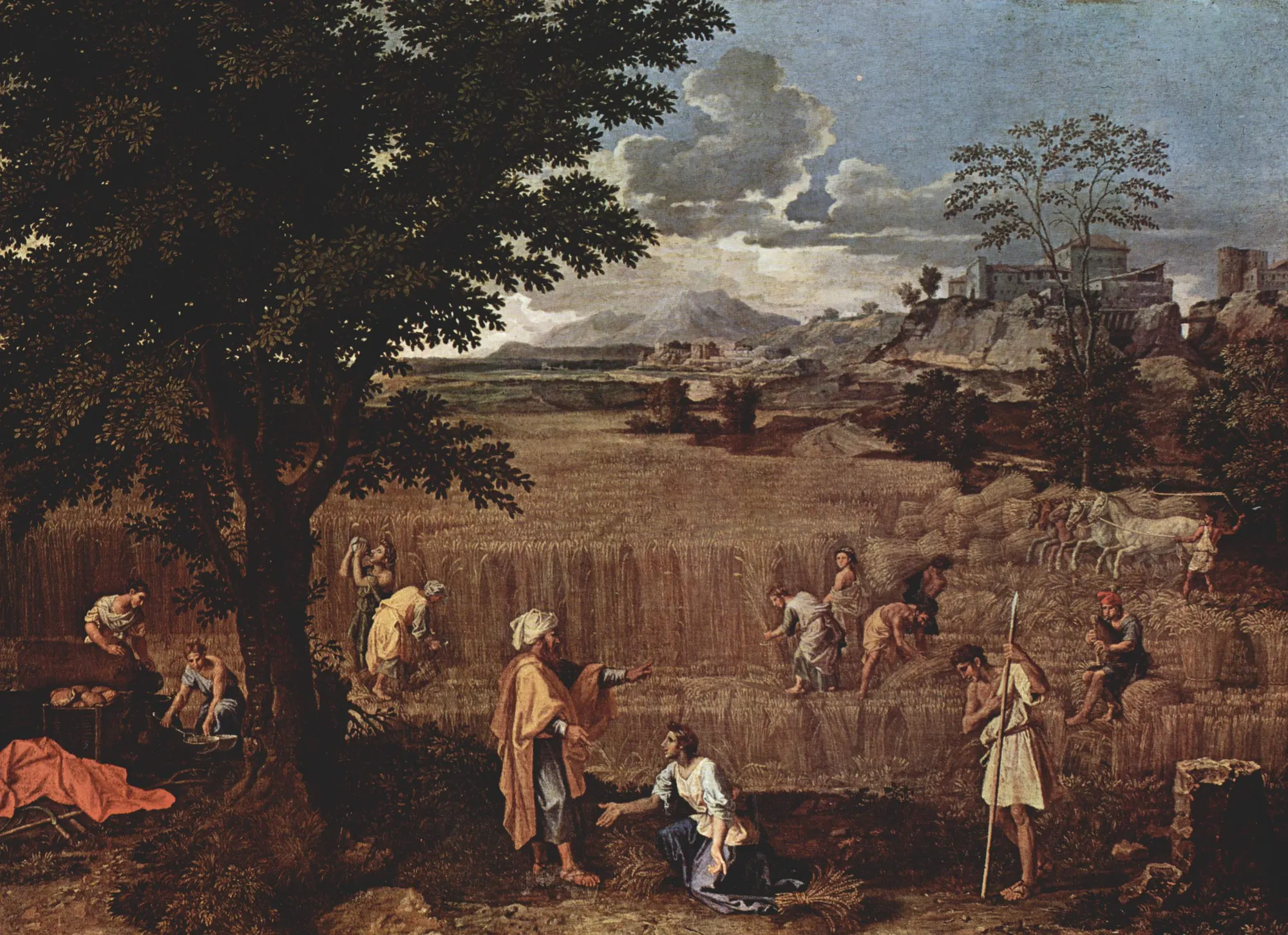
in Ruth 3And he told her, “Bring the shawl you are wearing and hold it out.” When she did so, he shoveled six measures of barley into her shawl. Then he went into the city.
BSB
The same verse in ASV and KJV ▾
ASV
And he said, Bring the mantle that is upon thee, and hold it; and she held it; and he measured six measures of barley, and laid it on her: and he went into the city.
KJV
Also he said, Bring the vail that thou hast upon thee, and hold it. And when she held it, he measured six measures of barley, and laid it on her: and she went into the city.
⋯
This verse in Ruth 3
Commentary
7 notes on this verseA commentator
Albert Barnes1798–1870
Notes, Explanatory and Practical, on the Old and New Testaments (1832-1869)
The vail - Quite a different word from that rendered “vail,” in Gen 38:14. It seems rather to mean a kind of loose cloak, worn over the ordinary dress (see the margin). Six measures - i. e. six seahs, in all two ephahs, twice as much as she gleaned Rth 3:17, and a heavy load to carry; for which reason he laid it on her, probably placed it on her head. It is well known that women can carry great weights when duly positioned on their heads.
This site's exposition
So she lay down at his feet until morning
on Ruth 3:14-16
She leaves before anyone could recognize her, and Boaz orders that no one know "a woman came to the threshing floor", guarding the name verse 11 says the town honors. The text never names the unit of the "six measures", and readings run from six omers to six seahs, Albert Barnes reckoning the larger a load Boaz lifted onto her. At verse 16 Ruth tells Naomi everything.
This site's exposition
he shoveled six measures of barley into her shawl
Albert Barnes takes the six measures of barley as seahs, two ephahs in all, twice what she gleaned on her first day. The load in her shawl was heavy. The Hebrew never names the measure, so its size is a reckoning.
The record, by era
The Puritans and the Awakening2 voices
And the Chaldee says, Strength was given her from the Lord to carry it; and adds that now it was told her by the spirit of prophecy that from her should descend six of the most righteous men of their age, namely, David, Daniel, his three companions, and the king Messiah. How she was welcomed by her mother-in-law. She asked her, " Who art thou, my daughter?
quarantine:debris (2026-07-29) — odd-straight-quotes
Also he said,....
The Nineteenth Century2 voices
A commentator
Jamieson, Fausset & Brown1802–1910
Commentary Critical and Explanatory on the Whole Bible (1871)
Bring the veil that thou hast upon thee, and hold it--Eastern veils are large sheets--those of ladies being of red silk; but the poorer or common class of women wear them of blue, or blue and white striped linen or cotton. They are wrapped round the head, so as to conceal the whole face except one eye.
Bring the veil - המט פחת hammit pachath; this seems to have been a cloak, plaid, or what the Arabs call hayk, which has been largely explained elsewhere. See Jdg 14:12. Six measures of barley - We supply the word measures, for the Hebrew mentions no quantity. The Targum renders six seahs, שית סאין shith sein, which, as a seah was about two gallons and a half, must have been a very heavy load for a woman; and so the Targumist thought, for he adds, And she received strength from the Lord to carry it. If the omer be meant, which is about six pints, the load would not be so great, as this would amount to but about four gallons and a half; a very goodly present. The Targum says, that on receiving these six measures “it was said in the spirit of prophecy, that from her should proceed the six righteous persons of the world, viz., David, Daniel, Shadrach, Meshach, Abednego, and the King Messiah; each of whom should be blessed with six benedictions.” It is, however, remarkable, that the Targum makes the Messiah to spring from her through the line of David, and goes down to Daniel and his companions; which Daniel prophesied so clearly, not only of the advent of Messiah the prince, but also of the very time in which he was to come, and the sacrificial death he was to die.
How the passage was read
What the Jewish commentators add
On the verses either side of this one
For he said, “It must not be known. ” This refers back to “and she arose before one could recognize [another].
This section is reception history: how the passage was read and kept in the Jewish tradition. Where a reading parts from an essential of the Christian faith, the section says so at that point.
Texts and citation data: Sefaria; each excerpt follows its version’s licence. 2 further sources are cited on this chapter that carry no English text this site may quote or only restate the verse.
The words behind it
16 Hebrew wordsEvery Hebrew word of this verse in the order it stands, with what it means and the door to its own study. The last column counts the times a word stands in the whole Bible: the rarer the word, the more the places it appears belong together.
| Hebrew | Sound | Meaning | Word study | In the Bible |
|---|---|---|---|---|
| וַיֹּ֗אמֶר | vaiyomer | and he said | H559 → | 5305 times |
| הָ֠בִי | havi | give | H3051 → | |
| הַמִּטְפַּ֧חַת | hamitpachat | the shawl | H4304 → | |
| אֲשֶׁר־ | ʾasher- | which | H834 → | 5497 times |
| עָלַ֛יִךְ | ʾalayikh | [is] on you | H5921 → | 5755 times |
| וְאֶֽחֳזִי־ | veechozi- | and take hold | H270 → | |
| בָ֖הּ | vah | on <the> it | ||
| וַתֹּ֣אחֶז | vatochez | and she took hold | H270 → | |
| בָּ֑הּ | bah | on <the> it | ||
| וַיָּ֤מָד | vaiyamod | and he measured out | H4058 → | |
| שֵׁשׁ־ | shesh- | six | H8337 → | |
| שְׂעֹרִים֙ | seorim | barley<s> | H8184 → | 34 times |
| וַיָּ֣שֶׁת | vaiyashet | and he put [it] | H7896 → | |
| עָלֶ֔יהָ | ʾaleiha | on her | H5921 → | 5755 times |
| וַיָּבֹ֖א | vaiyavo' | and he came | H935 → | 2568 times |
| הָעִֽיר׃ | hair | the city | H5892 → | 1090 times |
וַיֹּ֗אמֶרand he said
vaiyomerH559 →5305 times
הָ֠בִיgive
haviH3051 →
הַמִּטְפַּ֧חַתthe shawl
hamitpachatH4304 →
אֲשֶׁר־which
ʾasher-H834 →5497 times
עָלַ֛יִךְ[is] on you
ʾalayikhH5921 →5755 times
וְאֶֽחֳזִי־and take hold
veechozi-H270 →
בָ֖הּon <the> it
vah
וַתֹּ֣אחֶזand she took hold
vatochezH270 →
בָּ֑הּon <the> it
bah
וַיָּ֤מָדand he measured out
vaiyamodH4058 →
שֵׁשׁ־six
shesh-H8337 →
שְׂעֹרִים֙barley<s>
seorimH8184 →34 times
וַיָּ֣שֶׁתand he put [it]
vaiyashetH7896 →
עָלֶ֔יהָon her
ʾaleihaH5921 →5755 times
וַיָּבֹ֖אand he came
vaiyavo'H935 →2568 times
הָעִֽיר׃the city
hairH5892 →1090 times
A shaded row is a word that stands 400 times or fewer in the Bible.
The walk
8 stopsEach card is a verse this one points to, and under it the verses that one points to in turn. Where several paths arrive at the same place, that place is listed first: the text keeps returning to it.
Through
Galatians 6:10Therefore, as we have opportunity, let us do good to everyone, and especially to the family of faith.
it leads to
- Hebrews 13:16
And do not neglect to do good and to share with others, for with such sacrifices God is pleased.
- Proverbs 3:27
Do not withhold good from the deserving when it is within your power to act.
- 1 Thessalonians 5:15
Make sure that no one repays evil for evil. Always pursue what is good for one another and for all people.
- Titus 3:8
This saying is trustworthy. And I want you to emphasize these things, so that those who have believed God will take care to devote themselves to good deeds. These things are excellent and profitable…
- Matthew 25:40
And the King will reply, ‘Truly I tell you, whatever you did for one of the least of these brothers of Mine, you did for Me.’
- Hebrews 13:16
Through
Isaiah 32:8But a noble man makes honorable plans; he stands up for worthy causes.
it leads to
- Proverbs 11:24–25
One gives freely, yet gains even more; another withholds what is right, only to become poor.
- Acts 11:29–30
So the disciples, each according to his ability, decided to send relief to the brothers living in Judea.
- 2 Samuel 9:1–13
Then David asked, “Is there anyone left from the house of Saul to whom I can show kindness for the sake of Jonathan?”
- Proverbs 11:24–25
Where this verse is studied
On this page
About Ruth
This page draws on Adam Clarke, Commentary on the Bible; Albert Barnes, Notes, Explanatory and Practical, on the Old and New Testaments (1832-1869); Albert Barnes, Notes on the Old Testament; Jamieson, Fausset & Brown, Commentary Critical and Explanatory on the Whole Bible; John Gill, Exposition of the Old Testament (1748-1763) and Matthew Henry, Commentary on the Whole Bible.