
Ruth 1:21
in Ruth 1I went away full, but the LORD has brought me back empty. Why call me Naomi? After all, the LORD has testified against me, and the Almighty has afflicted me.”
BSB
The same verse in ASV and KJV ▾
ASV
I went out full, and Jehovah hath brought me home again empty; why call ye me Naomi, seeing Jehovah hath testified against me, and the Almighty hath afflicted me?
KJV
I went out full, and the Lord hath brought me home again empty: why then call ye me Naomi, seeing the Lord hath testified against me, and the Almighty hath afflicted me?
⋯
This verse in Ruth 1
Commentary
10 notes on this verseA commentator
Albert Barnes1798–1870
Notes, Explanatory and Practical, on the Old and New Testaments (1832-1869)
The Lord hath testified against me - The phrase is very commonly applied to a man who gives witness concerning (usually against) another in a court of justice Exo 20:16; 2Sa 1:16; Isa 3:9. Naomi in the bitterness of her spirit complains that the Lord Himself turned against her, and was bringing her sins up for judgment.
This site's exposition
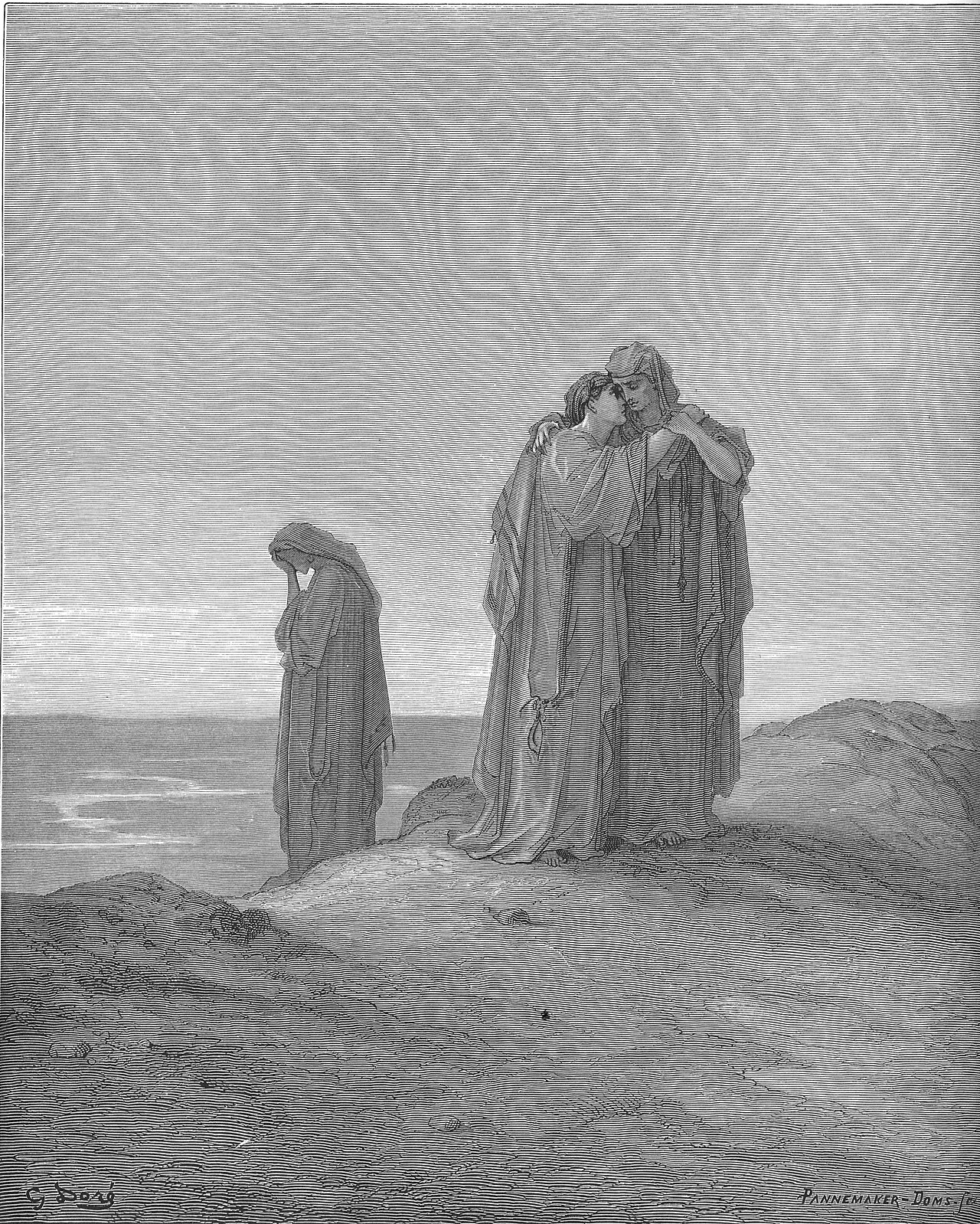
So Naomi and Ruth traveled until they came to Bethlehem
on Ruth 1:19-21
The town asks "Can this be Naomi?", which shows how much ten years and three graves had changed her. She renames herself Mara, bitter, against Naomi, pleasant, and twice calls God the Almighty, which is Shaddai, the name God used of himself to Abram at Genesis 17:1. Her summary, "I went away full, but the LORD has brought me back empty", is overturned at 4:14-17 by the same women.
This site's exposition
I went away full, but the LORD has brought me back empty
Albert Barnes reads testified against me as a courtroom term, the word for a witness giving evidence against a man, as at Exodus 20:16. Naomi speaks as one charged before God. Ruth stands beside her while she says she came back empty.
The record, by era
The Puritans and the Awakening5 voices
It is the Lord, 1 Sam. iii. Especially to consider that he who afflicts us is Shaddai, the Almighty, with whom it is folly to contend and to whom it is our duty and interest to submit. It is that name of God by which he enters into covenant with his people: I am God Almighty, God All-sufficient, Gen. xvii.
3 And Elimelech Naomi's husband died; and she was left, and her two sons. 4 And they took them wives of the women of Moab; the name of the one was Orpah, and the name of the other Ruth: and they dwelled there about ten years. 5 And Mahlon and Chilion died also both of them; and the woman was left of her two sons and her husband.
quarantine:scripture (2026-07-29) — verbatim-scripture
Full - With my husband and sons, and a plentiful estate for our support. Testified - That is, hath born witness, as it were, in judgment, and given sentence against me.
I went out full,....
By those who tarried at home it appears that the famine was not so extreme but that there was sufficient to keep life and soul together; and his charge was but small, only two sons.
2 more voices on this verse
The Nineteenth Century2 voices
A commentator
Jamieson, Fausset & Brown1802–1910
Commentary Critical and Explanatory on the Whole Bible (1871)
proposed
all the city was moved about them--The present condition of Naomi, a forlorn and desolate widow, presented so painful a contrast to the flourishing state of prosperity and domestic bliss in which she had been at her departure.
quarantine:debris (2026-07-29) — starts-lowercase
I went out full - Having a husband and two sons. The Lord hath brought me home again empty - Having lost all three by death. It is also likely that Elimelech took considerable property with him into the land of Moab; for as he fled from the face of the famine, he would naturally take his property with him; and on this Naomi subsisted till her return to Bethlehem, which she might not have thought of till all was spent.
The words behind it
16 Hebrew wordsEvery Hebrew word of this verse in the order it stands, with what it means and the door to its own study. The last column counts the times a word stands in the whole Bible: the rarer the word, the more the places it appears belong together.
| Hebrew | Sound | Meaning | Word study | In the Bible |
|---|---|---|---|---|
| אֲנִי֙ | ʾani | I | H589 → | |
| מְלֵאָ֣ה | meleah | full | H4392 → | |
| הָלַ֔כְתִּי | halakhti | I went | H1980 → | 1546 times |
| וְרֵיקָ֖ם | vereikam | and empty | H7387 → | |
| הֱשִׁיבַ֣נִי | heshivani | he has brought back me | H7725 → | 1056 times |
| יְהוָ֑ה | yahweh | Yahweh | H3068 → | 6520 times |
| לָ֣מָּה | lamah | <to> why? | H4100 → | |
| תִקְרֶ֤אנָה | tikrenah | do you call | H7121 → | 733 times |
| לִי֙ | li | <to> <the> me | ||
| נָעֳמִ֔י | noomi | Naomi | H5281 → | 21 times |
| וַֽיהוָה֙ | vayahweh | and Yahweh | H3068 → | 6520 times |
| עָ֣נָה | ʾanah | he has testified | H6030 → | 331 times |
| בִ֔י | vi | against <the> me | ||
| וְשַׁדַּ֖י | veshadai | and [the] Almighty | H7706 → | |
| הֵ֥רַֽע | hera' | he has done harm | H7489 → | |
| לִֽי׃ | li | to <the> me |
אֲנִי֙I
ʾaniH589 →
מְלֵאָ֣הfull
meleahH4392 →
הָלַ֔כְתִּיI went
halakhtiH1980 →1546 times
וְרֵיקָ֖םand empty
vereikamH7387 →
הֱשִׁיבַ֣נִיhe has brought back me
heshivaniH7725 →1056 times
יְהוָ֑הYahweh
yahwehH3068 →6520 times
לָ֣מָּה<to> why?
lamahH4100 →
תִקְרֶ֤אנָהdo you call
tikrenahH7121 →733 times
לִי֙<to> <the> me
li
נָעֳמִ֔יNaomi
noomiH5281 →21 times
וַֽיהוָה֙and Yahweh
vayahwehH3068 →6520 times
עָ֣נָהhe has testified
ʾanahH6030 →331 times
בִ֔יagainst <the> me
vi
וְשַׁדַּ֖יand [the] Almighty
veshadaiH7706 →
הֵ֥רַֽעhe has done harm
hera'H7489 →
לִֽי׃to <the> me
li
A shaded row is a word that stands 400 times or fewer in the Bible.
The walk
8 stopsEach card is a verse this one points to, and under it the verses that one points to in turn. Where several paths arrive at the same place, that place is listed first: the text keeps returning to it.
Through
Job 1:21saying: “Naked I came from my mother’s womb, and naked I will return. The LORD gave, and the LORD has taken away. Blessed be the name of the LORD.”
it leads to
- Ecclesiastes 5:15
As a man came from his mother’s womb, so he will depart again, naked as he arrived. He takes nothing for his labor to carry in his hands.
- 1 Timothy 6:7
For we brought nothing into the world, so we cannot carry anything out of it.
- 1 Thessalonians 5:18
Give thanks in every circumstance, for this is God’s will for you in Christ Jesus.
- James 1:17
Every good and perfect gift is from above, coming down from the Father of the heavenly lights, with whom there is no change or shifting shadow.
- Job 2:10
“You speak as a foolish woman speaks,” he told her. “Should we accept from God only good and not adversity?” In all this, Job did not sin in what he said.
- Ecclesiastes 5:15
Through
Job 13:26For You record bitter accusations against me and bequeath to me the iniquities of my youth.
it leads to
- Psalms 25:7
Remember not the sins of my youth, nor my rebellious acts; remember me according to Your loving devotion, because of Your goodness, O LORD.
- Psalms 25:7
Through
Job 16:8You have bound me, and it has become a witness; my frailty rises up and testifies against me.
it leads to
- Job 10:17
You produce new witnesses against me and multiply Your anger toward me. Hardships assault me in wave after wave.
- Job 10:17
Through
Job 10:17You produce new witnesses against me and multiply Your anger toward me. Hardships assault me in wave after wave.
it leads to
- Job 16:8
You have bound me, and it has become a witness; my frailty rises up and testifies against me.
- Job 16:8
Where this verse is studied
On this page
Studies3
On this verse
On this chapter
About Ruth
Who and where
1 name in this verse with a page on the site.
This page draws on Adam Clarke, Commentary on the Bible; Albert Barnes, Notes, Explanatory and Practical, on the Old and New Testaments (1832-1869); Jamieson, Fausset & Brown, Commentary Critical and Explanatory on the Whole Bible; John Gill, Exposition of the Old Testament (1748-1763); John Wesley, Explanatory Notes upon the Old Testament; Keil and Delitzsch, Biblical Commentary on the Old Testament: Joshua, Judges, Ruth and Matthew Henry, Commentary on the Whole Bible.