
Psalms 45:17
in Psalms 45I will commemorate your name through all generations; therefore the nations will praise you forever and ever.
BSB
The same verse in ASV and KJV ▾
ASV
I will make thy name to be remembered in all generations: Therefore shall the peoples give thee thanks for ever and ever.
KJV
I will make thy name to be remembered in all generations: therefore shall the people praise thee for ever and ever.
⋯
This verse in Psalms 45
Commentary
12 notes on this verseI will make thy name to be remembered in all generations. Jehovah by the prophet's mouth promises to the Prince of Peace eternal fame as well as a continuous progeny. His name is his fame, his character, his person; these are dear to his people now—they never can forget them; and it shall be so as long as men exist. Names renowned in one generation have been unknown to the next era, but the laurels of Jesus shall ever be fresh, his renown ever new. God will see to this; his providence and his grace shall make it so.
This site's exposition
Your sons will succeed your fathers
on Psalms 45:16-17
Your sons will succeed your fathers, and they are made princes throughout the land. The song itself carries the promise, the king's name commemorated through all generations. The nations praise him forever.
This site's exposition
I will commemorate your name
Two speakers are heard here. Spurgeon heard God promising to commemorate the king's name, and Barnes heard the writer of verse 1, whose song would carry that name through generations. Clarke saw the nations praise him in the church's constant use of this psalm.
The record, by era
The Church Fathers2 voices
"They shall be mindful of thy name in every generation and generation; therefore shall the peoples confess unto Thee" (ver. 17). What does it profit then to "confess" indeed and yet to confess out of "the Temple"? What does it profit to pray, and yet not to pray on the Mount? "I cried," says he, "unto the Lord with my voice: and He heard me out of His holy hill." Out of what "hill"? Out of that of which it is said, "A city set upon a hill cannot be hid." Of what "hill"? Out of that hill which Daniel saw "grow out of a small stone, and break all the kingdoms of the earth; and cover all the face of the earth." There let him pray, who hopes to receive: there let him ask, who would have his prayer heard: there let him confess, who wishes to be pardoned. "Therefore shall the peoples confess unto thee for ever, world without end." For in that eternal life it is true indeed there will no longer be the mourning over sins: but yet in the praises of God by that everlasting City which is above, there will not be wanting a perpetual confession of the greatness of that happiness. For to that City itself, to which another Psalm sings, "Glorious things are spoken of thee, O City of God," to her who is the very Bride of Christ, the very Queen, a "King's daughter, and a King's consort;" ...the peoples shall for this very cause confess even to herself; the hearts of all, now enlightened by perfect charity, being laid bare, and made manifest, that she may know the whole of herself most completely, who here is, in many parts of her, unknown to herself. ...
Where he began, there he concluded—in Christ.… Because you have achieved so much, you have appointed such rulers, you have driven out evil, you have planted virtue, you have plighted your troth to our nature, you have performed these wonderful good things. All the world will offer you hymns of praise, not for a short time, not for ten, not twenty, not a hundred years, or in one part of the world, but earth and sea, both inhabited and uninhabited, will sing praise for all time, giving thanks for all the good things accomplished. For all these good things let us too give thanks to the loving Christ, through whom and with whom be the glory to the Father, together with Holy Spirit, now and forever, for ages of ages.
The Medieval Church1 voice
"Instead of your fathers, sons have been born to you." Here he commends her for her offspring. Regarding which he sets forth four things: namely, the origin of the offspring, its dignity, its office, and its fruit. He says therefore, "Instead of your fathers, sons …
The Puritans and the Awakening2 voices
1 My heart is inditing a good matter: I speak of the things which I have made touching the king: my tongue is the pen of a ready writer. 2 Thou art fairer than the children of men: grace is poured into thy lips: therefore God hath blessed thee for ever. 3 Gird thy sword upon thy thigh, O most mighty, with thy glory and thy majesty.
quarantine:scripture (2026-07-29) — verbatim-scripture
I will make thy name to be remembered in all generations,....
4 more voices on this verse
The Nineteenth Century4 voices
A commentator
Jamieson, Fausset & Brown1802–1910
Commentary Critical and Explanatory on the Whole Bible (1871)
Thus the union of Christ and the Church triumphant is set forth. On the other hand, in regard to its component parts, the relation of Christ as head, as husband, &c., already exists, and as these parts form an institution in this world, it is by His union with it, and the gifts and graces with which He endows it, that a spiritual seed arises and spreads in the world.
I will make thy name to be remembered in all generations. Jehovah by the prophet's mouth promises to the Prince of Peace eternal fame as well as a continuous progeny. His name is his fame, his character, his person; these are dear to his people now—they never can forget them; and it shall be so as long as men exist. Names renowned in one generation have been unknown to the next era, but the laurels of Jesus shall ever be fresh, his renown ever new. God will see to this; his providence and his grace shall make it so. The fame of Messiah is not left to human guardianship; the Eternal guarantees it, and his promise never fails. All down the ages the memories of Gethsemane and Calvary shall glow with inextinguishable light; nor shall the lapse of time, the smoke of error, or the malice of hell be able to dim the glory of the Redeemer's fame. Therefore shall the people praise thee for ever and ever. They shall confess thee to be what thou art, and shall render to thee in perpetuity the homage due. Praise is due from every heart to him who loved us, and redeemed us by his blood; this praise will never be fully paid, but will be ever a standing and growing debt. His daily benefits enlarge our obligations, let them increase the number of our songs. Age to age reveals more of his love, let every year swell the volume of the music of earth and heaven, and let thunders of song roll up in full diapason to the throne of him that liveth, and was dead, and is alive for evermore, and hath the keys of hell and of death.
Therefore shall the people praise thee - They shall magnify the heavenly Bridegroom, and sing the wonderful displays of his love to the Church, his spouse. And the constant use of this Psalm in the Christian Church is a literal fulfillment of the prophecy.
A commentator
Albert Barnes1798–1870
Notes, Explanatory and Practical, on the Old and New Testaments (1832-1869)
proposed
I will make thy name to be remembered in all generations - The psalmist here evidently speaks as an inspired man, and the idea is that his thus singing the praises of the “king” - the Messiah - would be among the means of causing His name to be celebrated in all future ages. This song would go down to future times, and would serve to keep up the true knowledge of the Messiah in the far distant ages of the world. No one can doubt that this has been thus far accomplished; no one has any reason to doubt that this psalm “will be” among the means of keeping up the true knowledge of the Messiah, and of securing the remembrance of him upon the earth in all future periods of the world’s history. This psalm has been on million of lips, in praise of the Messiah; it will be on hundreds of million more in future times, as expressive of tender love for the Redeemer. Therefore shall the people praise thee forever and ever - Thy praise will never cease to be celebrated. The time will never come on earth when that praise will die away; and in all the eternity beyond the termination of this world’s history there never will arrive a period when thy name will not be honored, and when thy praises shall cease to be sung. Compare the notes at Rev 4:10; notes at Rev 5:9-13. Happy are they who join in that song on earth; happy they who will unite in it in the heavenly world!
The words behind it
11 Hebrew wordsEvery Hebrew word of this verse in the order it stands, with what it means and the door to its own study. The last column counts the times a word stands in the whole Bible: the rarer the word, the more the places it appears belong together.
| Hebrew | Sound | Meaning | Word study | In the Bible |
|---|---|---|---|---|
| אַזְכִּ֣ירָה | ʾazkirah | I will cause to be remembered | H2142 → | 230 times |
| שִׁ֭מְךָ | shimkha | name your | H8034 → | 864 times |
| בְּכָל־ | bekhol | in every | H3605 → | 5413 times |
| דֹּ֣ר | dor | generation | H1755 → | 167 times |
| וָדֹ֑ר | vador | and a generation | H1755 → | 167 times |
| עַל־ | ʾal- | there- | H5921 → | 5755 times |
| כֵּ֥ן | ken | -fore | H3651 → | 771 times |
| עַמִּ֥ים | ʾamim | peoples | H5971 → | 1873 times |
| יְ֝הוֹדֻ֗ךָ | yehodukha | they will give thanks to you | H3034 → | 114 times |
| לְעֹלָ֥ם | leolam | for ever | H5769 → | 438 times |
| וָעֶֽד׃ | vaed | and ever | H5703 → | 49 times |
אַזְכִּ֣ירָהI will cause to be remembered
ʾazkirahH2142 →230 times
שִׁ֭מְךָname your
shimkhaH8034 →864 times
בְּכָל־in every
bekholH3605 →5413 times
דֹּ֣רgeneration
dorH1755 →167 times
וָדֹ֑רand a generation
vadorH1755 →167 times
עַל־there-
ʾal-H5921 →5755 times
כֵּ֥ן-fore
kenH3651 →771 times
עַמִּ֥יםpeoples
ʾamimH5971 →1873 times
יְ֝הוֹדֻ֗ךָthey will give thanks to you
yehodukhaH3034 →114 times
לְעֹלָ֥םfor ever
leolamH5769 →438 times
וָעֶֽד׃and ever
vaedH5703 →49 times
A shaded row is a word that stands 400 times or fewer in the Bible.
The walk
8 stopsEach card is a verse this one points to, and under it the verses that one points to in turn. Where several paths arrive at the same place, that place is listed first: the text keeps returning to it.
Through
Isaiah 62:3You will be a crown of glory in the hand of the LORD, a royal diadem in the palm of your God.
it leads to
- Isaiah 28:5
On that day the LORD of Hosts will be a crown of glory, a diadem of splendor to the remnant of His people,
- Zechariah 9:16
On that day the LORD their God will save them as the flock of His people; for like jewels in a crown they will sparkle over His land.
- 1 Thessalonians 2:19
After all, who is our hope, our joy, our crown of boasting, if it is not you yourselves in the presence of our Lord Jesus at His coming?
- Isaiah 28:5
Through
Isaiah 61:9Their descendants will be known among the nations, and their offspring among the peoples. All who see them will acknowledge that they are a people the LORD has blessed.
it leads to
- Isaiah 44:3
For I will pour water on the thirsty land, and currents on the dry ground. I will pour out My Spirit on your descendants, and My blessing on your offspring.
- Psalms 115:14
May the LORD give you increase, both you and your children.
- Isaiah 44:3
Through
Matthew 26:13Truly I tell you, wherever this gospel is preached in all the world, what she has done will also be told in memory of her.”
it leads to
- Mark 14:9
And truly I tell you, wherever the gospel is preached in all the world, what she has done will also be told in memory of her.”
- Mark 14:9
Through
Malachi 1:11For My name will be great among the nations, from where the sun rises to where it sets. In every place, incense and pure offerings will be presented in My name, because My name…
it leads to
- Isaiah 54:5
For your husband is your Maker—the LORD of Hosts is His name—the Holy One of Israel is your Redeemer; He is called the God of all the earth.
- Isaiah 45:6
so that all may know, from where the sun rises to where it sets, that there is none but Me; I am the LORD, and there is no other.
- Isaiah 54:5
Where this verse is studied
On this page
Studies2
On this verse
On this chapter
About Psalms
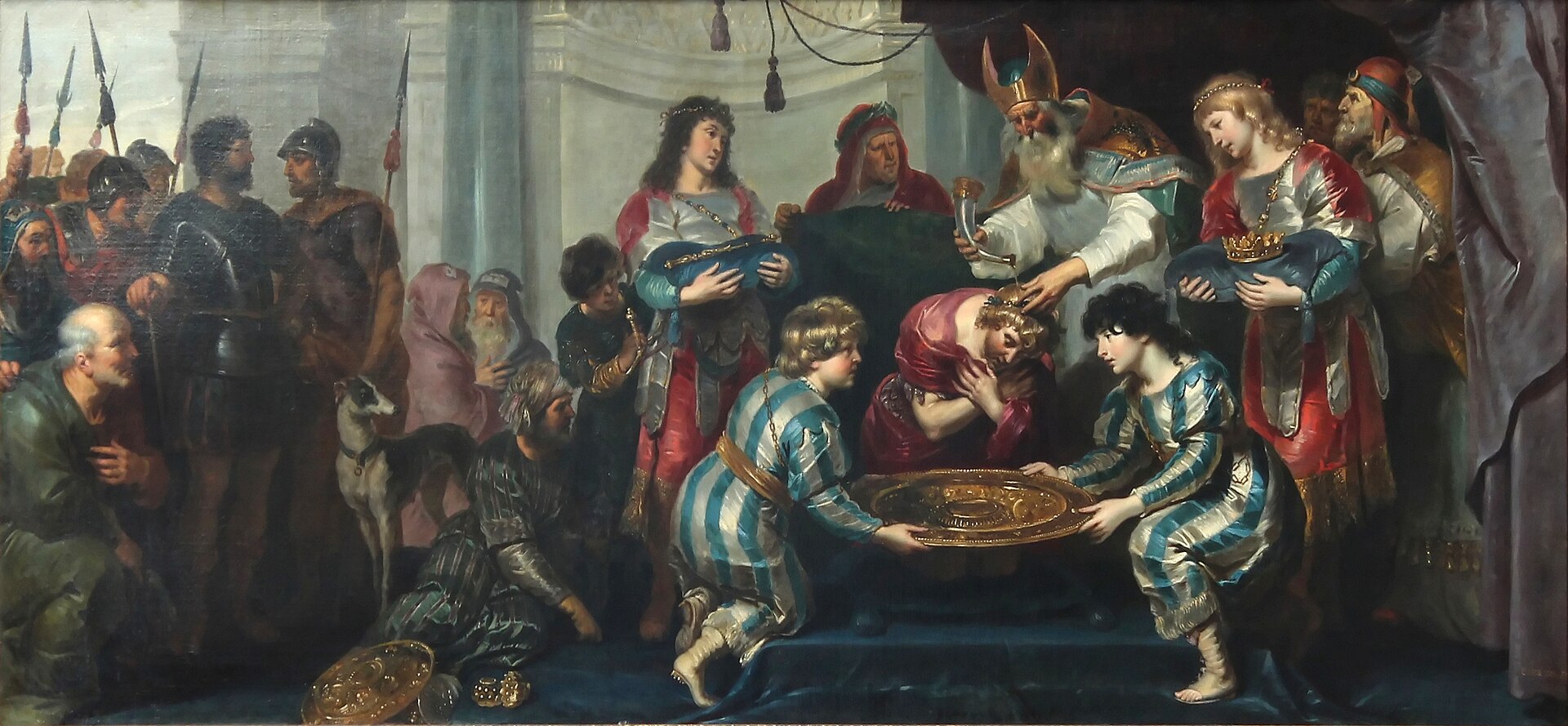
This page draws on 11 works. Open the list of works
This page draws on Adam Clarke, Commentary on the Bible; Albert Barnes, Notes, Explanatory and Practical, on the Old and New Testaments; Albert Barnes, Notes, Explanatory and Practical, on the Old and New Testaments (1832-1869); Augustine of Hippo, Exposition on Psalm 45; Charles Spurgeon, The Treasury of David, Vol. 2; Charles Spurgeon, The Treasury of David; Jamieson, Fausset & Brown, Commentary Critical and Explanatory on the Whole Bible; John Chrysostom, COMMENTARY ON THE PSALMS 45:13; John Gill, Exposition of the Old Testament (1748-1763); Matthew Henry, Commentary on the Whole Bible and Thomas Aquinas, Exposition on the Psalms of David.