
Numbers 24:1
in Numbers 24And when Balaam saw that it pleased the LORD to bless Israel, he did not resort to sorcery as on previous occasions, but he turned his face toward the wilderness.
BSB
The same verse in ASV and KJV ▾
ASV
And when Balaam saw that it pleased Jehovah to bless Israel, he went not, as at the other times, to meet with enchantments, but he set his face toward the wilderness.
KJV
And when Balaam saw that it pleased the Lord to bless Israel, he went not, as at other times, to seek for enchantments, but he set his face toward the wilderness.
⋯
This verse in Numbers 24
Commentary
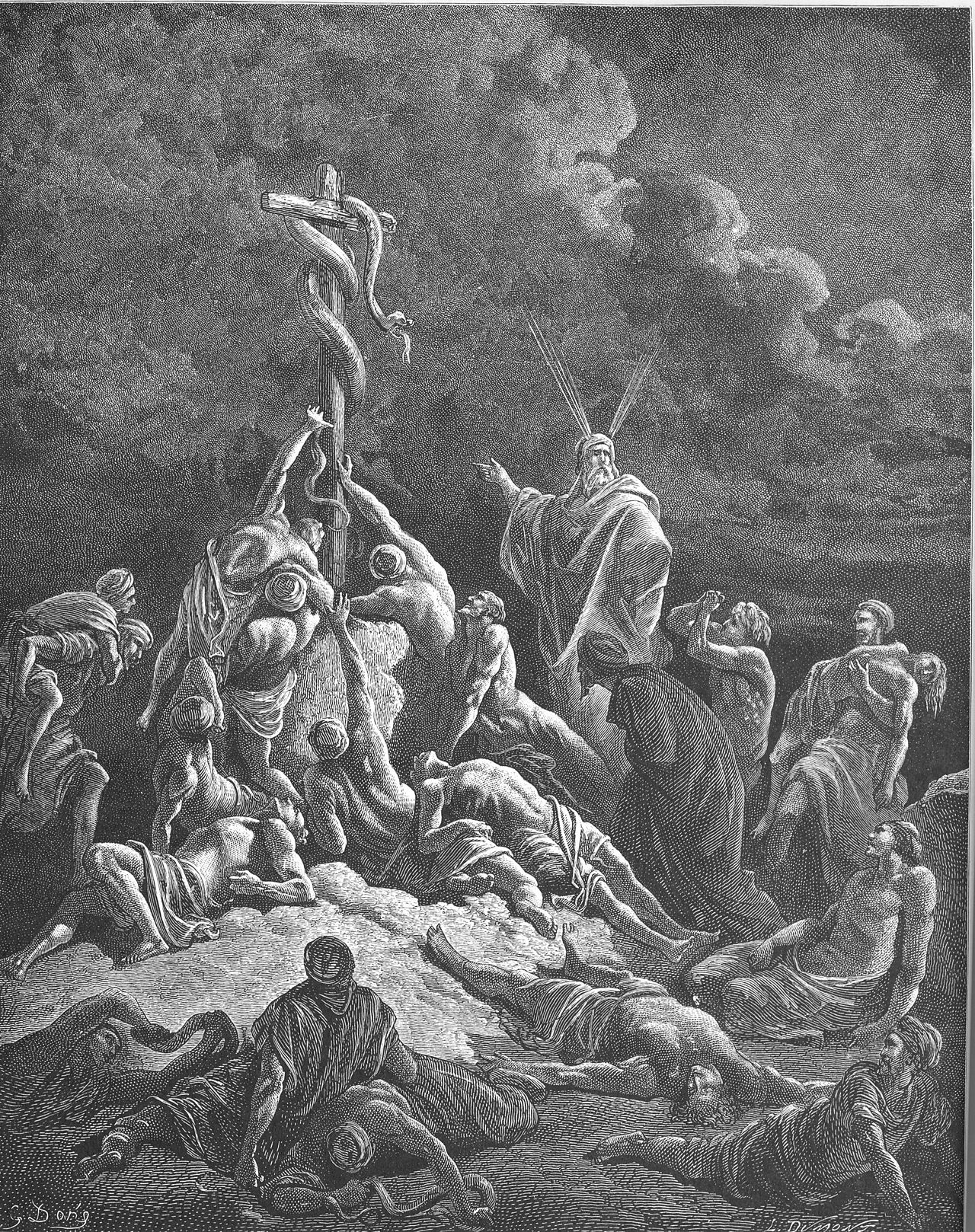
5 notes on this verseHe went not, as at other times, to seek for enchantments - We have already had occasion to observe that the proper meaning of the word נחש nachash is not easily ascertained; see Num 21:9 (note), and Gen 3:1 (note). Here the plural נחשים nechashim is rendered enchantments; but it probably means no more than the knowledge of future events.
This site's exposition
he set his face toward the wilderness
on Numbers 24:1-2
Twice before this Balaam went aside to meet omens, at 23:3 and 23:15, and the men who fetched him carried the rewards of divination at 22:7. Here he stops, because 23:23 had already told him there is no enchantment against Jacob. What he sees when he turns is the camp lying tribe by tribe in the order set at Numbers 2, and the text then says the spirit of God came upon him. Matthew Henry sets that beside 1 Samuel 19:23, where the same words fall on Saul while Saul is hunting David.
The record, by era
The Puritans and the Awakening2 voices
He did not now retire into a solitary place as before, but set his face directly towards the wilderness where Israel lay encamped; and, since there is no remedy, but they must be blessed, he will design nothing else, but will submit by compulsion. Now the Spirit of God came upon him, that is, the Spirit of prophecy, as upon Saul to prevent him from taking David, 1 Sam. xix.
And when Balsam saw that it pleased the Lord to bless Israel,....
The Nineteenth Century1 voice
A commentator
Jamieson, Fausset & Brown1802–1910
Commentary Critical and Explanatory on the Whole Bible (1871)
proposed
to seek for--that is, to use enchantments. His experience on the two former occasions [Nu 23:3, 15] had taught him that these superstitious accompaniments of his worship were useless, and therefore he now simply looked towards the camp of Israel, either with a secret design to curse them, or to await the divine afflatus.
quarantine:debris (2026-07-29) — starts-lowercase
The words behind it
19 Hebrew wordsEvery Hebrew word of this verse in the order it stands, with what it means and the door to its own study. The last column counts the times a word stands in the whole Bible: the rarer the word, the more the places it appears belong together.
| Hebrew | Sound | Meaning | Word study | In the Bible |
|---|---|---|---|---|
| וַיַּ֣רְא | vaiyar' | and he saw | H7200 → | 1300 times |
| בִּלְעָ֗ם | bilam | Balaam | H1109 → | 61 times |
| כִּ֣י | ki | that | H3588 → | 4482 times |
| ט֞וֹב | tov | it was good | H2895 → | 45 times |
| בְּעֵינֵ֤י | beeinei | in [the] eyes of | H5869 → | 887 times |
| יְהוָה֙ | yahweh | Yahweh | H3068 → | 6520 times |
| לְבָרֵ֣ךְ | levarekh | to bless | H1288 → | 330 times |
| אֶת־ | ʾet- | <obj.> | H853 → | 10935 times |
| יִשְׂרָאֵ֔ל | yisrael | Israel | H3478 → | 2507 times |
| וְלֹא־ | velo'- | and not | H3808 → | 5168 times |
| הָלַ֥ךְ | halakh | he went | H1980 → | 1546 times |
| כְּפַֽעַם־ | kefaam- | as time | H6471 → | 118 times |
| בְּפַ֖עַם | befaam | on time | H6471 → | 118 times |
| לִקְרַ֣את | likrat | to meet | H7122 → | 139 times |
| נְחָשִׁ֑ים | nechashim | omens | H5173 → | |
| וַיָּ֥שֶׁת | vaiyashet | and he set | H7896 → | |
| אֶל־ | ʾel- | to | H413 → | 5510 times |
| הַמִּדְבָּ֖ר | hamidbar | the wilderness | H4057 → | 270 times |
| פָּנָֽיו׃ | panav | face his | H6440 → | 2123 times |
וַיַּ֣רְאand he saw
vaiyar'H7200 →1300 times
בִּלְעָ֗םBalaam
bilamH1109 →61 times
כִּ֣יthat
kiH3588 →4482 times
ט֞וֹבit was good
tovH2895 →45 times
בְּעֵינֵ֤יin [the] eyes of
beeineiH5869 →887 times
יְהוָה֙Yahweh
yahwehH3068 →6520 times
לְבָרֵ֣ךְto bless
levarekhH1288 →330 times
אֶת־<obj.>
ʾet-H853 →10935 times
יִשְׂרָאֵ֔לIsrael
yisraelH3478 →2507 times
וְלֹא־and not
velo'-H3808 →5168 times
הָלַ֥ךְhe went
halakhH1980 →1546 times
כְּפַֽעַם־as time
kefaam-H6471 →118 times
בְּפַ֖עַםon time
befaamH6471 →118 times
לִקְרַ֣אתto meet
likratH7122 →139 times
נְחָשִׁ֑יםomens
nechashimH5173 →
וַיָּ֥שֶׁתand he set
vaiyashetH7896 →
אֶל־to
ʾel-H413 →5510 times
הַמִּדְבָּ֖רthe wilderness
hamidbarH4057 →270 times
פָּנָֽיו׃face his
panavH6440 →2123 times
A shaded row is a word that stands 400 times or fewer in the Bible.
The walk
8 stopsEach card is a verse this one points to, and under it the verses that one points to in turn. Where several paths arrive at the same place, that place is listed first: the text keeps returning to it.
Through
Numbers 23:23For there is no spell against Jacob and no divination against Israel. It will now be said of Jacob and Israel, ‘What great things God has done!’
it leads to
- Luke 10:18–19
So He told them, “I saw Satan fall like lightning from heaven.
- Joshua 13:22
The Israelites also killed the diviner Balaam son of Beor along with the others they put to the sword.
- Psalms 64:9
Then all mankind will fear and proclaim the work of God; so they will ponder what He has done.
- Luke 10:18–19
Through
Numbers 23:20I have indeed received a command to bless; He has blessed, and I cannot change it.
it leads to
- John 10:27–29
My sheep listen to My voice; I know them, and they follow Me.
- Numbers 22:12
But God said to Balaam, “Do not go with them. You are not to curse this people, for they are blessed.”
- Genesis 12:2
I will make you into a great nation, and I will bless you; I will make your name great, so that you will be a blessing.
- Genesis 22:17
I will surely bless you, and I will multiply your descendants like the stars in the sky and the sand on the seashore. Your descendants will possess the gates of their enemies.
- John 10:27–29
Through
Numbers 31:16“Look, these women caused the sons of Israel, through the counsel of Balaam, to turn unfaithfully against the LORD at Peor, so that the plague struck the congregation of the LORD.
it leads to
- Numbers 25:1–9
While Israel was staying in Shittim, the men began to indulge in sexual immorality with the daughters of Moab,
- Numbers 25:1–9
Where this verse is studied
On this page
About Numbers
This page draws on Adam Clarke, Commentary on the Bible; Jamieson, Fausset & Brown, Commentary Critical and Explanatory on the Whole Bible; John Calvin, Commentary on the Four Last Books of Moses Arranged in the Form of a Harmony; John Gill, Exposition of the Old Testament (1748-1763) and Matthew Henry, Commentary on the Whole Bible.