
Micah 6:3
in Micah 6‘My people, what have I done to you? Testify against Me how I have wearied you!
BSB
The same verse in ASV and KJV ▾
ASV
O my people, what have I done unto thee? and wherein have I wearied thee? testify against me.
KJV
O my people, what have I done unto thee? and wherein have I wearied thee? testify against me.
⋯
This verse in Micah 6
Commentary
11 notes on this verseThe third interruption of the Prophet is that, as he is stationed among people who exercise wickedness, he desires to be separated from their contamination. Many think that this refers to the Lord Jesus, because it is His alone not to fear judgment, since He conquers when He is judged. For He has a judgment from an unjust man, into which Christ willingly enters, as you have written: My people, what have I done to you, or in what have I saddened you?
This site's exposition
My people, what have I done to you
on Micah 6:3-5
The Lord opens by asking, "what have I done to you". His evidence is His own care, for "I brought you up from the land of Egypt" and "I sent Moses before you". Verse 5 recalls Balak's hire of Balaam in Numbers 22 to 24, the curse turned to blessing.
The record, by era
The Church Fathers3 voices
(Verse 3 onwards) O my people, what have I done to you, and how have I wearied you? Answer me! For I brought you up from the land of Egypt, and redeemed you from the house of slavery; and I sent before you Moses, Aaron, and Miriam. O my people, remember, I pray, what Balak king of Moab devised, and what Balaam the son of Beor answered him, from Shittim to Gilgal, that you may know the saving acts of the Lord. LXX: My people, what have I done to you, or how have I troubled you? Answer me: for I brought you out of the land of Egypt, and redeemed you from the house of bondage, and sent before you Moses, and Aaron, and Miriam. My people, remember what Balak, king of Moab, devised against you, and what Balaam, the son of Beor, answered him from Seir unto Gilgal; that the righteousness of the Lord might be known. Symmachus interpreted 'justitiis' or 'justitia' as 'misericordias', and where LXX Shanis; all translated it as Settim. It is the place where Balak, the king of the Moabites, gathered an army against Israel, like the trees that still grow through the desert of Mount Sinai. For in the LXX, whether it be the Ark of the Covenant, or the altar and tabernacle, and other things made of imperishable wood, they are called Settim in Hebrew, which resemble a tree that we commonly call the White Thorn. Therefore, I believe that both LXX σχίνον and σχοῖνοι have been interpreted as lentisk; but gradually, due to a mistake made by copyists, σχοῖνοι, meaning ropes, were read instead of σχίνοις, meaning lentisks. Therefore, God speaks to the people of Israel and challenges them to a judgment, granting them permission to argue against Him. My people, what have I done to you that I should not have done? Or how have I wearied you? Although this is not found in Hebrew. But the father is saddened by his son being flogged, and he visits the sins of the sheep with the shepherd's rod. […]
A commentator
Gregory of NazianzusAGAINST THE ARIANS AND ON HIMSELF, ORATION 33:2 · Written before 390.
proposed
Would you like me to utter to you the words of God to Israel, stiff-necked and hardened? "O my people, what have I done to you, or in what way have I injured you, or wherein have I wearied you?" This language indeed is more fit from me to you who insult me. It is a sad thing that we watch for opportunities against each other and having destroyed our fellowship of spirit by diversities of opinion have become almost more inhuman and savage to one another than even the barbarians who are now engaged in war against us, banded together against us by the Trinity whom we have separated. We are not foreigners making forays and raids upon foreigners or nations of a different language, which is some little consolation in the calamity. But we are making war upon one another, and almost upon those of the same household. Or if you will, we the members of the same body are consuming and being consumed by one another. Nor is this, bad as it is, the extent of our calamity, for we even regard our diminution as a gain. But since we are in such a condition and regulate our faith by the times, let us compare the times with one another; you your emperor, and I my sovereigns; you Ahab and I Josiah.
"For the Lord will judge his people, and he will [give] comfort among his servants." The reason for the previous praise is stated: "For the Lord will judge his people," that is, the Jewish people, to whom he revealed great miracles and assigned his prophets …
The Puritans and the Awakening2 voices
): " O my people! what have I done unto thee? Wherein have I wearied thee? " If subjects quit their allegiance to their prince, they will pretend (as the ten tribes did when they revolted from Rehoboam), that his yoke is too heavy for them; but can you pretend any such thing? What have I done to you that is unjust or unkind?
quarantine:debris (2026-07-29) — leading-punctuation+unbalanced-parens
What have I done - What injustice or unkindness? What grievous, burdensome impositions have I laid upon thee. Wearied thee - Speak, what it is hath caused thee to be weary of me?
4 more voices on this verse
The Puritans and the Awakening1 voice
O my people,....
The Nineteenth Century3 voices
A commentator
Albert Barnes1798–1870
Notes, Explanatory and Practical, on the Old and New Testaments (1832-1869)
O My people - This one tender word, twice repeated , contains in one a whole volume of reproof.
A commentator
Jamieson, Fausset & Brown1802–1910
Commentary Critical and Explanatory on the Whole Bible (1871)
proposed
my people--the greatest aggravation of their sin, that God always treated them, and still treats them, as His people. what have I done unto thee?--save kindness, that thou revoltest from Me (Jer 2:5, 31). wherein have I wearied thee?--What commandments have I enjoined that should have wearied thee as irksome (1Jo 5:3)?
quarantine:debris (2026-07-29) — starts-lowercase
O my people, what have I done unto thee? - They are called to show why God should not pronounce sentence upon them. This condescension is truly astonishing! God appears to humble himself to his creatures. You have acted basely, treacherously, and ungratefully to me; this had already been proved by the prophets. What cause have I given you for such conduct? I have required a religious service from you; but have I wearied you by a fatiguing round of difficult duties? If I have, now testify against me; and you shall be first heard, and your plea received, if it be reasonable and good. They are silent; and God proceeds, and states what he has done for them.
The words behind it
8 Hebrew wordsEvery Hebrew word of this verse in the order it stands, with what it means and the door to its own study. The last column counts the times a word stands in the whole Bible: the rarer the word, the more the places it appears belong together.
| Hebrew | Sound | Meaning | Word study | In the Bible |
|---|---|---|---|---|
| עַמִּ֛י | ʾami | O people my | H5971 → | 1873 times |
| מֶה־ | meh- | what? | H4100 → | 752 times |
| עָשִׂ֥יתִי | ʾasiti | have I done | H6213 → | 2628 times |
| לְךָ֖ | lekha | to you | ||
| וּמָ֣ה | umah | and what? | H4100 → | 752 times |
| הֶלְאֵתִ֑יךָ | heletikha | have I made weary you | H3811 → | |
| עֲנֵ֥ה | ʾaneh | testify | H6030 → | 331 times |
| בִֽי׃ | vi | against me |
עַמִּ֛יO people my
ʾamiH5971 →1873 times
מֶה־what?
meh-H4100 →752 times
עָשִׂ֥יתִיhave I done
ʾasitiH6213 →2628 times
לְךָ֖to you
lekha
וּמָ֣הand what?
umahH4100 →752 times
הֶלְאֵתִ֑יךָhave I made weary you
heletikhaH3811 →
עֲנֵ֥הtestify
ʾanehH6030 →331 times
בִֽי׃against me
vi
A shaded row is a word that stands 400 times or fewer in the Bible.
The walk
8 stopsEach card is a verse this one points to, and under it the verses that one points to in turn. Where several paths arrive at the same place, that place is listed first: the text keeps returning to it.
Through
Psalms 81:13If only My people would listen to Me, if Israel would follow My ways,
it leads to
- Isaiah 48:18
If only you had paid attention to My commandments, your peace would have been like a river, and your righteousness like waves of the sea.
- Deuteronomy 5:29
If only they had such a heart to fear Me and keep all My commandments always, so that it might be well with them and with their children forever.
- Deuteronomy 10:12–13
And now, O Israel, what does the LORD your God ask of you but to fear the LORD your God by walking in all His ways, to love Him, to serve the LORD your…
- Luke 19:41–42
As Jesus approached Jerusalem and saw the city, He wept over it
- Isaiah 48:18
Through
Jeremiah 2:5This is what the LORD says: “What fault did your fathers find in Me that they strayed so far from Me, and followed worthless idols, and became worthless themselves?
it leads to
- 2 Kings 17:15
They rejected His statutes and the covenant He had made with their fathers, as well as the decrees He had given them. They pursued worthless idols and themselves became worthless, going after the surrounding…
- Romans 1:21
For although they knew God, they neither glorified Him as God nor gave thanks to Him, but they became futile in their thinking and darkened in their foolish hearts.
- 2 Kings 17:15
Through
Psalms 50:7“Hear, O My people, and I will speak, O Israel, and I will testify against you: I am God, your God.
it leads to
- Psalms 81:8
Hear, O My people, and I will warn you: O Israel, if only you would listen to Me!
- Exodus 20:2
“I am the LORD your God, who brought you out of the land of Egypt, out of the house of slavery.
- Psalms 81:8
Where this verse is studied
On this page
Studies12
On this verse
On this chapter
About Micah
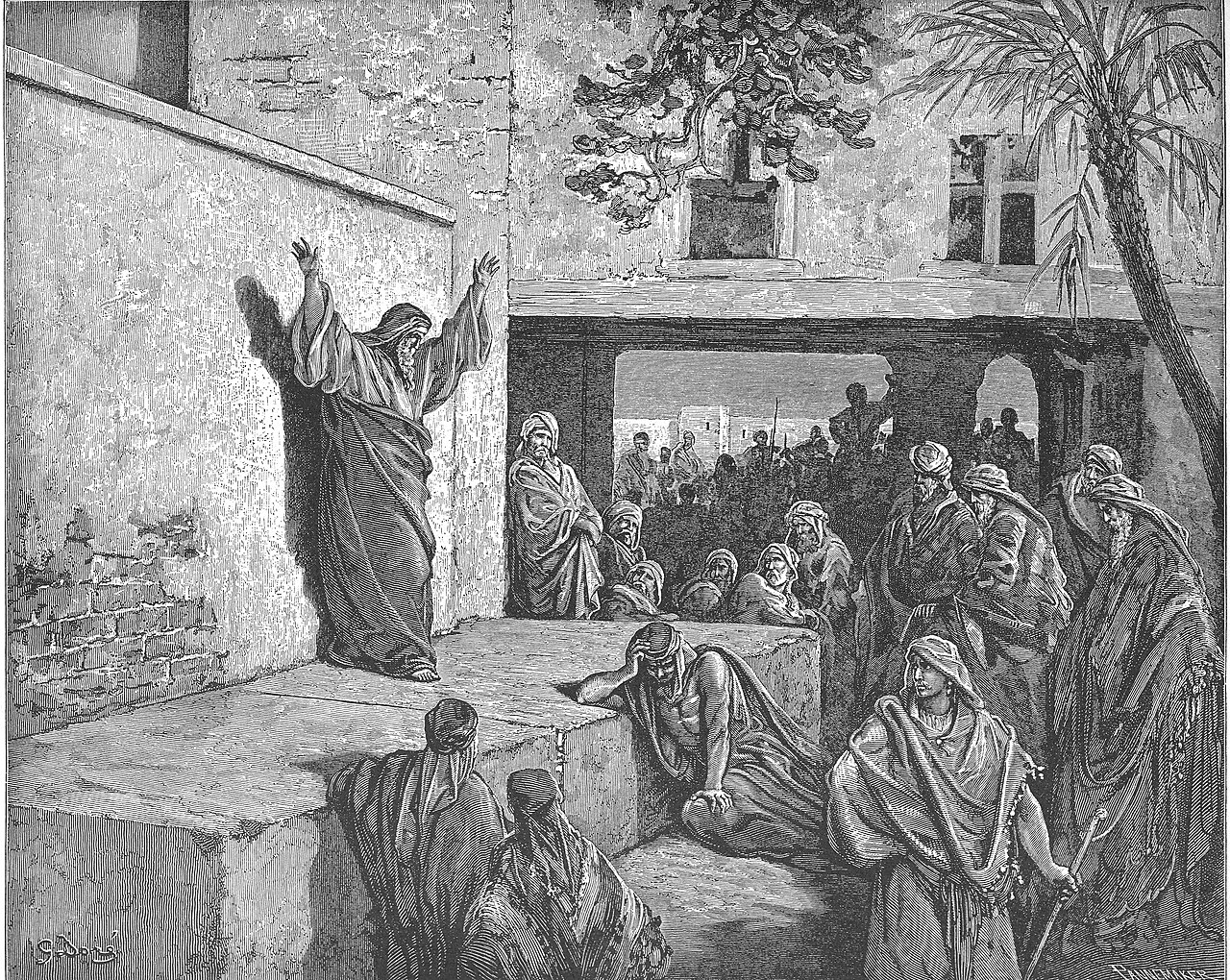
This page draws on 11 works. Open the list of works
This page draws on Adam Clarke, Commentary on the Bible; Albert Barnes, Notes, Explanatory and Practical, on the Old and New Testaments (1832-1869); Ambrose of Milan, Interrogation of Job and David; Cassiodorus, EXPOSITION OF THE PSALMS 134:14; Gregory of Nazianzus, AGAINST THE ARIANS AND ON HIMSELF, ORATION 33:2; Jamieson, Fausset & Brown, Commentary Critical and Explanatory on the Whole Bible; Jerome, Commentary on Micah; John Gill, Exposition of the Old Testament; John Gill, Exposition of the Old Testament (1748-1763); John Wesley, Explanatory Notes upon the Old Testament and Matthew Henry, Commentary on the Whole Bible.