
Micah 1:9
in Micah 1For her wound is incurable; it has reached even Judah; it has approached the gate of my people, as far as Jerusalem itself.
BSB
The same verse in ASV and KJV ▾
ASV
For her wounds are incurable; for it is come even unto Judah; it reacheth unto the gate of my people, even to Jerusalem.
KJV
For her wound is incurable; for it is come unto Judah; he is come unto the gate of my people, even to Jerusalem.
⋯
This verse in Micah 1
Commentary
8 notes on this verseA commentator
Albert Barnes1798–1870
Notes, Explanatory and Practical, on the Old and New Testaments (1832-1869)
For her - Samaria’s Wound - o, (literally, her wounds, or strokes, (the word is used especially of those inflicted by God, (Lev 26:21; Num 11:33; Deu 28:59, Deu 28:61, etc.) each, one by one,) is incurable The idiom is used of inflictions on the body politic (Nahum 3 ult.; Jer 30:12, Jer 30:15) or the mind , for which there is no remedy. The wounds were very sick, or incurable, not in themselves or on God’s part, but on Israel’s.
This site's exposition
I will wail and howl
on Micah 1:8-9
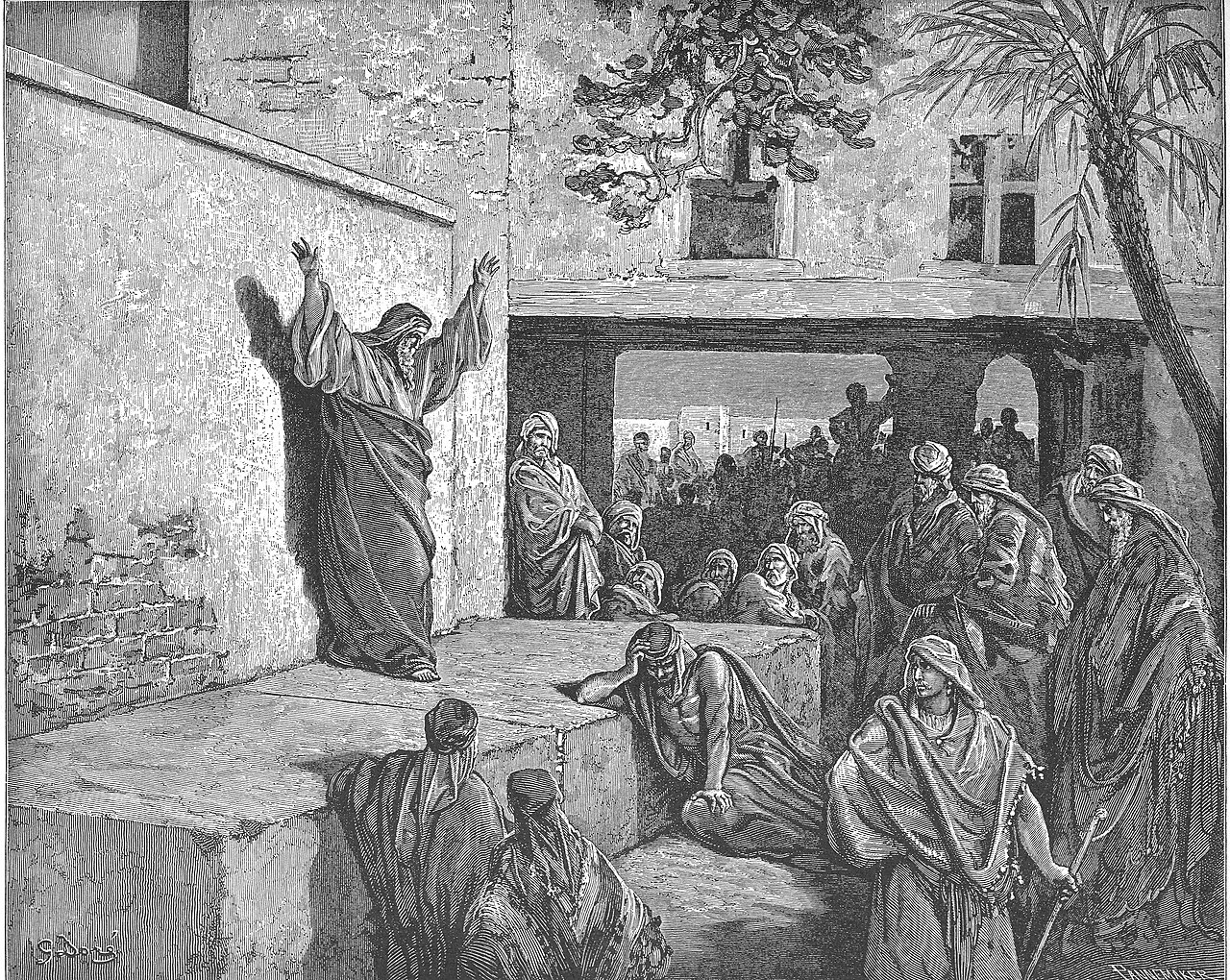
Micah steps into his own oracle as a mourner, stripped and naked, wailing like the dragons and the owls, the prophet enacting the grief he announces rather than merely predicting it. Verse 9 turns the wound from Samaria toward home: her wound is incurable, for it is come unto Judah, unto the gate of my people, even to Jerusalem, the disaster no longer someone else's. The commentators mark this as the hinge of the chapter, the north's fall now read as a warning already arriving at the south's own gate.
The record, by era
The Church Fathers1 voice
(Verse 6 onwards): And I will make Samaria a heap of stones in the field, when a vineyard is planted, and I will pour down her stones into the valley, and will lay bare her foundations. And all her carved images shall be beaten to pieces, and all her wages shall be burned with fire, and all her idols will I lay desolate: for she gathered it of the hire of an harlot, and they shall return to the hire of a harlot.
The Puritans and the Awakening3 voices
Her wound - The wounds of Samaria, her own sins, and God's just displeasure. It is come - The contagion of her sins, and the indignation of God against it, have reached to Judah also, yea, to Jerusalem.
For her wound is incurable,.... Or her "stroke is desperate" (e).
Two things the prophet here thus dolefully laments:-- 1. That Israel's case is desperate: Her wound is incurable; it is ruin without remedy; man cannot help her;
The Nineteenth Century1 voice
A commentator
Jamieson, Fausset & Brown1802–1910
Commentary Critical and Explanatory on the Whole Bible (1871)
proposed
wound . . . incurable--Her case, politically and morally, is desperate (Jer 8:22). it is come--the wound, or impending calamity (compare Isa 10:28). he is come . . . even to Jerusalem--The evil is no longer limited to Israel. The prophet foresees Sennacherib coming even "to the gate" of the principal city.
quarantine:debris (2026-07-29) — starts-lowercase
1 more voice on this verse
The Nineteenth Century1 voice
Her wound is incurable - Nothing shall prevent their utter ruin, for they have filled up the measure of their iniquity. He is come - even to Jerusalem - The desolation and captivity of Israel shall first take place; that of Judah shall come after.
How the passage was read
What the Jewish commentators add
On the verses either side of this one
Do not declare it in Gath —lest the Philistines rejoice about us.
This section is reception history: how the passage was read and kept in the Jewish tradition. Where a reading parts from an essential of the Christian faith, the section says so at that point.
Texts and citation data: Sefaria; each excerpt follows its version’s licence. 6 further sources are cited on this chapter that carry no English text this site may quote or only restate the verse.
The words behind it
13 Hebrew wordsEvery Hebrew word of this verse in the order it stands, with what it means and the door to its own study. The last column counts the times a word stands in the whole Bible: the rarer the word, the more the places it appears belong together.
| Hebrew | Sound | Meaning | Word study | In the Bible |
|---|---|---|---|---|
| כִּ֥י | ki | for | H3588 → | 4482 times |
| אֲנוּשָׁ֖ה | ʾanushah | [is] incurable | H605 → | |
| מַכּוֹתֶ֑יהָ | makoteiha | wounds its | H4347 → | |
| כִּי־ | ki- | for | H3588 → | 4482 times |
| בָ֙אָה֙ | vaah | it has come | H935 → | 2568 times |
| עַד־ | ʾad- | to | H5704 → | 1261 times |
| יְהוּדָ֔ה | yehudah | Judah | H3063 → | 819 times |
| נָגַ֛ע | naga' | it has reached | H5060 → | |
| עַד־ | ʾad- | to | H5704 → | 1261 times |
| שַׁ֥עַר | shaar | [the] gate of | H8179 → | 374 times |
| עַמִּ֖י | ʾami | people my | H5971 → | 1873 times |
| עַד־ | ʾad- | to | H5704 → | 1261 times |
| יְרוּשָׁלִָֽם׃ | yerushalim | Jerusalem | H3389 → | 643 times |
כִּ֥יfor
kiH3588 →4482 times
אֲנוּשָׁ֖ה[is] incurable
ʾanushahH605 →
מַכּוֹתֶ֑יהָwounds its
makoteihaH4347 →
כִּי־for
ki-H3588 →4482 times
בָ֙אָה֙it has come
vaahH935 →2568 times
עַד־to
ʾad-H5704 →1261 times
יְהוּדָ֔הJudah
yehudahH3063 →819 times
נָגַ֛עit has reached
naga'H5060 →
עַד־to
ʾad-H5704 →1261 times
שַׁ֥עַר[the] gate of
shaarH8179 →374 times
עַמִּ֖יpeople my
ʾamiH5971 →1873 times
עַד־to
ʾad-H5704 →1261 times
יְרוּשָׁלִָֽם׃Jerusalem
yerushalimH3389 →643 times
A shaded row is a word that stands 400 times or fewer in the Bible.
The walk
8 stopsEach card is a verse this one points to, and under it the verses that one points to in turn. Where several paths arrive at the same place, that place is listed first: the text keeps returning to it.
Through
Jeremiah 15:18Why is my pain unending, and my wound incurable, refusing to be healed? You have indeed become like a mirage to me—water that is not there.
it leads to
- Jeremiah 30:15
Why do you cry out over your wound? Your pain has no cure! Because of your great iniquity and your numerous sins I have done these things to you.
- Job 34:6
Would I lie about my case? My wound is incurable, though I am without transgression.’
- Job 6:15–20
But my brothers are as faithless as wadis, as seasonal streams that overflow,
- Jeremiah 30:12
For this is what the LORD says: “Your injury is incurable; your wound is grievous.
- Psalms 13:1–3
How long, O LORD? Will You forget me forever? How long will You hide Your face from me?
- Jeremiah 30:15
Through
Micah 1:12For the dwellers of Maroth pined for good, but calamity came down from the LORD, even to the gate of Jerusalem.
it leads to
- Jeremiah 14:19
Have You rejected Judah completely? Do You despise Zion? Why have You stricken us so that we are beyond healing? We hoped for peace, but no good has come, and for the time of…
- Amos 3:6
If a ram’s horn sounds in a city, do the people not tremble? If calamity comes to a city, has not the LORD caused it?
- Job 30:26
But when I hoped for good, evil came; when I looked for light, darkness fell.
- Jeremiah 14:19
Where this verse is studied
On this page
Studies2
On this verse
On this chapter
About Micah
Who and where
2 names in this verse with a page on the site.
- PersonPatriarchsJudahJacob's fourth son who pledges himself for Benjamin; the tribe that carries the scepter to Shiloh (49:10) and the line to Christ (…
- PlaceJerusalemJerusalemThe city David took from the Jebusites and made his capital, where Solomon built the temple, where Christ was crucified and rose,…
This page draws on Adam Clarke, Commentary on the Bible; Albert Barnes, Notes, Explanatory and Practical, on the Old and New Testaments (1832-1869); Edward Bouverie Pusey, The Minor Prophets: A Commentary; Jamieson, Fausset & Brown, Commentary Critical and Explanatory on the Whole Bible; Jerome, Commentary on Micah; John Gill, Exposition of the Old Testament (1748-1763); John Wesley, Explanatory Notes upon the Old Testament and Matthew Henry, Commentary on the Whole Bible.