
Lamentations 4:15
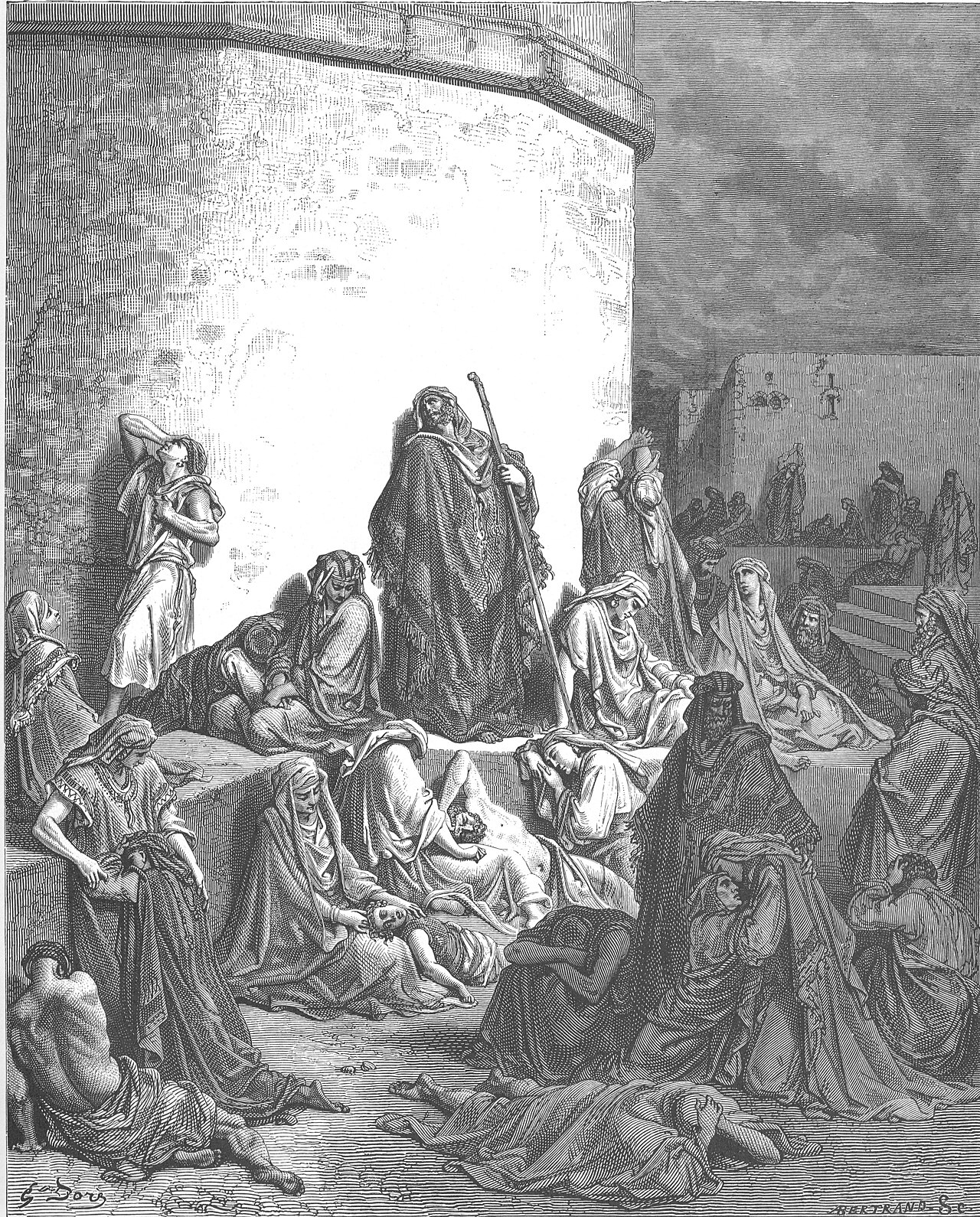
in Lamentations 4“Go away! Unclean!” men shouted at them. “Away, away! Do not touch us!” So they fled and wandered. Among the nations it was said, “They can stay here no longer.”
BSB
The same verse in ASV and KJV ▾
ASV
Depart ye, they cried unto them, Unclean! depart, depart, touch not! When they fled away and wandered, men said among the nations, They shall no more sojourn here.
KJV
They cried unto them, Depart ye; it is unclean; depart, depart, touch not: when they fled away and wandered, they said among the heathen, They shall no more sojourn there.
⋯
This verse in Lamentations 4
Commentary
2 notes on this verseA commentator
Albert Barnes1798–1870
Notes, Explanatory and Practical, on the Old and New Testaments (1832-1869)
Men cried to these priests, “Away! Unclean! Away! Away! Touch not.” “Unclean” was the cry of the leper whenever he appeared in public: here it is the warning shout of those who meet the murderers. When they fled away and wandered - These priests fled away from the city, but with uncertain steps, not knowing where to find refuge. They find themselves abhorred abroad as well as at home. It is quite possible that this verse records a real occurrence, if not during the siege, at all events during the last years of Zedekiah’s reign.
This site's exposition
For the sins of her prophets, and the iniquities of her priests
on Lamentations 4:13-15
Verse 13 lays the disaster at a specific door, the sins of her prophets and the iniquities of her priests, who shed the blood of the just in the midst of her, false leadership named as the wound behind the famine and the fire. Verses 14 and 15 follow them into exile still marked: they wander blind and blood-polluted so that no one will touch their garments, and the very nations who receive them cry depart, it is unclean, refusing them any lasting home. The bench reads the scene as guilt made visible on the body, a leadership once trusted now avoided on sight.
How the passage was read
What the Jewish commentators add
Get away. From us, you unclean ones, who are sullied with blood.
1 more on this passage, in their own words ▾
The blind slithered in the streets. When the blind would walk in the street, they would stagger, and their feet would slip on the blood of the slain, 19 Alternatively, ‘they wandered through the streets blindly.’ whom the wicked were slaying in its [Yerusholayim] midst.
This section is reception history: how the passage was read and kept in the Jewish tradition. Where a reading parts from an essential of the Christian faith, the section says so at that point.
Texts and citation data: Sefaria; each excerpt follows its version’s licence. 3 further sources are cited on this chapter that carry no English text this site may quote or only restate the verse.
The words behind it
17 Hebrew wordsEvery Hebrew word of this verse in the order it stands, with what it means and the door to its own study. The last column counts the times a word stands in the whole Bible: the rarer the word, the more the places it appears belong together.
| Hebrew | Sound | Meaning | Word study | In the Bible |
|---|---|---|---|---|
| ס֣וּרוּ | suru | depart | H5493 → | 299 times |
| טָמֵ֞א | tame' | unclean | H2931 → | |
| קָ֣רְאוּ | kareu | people called out | H7121 → | 733 times |
| לָ֗מוֹ | lamo | to them | ||
| ס֤וּרוּ | suru | depart | H5493 → | 299 times |
| ס֙וּרוּ֙ | suru | depart | H5493 → | 299 times |
| אַל־ | ʾal- | may not | H408 → | 724 times |
| תִּגָּ֔עוּ | tigau | you touch | H5060 → | 150 times |
| כִּ֥י | ki | for | H3588 → | 4482 times |
| נָצ֖וּ | natzu | they fled | H5132 → | |
| גַּם־ | gam- | also | H1571 → | 769 times |
| נָ֑עוּ | nau | they wandered | H5128 → | 40 times |
| אָֽמְרוּ֙ | ʾameru | people said | H559 → | 5305 times |
| בַּגּוֹיִ֔ם | bagoyim | among the nations | H1471 → | 561 times |
| לֹ֥א | lo' | not | H3808 → | 5168 times |
| יוֹסִ֖יפוּ | yosifu | they will increase | H3254 → | 212 times |
| לָגֽוּר׃ ס | lagur | to sojourn | H1481 → |
ס֣וּרוּdepart
suruH5493 →299 times
טָמֵ֞אunclean
tame'H2931 →
קָ֣רְאוּpeople called out
kareuH7121 →733 times
לָ֗מוֹto them
lamo
ס֤וּרוּdepart
suruH5493 →299 times
ס֙וּרוּ֙depart
suruH5493 →299 times
אַל־may not
ʾal-H408 →724 times
תִּגָּ֔עוּyou touch
tigauH5060 →150 times
כִּ֥יfor
kiH3588 →4482 times
נָצ֖וּthey fled
natzuH5132 →
גַּם־also
gam-H1571 →769 times
נָ֑עוּthey wandered
nauH5128 →40 times
אָֽמְרוּ֙people said
ʾameruH559 →5305 times
בַּגּוֹיִ֔םamong the nations
bagoyimH1471 →561 times
לֹ֥אnot
lo'H3808 →5168 times
יוֹסִ֖יפוּthey will increase
yosifuH3254 →212 times
לָגֽוּר׃ סto sojourn
lagurH1481 →
A shaded row is a word that stands 400 times or fewer in the Bible.
About Lamentations
This page draws on Albert Barnes, Notes, Explanatory and Practical, on the Old and New Testaments (1832-1869); Albert Barnes, Notes on the Old Testament and Matthew Henry, Commentary on the Whole Bible.