
Job 2:3
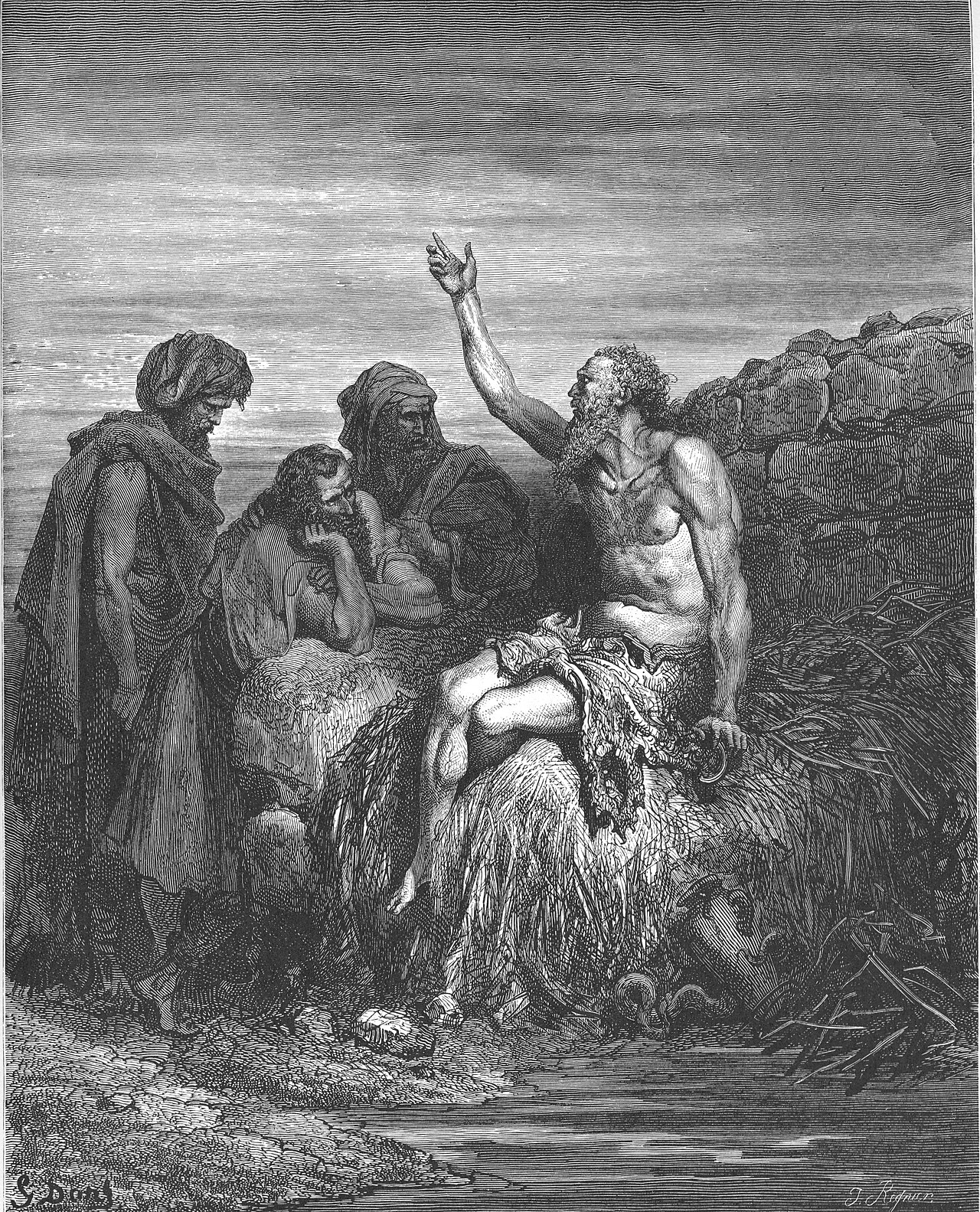
in Job 2Then the LORD said to Satan, “Have you considered My servant Job? For there is no one on earth like him, a man who is blameless and upright, who fears God and shuns evil. He still retains his integrity, even though you incited Me against him to ruin him without cause.”
BSB
The same verse in ASV and KJV ▾
ASV
And Jehovah said unto Satan, Hast thou considered my servant Job? for there is none like him in the earth, a perfect and an upright man, one that feareth God, and turneth away from evil: and he still holdeth fast his integrity, although thou movedst me against him, to destroy him without cause.
KJV
And the Lord said unto Satan, Hast thou considered my servant Job, that there is none like him in the earth, a perfect and an upright man, one that feareth God, and escheweth evil? and still he holdeth fast his integrity, although thou movedst me against him, to destroy him without cause.
⋯
This verse in Job 2
Commentary
10 notes on this verseAnd the Lord said unto Satan, Hast thou considered my servant Job, that there is none like him in the earth, a perfect and an upright man, one that feareth God, and escheweth evil? and still he holdeth fast his integrity, although thou movedst me against him, to destroy him without cause. HISTORICAL INTERPRETATION. As if He said explicitly, 'Thou indeed hast wrought thy malice, but he has not lost his innocence; and thou art forced to serve to his advancement by the very means whence thou thoughtest to lessen his advancement.
This site's exposition
the sons of God came to present themselves
on Job 2:1-3
The second court scene repeats the formula of chapter 1. The added clause, "He still retains his integrity, even though you incited Me against him to ruin him without cause," is God's verdict. The words "without cause" settle in advance that none of it was deserved, whatever the friends claim.
This site's exposition
He still retains his integrity
Clarke notes the Hebrew for ruin means to swallow or devour, the word Peter echoes when the devil seeks to devour at 1 Peter 5:8. Wesley reads you incited Me as a picture of Satan's malice and God's permission. Without cause means Job's sins had called down none of this.
The record, by era
The Medieval Church2 voices
ALLEGORICAL INTERPRETATION. Though thou movedst Me against him, to destroy him without cause. If blessed Job bears the likeness of our Redeemer in His Passion, how is it that the Lord says to Satan, Thou movedst Me against him? Truly the Mediator between God and man, the Man Christ Jesus, came to bear the scourges of our mortal nature, that He might put away the sins of our disobedience; but forasmuch as He is of one and the self-same nature with the Father, how does the Father declare that He was moved by Satan against Him, when it is acknowledged that no inequality of power, no diversity of will, interrupts the harmony between the Father and the Son? Yet He, that is equal to the Father by the Divine Nature, came for our sakes to be under stripes in a fleshly nature. Which stripes He would never have undergone, if he had not taken the form of accursed man in the work of their redemption. And unless the first man had transgressed, the second would never have come to the ignominies of the Passion. When then the first man was moved by Satan from the Lord, then the Lord was moved against the second Man. And so Satan then moved the Lord to the affliction of this latter, when the sin of disobedience brought down the first man from the height of uprightness. For if he had not drawn the first Adam by wilful sin into the death of the soul, the second Adam, being without sin, would never have come into the voluntary death of the flesh, and therefore it is with justice said to him of our Redeemer too, Thou movedst Me against him to afflict him without cause. As though it were said in plainer words; 'Whereas this Man dies not on His own account, but on account of that other, thou didst then move Me to the afflicting of This one, when thou didst withdraw that other from Me by thy cunning persuasions.' And of Him it is rightly added, without cause. […]
Once again the Lord proposes the virtue of Job as something evident, and so there follows, "The Lord said to Satan: Have you considered my servant Job; there is none like him on earth? He is a blameless and upright man, who fears God and …
The Puritans and the Awakening3 voices
Still - Notwithstanding all his afflictions, and thy suggestion to the contrary. Movedst - This, as the rest of this representation, is not to be understood literally: But the design is to signify both the devil's restless malice in promoting man's misery and God's permission of it for wise and holy ends.
And the Lord said unto Satan, hast thou considered my servant Job, that there is none like him in the earth, a perfect and an upright man, one that feareth God, and escheweth evil?.... The same with this is also before put unto Satan, and the same character given of Job, which is here continued and confirmed, with an addition to it; for Job was no loser, but a gainer in his character by his afflictions and trials: and still he holdeth fast his integrity.
How well is it for us that neither men nor devils are to be our judges, for perhaps they would destroy us, right or wrong; but our judgment proceeds from the Lord, whose judgment never errs nor is biassed.
2 more voices on this verse
The Nineteenth Century2 voices
A commentator
Albert Barnes1798–1870
Notes, Explanatory and Practical, on the Old and New Testaments (1832-1869)
Hast thou considered - Notes, Job 1:8. That there is none like him in the earth - The same addition is made here by the Septuagint which occurs in Job 1:1; see the notes at that verse. And still he holdeth fast his integrity - Notwithstanding all the efforts made to show that his piety was the result of mere selfishness. The word “integrity” here תמה tûmmâh means “perfection;” another form of the word which is rendered “perfect” in Job 1:1; see the notes at that verse.
To destroy him without cause - Thou wishedst me to permit thee to destroy a man whose sins have not called for so heavy a judgment. This seems to be the meaning of this saying. The original word, לבלעו leballeo, signifies to swallow down or devour; and this word St. Peter had no doubt in view in the place quoted on Job 2:7 of the preceding chapter: “Your adversary the devil goeth about as a roaring lion, seeking whom he may Devour; ζητων, τινα καταπιῃ, seeking whom he may Swallow or Gulp Down. See the note on 1Pe 5:8.
How the passage was read
What the Jewish commentators add
On the verses either side of this one
“Where are you coming from?” Where is the place about which you may say, “From this place I come”?
This section is reception history: how the passage was read and kept in the Jewish tradition. Where a reading parts from an essential of the Christian faith, the section says so at that point.
Texts and citation data: Sefaria; each excerpt follows its version’s licence. 5 further sources are cited on this chapter that carry no English text this site may quote or only restate the verse.
The words behind it
27 Hebrew wordsEvery Hebrew word of this verse in the order it stands, with what it means and the door to its own study. The last column counts the times a word stands in the whole Bible: the rarer the word, the more the places it appears belong together.
| Hebrew | Sound | Meaning | Word study | In the Bible |
|---|---|---|---|---|
| וַיֹּ֨אמֶר | vaiyomer | and he said | H559 → | 5305 times |
| יְהוָ֜ה | yahweh | Yahweh | H3068 → | 6520 times |
| אֶל־ | ʾel- | to | H413 → | 5510 times |
| הַשָּׂטָ֗ן | hasatan | the adversary | H7854 → | 27 times |
| הֲשַׂ֣מְתָּ | hasamta | ¿ have you set | H7760 → | 584 times |
| לִבְּךָ֮ | libekha | heart your | H3820 → | 595 times |
| אֶל־ | ʾel- | to | H413 → | 5510 times |
| עַבְדִּ֣י | ʾavdi | servant my | H5650 → | 799 times |
| אִיּוֹב֒ | ʾiyov | Job | H347 → | 58 times |
| כִּי֩ | ki | for | H3588 → | 4482 times |
| אֵ֨ין | ʾein | there not | H369 → | 789 times |
| כָּמֹ֜הוּ | kamohu | [is] like him | H3644 → | 143 times |
| בָּאָ֗רֶץ | baaretz | on the earth | H776 → | 2504 times |
| אִ֣ישׁ | ʾish | a man | H376 → | 1663 times |
| תָּ֧ם | tam | blameless | H8535 → | 16 times |
| וְיָשָׁ֛ר | veyashar | and upright | H3477 → | 119 times |
| יְרֵ֥א | yere' | fearing | H3373 → | 64 times |
| אֱלֹהִ֖ים | ʾelohim | <of> God | H430 → | 2601 times |
| וְסָ֣ר | vesar | and [who] turns aside | H5493 → | 299 times |
| מֵרָ֑ע | mera' | from evil | H7451 → | 662 times |
| וְעֹדֶ֙נּוּ֙ | veodenu | and still he | H5750 → | 490 times |
| מַחֲזִ֣יק | machazik | [is] keeping hold | H2388 → | 291 times |
| בְּתֻמָּת֔וֹ | betumato | on integrity his | H8538 → | 5 times |
| וַתְּסִיתֵ֥נִי | vatesiteni | and you incited me | H5496 → | 18 times |
| ב֖וֹ | vo | against him | ||
| לְבַלְּע֥וֹ | levaleo | to ruin him | H1104 → | 49 times |
| חִנָּֽם׃ | chinam | without cause | H2600 → | 32 times |
וַיֹּ֨אמֶרand he said
vaiyomerH559 →5305 times
יְהוָ֜הYahweh
yahwehH3068 →6520 times
אֶל־to
ʾel-H413 →5510 times
הַשָּׂטָ֗ןthe adversary
hasatanH7854 →27 times
הֲשַׂ֣מְתָּ¿ have you set
hasamtaH7760 →584 times
לִבְּךָ֮heart your
libekhaH3820 →595 times
אֶל־to
ʾel-H413 →5510 times
עַבְדִּ֣יservant my
ʾavdiH5650 →799 times
אִיּוֹב֒Job
ʾiyovH347 →58 times
כִּי֩for
kiH3588 →4482 times
אֵ֨יןthere not
ʾeinH369 →789 times
כָּמֹ֜הוּ[is] like him
kamohuH3644 →143 times
בָּאָ֗רֶץon the earth
baaretzH776 →2504 times
אִ֣ישׁa man
ʾishH376 →1663 times
תָּ֧םblameless
tamH8535 →16 times
וְיָשָׁ֛רand upright
veyasharH3477 →119 times
יְרֵ֥אfearing
yere'H3373 →64 times
אֱלֹהִ֖ים<of> God
ʾelohimH430 →2601 times
וְסָ֣רand [who] turns aside
vesarH5493 →299 times
מֵרָ֑עfrom evil
mera'H7451 →662 times
וְעֹדֶ֙נּוּ֙and still he
veodenuH5750 →490 times
מַחֲזִ֣יק[is] keeping hold
machazikH2388 →291 times
בְּתֻמָּת֔וֹon integrity his
betumatoH8538 →5 times
וַתְּסִיתֵ֥נִיand you incited me
vatesiteniH5496 →18 times
ב֖וֹagainst him
vo
לְבַלְּע֥וֹto ruin him
levaleoH1104 →49 times
חִנָּֽם׃without cause
chinamH2600 →32 times
A shaded row is a word that stands 400 times or fewer in the Bible.
The walk
8 stopsEach card is a verse this one points to, and under it the verses that one points to in turn. Where several paths arrive at the same place, that place is listed first: the text keeps returning to it.
Through
James 1:12Blessed is the man who perseveres under trial, because when he has stood the test, he will receive the crown of life that God has promised to those who love Him.
it leads to
- 1 Peter 5:10
And after you have suffered for a little while, the God of all grace, who has called you to His eternal glory in Christ, will Himself restore you, secure you, strengthen you, and establish…
- 1 Peter 1:6–8
In this you greatly rejoice, though now for a little while you may have had to suffer grief in various trials
- Revelation 2:10
Do not fear what you are about to suffer. Look, the devil is about to throw some of you into prison to test you, and you will suffer tribulation for ten days. Be faithful…
- James 5:11
See how blessed we consider those who have persevered. You have heard of Job’s perseverance and have seen the outcome from the Lord. The Lord is full of compassion and mercy.
- Romans 8:28
And we know that God works all things together for the good of those who love Him, who are called according to His purpose.
- 1 Peter 5:10
Through
1 Peter 1:7so that the proven character of your faith—more precious than gold, which perishes even though refined by fire—may result in praise, glory, and honor at the revelation of Jesus Christ.
it leads to
- Job 23:10
Yet He knows the way I have taken; when He has tested me, I will come forth as gold.
- James 1:12
Blessed is the man who perseveres under trial, because when he has stood the test, he will receive the crown of life that God has promised to those who love Him.
- Isaiah 48:10
See, I have refined you, but not as silver; I have tested you in the furnace of affliction.
- Job 23:10
Where this verse is studied
On this page
About Job
Who and where
1 name in this verse with a page on the site.
This page draws on Adam Clarke, Commentary on the Bible; Albert Barnes, Notes, Explanatory and Practical, on the Old and New Testaments (1832-1869); Gregory the Dialogist, Morals on the Book of Job, Book III; John Gill, Exposition of the Old Testament; John Gill, Exposition of the Old Testament (1748-1763); John Wesley, Explanatory Notes upon the Old Testament; Matthew Henry, Commentary on the Whole Bible and Thomas Aquinas, Commentary on Job.