
Jeremiah 28:13
in Jeremiah 28“Go and tell Hananiah that this is what the LORD says: ‘You have broken a yoke of wood, but in its place you have fashioned a yoke of iron.’
BSB
The same verse in ASV and KJV ▾
ASV
Go, and tell Hananiah, saying, Thus saith Jehovah: Thou hast broken the bars of wood; but thou hast made in their stead bars of iron.
KJV
Go and tell Hananiah, saying, Thus saith the Lord; Thou hast broken the yokes of wood; but thou shalt make for them yokes of iron.
⋯
This verse in Jeremiah 28
Commentary
9 notes on this verseYokes of iron - Instead of Nebuchadnezzar’s yoke being broken, this captivity shall be more severe than the preceding. All these nations shall have a yoke of iron on their neck. He shall subdue them and take all their property, even the beasts of the field.
This site's exposition
But shortly after Hananiah the prophet
on Jeremiah 28:12-14
The LORD's reply comes after Hananiah has broken the yoke and turns his symbol against him: “You have broken a yoke of wood, but in its place you have fashioned a yoke of iron.” The bondage grows harder, and Nebuchadnezzar is given even “control of the beasts of the field,” the submission of chapter 27 restated. A yoke wished away by a false word returns as iron.
This site's exposition
You have broken a yoke of wood
The wooden yoke broken by Hananiah is replaced with one of iron. Clarke reads it as a harder captivity than before, with every nation under the yoke and even their beasts taken. The false hope made the bondage heavier.
The record, by era
The Church Fathers2 voices
(Ver. 2 and following) And the word of the Lord came to Jeremiah after Ananias the prophet broke the chain (or yoke) from the neck of the prophet Jeremiah, saying: Go and tell Ananias, this is what the Lord says: You have broken the wooden chains (or yokes), and I will make iron yokes in their place. For this is what the Lord, the God of Israel, says: I have put an iron yoke on the neck of all these nations, so they will serve Nebuchadnezzar, the king of Babylon. And what follows: 'And they shall serve him, and the beasts of the earth I have given to him. But in the present place, according to the Septuagint, Ananias the prophet is not written, and in the following, lest they should seem to call a false prophet a prophet. But what about the Hebrew truth? After Jeremiah the prophet went on his way and swallowed up the injury in silence, the word of the Lord came to him, so that he would not speak in his own words to the false prophet boasting in lies; but he should say: thus says the Lord: even though Ananias, breaking the wooden yoke, spoke with the same authority in the presence of the Lord: thus says the Lord.' For falsehood always imitates the truth. And that which it has brought in: You have shattered wooden forks, and instead of them have made iron chains, shows this, that, rejecting the lesser punishment, it was for the sake of a greater penalty among the people. The allegorical interpreter also raves in this passage, calling the wooden forks and chains, ethereal and airy bodies, namely, of demons and adverse powers. […]
About four hundred years have passed since the preaching of Christ burst on the world, and during that time in which his robe has been torn by countless heresies, almost the whole body of error has been derived from the Chaldaean, Syriac and Greek languages. Basilides, the master of licentiousness and the grossest sensuality, after the lapse of so many years and like a second Euphorbus, was changed by transmigration into Jovinian, so that the Latin tongue might have a heresy of its own. Was there no other province in the whole world to receive the gospel of pleasure and into which the serpent might insinuate itself, except that which was founded by the teaching of Peter, on the rock Christ? Idol temples had fallen before the standard of the cross and the severity of the gospel. Now, on the contrary, lust and gluttony endeavor to overthrow the solid structure of the cross. And so God says by Isaiah, "O my people, they which bless you cause you to err, and trouble the paths of your feet." Also by Jeremiah, "Flee out of the midst of Babylon, and save every one his life," and do not believe the false prophets who say, "Peace, peace, and there is no peace," who are always repeating, "The temple of the Lord, the temple of the Lord." "Your prophets have foreseen false and foolish things for you. They have not exposed your iniquity in order to call you to repentance. They devour God's people like bread. They have not called on God. Jeremiah announced the captivity and was stoned by the people. Hananiah, the son of Azzur, broke the bars of wood for the present but was preparing bars of iron for the future. False prophets always promise pleasant things and please for a time. Truth is bitter, and those preaching it are filled with bitterness. For with the unleavened bread of sincerity and truth the Lord's Passover is kept, and it is eaten with bitter herbs.
The Puritans and the Awakening1 voice
Go and tell Hananiah, saying, thus saith the Lord,....
The Nineteenth Century2 voices
A commentator
Jamieson, Fausset & Brown1802–1910
Commentary Critical and Explanatory on the Whole Bible (1871)
proposed
It is better to take up a light cross in our way, than to pull a heavier on our own heads. We may escape destroying providences by submitting to humbling providences. So, spiritually, contrast the "easy yoke" of Christ with the "yoke of bondage" of the law (Ac 15:10;
quarantine:debris (2026-07-29) — unbalanced-parens
'Thus saith the Lord; Thou hast broken the yokes of wood; but thou shalt make for them yokes of iron.''Jeremiah 28:13. ALL THROUGH THE BOOK of Jeremiah you will observe that the prophet taught the people not only by words, but by symbols. At one time he took his mantle and hid it in the earth till it was soiled and worn, and then taught them something by wearing it. At another time he took an earthen pot and broke it in their presence.
1 more voice on this verse
The Nineteenth Century1 voice
'Thus saith the Lord; Thou hast broken the yokes of wood; but thou shalt make for them yokes of iron.''Jeremiah 28:13. ALL THROUGH THE BOOK of Jeremiah you will observe that the prophet taught the people not only by words, but by symbols. At one time he took his mantle and hid it in the earth till it was soiled and worn, and then taught them something by wearing it. At another time he took an earthen pot and broke it in their presence. And on this occasion he put a yoke about his own neck as the token that Israel should be subdued beneath the power of Nebuchadnezzar. This was a strange method of teaching. I have sometimes heard complaints made by those who are fond of criticizing things they know nothing about'when a teacher puts a truth very plainly, if he shall, as it were, act what he says, he is upbraided at once as being histrionic. I know not what ungenerous words are hurled at him. Yet after all, this was what Jeremiah did. He taught the people by signs and symbols. So, too, our Lord himself. I doubt not, that when he uttered those words, 'Consider the lilies,' he stooped down and plucked a lily; and when he said, 'Consider the ravens,' he pointed to the ravens flying overhead, in the sky. At any rate, we know that once he took a little child, and set it in the midst of them. What an outcry there would be if I were to take a little child and set him here and preach about him! Did we use any kind of symbol, to what ridicule we should expose ourselves! The fact is, we might do much more good if we did less regard the general current of public opinion, and ventured to do strange things, that anyhow the truth of God might come home to a slumbering generation, and the Word of God, which must be learnt by them or they must perish, were made to tell upon their minds.
How the passage was read
What the Jewish commentators add
On the verses either side of this one
the beasts of the field have I given to him He rode on a lion and tied a serpent on its head.
This section is reception history: how the passage was read and kept in the Jewish tradition. Where a reading parts from an essential of the Christian faith, the section says so at that point.
Texts and citation data: Sefaria; each excerpt follows its version’s licence. 6 further sources are cited on this chapter that carry no English text this site may quote or only restate the verse.
The words behind it
15 Hebrew wordsEvery Hebrew word of this verse in the order it stands, with what it means and the door to its own study. The last column counts the times a word stands in the whole Bible: the rarer the word, the more the places it appears belong together.
| Hebrew | Sound | Meaning | Word study | In the Bible |
|---|---|---|---|---|
| הָלוֹךְ֩ | halokh | go | H1980 → | 1546 times |
| וְאָמַרְתָּ֨ | veamarta | and you will say | H559 → | 5305 times |
| אֶל־ | ʾel- | to | H413 → | 5510 times |
| חֲנַנְיָ֜ה | chananyah | Hananiah | H2608 → | 29 times |
| לֵאמֹ֗ר | lemor | <to> saying | H559 → | 5305 times |
| כֹּ֚ה | koh | thus | H3541 → | 577 times |
| אָמַ֣ר | ʾamar | he says | H559 → | 5305 times |
| יְהוָ֔ה | yahweh | Yahweh | H3068 → | 6520 times |
| מוֹטֹ֥ת | motot | yoke-bars of | H4133 → | 12 times |
| עֵ֖ץ | ʾetz | wood | H6086 → | 328 times |
| שָׁבָ֑רְתָּ | shavareta | you have broken | H7665 → | 147 times |
| וְעָשִׂ֥יתָ | veasita | and you will make | H6213 → | 2628 times |
| תַחְתֵּיהֶ֖ן | tachteihen | in place of them | H8478 → | 505 times |
| מֹט֥וֹת | motot | yoke-bars of | H4133 → | 12 times |
| בַּרְזֶֽל׃ | barzel | iron | H1270 → | 76 times |
הָלוֹךְ֩go
halokhH1980 →1546 times
וְאָמַרְתָּ֨and you will say
veamartaH559 →5305 times
אֶל־to
ʾel-H413 →5510 times
חֲנַנְיָ֜הHananiah
chananyahH2608 →29 times
לֵאמֹ֗ר<to> saying
lemorH559 →5305 times
כֹּ֚הthus
kohH3541 →577 times
אָמַ֣רhe says
ʾamarH559 →5305 times
יְהוָ֔הYahweh
yahwehH3068 →6520 times
מוֹטֹ֥תyoke-bars of
mototH4133 →12 times
עֵ֖ץwood
ʾetzH6086 →328 times
שָׁבָ֑רְתָּyou have broken
shavaretaH7665 →147 times
וְעָשִׂ֥יתָand you will make
veasitaH6213 →2628 times
תַחְתֵּיהֶ֖ןin place of them
tachteihenH8478 →505 times
מֹט֥וֹתyoke-bars of
mototH4133 →12 times
בַּרְזֶֽל׃iron
barzelH1270 →76 times
A shaded row is a word that stands 400 times or fewer in the Bible.
The walk
8 stopsEach card is a verse this one points to, and under it the verses that one points to in turn. Where several paths arrive at the same place, that place is listed first: the text keeps returning to it.
Through
Lamentations 2:14The visions of your prophets were empty and deceptive; they did not expose your guilt to ward off your captivity. The burdens they envisioned for you were empty and misleading.
it leads to
- Jeremiah 5:31
The prophets prophesy falsely, and the priests rule by their own authority. My people love it so, but what will you do in the end?
- Ezekiel 22:28
Her prophets whitewash these deeds by false visions and lying divinations, saying, ‘This is what the Lord GOD says,’ when the LORD has not spoken.
- Isaiah 58:1
“Cry aloud, do not hold back! Raise your voice like a ram’s horn. Declare to My people their transgression and to the house of Jacob their sins.
- Micah 3:5–7
This is what the LORD says: “As for the prophets who lead My people astray, who proclaim peace while they chew with their teeth, but declare war against one who puts nothing in their…
- Jeremiah 5:31
Through
Psalms 149:8to bind their kings with chains and their nobles with shackles of iron,
it leads to
- Joshua 10:23–24
So they brought the five kings out of the cave—the kings of Jerusalem, Hebron, Jarmuth, Lachish, and Eglon.
- Judges 1:6–7
As Adoni-bezek fled, they pursued him, seized him, and cut off his thumbs and big toes.
- Joshua 12:7
And these are the kings of the land that Joshua and the Israelites conquered beyond the Jordan to the west, from Baal-gad in the Valley of Lebanon to Mount Halak, which rises toward Seir…
- Joshua 10:23–24
Through
Jeremiah 27:15For I have not sent them, declares the LORD, and yet they are prophesying falsely in My name; therefore I will banish you, and you will perish—you and the prophets who prophesy to you.”
it leads to
- Jeremiah 27:10
For they prophesy to you a lie that will serve to remove you from your land; I will banish you and you will perish.
- Jeremiah 27:10
Where this verse is studied
On this page
Studies1
About Jeremiah
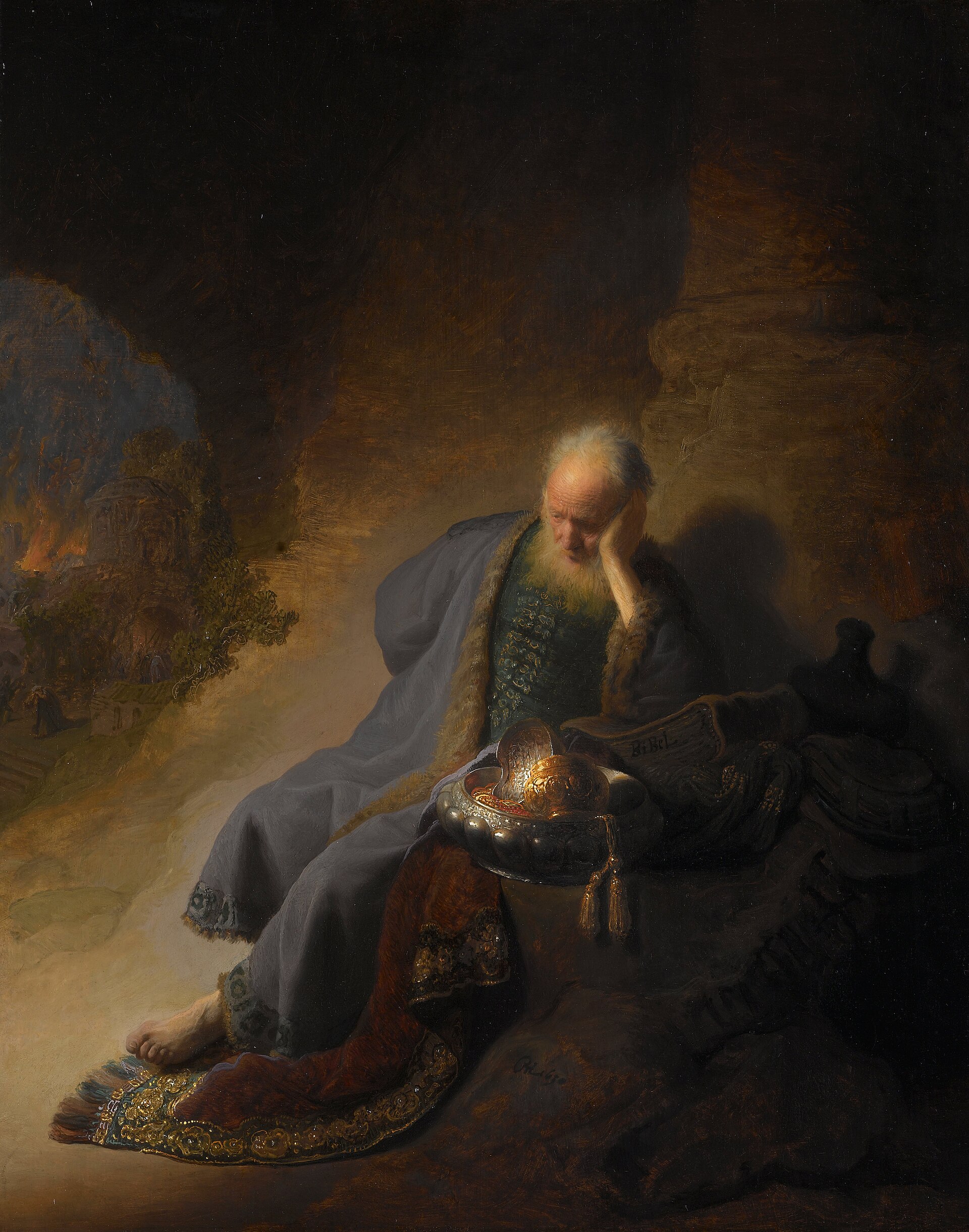
This page draws on Adam Clarke, Commentary on the Bible; Albert Barnes, Notes on the Old Testament; Carl Friedrich Keil, The Prophecies of Jeremiah; Charles Spurgeon, The Metropolitan Tabernacle Pulpit, Sermon No. 1032: “The Two Yokes” (lightly modernized text, CCEL edition); Jamieson, Fausset & Brown, Commentary Critical and Explanatory on the Whole Bible; Jerome, Commentary on Jeremiah; Jerome, Against Jovinianus 2.37 and John Gill, Exposition of the Old Testament (1748-1763).