
Jeremiah 14:17
in Jeremiah 14You are to speak this word to them: ‘My eyes overflow with tears; day and night they do not cease, for the virgin daughter of my people has been shattered by a crushing blow, a severely grievous wound.
BSB
The same verse in ASV and KJV ▾
ASV
And thou shalt say this word unto them, Let mine eyes run down with tears night and day, and let them not cease; for the virgin daughter of my people is broken with a great breach, with a very grievous wound.
KJV
Therefore thou shalt say this word unto them; Let mine eyes run down with tears night and day, and let them not cease: for the virgin daughter of my people is broken with a great breach, with a very grievous blow.
⋯
This verse in Jeremiah 14
Commentary
3 notes on this verseA commentator
Albert Barnes1798–1870
Notes, Explanatory and Practical, on the Old and New Testaments (1832-1869)
A message from God to the effect that the calamity would be so overwhelming as to cause perpetual weeping; it is set before the people under the representation of Jeremiah’s own sorrow. The virgin daughter of my people - The epithet testifies to God’s previous care of Judah. She had been as jealously guarded from other nations as virgins are in an oriental household (compare Son 4:12).
This site's exposition
Therefore thou shalt say this word unto them; Let mine eyes run down with tears
on Jeremiah 14:17-18
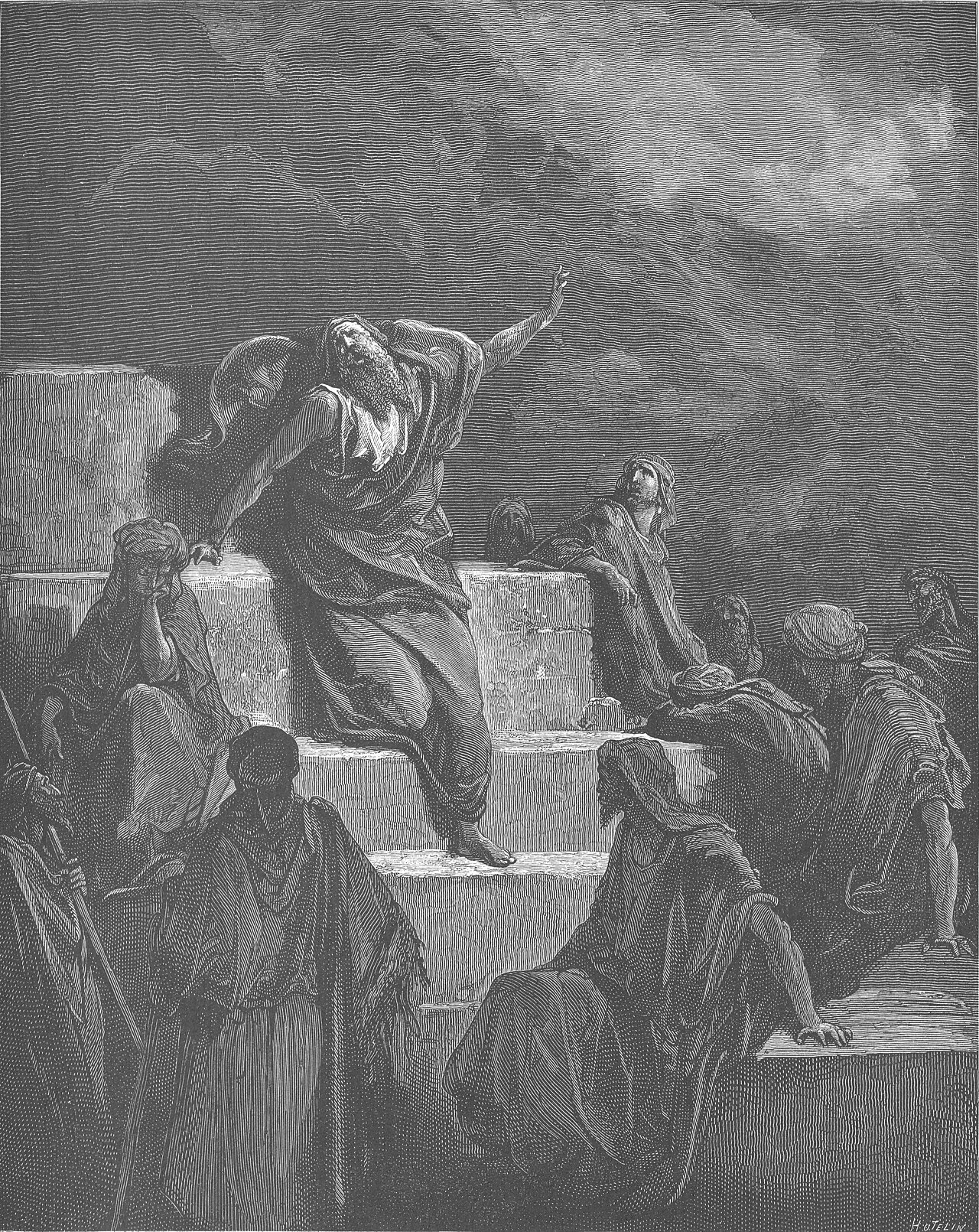
Jeremiah is commanded to weep, let mine eyes run down with tears night and day, and let them not cease, grief made part of the message rather than a private reaction to it. The virgin daughter of my people broken with a great breach names the wound in the tenderest possible term for a people the Lord still calls his own even as he judges them. The verse that follows sets the horror in both directions at once, the slain by the sword in the field and the sick with famine in the city, no refuge left in either place, prophet and priest alike wandering a land they no longer know.
The record, by era
The Nineteenth Century1 voice
A commentator
Jamieson, Fausset & Brown1802–1910
Commentary Critical and Explanatory on the Whole Bible (1871)
Jeremiah is desired to weep ceaselessly for the calamities coming on his nation (called a "virgin," as being heretofore never under foreign yoke), (Isa 23:4).
The words behind it
22 Hebrew wordsEvery Hebrew word of this verse in the order it stands, with what it means and the door to its own study. The last column counts the times a word stands in the whole Bible: the rarer the word, the more the places it appears belong together.
| Hebrew | Sound | Meaning | Word study | In the Bible |
|---|---|---|---|---|
| וְאָמַרְתָּ֤ | veamarta | and you will speak | H559 → | 5305 times |
| אֲלֵיהֶם֙ | ʾaleihem | to them | H413 → | 5510 times |
| אֶת־ | ʾet- | <obj.> | H853 → | 10935 times |
| הַדָּבָ֣ר | hadavar | the word | H1697 → | 1440 times |
| הַזֶּ֔ה | hazeh | <the> this | H2088 → | 1180 times |
| תֵּרַ֨דְנָה | teradnah | let them run down | H3381 → | 381 times |
| עֵינַ֥י | ʾeinai | eyes my | H5869 → | 887 times |
| דִּמְעָ֛ה | dimah | tear[s] | H1832 → | 23 times |
| לַ֥יְלָה | laylah | night | H3915 → | 233 times |
| וְיוֹמָ֖ם | veyomam | and by day | H3119 → | 50 times |
| וְאַל־ | veal- | and may not | H408 → | 724 times |
| תִּדְמֶ֑ינָה | tidmeinah | they cease | H1820 → | |
| כִּי֩ | ki | for | H3588 → | 4482 times |
| שֶׁ֨בֶר | shever | a breaking | H7667 → | 45 times |
| גָּד֜וֹל | gadol | great | H1419 → | 526 times |
| נִשְׁבְּרָ֗ה | nishberah | she has been broken | H7665 → | 147 times |
| בְּתוּלַת֙ | betulat | [the] virgin of | H1330 → | 50 times |
| בַּת־ | bat- | [the] daughter of | H1323 → | 588 times |
| עַמִּ֔י | ʾami | people my | H5971 → | 1873 times |
| מַכָּ֖ה | makah | a wound | H4347 → | 48 times |
| נַחְלָ֥ה | nachlah | made sick | H2470 → | 76 times |
| מְאֹֽד׃ | meod | very | H3966 → | 300 times |
וְאָמַרְתָּ֤and you will speak
veamartaH559 →5305 times
אֲלֵיהֶם֙to them
ʾaleihemH413 →5510 times
אֶת־<obj.>
ʾet-H853 →10935 times
הַדָּבָ֣רthe word
hadavarH1697 →1440 times
הַזֶּ֔ה<the> this
hazehH2088 →1180 times
תֵּרַ֨דְנָהlet them run down
teradnahH3381 →381 times
עֵינַ֥יeyes my
ʾeinaiH5869 →887 times
דִּמְעָ֛הtear[s]
dimahH1832 →23 times
לַ֥יְלָהnight
laylahH3915 →233 times
וְיוֹמָ֖םand by day
veyomamH3119 →50 times
וְאַל־and may not
veal-H408 →724 times
תִּדְמֶ֑ינָהthey cease
tidmeinahH1820 →
כִּי֩for
kiH3588 →4482 times
שֶׁ֨בֶרa breaking
sheverH7667 →45 times
גָּד֜וֹלgreat
gadolH1419 →526 times
נִשְׁבְּרָ֗הshe has been broken
nishberahH7665 →147 times
בְּתוּלַת֙[the] virgin of
betulatH1330 →50 times
בַּת־[the] daughter of
bat-H1323 →588 times
עַמִּ֔יpeople my
ʾamiH5971 →1873 times
מַכָּ֖הa wound
makahH4347 →48 times
נַחְלָ֥הmade sick
nachlahH2470 →76 times
מְאֹֽד׃very
meodH3966 →300 times
A shaded row is a word that stands 400 times or fewer in the Bible.
The walk
8 stopsEach card is a verse this one points to, and under it the verses that one points to in turn. Where several paths arrive at the same place, that place is listed first: the text keeps returning to it.
Through
Jeremiah 9:1Oh, that my head were a spring of water, and my eyes a fountain of tears! I would weep day and night over the slain daughter of my people.
it leads to
- Jeremiah 13:17
But if you do not listen, I will weep in secret because of your pride. My eyes will overflow with tears, because the LORD’s flock has been taken captive.
- Isaiah 22:4
Therefore I said, “Turn away from me, let me weep bitterly! Do not try to console me over the destruction of the daughter of my people.”
- Jeremiah 8:21–22
For the brokenness of the daughter of my people I am crushed. I mourn; horror has gripped me.
- Lamentations 2:11
My eyes fail from weeping; I am churning within. My heart is poured out in grief over the destruction of the daughter of my people, because children and infants faint in the streets of…
- Jeremiah 13:17
Through
Jeremiah 13:17But if you do not listen, I will weep in secret because of your pride. My eyes will overflow with tears, because the LORD’s flock has been taken captive.
it leads to
- Malachi 2:2
If you do not listen, and if you do not take it to heart to honor My name,” says the LORD of Hosts, “I will send a curse among you, and I will curse…
- Jeremiah 9:1
Oh, that my head were a spring of water, and my eyes a fountain of tears! I would weep day and night over the slain daughter of my people.
- Malachi 2:2
Through
Lamentations 2:13What can I say for you? To what can I compare you, O Daughter of Jerusalem? To what can I liken you, that I may console you, O Virgin Daughter of Zion? For your…
it leads to
- Lamentations 1:12
Is this nothing to you, all you who pass by? Look around and see! Is there any sorrow like mine, which was inflicted on me, which the LORD made me suffer on the day…
- Lamentations 1:12
Through
Jeremiah 8:21For the brokenness of the daughter of my people I am crushed. I mourn; horror has gripped me.
it leads to
- Joel 2:6
Nations writhe in horror before them; every face turns pale.
- Joel 2:6
Where this verse is studied
On this page
About Jeremiah
This page draws on Albert Barnes, Notes, Explanatory and Practical, on the Old and New Testaments (1832-1869); Jamieson, Fausset & Brown, Commentary Critical and Explanatory on the Whole Bible; John Calvin, Commentary on Jeremiah and Lamentations and Matthew Henry, Commentary on the Whole Bible.