
Isaiah 49:4
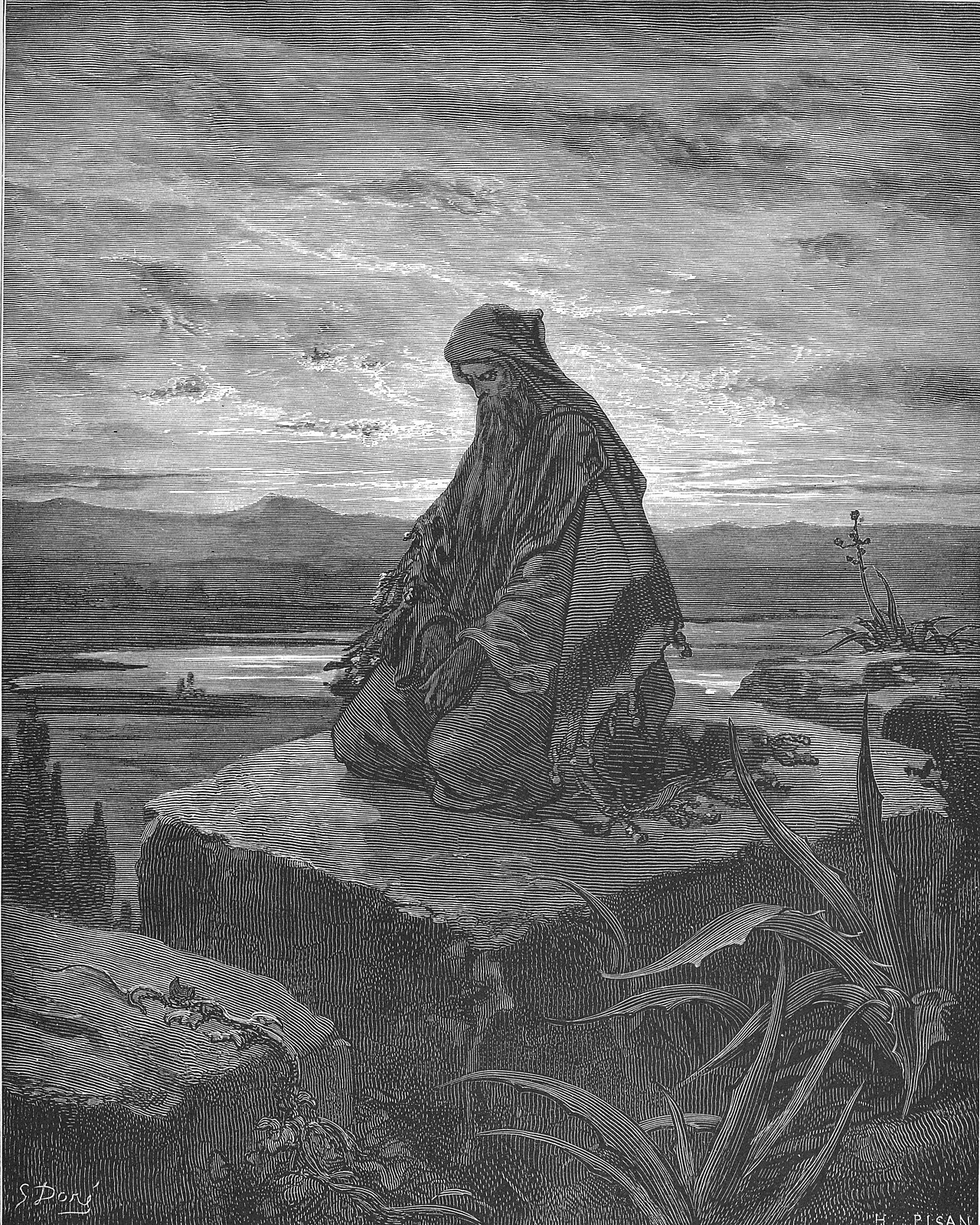
in Isaiah 49But I said, “I have labored in vain, I have spent My strength in futility and vanity; yet My vindication is with the LORD, and My reward is with My God.”
BSB
The same verse in ASV and KJV ▾
ASV
But I said, I have labored in vain, I have spent my strength for nought and vanity; yet surely the justice due to me is with Jehovah, and my recompense with my God.
KJV
Then I said, I have laboured in vain, I have spent my strength for nought, and in vain: yet surely my judgment is with the Lord, and my work with my God.
⋯
This verse in Isaiah 49
Commentary
12 notes on this verseFor it was a labor for the Word to come among us and to surrender himself to human fragility. But "my judgment" is the punishment of the Father that I [the Savior] have turned into a feast for their salvation. For that reason the judgment was taken away from him [the servant].
This site's exposition
I have laboured in vain
The servant answers his own call with a confession of apparent failure: I have laboured in vain, I have spent my strength for nought, and in vain. He does not stop there, and turns the verdict over to the Lord himself, yet surely my judgment is with the Lord, and my work with my God, a pattern the older writers find in every faithful ministry that looks unsuccessful by any count taken too soon. Matthew Henry reads the verse as the true servant's complaint answered by faith rather than by results.
The record, by era
The Church Fathers2 voices
(Chapter 49—Verse 1 onwards) Listen, O islands, and pay attention, O peoples from afar: The Lord called me from the womb; from the body of my mother he remembered my name. He made my mouth like a sharpened sword; in the shadow of his hand he protected me. He made me like a polished arrow; in his quiver he hid me away. And he said to me: You are my servant, Israel, in whom I will be glorified.
It is necessary to recognize that he says these things as a human. For in the holy Gospels Christ as a human makes a number of humble declarations. For instance, … "I do nothing from myself."
The Medieval Church1 voice
898. And I said. Here the Lord promises future benefits. And first, he promises exaltation to the prophet Isaiah; second, he promises liberation to the people: thus says the Lord the redeemer (Isa 49:7). Concerning the first, he does two things. First is set out …
The Puritans and the Awakening2 voices
His comfort is, and it may be the comfort of all faithful ministers, when they see little success of their labours, (1.) That, however it be, it is a righteous cause that they are pleading.
But this is directed to the isles (that is, the Gentiles, for they are called the isles of the Gentiles, Gen. x. 5 ) and to the people from far, that were strangers to the commonwealth of Israel, and afar off.
5 more voices on this verse
The Puritans and the Awakening3 voices
He is sent to the Gentiles with gracious promises, ver. 5-12. God's love to his church perpetual, ver. 13-17. The ample restoration of the church, and its enlargement, ver. 18-23.
quarantine:anchor (2026-07-29) — cites-ver-13/18-anchored-1-4
Then said I - Lord, thou sayest thou wilt be glorified by my ministry; but I find it otherwise. In vain - Without any considerable fruit of my word and works among the Israelites. My judgment - My right, the reward which by his promise, and my purchase, is my right.
Then I said,....
The Nineteenth Century2 voices
A commentator
Albert Barnes1798–1870
Notes, Explanatory and Practical, on the Old and New Testaments (1832-1869)
Then I said - I the Messiah. In the previous verses he speaks of his appointment to the office of Messiah, and of his dignity. The design here is to prepare the way for the announcement of the fact that he would make known his gospel to the pagan, and would be for a light to the Gentiles.
A commentator
Jamieson, Fausset & Brown1802–1910
Commentary Critical and Explanatory on the Whole Bible (1871)
proposed
Only a hundred twenty disciples met after His personal ministry was ended (Ac 1:15). yet . . . my judgment . . . with the Lord--Ultimately, God will do justice to My cause, and reward (Margin for "work," compare Isa 40:10; 62:11) My labors and sufferings. He was never "discouraged" (Isa 42:4;
quarantine:debris (2026-07-29) — unbalanced-parens
The words behind it
15 Hebrew wordsEvery Hebrew word of this verse in the order it stands, with what it means and the door to its own study. The last column counts the times a word stands in the whole Bible: the rarer the word, the more the places it appears belong together.
| Hebrew | Sound | Meaning | Word study | In the Bible |
|---|---|---|---|---|
| וַאֲנִ֤י | vaani | and I | H589 → | 874 times |
| אָמַ֙רְתִּי֙ | ʾamarti | I said | H559 → | 5305 times |
| לְרִ֣יק | lerik | to emptiness | H7385 → | 12 times |
| יָגַ֔עְתִּי | yaga'ti | I have labored | H3021 → | 26 times |
| לְתֹ֥הוּ | letohu | to nothingness | H8414 → | 20 times |
| וְהֶ֖בֶל | vehevel | and futility | H1892 → | 73 times |
| כֹּחִ֣י | kochi | strength my | H3581 → | 126 times |
| כִלֵּ֑יתִי | khileiti | I have caused to fail | H3615 → | 208 times |
| אָכֵן֙ | ʾakhen | nevertheless | H403 → | 18 times |
| מִשְׁפָּטִ֣י | mishpati | justice my | H4941 → | 422 times |
| אֶת־ | ʾet- | [is] with | H854 → | 929 times |
| יְהוָ֔ה | yahweh | Yahweh | H3068 → | 6520 times |
| וּפְעֻלָּתִ֖י | ufeulati | and recompense my | H6468 → | 14 times |
| אֶת־ | ʾet- | [is] with | H854 → | 929 times |
| אֱלֹהָֽי׃ | ʾelohai | God my | H430 → | 2601 times |
וַאֲנִ֤יand I
vaaniH589 →874 times
אָמַ֙רְתִּי֙I said
ʾamartiH559 →5305 times
לְרִ֣יקto emptiness
lerikH7385 →12 times
יָגַ֔עְתִּיI have labored
yaga'tiH3021 →26 times
לְתֹ֥הוּto nothingness
letohuH8414 →20 times
וְהֶ֖בֶלand futility
vehevelH1892 →73 times
כֹּחִ֣יstrength my
kochiH3581 →126 times
כִלֵּ֑יתִיI have caused to fail
khileitiH3615 →208 times
אָכֵן֙nevertheless
ʾakhenH403 →18 times
מִשְׁפָּטִ֣יjustice my
mishpatiH4941 →422 times
אֶת־[is] with
ʾet-H854 →929 times
יְהוָ֔הYahweh
yahwehH3068 →6520 times
וּפְעֻלָּתִ֖יand recompense my
ufeulatiH6468 →14 times
אֶת־[is] with
ʾet-H854 →929 times
אֱלֹהָֽי׃God my
ʾelohaiH430 →2601 times
A shaded row is a word that stands 400 times or fewer in the Bible.
The walk
8 stopsEach card is a verse this one points to, and under it the verses that one points to in turn. Where several paths arrive at the same place, that place is listed first: the text keeps returning to it.
Through
Isaiah 35:4Say to those with anxious hearts: “Be strong, do not fear! Behold, your God will come with vengeance. With divine retribution He will come to save you.”
it leads to
- James 5:7–9
Be patient, then, brothers, until the Lord’s coming. See how the farmer awaits the precious fruit of the soil—how patient he is for the fall and spring rains.
- Isaiah 41:10–14
Do not fear, for I am with you; do not be afraid, for I am your God. I will strengthen you; I will surely help you; I will uphold you with My right hand…
- Zephaniah 3:16–17
On that day they will say to Jerusalem: “Do not fear, O Zion; do not let your hands fall limp.
- Isaiah 34:8
For the LORD has a day of vengeance, a year of recompense for the cause of Zion.
- Haggai 2:4
But now be strong, O Zerubbabel, declares the LORD. Be strong, O Joshua son of Jehozadak, the high priest. And be strong, all you people of the land, declares the LORD. Work! For I…
- James 5:7–9
Through
Isaiah 65:23They will not labor in vain or bear children doomed to disaster; for they will be a people blessed by the LORD—they and their descendants with them.
it leads to
- Isaiah 61:9
Their descendants will be known among the nations, and their offspring among the peoples. All who see them will acknowledge that they are a people the LORD has blessed.
- Isaiah 61:9
Through
Matthew 17:17“O unbelieving and perverse generation!” Jesus replied. “How long must I remain with you? How long must I put up with you? Bring the boy here to Me.”
it leads to
- Numbers 14:11
And the LORD said to Moses, “How long will this people treat Me with contempt? How long will they refuse to believe in Me, despite all the signs I have performed among them?
- Matthew 6:30
If that is how God clothes the grass of the field, which is here today and tomorrow is thrown into the furnace, will He not much more clothe you, O you of little faith?
- Numbers 14:11
Where this verse is studied
On this page
Studies4
On this verse
About Isaiah
This page draws on 10 works. Open the list of works
This page draws on Albert Barnes, Notes, Explanatory and Practical, on the Old and New Testaments (1832-1869); Cyril of Alexandria, COMMENTARY ON ISAIAH 4:4.49:4; Jamieson, Fausset & Brown, Commentary Critical and Explanatory on the Whole Bible; Jerome, Commentary on Isaiah; John Gill, Exposition of the Old Testament; John Gill, Exposition of the Old Testament (1748-1763); John Wesley, Explanatory Notes upon the Old Testament; Matthew Henry, Commentary on the Whole Bible; Theodoret of Cyrus, COMMENTARY ON ISAIAH 15:49.4 and Thomas Aquinas, Commentary on Isaiah.