
Ezra 3:10
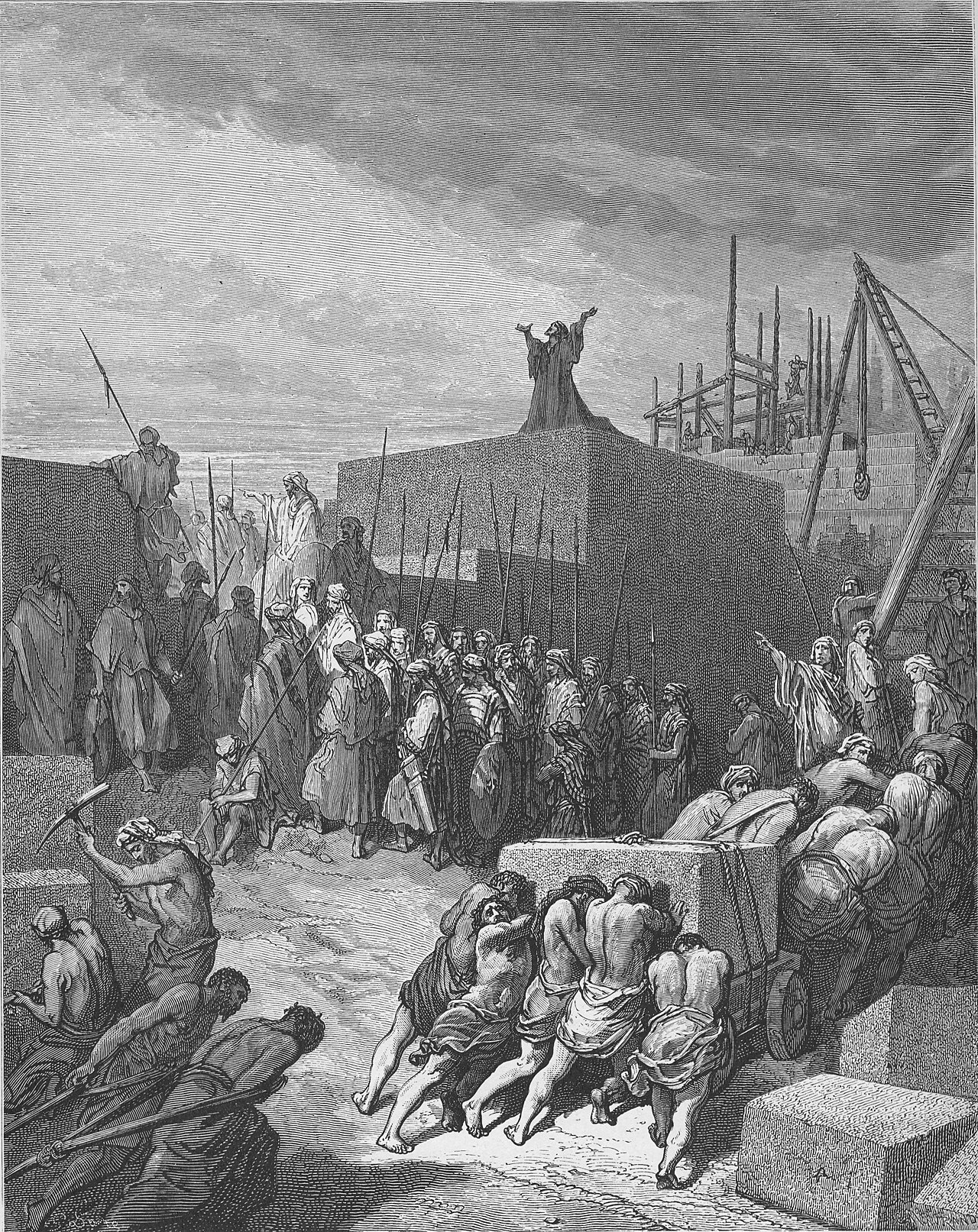
in Ezra 3When the builders had laid the foundation of the temple of the LORD, the priests in their apparel with trumpets, and the Levites (the sons of Asaph) with cymbals, took their positions to praise the LORD, as David king of Israel had prescribed.
BSB
The same verse in ASV and KJV ▾
ASV
And when the builders laid the foundation of the temple of Jehovah, they set the priests in their apparel with trumpets, and the Levites the sons of Asaph with cymbals, to praise Jehovah, after the order of David king of Israel.
KJV
And when the builders laid the foundation of the temple of the Lord, they set the priests in their apparel with trumpets, and the Levites the sons of Asaph with cymbals, to praise the Lord, after the ordinance of David king of Israel.
⋯
This verse in Ezra 3
Commentary
2 notes on this verseA commentator
Albert Barnes1798–1870
Notes, Explanatory and Practical, on the Old and New Testaments (1832-1869)
They set the priests - Or, according to another reading, “The priests stood.” The Levites the sons of Asaph - i. e., “such of the Levites as were descendants of Asaph.” It would seem as if no descendants of Heman or Jeduthun had returned.
This site's exposition
after the ordinance of David
on Ezra 3:10-11
When the builders lay the foundation, the priests take up their trumpets and the Levites of Asaph their cymbals, set in order after the ordinance of David king of Israel, the worship of the first house resumed under fewer hands and a leaner budget. They sing by course the refrain of 1 Chronicles 16:34, because he is good, for his mercy endureth for ever toward Israel, the same liturgy that once opened the ark's rest under David now opening a foundation stone under Persian rule. All the people answer with a great shout, so that praise rather than silence marks the first finished stage of the house.
The words behind it
21 Hebrew wordsEvery Hebrew word of this verse in the order it stands, with what it means and the door to its own study. The last column counts the times a word stands in the whole Bible: the rarer the word, the more the places it appears belong together.
| Hebrew | Sound | Meaning | Word study | In the Bible |
|---|---|---|---|---|
| וְיִסְּד֥וּ | veyisedu | and they founded | H3245 → | 43 times |
| הַבֹּנִ֖ים | habonim | the builders | H1129 → | 376 times |
| אֶת־ | ʾet- | <obj.> | H853 → | 10935 times |
| הֵיכַ֣ל | heikhal | [the] temple of | H1964 → | 80 times |
| יְהוָ֑ה | yahweh | Yahweh | H3068 → | 6520 times |
| וַיַּעֲמִידוּ֩ | vaiyaamidu | and they appointed | H5975 → | 521 times |
| הַכֹּהֲנִ֨ים | hakohanim | the priests | H3548 → | 750 times |
| מְלֻבָּשִׁ֜ים | melubashim | fully clothed | H3847 → | |
| בַּחֲצֹֽצְר֗וֹת | bachatzotzerot | with <the> trumpets | H2689 → | |
| וְהַלְוִיִּ֤ם | vehalviyim | and the Levites | H3881 → | 291 times |
| בְּנֵֽי־ | benei- | [the] sons of | H1121 → | 4930 times |
| אָסָף֙ | ʾasaf | Asaph | H623 → | |
| בַּֽמְצִלְתַּ֔יִם | bamtziltayim | with <the> cymbals | H4700 → | |
| לְהַלֵּל֙ | lehalel | to praise | H1984 → | 165 times |
| אֶת־ | ʾet- | <obj.> | H853 → | 10935 times |
| יְהוָ֔ה | yahweh | Yahweh | H3068 → | 6520 times |
| עַל־ | ʾal- | on | H5921 → | 5755 times |
| יְדֵ֖י | yedei | [the] hands of | H3027 → | 1618 times |
| דָּוִ֥יד | david | David | H1732 → | 999 times |
| מֶֽלֶךְ־ | melekh- | [the] king of | H4428 → | 2525 times |
| יִשְׂרָאֵֽל׃ | yisrael | Israel | H3478 → | 2507 times |
וְיִסְּד֥וּand they founded
veyiseduH3245 →43 times
הַבֹּנִ֖יםthe builders
habonimH1129 →376 times
אֶת־<obj.>
ʾet-H853 →10935 times
הֵיכַ֣ל[the] temple of
heikhalH1964 →80 times
יְהוָ֑הYahweh
yahwehH3068 →6520 times
וַיַּעֲמִידוּ֩and they appointed
vaiyaamiduH5975 →521 times
הַכֹּהֲנִ֨יםthe priests
hakohanimH3548 →750 times
מְלֻבָּשִׁ֜יםfully clothed
melubashimH3847 →
בַּחֲצֹֽצְר֗וֹתwith <the> trumpets
bachatzotzerotH2689 →
וְהַלְוִיִּ֤םand the Levites
vehalviyimH3881 →291 times
בְּנֵֽי־[the] sons of
benei-H1121 →4930 times
אָסָף֙Asaph
ʾasafH623 →
בַּֽמְצִלְתַּ֔יִםwith <the> cymbals
bamtziltayimH4700 →
לְהַלֵּל֙to praise
lehalelH1984 →165 times
אֶת־<obj.>
ʾet-H853 →10935 times
יְהוָ֔הYahweh
yahwehH3068 →6520 times
עַל־on
ʾal-H5921 →5755 times
יְדֵ֖י[the] hands of
yedeiH3027 →1618 times
דָּוִ֥ידDavid
davidH1732 →999 times
מֶֽלֶךְ־[the] king of
melekh-H4428 →2525 times
יִשְׂרָאֵֽל׃Israel
yisraelH3478 →2507 times
A shaded row is a word that stands 400 times or fewer in the Bible.
The walk
2 stopsEach card is a verse this one points to, and under it the verses that one points to in turn. Where several paths arrive at the same place, that place is listed first: the text keeps returning to it.
Through
1 Chronicles 15:27Now David was dressed in a robe of fine linen, as were all the Levites who were carrying the ark, as well as the singers and Chenaniah, the director of music for the singers.…
it leads to
- 1 Samuel 2:18
Now Samuel was ministering before the LORD—a boy wearing a linen ephod.
- 2 Samuel 6:14
And David, wearing a linen ephod, danced with all his might before the LORD,
- 1 Samuel 2:18
Where this verse is studied
On this page
Studies1
About Ezra
Who and where
2 names in this verse with a page on the site.
This page draws on Albert Barnes, Notes, Explanatory and Practical, on the Old and New Testaments (1832-1869); John Wesley, Explanatory Notes upon the Old Testament and Matthew Henry, Commentary on the Whole Bible.