
Ezra 3:2
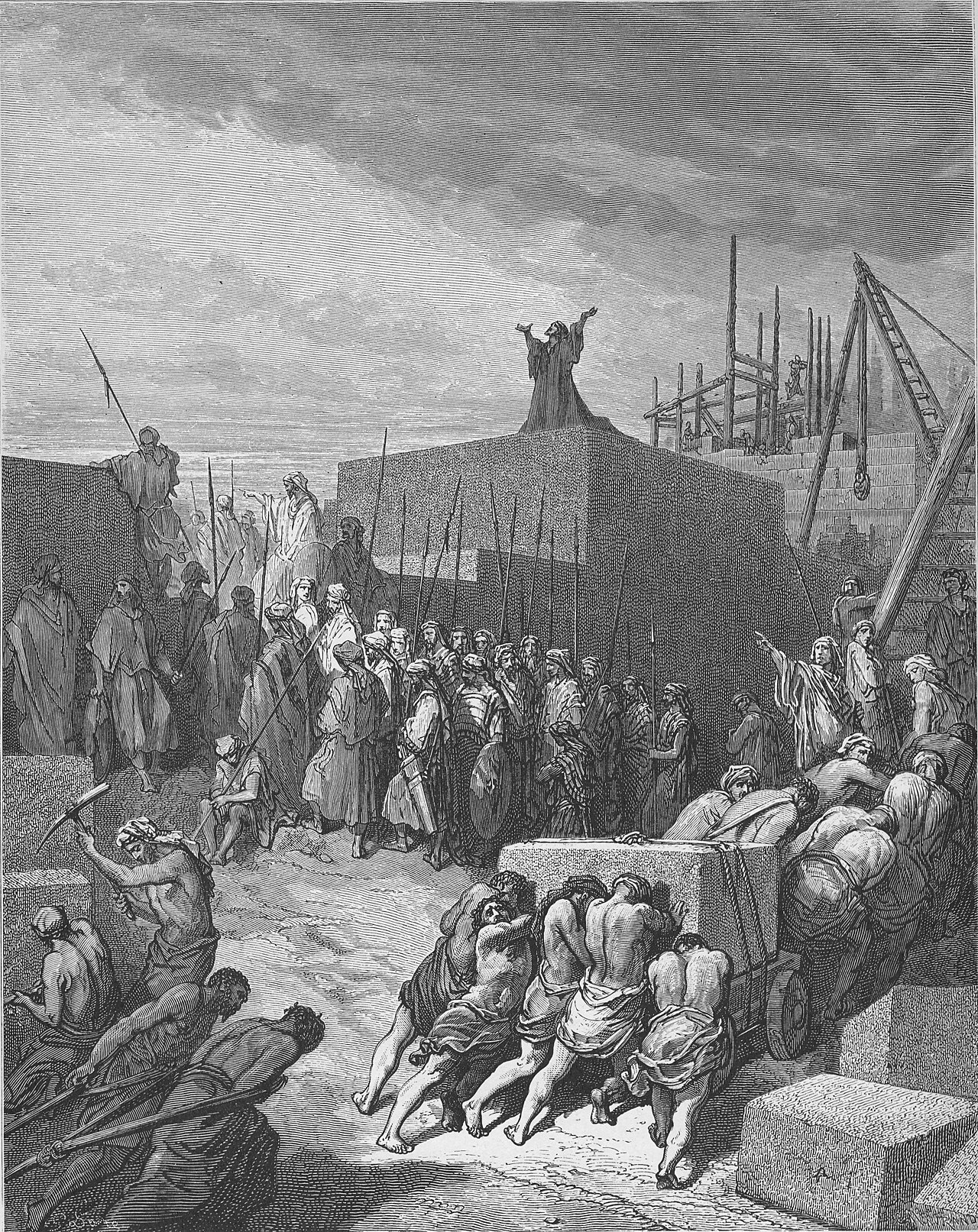
in Ezra 3Then Jeshua son of Jozadak and his fellow priests, along with Zerubbabel son of Shealtiel and his associates, began to build the altar of the God of Israel to sacrifice burnt offerings on it, as it is written in the Law of Moses the man of God.
BSB
The same verse in ASV and KJV ▾
ASV
Then stood up Jeshua the son of Jozadak, and his brethren the priests, and Zerubbabel the son of Shealtiel, and his brethren, and builded the altar of the God of Israel, to offer burnt-offerings thereon, as it is written in the law of Moses the man of God.
KJV
Then stood up Jeshua the son of Jozadak, and his brethren the priests, and Zerubbabel the son of Shealtiel, and his brethren, and builded the altar of the God of Israel, to offer burnt offerings thereon, as it is written in the law of Moses the man of God.
⋯
This verse in Ezra 3
Commentary
8 notes on this verseOr rather let them learn of you, who are so well instructed in such histories, how that Jeshua the son of Josedek the priest, and his brother, and Zerubbabel the wise, the son of Salathiel, and Ezra the priest and scribe of the law, as the temple was being built after the captivity, the feast of tabernacles being at hand (which was a great feast and time of assembly and prayer in Israel), gathered the people together with one accord in the great court within the first gate, which is toward the east, and prepared the altar to God, and there offered their gifts and kept the feast.
This site's exposition
the people assembled as one man
on Ezra 3:1-2
By the seventh month, the month of the Feast of Trumpets, the returned exiles assemble in Jerusalem before any stone of the temple is laid. Jeshua the priest and Zerubbabel the governor build the altar and offer burnt offerings on it, as it is written in the Law of Moses.
This site's exposition
Jeshua son of Jozadak
Adam Clarke traces Jeshua son of Jozadak to Seraiah, the high priest Nebuchadnezzar put to death at 2 Kings 25:18 and 21. Jeshua was his grandson and the first high priest after the captivity. The priestly line resumes where the exile cut it.
The record, by era
The Medieval Church1 voice
And Joshua, the son of Jozadak, arose, etc. For Joshua and Zerubbabel, both of whom, as we mentioned above, fulfill one and the same figure of our Lord and Savior, were engaged in the work of divine worship. Joshua conspicuously for the priesthood, Zerubbabel for …
The Puritans and the Awakening2 voices
Altar - Which was of more present necessity than the temple, both to make atonement to God for all their sins, and to obtain God's assistance for the building of the temple, and to strengthen their own hearts and hands in that great work.
Then stood up Jeshua the son of Jozadak,....
The Nineteenth Century2 voices
Jeshua the son of Jozadak - He was grandson of Seraiah the high priest, who was put to death by Nebuchadnezzar, 2Ki 25:18, 2Ki 25:21. This Jeshua or Joshua was the first high priest after the captivity.
A commentator
Albert Barnes1798–1870
Notes, Explanatory and Practical, on the Old and New Testaments (1832-1869)
proposed
Jeshua, the high priest, was the son of Jozadak, who was carried into captivity by Nebuchadnezzar 1Ch 6:15. Zerubbabel was really the son of Pedaiah, Shealtiel’s (or Salathiel’s) younger brother. But Shealtiel having no sons, and the royal line being continued in the person of his nephew, Zerubbabel, the latter was accounted Shealtiel’s son.
The words behind it
23 Hebrew wordsEvery Hebrew word of this verse in the order it stands, with what it means and the door to its own study. The last column counts the times a word stands in the whole Bible: the rarer the word, the more the places it appears belong together.
| Hebrew | Sound | Meaning | Word study | In the Bible |
|---|---|---|---|---|
| וַיָּקָם֩ | vaiyakam | and he arose | H6965 → | 628 times |
| יֵשׁ֨וּעַ | yeshua' | Jeshua | H3442 → | 29 times |
| בֶּן־ | ben- | [the] son of | H1121 → | 4930 times |
| יֽוֹצָדָ֜ק | yotzadak | Jozadak | H3136 → | 5 times |
| וְאֶחָ֣יו | veechav | and brothers his | H251 → | 630 times |
| הַכֹּהֲנִ֗ים | hakohanim | the priests | H3548 → | 750 times |
| וּזְרֻבָּבֶ֤ל | uzerubavel | and Zerubbabel | H2216 → | 21 times |
| בֶּן־ | ben- | [the] son of | H1121 → | 4930 times |
| שְׁאַלְתִּיאֵל֙ | shealtiel | Shealtiel | H7597 → | |
| וְאֶחָ֔יו | veechav | and brothers his | H251 → | 630 times |
| וַיִּבְנ֕וּ | vaiyivnu | and they rebuilt | H1129 → | 376 times |
| אֶת־ | ʾet- | <obj.> | H853 → | 10935 times |
| מִזְבַּ֖ח | mizbach | [the] altar of | H4196 → | |
| אֱלֹהֵ֣י | ʾelohei | [the] God of | H430 → | 2601 times |
| יִשְׂרָאֵ֑ל | yisrael | Israel | H3478 → | 2507 times |
| לְהַעֲל֤וֹת | lehaalot | to offer up | H5927 → | 890 times |
| עָלָיו֙ | ʾalav | on it | H5921 → | 5755 times |
| עֹל֔וֹת | olot | burnt offerings | H5930 → | 287 times |
| כַּכָּת֕וּב | kakatuv | according to <the> [what] is written | H3789 → | 224 times |
| בְּתוֹרַ֖ת | betorat | in [the] law of | H8451 → | 219 times |
| מֹשֶׁ֥ה | mosheh | Moses | H4872 → | |
| אִישׁ־ | ʾish- | [the] man of | H376 → | 1663 times |
| הָאֱלֹהִֽים׃ | haelohim | <the> God | H430 → | 2601 times |
וַיָּקָם֩and he arose
vaiyakamH6965 →628 times
יֵשׁ֨וּעַJeshua
yeshua'H3442 →29 times
בֶּן־[the] son of
ben-H1121 →4930 times
יֽוֹצָדָ֜קJozadak
yotzadakH3136 →5 times
וְאֶחָ֣יוand brothers his
veechavH251 →630 times
הַכֹּהֲנִ֗יםthe priests
hakohanimH3548 →750 times
וּזְרֻבָּבֶ֤לand Zerubbabel
uzerubavelH2216 →21 times
בֶּן־[the] son of
ben-H1121 →4930 times
שְׁאַלְתִּיאֵל֙Shealtiel
shealtielH7597 →
וְאֶחָ֔יוand brothers his
veechavH251 →630 times
וַיִּבְנ֕וּand they rebuilt
vaiyivnuH1129 →376 times
אֶת־<obj.>
ʾet-H853 →10935 times
מִזְבַּ֖ח[the] altar of
mizbachH4196 →
אֱלֹהֵ֣י[the] God of
ʾeloheiH430 →2601 times
יִשְׂרָאֵ֑לIsrael
yisraelH3478 →2507 times
לְהַעֲל֤וֹתto offer up
lehaalotH5927 →890 times
עָלָיו֙on it
ʾalavH5921 →5755 times
עֹל֔וֹתburnt offerings
olotH5930 →287 times
כַּכָּת֕וּבaccording to <the> [what] is written
kakatuvH3789 →224 times
בְּתוֹרַ֖תin [the] law of
betoratH8451 →219 times
מֹשֶׁ֥הMoses
moshehH4872 →
אִישׁ־[the] man of
ʾish-H376 →1663 times
הָאֱלֹהִֽים׃<the> God
haelohimH430 →2601 times
A shaded row is a word that stands 400 times or fewer in the Bible.
The walk
8 stopsEach card is a verse this one points to, and under it the verses that one points to in turn. Where several paths arrive at the same place, that place is listed first: the text keeps returning to it.
Through
Haggai 1:1In the second year of the reign of Darius, on the first day of the sixth month, the word of the LORD came through Haggai the prophet to Zerubbabel son of Shealtiel, governor of…
it leads to
- Ezra 3:8
In the second month of the second year after they had arrived at the house of God in Jerusalem, Zerubbabel son of Shealtiel, Jeshua son of Jozadak, and the rest of their associates including…
Reached by 2 separate paths from here.
- Ezra 2:2
accompanied by Zerubbabel, Jeshua, Nehemiah, Seraiah, Reelaiah, Mordecai, Bilshan, Mispar, Bigvai, Rehum, and Baanah. This is the count of the men of Israel:
- Haggai 2:10
On the twenty-fourth day of the ninth month, in the second year of Darius, the word of the LORD came to Haggai the prophet, saying,
- Ezra 3:8
Through
Ezra 2:2accompanied by Zerubbabel, Jeshua, Nehemiah, Seraiah, Reelaiah, Mordecai, Bilshan, Mispar, Bigvai, Rehum, and Baanah. This is the count of the men of Israel:
it leads to
- Nehemiah 7:7
accompanied by Zerubbabel, Jeshua, Nehemiah, Azariah, Raamiah, Nahamani, Mordecai, Bilshan, Mispereth, Bigvai, Nehum, and Baanah. This is the count of the men of Israel:
Reached by 2 separate paths from here.
- Haggai 1:12
Then Zerubbabel son of Shealtiel and Joshua son of Jehozadak, the high priest, as well as all the remnant of the people, obeyed the voice of the LORD their God and the words of…
Reached by 2 separate paths from here.
- Haggai 2:4
But now be strong, O Zerubbabel, declares the LORD. Be strong, O Joshua son of Jehozadak, the high priest. And be strong, all you people of the land, declares the LORD. Work! For I…
- Haggai 1:14
So the LORD stirred the spirit of Zerubbabel son of Shealtiel, governor of Judah, and the spirit of Joshua son of Jehozadak, the high priest, as well as the spirit of all the remnant…
- Nehemiah 7:7
Through
Luke 3:27the son of Joanan, the son of Rhesa, the son of Zerubbabel, the son of Shealtiel, the son of Neri,
it leads to
- Matthew 1:12
After the exile to Babylon: Jeconiah was the father of Shealtiel, Shealtiel the father of Zerubbabel,
Reached by 2 separate paths from here.
- Matthew 1:12
Where this verse is studied
About Ezra
Who and where
2 names in this verse with a page on the site.
This page draws on Adam Clarke, Commentary on the Bible; Albert Barnes, Notes, Explanatory and Practical, on the Old and New Testaments (1832-1869); Athanasius of Alexandria, DEFENSE BEFORE CONSTANTIUS 18; Bede, Commentary on Ezra and Nehemiah; John Gill, Exposition of the Old Testament (1748-1763); John Wesley, Explanatory Notes upon the Old Testament and Matthew Henry, Commentary on the Whole Bible.