
Ezra 3:9
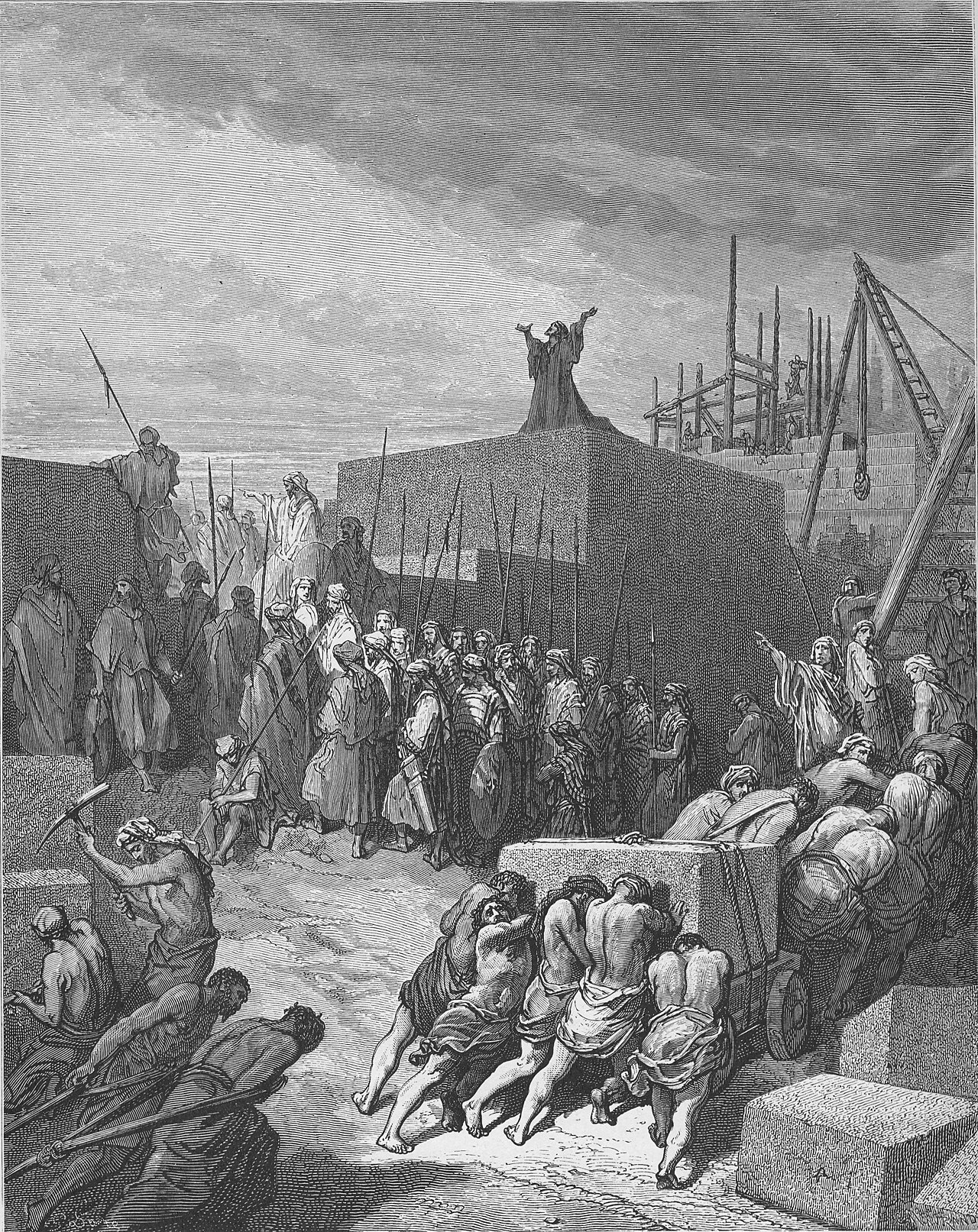
in Ezra 3So Jeshua and his sons and brothers, Kadmiel and his sons (descendants of Yehudah), and the sons of Henadad and their sons and brothers—all Levites—joined together to supervise those working on the house of God.
BSB
The same verse in ASV and KJV ▾
ASV
Then stood Jeshua with his sons and his brethren, Kadmiel and his sons, the sons of Judah, together, to have the oversight of the workmen in the house of God: the sons of Henadad, with their sons and their brethren the Levites.
KJV
Then stood Jeshua with his sons and his brethren, Kadmiel and his sons, the sons of Judah, together, to set forward the workmen in the house of God: the sons of Henadad, with their sons and their brethren the Levites.
⋯
This verse in Ezra 3
Commentary
9 notes on this verseWhen Jerusalem was demolished by Nebuchadnezzar, the kingdom was destroyed, and no longer were there hereditary successions to the sovereignty as formerly; at that time, moreover, being out of power, the posterity of David were living in captivity. But, when the followers of Salathiel and Zerubbabel returned, they led the people more democratically, transferring the rule henceforth to the priesthood because of the intermingling of the priestly and royal tribes.
This site's exposition
Levites twenty years of age or older
on Ezra 3:8-9
The leaders appoint Levites twenty years of age or older to supervise the work. That is the age David set in 1 Chronicles 23:24 and 27, lower than the thirty years of Numbers 4. A Levite named Jeshua, a different man from Jeshua son of Jozadak, supervises with Kadmiel.
This site's exposition
descendants of Yehudah
The descendants of Yehudah are a Levite family, which John Gill identifies with the Hodaviah of the register at 2:40. Albert Barnes reads the Hebrew behind joined together as emphatic, they stood up as one man. Gill notes two sons of Henadad named again at Nehemiah 3:18.
The record, by era
The Medieval Church1 voice
And Joshua stood and his sons, etc. In this place, Joshua does not refer to the son of Josedek, the high priest, but to one of the Levites, of whom it had been foretold that they would be appointed from twenty years old and above …
The Puritans and the Awakening3 voices
Then stood Jeshua, with his sons,.... Not Jeshua the high priest before mentioned, but Jeshua the Levite, Ezr 2:40, and his brethren, Kadmiel and his sons, the sons of Judah, together; the same with Hodaviah, Ezr 2:40 to set forward the workmen in the house of God; to give them orders to begin and lay the foundation, and hasten and animate them to it: the sons of Henadad, with their sons and their brethren the Levites: two of this man's sons are mentioned in Neh 3:18.
), and strengthening their hands with good and comfortable words. Note, Those that do not work themselves may yet do good service by quickening and encouraging those that do work. How God was praised at the laying of the foundation of the temple (
quarantine:debris (2026-07-29) — leading-punctuation
This was the day of small things, which was not to be despised, Zech. iv. The Renewal of the Sacrifices. 1 And when the seventh month was come, and the children of Israel were in the cities, the people gathered themselves together as one man to Jerusalem.
quarantine:scripture (2026-07-29) — verbatim-run:26w-of-46
The Nineteenth Century1 voice
A commentator
Albert Barnes1798–1870
Notes, Explanatory and Practical, on the Old and New Testaments (1832-1869)
Jeshua - See the marginal reference. Not the high priest, but the head of one of the two Levitical houses which had returned. Together - The Hebrew phrase is very emphatic - “they stood up as one man.”
1 more voice on this verse
The Nineteenth Century1 voice
A commentator
Jamieson, Fausset & Brown1802–1910
Commentary Critical and Explanatory on the Whole Bible (1871)
proposed
Jeshua with his sons--not the high priest, but a Levite (Ezr 2:40). To these, as probably distinguished for their mechanical skill and taste, the duty of acting as overseers was particularly committed.
The words behind it
20 Hebrew wordsEvery Hebrew word of this verse in the order it stands, with what it means and the door to its own study. The last column counts the times a word stands in the whole Bible: the rarer the word, the more the places it appears belong together.
| Hebrew | Sound | Meaning | Word study | In the Bible |
|---|---|---|---|---|
| וַיַּעֲמֹ֣ד | vaiyaamod | and he stood | H5975 → | 521 times |
| יֵשׁ֡וּעַ | yeshua' | Jeshua | H3442 → | 29 times |
| בָּנָ֣יו | banav | sons his | H1121 → | 4930 times |
| וְ֠אֶחָיו | veechav | and brothers his | H251 → | 630 times |
| קַדְמִיאֵ֨ל | kadmiel | Kadmiel | H6934 → | |
| וּבָנָ֤יו | uvanav | and sons his | H1121 → | 4930 times |
| בְּנֵֽי־ | benei- | [the] sons of | H1121 → | 4930 times |
| יְהוּדָה֙ | yehudah | Judah | H3063 → | 819 times |
| כְּאֶחָ֔ד | keechad | as one | H259 → | 971 times |
| לְנַצֵּ֛חַ | lenatzeach | to act as overseers | H5329 → | |
| עַל־ | ʾal- | over | H5921 → | 5755 times |
| עֹשֵׂ֥ה | ʾoseh | [the] doer of | H6213 → | 2628 times |
| הַמְּלָאכָ֖ה | hamelakhah | the work | H4399 → | 167 times |
| בְּבֵ֣ית | beveit | on [the] house of | H1004 → | 2046 times |
| הָאֱלֹהִ֑ים ס | haelohim | <the> God | H430 → | 2601 times |
| בְּנֵי֙ | benei | [the] sons of | H1121 → | 4930 times |
| חֵֽנָדָ֔ד | chenadad | Henadad | H2582 → | |
| בְּנֵיהֶ֥ם | beneihem | sons their | H1121 → | 4930 times |
| וַאֲחֵיהֶ֖ם | vaacheihem | and brothers their | H251 → | 630 times |
| הַלְוִיִּֽם׃ | halviyim | the Levites | H3881 → | 291 times |
וַיַּעֲמֹ֣דand he stood
vaiyaamodH5975 →521 times
יֵשׁ֡וּעַJeshua
yeshua'H3442 →29 times
בָּנָ֣יוsons his
banavH1121 →4930 times
וְ֠אֶחָיוand brothers his
veechavH251 →630 times
קַדְמִיאֵ֨לKadmiel
kadmielH6934 →
וּבָנָ֤יוand sons his
uvanavH1121 →4930 times
בְּנֵֽי־[the] sons of
benei-H1121 →4930 times
יְהוּדָה֙Judah
yehudahH3063 →819 times
כְּאֶחָ֔דas one
keechadH259 →971 times
לְנַצֵּ֛חַto act as overseers
lenatzeachH5329 →
עַל־over
ʾal-H5921 →5755 times
עֹשֵׂ֥ה[the] doer of
ʾosehH6213 →2628 times
הַמְּלָאכָ֖הthe work
hamelakhahH4399 →167 times
בְּבֵ֣יתon [the] house of
beveitH1004 →2046 times
הָאֱלֹהִ֑ים ס<the> God
haelohimH430 →2601 times
בְּנֵי֙[the] sons of
beneiH1121 →4930 times
חֵֽנָדָ֔דHenadad
chenadadH2582 →
בְּנֵיהֶ֥םsons their
beneihemH1121 →4930 times
וַאֲחֵיהֶ֖םand brothers their
vaacheihemH251 →630 times
הַלְוִיִּֽם׃the Levites
halviyimH3881 →291 times
A shaded row is a word that stands 400 times or fewer in the Bible.
The walk
7 stopsEach card is a verse this one points to, and under it the verses that one points to in turn. Where several paths arrive at the same place, that place is listed first: the text keeps returning to it.
Through
Ezra 3:8In the second month of the second year after they had arrived at the house of God in Jerusalem, Zerubbabel son of Shealtiel, Jeshua son of Jozadak, and the rest of their associates including…
it leads to
- Ezra 4:3
But Zerubbabel, Jeshua, and the other heads of the families of Israel replied, “You have no part with us in building a house for our God, since we alone must build it for the…
- 1 Chronicles 23:4
“Of these,” said David, “24,000 are to oversee the work of the house of the LORD, 6,000 are to be officers and judges,
- 1 Chronicles 23:24–32
These were the descendants of Levi by their families—the heads of families, registered individually by name—those twenty years of age or older who worked in the service of the house of the LORD.
- Numbers 4:3
men from thirty to fifty years old—everyone who is qualified to serve in the work at the Tent of Meeting.
- Ezra 4:3
Through
Nehemiah 7:43The Levites: the descendants of Jeshua (through Kadmiel, through the line of Hodevah), 74.
it leads to
- Ezra 2:40
The Levites: the descendants of Jeshua and Kadmiel (through the line of Hodaviah), 74.
- Nehemiah 3:9
Next to them, Rephaiah son of Hur, ruler of a half-district of Jerusalem, made repairs;
- Ezra 2:40
Through
Ezra 2:40The Levites: the descendants of Jeshua and Kadmiel (through the line of Hodaviah), 74.
it leads to
- Nehemiah 7:43
The Levites: the descendants of Jeshua (through Kadmiel, through the line of Hodevah), 74.
- Nehemiah 7:43
Where this verse is studied
On this page
Studies5
About Ezra
This page draws on 9 works. Open the list of works
This page draws on Albert Barnes, Notes, Explanatory and Practical, on the Old and New Testaments; Albert Barnes, Notes, Explanatory and Practical, on the Old and New Testaments (1832-1869); Basil of Caesarea, LETTER 236.2; Bede, Commentary on Ezra and Nehemiah; Jamieson Fausset and Brown, Commentary Critical and Explanatory on the Whole Bible; Jamieson, Fausset & Brown, Commentary Critical and Explanatory on the Whole Bible; John Gill, Exposition of the Old Testament; John Gill, Exposition of the Old Testament (1748-1763) and Matthew Henry, Commentary on the Whole Bible.