
Ezekiel 14:12
in Ezekiel 14And the word of the LORD came to me, saying,
BSB
The same verse in ASV and KJV ▾
ASV
And the word of Jehovah came unto me, saying,
KJV
The word of the Lord came again to me, saying,
⋯
This verse in Ezekiel 14
Commentary
4 notes on this verseThe word of the Lord came again unto saying. At the same time as before, continuing the prophecy, and a denunciation of judgments; for it does not seem to begin a new prophecy. The Targum renders it, the word of prophecy from the Lord.
This site's exposition
The word of the Lord came again to me, saying,
on Ezekiel 14:12-14
A new oracle begins with a case in principle, a land that sins grievously and is judged by famine, and the Lord names three men whose righteousness could deliver only their own souls, Noah, Daniel, and Job. Daniel here stands as Ezekiel's own contemporary, a young man already renowned in Babylon for integrity, named twice more in this book and once again at 28:3, a living reputation rather than a distant memory. Gill notes the deliberate pairing of two ancient patriarchal figures with a man still alive in exile, making the point that not even present, proven righteousness averts a judgment aimed at a whole land.
The record, by era
The Nineteenth Century2 voices
A commentator
Albert Barnes1798–1870
Notes, Explanatory and Practical, on the Old and New Testaments (1832-1869)
Jer. 14; 15 is a remarkable parallel to this prophecy. Here, as elsewhere, Ezekiel is commissioned to deliver to the exiles the same message which Jeremiah conveys to the inhabitants of Judaea. The answer discovers the nature of the questions which had been expressed or implied. (1) Can God cast out a people who are holy unto Himself? (2) Is it just to punish them with utter desolation? The prophet answers: (1) That when a people is so corrupt as to call down national judgment, individual piety shall save none but the individuals themselves.
A commentator
Jamieson, Fausset & Brown1802–1910
Commentary Critical and Explanatory on the Whole Bible (1871)
God had told Jeremiah that the guilt of Judah was too great to be pardoned even for the intercession of Moses and Samuel (Ps 99:6; 15:1), which had prevailed formerly (Ex 32:11-14; 1Sa 7:8-12), implying the extraordinary heinousness of their guilt, since in ordinary cases "the effectual fervent prayer of a righteous man (for others) availeth much" (Jas 5:16).
The words behind it
5 Hebrew wordsEvery Hebrew word of this verse in the order it stands, with what it means and the door to its own study. The last column counts the times a word stands in the whole Bible: the rarer the word, the more the places it appears belong together.
| Hebrew | Sound | Meaning | Word study | In the Bible |
|---|---|---|---|---|
| וַיְהִ֥י | vayhi | and it came | H1961 → | 3559 times |
| דְבַר־ | devar- | [the] word of | H1697 → | 1440 times |
| יְהוָ֖ה | yahweh | Yahweh | H3068 → | 6520 times |
| אֵלַ֥י | ʾelai | to me | H413 → | 5510 times |
| לֵאמֹֽר׃ | lemor | <to> saying | H559 → | 5305 times |
וַיְהִ֥יand it came
vayhiH1961 →3559 times
דְבַר־[the] word of
devar-H1697 →1440 times
יְהוָ֖הYahweh
yahwehH3068 →6520 times
אֵלַ֥יto me
ʾelaiH413 →5510 times
לֵאמֹֽר׃<to> saying
lemorH559 →5305 times
A shaded row is a word that stands 400 times or fewer in the Bible.
About Ezekiel
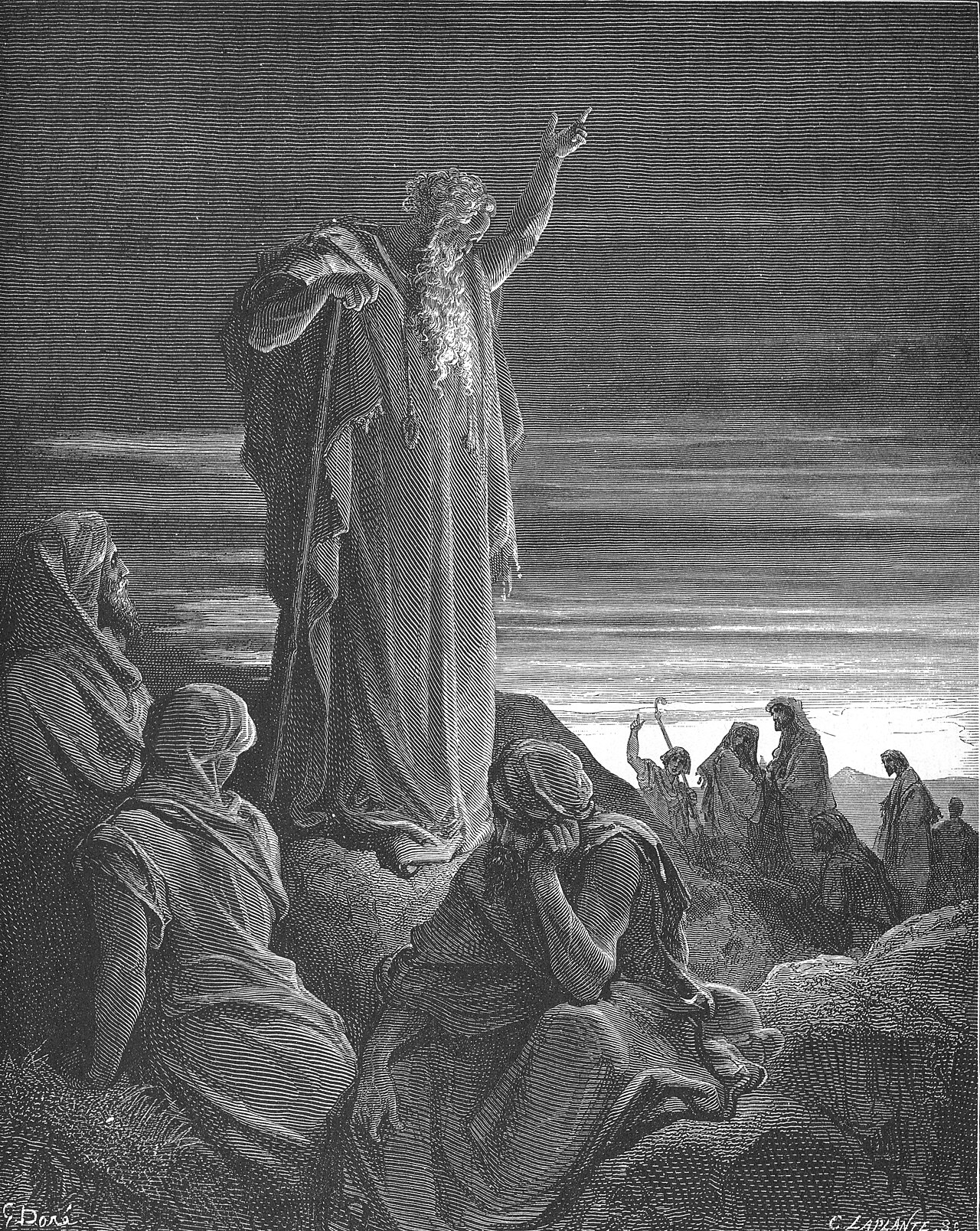
This page draws on Albert Barnes, Notes, Explanatory and Practical, on the Old and New Testaments (1832-1869); Carl Friedrich Keil, Biblical Commentary on the Prophecies of Ezekiel; Jamieson, Fausset & Brown, Commentary Critical and Explanatory on the Whole Bible; John Gill, Exposition of the Old Testament (1748-1763) and John Gill, Exposition of the Old Testament.