
Ezekiel 8:14
in Ezekiel 8Then He brought me to the entrance of the north gate of the house of the LORD, and I saw women sitting there, weeping for Tammuz.
BSB
The same verse in ASV and KJV ▾
ASV
Then he brought me to the door of the gate of Jehovah’s house which was toward the north; and behold, there sat the women weeping for Tammuz.
KJV
Then he brought me to the door of the gate of the Lord’s house which was toward the north; and, behold, there sat women weeping for Tammuz.
⋯
This verse in Ezekiel 8
Commentary
5 notes on this verseThen he brought me to the door of the gate of the Lord's house, which was towards the north,.... By "the Lord's house" no doubt is meant the temple, which the Targum here calls the house of the sanctuary of the Lord; that gate of the temple (for the temple had several gates) which was to the north was the gate called Teri or Tedi, and was very little used (y).
This site's exposition
there sat women weeping for Tammuz
on Ezekiel 8:14-15
At the north gate of the Lord's own house sit women weeping for Tammuz, the Babylonian and Sumerian fertility god mourned in an annual rite for his descent to the underworld, a foreign cult of death and renewal practiced at the door of the house built for the living God. The commentators note the location as the point, not a private grove but the gate of the Lord's house itself, and the fourth summons, greater abominations than these, promises a still deeper compromise ahead. Clarke identifies Tammuz with the Adonis of Greek myth, a mourning rite the ancient world knew widely and Judah had adopted rather than invented.
The record, by era
The Church Fathers1 voice
on Ezekiel 8:13-14
(Verse 13, 14). And he said to me: You will still see greater abominations that they (or these) do. And he brought me through the entrance of the gate of the house of the Lord, which faced north; and behold, there were women sitting there, mourning for Adonis. Whom we interpret as Adonis, and in the Hebrew and Syriac languages is called Thamuz.
The Puritans and the Awakening1 voice
Yet such absurdities as these are those guilty of who follow after lying vanities and forsake their own mercies. Some think it was for Adonis, an idol among the Greeks, other for Osiris, an idol of the Egyptians, that they shed these tears. The image, they say, was made to weep, and then the worshippers wept with it.
The Nineteenth Century1 voice
There sat women weeping for Tammuz - This was Adonis, as we have already seen; and so the Vulgate here translates. My old MS. Bible reads, There saten women, mornynge a mawmete of lecherye that is cleped Adonrdes. He is fabled to have been a beautiful youth beloved by Venus, and killed by a wild boar in Mount Lebanon, whence springs the river Adonis, which was fabled to run blood at his festival in August.
How the passage was read
What the Jewish commentators add
to the entrance of the gate of the house of the Lord Within the inner space of the courtyard [that led] to the entrance of the heichal that is in the north, for the master [R.
This section is reception history: how the passage was read and kept in the Jewish tradition. Where a reading parts from an essential of the Christian faith, the section says so at that point.
Texts and citation data: Sefaria; each excerpt follows its version’s licence. 6 further sources are cited on this chapter that carry no English text this site may quote or only restate the verse.
The words behind it
17 Hebrew wordsEvery Hebrew word of this verse in the order it stands, with what it means and the door to its own study. The last column counts the times a word stands in the whole Bible: the rarer the word, the more the places it appears belong together.
| Hebrew | Sound | Meaning | Word study | In the Bible |
|---|---|---|---|---|
| וַיָּבֵ֣א | vaiyave' | and he brought | H935 → | 2568 times |
| אֹתִ֗י | ʾoti | <obj.> me | H853 → | 10935 times |
| אֶל־ | ʾel- | to | H413 → | 5510 times |
| פֶּ֙תַח֙ | petach | [the] entrance of | H6607 → | 164 times |
| שַׁ֣עַר | shaar | [the] gate of | H8179 → | 374 times |
| בֵּית־ | beit- | [the] house of | H1004 → | 2046 times |
| יְהוָ֔ה | yahweh | Yahweh | H3068 → | 6520 times |
| אֲשֶׁ֖ר | ʾasher | which | H834 → | 5497 times |
| אֶל־ | ʾel- | [was] to | H413 → | 5510 times |
| הַצָּפ֑וֹנָה | hatzafonah | the north towards | H6828 → | 153 times |
| וְהִנֵּה־ | vehineh- | and there! | H2009 → | 843 times |
| שָׁם֙ | sham | there | H8033 → | 834 times |
| הַנָּשִׁ֣ים | hanashim | the women | H802 → | 781 times |
| יֹֽשְׁב֔וֹת | yoshevot | [were] sitting | H3427 → | 1079 times |
| מְבַכּ֖וֹת | mevakot | bewailing | H1058 → | 114 times |
| אֶת־ | ʾet- | <obj.> | H853 → | 10935 times |
| הַתַּמּֽוּז׃ ס | hatamuz | <the> Tammuz | H8542 → |
וַיָּבֵ֣אand he brought
vaiyave'H935 →2568 times
אֹתִ֗י<obj.> me
ʾotiH853 →10935 times
אֶל־to
ʾel-H413 →5510 times
פֶּ֙תַח֙[the] entrance of
petachH6607 →164 times
שַׁ֣עַר[the] gate of
shaarH8179 →374 times
בֵּית־[the] house of
beit-H1004 →2046 times
יְהוָ֔הYahweh
yahwehH3068 →6520 times
אֲשֶׁ֖רwhich
ʾasherH834 →5497 times
אֶל־[was] to
ʾel-H413 →5510 times
הַצָּפ֑וֹנָהthe north towards
hatzafonahH6828 →153 times
וְהִנֵּה־and there!
vehineh-H2009 →843 times
שָׁם֙there
shamH8033 →834 times
הַנָּשִׁ֣יםthe women
hanashimH802 →781 times
יֹֽשְׁב֔וֹת[were] sitting
yoshevotH3427 →1079 times
מְבַכּ֖וֹתbewailing
mevakotH1058 →114 times
אֶת־<obj.>
ʾet-H853 →10935 times
הַתַּמּֽוּז׃ ס<the> Tammuz
hatamuzH8542 →
A shaded row is a word that stands 400 times or fewer in the Bible.
The walk
8 stopsEach card is a verse this one points to, and under it the verses that one points to in turn. Where several paths arrive at the same place, that place is listed first: the text keeps returning to it.
Through
Ezekiel 46:9When the people of the land come before the LORD at the appointed feasts, whoever enters by the north gate to worship must go out by the south gate, and whoever enters by the…
it leads to
- Deuteronomy 16:16
Three times a year all your men are to appear before the LORD your God in the place He will choose: at the Feast of Unleavened Bread, the Feast of Weeks, and the Feast…
- Psalms 84:7
They go from strength to strength, until each appears before God in Zion.
- Exodus 34:23
Three times a year all your males are to appear before the Lord GOD, the God of Israel.
- Deuteronomy 16:16
Through
Ezekiel 44:4Then the man brought me to the front of the temple by way of the north gate. I looked and saw the glory of the LORD filling His temple, and I fell facedown.
it leads to
- Ezekiel 1:28
The appearance of the brilliant light all around Him was like that of a rainbow in a cloud on a rainy day. This was the appearance of the likeness of the glory of the…
- Ezekiel 3:23
So I got up and went out to the plain, and behold, the glory of the LORD was present there, like the glory I had seen by the River Kebar, and I fell facedown.
- Revelation 1:17
When I saw Him, I fell at His feet like a dead man. But He placed His right hand on me and said, “Do not be afraid. I am the First and the Last,
- Ezekiel 40:20
He also measured the length and width of the gateway of the outer court facing north.
- Ezekiel 43:3–5
The vision I saw was like the vision I had seen when He came to destroy the city and like the visions I had seen by the River Kebar. I fell facedown,
- Ezekiel 1:28
Where this verse is studied
On this page
About Ezekiel
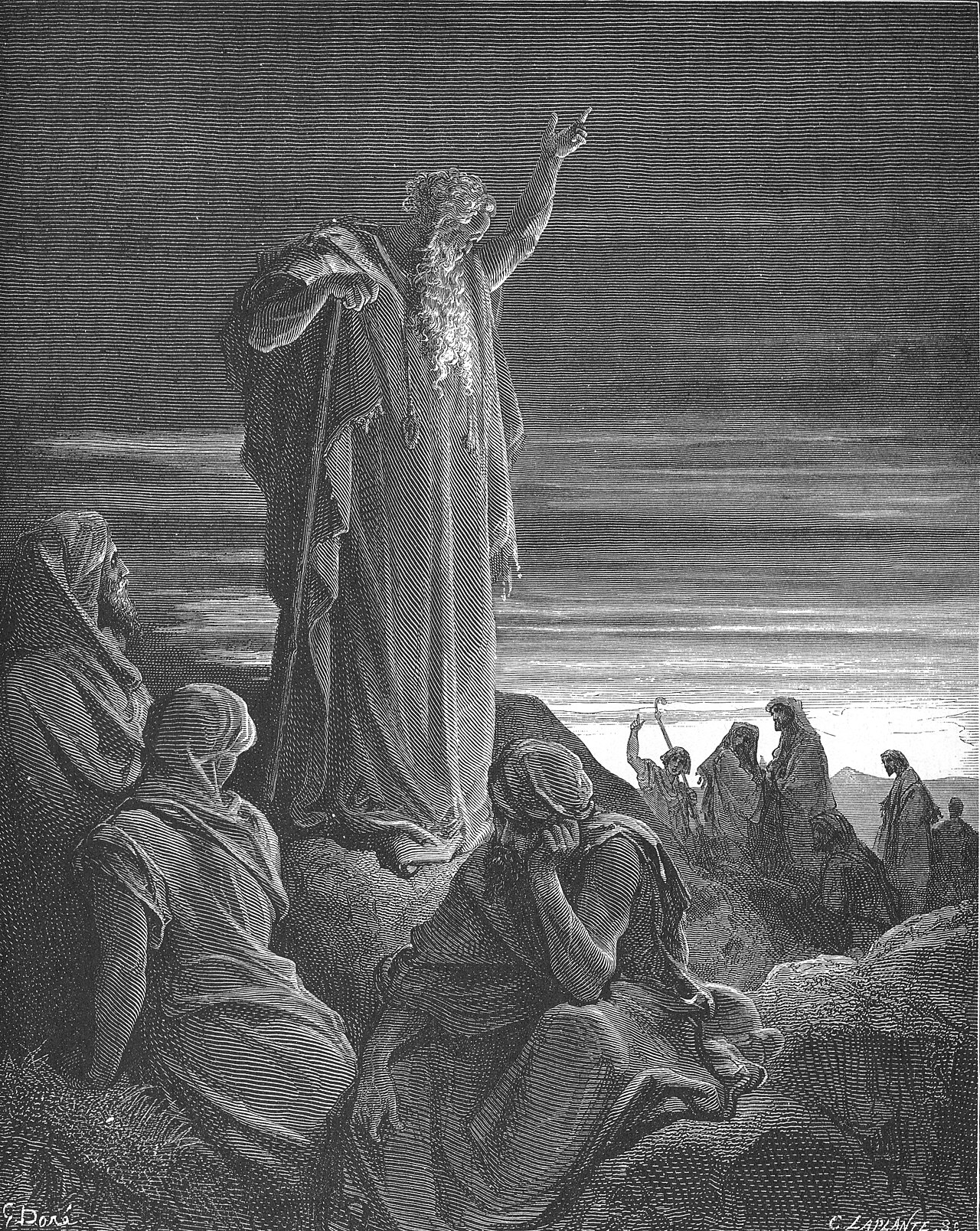
This page draws on Adam Clarke, Commentary on the Bible; Jerome, Commentary on Ezekiel; John Gill, Exposition of the Old Testament (1748-1763) and Matthew Henry, Commentary on the Whole Bible.