
Esther 2:14
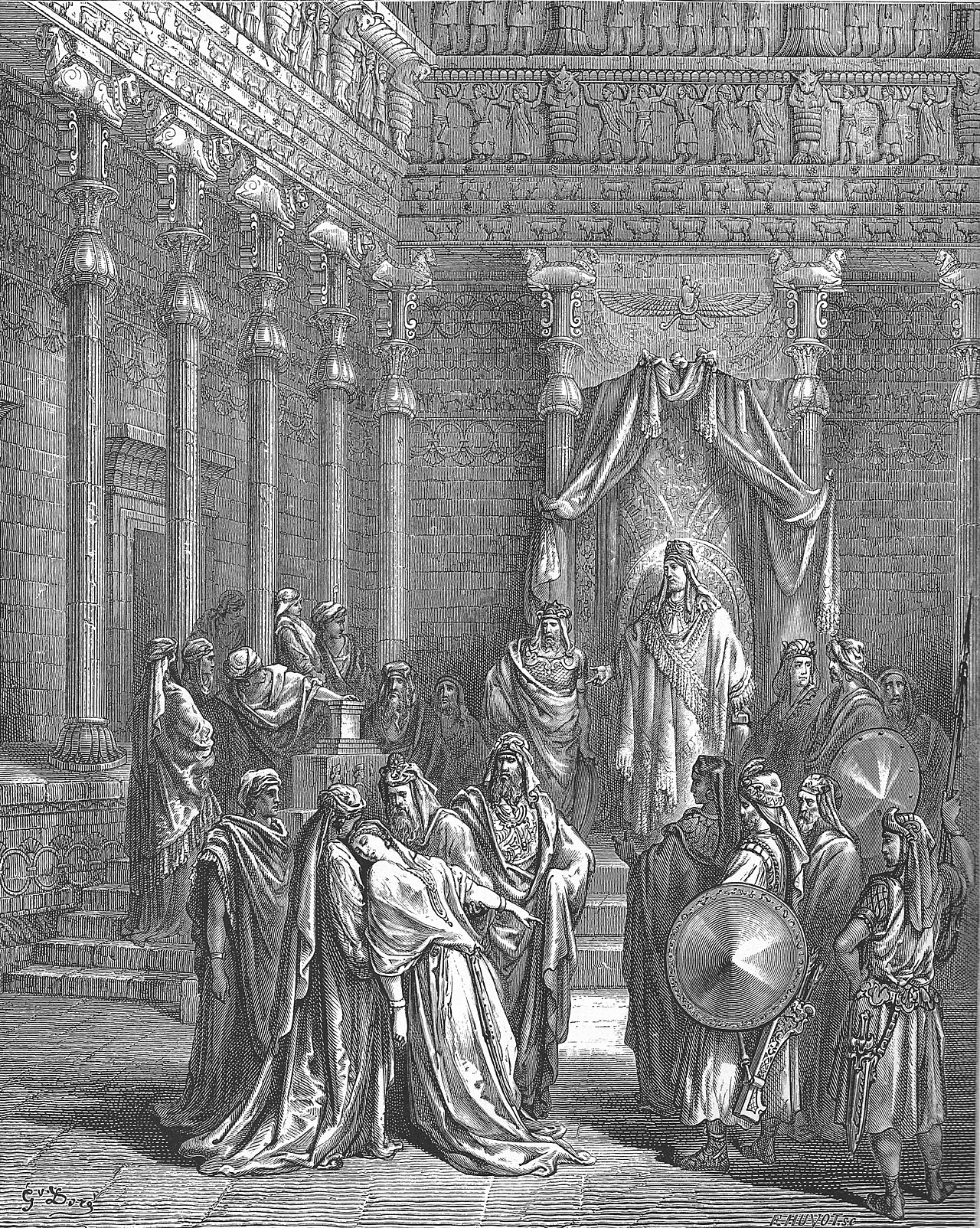
in Esther 2She would go there in the evening, and in the morning she would return to a second harem under the care of Shaashgaz, the king’s eunuch in charge of the concubines. She would not return to the king unless he delighted in her and summoned her by name.
BSB
The same verse in ASV and KJV ▾
ASV
In the evening she went, and on the morrow she returned into the second house of the women, to the custody of Shaashgaz, the king’s chamberlain, who kept the concubines: she came in unto the king no more, except the king delighted in her, and she were called by name.
KJV
In the evening she went, and on the morrow she returned into the second house of the women, to the custody of Shaashgaz, the king’s chamberlain, which kept the concubines: she came in unto the king no more, except the king delighted in her, and that she were called by name.
⋯
This verse in Esther 2
Commentary
7 notes on this verseShe returned into the second house - This was the place where the king’s concubines were kept. They went out no more, and were never given in marriage to any man, and saw the king’s face no more unless specially called. Custody of Shaashgaz - This is probably another Persian name; sheshkhunj, beardless, a proper epithet of a eunuch; or sestgunj, weak loins, for the same reason. Names of this kind at once show the reason of their imposition, by describing the state of the person.
This site's exposition
In the twelve months
on Esther 2:12-14
The text sets out the harem's process: twelve months of treatments, then one night with the king. In the morning each woman went "to a second harem under the care of Shaashgaz". She would not return to the king "unless he delighted in her and summoned her by name".
This site's exposition
She would go there in the
Clarke notes a woman sent to the second harem never left it and was never given in marriage to any man. Henry judged the custom of concubines a breach of the law founded on God's making one man and one woman. One night decided the rest of her life.
The record, by era
The Medieval Church1 voice
What then follows—"She would enter in the evening and leave in the morning, and was then brought to the second building"—and so on, proves in an allegorical way that after our vices have subsided, the glow of our virtues (which will not shine properly anywhere …
The Puritans and the Awakening2 voices
Having broken through that law of creation which resulted from God's making man, they broke through another law, which was founded upon his making one man and one woman. See what need there was of the gospel of Christ to purify men from the lusts of the flesh and to reduce them to the original institution.
In the evening she went, and on the morrow she returned into the second house of the women,.... Or the other apartment of the house of the women, where were kept those the king had made his concubines or secondary wives.
The Nineteenth Century1 voice
A commentator
Albert Barnes1798–1870
Notes, Explanatory and Practical, on the Old and New Testaments (1832-1869)
proposed
The second house of the women - i. e. Esther returned to the “house of the women,” but not to the same part of it. She became an inmate of the “second house,” or “house of the concubines,” under the superintendence of a distinct officer, Shaashgaz.
How the passage was read
What the Jewish commentators add
On the verses either side of this one
Whatever she requested. Any entertainment and types of music.
This section is reception history: how the passage was read and kept in the Jewish tradition. Where a reading parts from an essential of the Christian faith, the section says so at that point.
Texts and citation data: Sefaria; each excerpt follows its version’s licence. 4 further sources are cited on this chapter that carry no English text this site may quote or only restate the verse.
The words behind it
29 Hebrew wordsEvery Hebrew word of this verse in the order it stands, with what it means and the door to its own study. The last column counts the times a word stands in the whole Bible: the rarer the word, the more the places it appears belong together.
| Hebrew | Sound | Meaning | Word study | In the Bible |
|---|---|---|---|---|
| בָּעֶ֣רֶב׀ | baerev | in the evening | H6153 → | |
| הִ֣יא | hi' | she | H1931 → | 1879 times |
| בָאָ֗ה | vaah | [was] going | H935 → | 2568 times |
| וּ֠בַבֹּקֶר | uvaboker | and in the morning | H1242 → | |
| הִ֣יא | hi' | she | H1931 → | 1879 times |
| שָׁבָ֞ה | shavah | [was] returning | H7725 → | 1056 times |
| אֶל־ | ʾel- | to | H413 → | 5510 times |
| בֵּ֤ית | beit | [the] house of | H1004 → | 2046 times |
| הַנָּשִׁים֙ | hanashim | the women | H802 → | 781 times |
| שֵׁנִ֔י | sheni | second | H8145 → | 156 times |
| אֶל־ | ʾel- | in | H413 → | 5510 times |
| יַ֧ד | yad | [the] hand of | H3027 → | 1618 times |
| שַֽׁעֲשְׁגַ֛ז | shaashgaz | Shaashgaz | H8190 → | |
| סְרִ֥יס | seris | [the] eunuch of | H5631 → | 42 times |
| הַמֶּ֖לֶךְ | hamelekh | the king | H4428 → | 2525 times |
| שֹׁמֵ֣ר | shomer | [the] keeper | H8104 → | 468 times |
| הַפִּֽילַגְשִׁ֑ים | hapilagshim | of the concubines | H6370 → | |
| לֹא־ | lo'- | not | H3808 → | 5168 times |
| תָב֥וֹא | tavo' | she went | H935 → | 2568 times |
| עוֹד֙ | ʾod | again | H5750 → | 490 times |
| אֶל־ | ʾel- | into | H413 → | 5510 times |
| הַמֶּ֔לֶךְ | hamelekh | the king | H4428 → | 2525 times |
| כִּ֣י | ki | that | H3588 → | 4482 times |
| אִם־ | ʾim- | except | H518 → | 1069 times |
| חָפֵ֥ץ | chafetz | he delighted | H2654 → | 74 times |
| בָּ֛הּ | bah | in <the> her | ||
| הַמֶּ֖לֶךְ | hamelekh | the king | H4428 → | 2525 times |
| וְנִקְרְאָ֥ה | venikreah | and she was summoned | H7121 → | 733 times |
| בְשֵֽׁם׃ | veshem | by name | H8034 → | 864 times |
בָּעֶ֣רֶב׀in the evening
baerevH6153 →
הִ֣יאshe
hi'H1931 →1879 times
בָאָ֗ה[was] going
vaahH935 →2568 times
וּ֠בַבֹּקֶרand in the morning
uvabokerH1242 →
הִ֣יאshe
hi'H1931 →1879 times
שָׁבָ֞ה[was] returning
shavahH7725 →1056 times
אֶל־to
ʾel-H413 →5510 times
בֵּ֤ית[the] house of
beitH1004 →2046 times
הַנָּשִׁים֙the women
hanashimH802 →781 times
שֵׁנִ֔יsecond
sheniH8145 →156 times
אֶל־in
ʾel-H413 →5510 times
יַ֧ד[the] hand of
yadH3027 →1618 times
שַֽׁעֲשְׁגַ֛זShaashgaz
shaashgazH8190 →
סְרִ֥יס[the] eunuch of
serisH5631 →42 times
הַמֶּ֖לֶךְthe king
hamelekhH4428 →2525 times
שֹׁמֵ֣ר[the] keeper
shomerH8104 →468 times
הַפִּֽילַגְשִׁ֑יםof the concubines
hapilagshimH6370 →
לֹא־not
lo'-H3808 →5168 times
תָב֥וֹאshe went
tavo'H935 →2568 times
עוֹד֙again
ʾodH5750 →490 times
אֶל־into
ʾel-H413 →5510 times
הַמֶּ֔לֶךְthe king
hamelekhH4428 →2525 times
כִּ֣יthat
kiH3588 →4482 times
אִם־except
ʾim-H518 →1069 times
חָפֵ֥ץhe delighted
chafetzH2654 →74 times
בָּ֛הּin <the> her
bah
הַמֶּ֖לֶךְthe king
hamelekhH4428 →2525 times
וְנִקְרְאָ֥הand she was summoned
venikreahH7121 →733 times
בְשֵֽׁם׃by name
veshemH8034 →864 times
A shaded row is a word that stands 400 times or fewer in the Bible.
The walk
8 stopsEach card is a verse this one points to, and under it the verses that one points to in turn. Where several paths arrive at the same place, that place is listed first: the text keeps returning to it.
Through
Esther 4:11“All the royal officials and the people of the king’s provinces know that one law applies to every man or woman who approaches the king in the inner court without being summoned—that he be…
it leads to
- Esther 5:1–2
On the third day, Esther put on her royal attire and stood in the inner court of the palace across from the king’s quarters. The king was sitting on his royal throne in the…
- Daniel 2:9
If you do not tell me the dream, there is only one decree for you. You have conspired to speak before me false and fraudulent words, hoping the situation will change. Therefore tell me…
- Esther 8:4
The king extended the gold scepter toward Esther, and she arose and stood before the king.
- Esther 5:1–2
Through
Deuteronomy 21:14And if you are not pleased with her, you are to let her go wherever she wishes. But you must not sell her for money or treat her as a slave, since you have…
it leads to
- Deuteronomy 22:29
then the man who lay with her must pay the young woman’s father fifty shekels of silver, and she must become his wife because he has violated her. He must not divorce her as…
- Genesis 34:2
When Shechem son of Hamor the Hivite, the prince of the region, saw her, he took her and lay with her by force.
- Deuteronomy 22:29
Through
Isaiah 45:4For the sake of Jacob My servant and Israel My chosen one, I call you by name; I have given you a title of honor, though you have not known Me.
it leads to
- Isaiah 41:8–9
“But you, O Israel, My servant, Jacob, whom I have chosen, descendant of Abraham My friend—
- Romans 11:7
What then? What Israel was seeking, it failed to obtain, but the elect did. The others were hardened,
- Exodus 19:5–6
Now if you will indeed obey My voice and keep My covenant, you will be My treasured possession out of all the nations—for the whole earth is Mine.
- Isaiah 41:8–9
Where this verse is studied
On this page
About Esther
This page draws on Adam Clarke, Commentary on the Bible; Albert Barnes, Notes, Explanatory and Practical, on the Old and New Testaments (1832-1869); John Gill, Exposition of the Old Testament (1748-1763); Matthew Henry, Commentary on the Whole Bible; Rabanus Maurus, Commentary on Esther and W. F. Adeney, Ezra, Nehemiah and Esther (Expositor's Bible).