
Esther 2:9
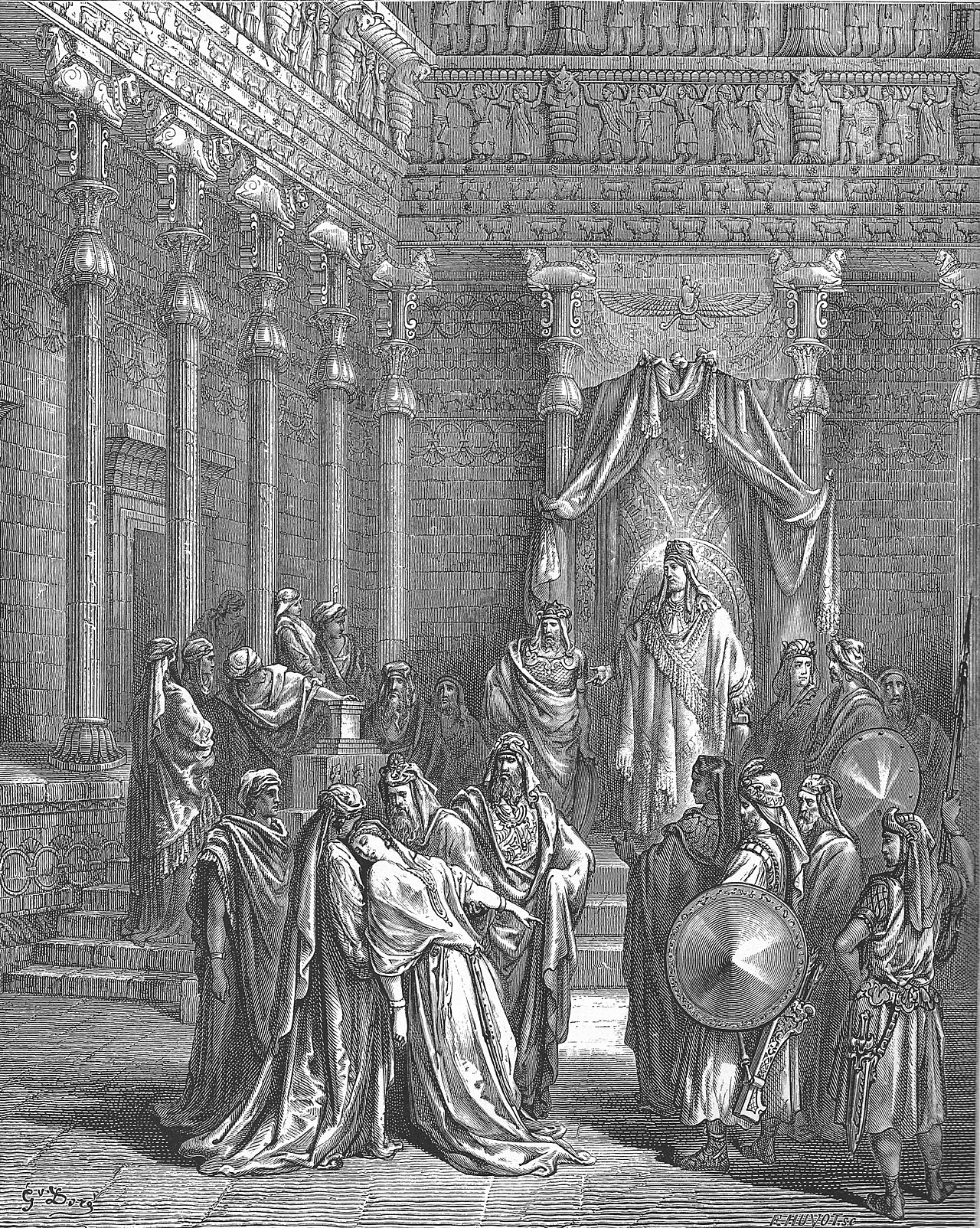
in Esther 2And the young woman pleased him and obtained his favor, so he quickly provided her with beauty treatments and the special diet. He assigned to her seven select maidservants from the palace and transferred her with them to the best place in the harem.
BSB
The same verse in ASV and KJV ▾
ASV
And the maiden pleased him, and she obtained kindness of him; and he speedily gave her her things for purification, with her portions, and the seven maidens who were meet to be given her out of the king’s house: and he removed her and her maidens to the best place of the house of the women.
KJV
And the maiden pleased him, and she obtained kindness of him; and he speedily gave her her things for purification, with such things as belonged to her, and seven maidens, which were meet to be given her, out of the king’s house: and he preferred her and her maids unto the best place of the house of the women.
⋯
This verse in Esther 2
Commentary
7 notes on this verseThe maiden pleased him - He conceived a partiality for her above the rest, probably because of the propriety of her deportment, and her engaging though unassuming manners. Seven maidens - These were to attend her to the bath, to anoint and adorn her, and be her servants in general.
This site's exposition
When the king’s command and edict
on Esther 2:8-9
Esther is taken to the palace among "many young women" and placed "under the care of Hegai, the custodian of the women". She pleases Hegai before the king has seen her. He gives her beauty treatments, "the special diet," "seven select maidservants" and "the best place in the harem".
This site's exposition
And the young woman pleased him
Clarke credits the favor Hegai showed to her modest and engaging manner, and Wesley adds her beauty and a divine hand. Clarke describes the seven maidservants as her attendants at the bath, where they anointed and adorned her. Henry drew the lesson that wisdom and virtue gain respect.
The record, by era
The Medieval Church1 voice
Now, what can Esther—whose name means hidden, and who was also called Hadassah, i.e. mercy—signify if not the Church of the nations, which pleases God in the recesses of its heart because its faith is pure, and it finds before the eyes of God more …
The Puritans and the Awakening3 voices
Pleased - Because she was very beautiful, therefore he supposed she would be acceptable to the king; and by the Divine power, which moveth the hearts of men which way he pleaseth.
), and was ready to serve her. Wisdom and virtue will gain respect. Those that make sure of God's favour shall find favour with man too as far as it is good for them.
quarantine:debris (2026-07-29) — leading-punctuation+unbalanced-parens
And the maiden pleased him,....
How the passage was read
What the Jewish commentators add
On the verses either side of this one
Not to reveal it. So that they should say that she was from an ignoble family and dismiss her, for if they knew that she was of the family of King Shaul, they would keep her. 11 According to Targum, Mordechai feared for Esther’s and the Jews’ safety.
This section is reception history: how the passage was read and kept in the Jewish tradition. Where a reading parts from an essential of the Christian faith, the section says so at that point.
Texts and citation data: Sefaria; each excerpt follows its version’s licence. 4 further sources are cited on this chapter that carry no English text this site may quote or only restate the verse.
The words behind it
27 Hebrew wordsEvery Hebrew word of this verse in the order it stands, with what it means and the door to its own study. The last column counts the times a word stands in the whole Bible: the rarer the word, the more the places it appears belong together.
| Hebrew | Sound | Meaning | Word study | In the Bible |
|---|---|---|---|---|
| וַתִּיטַ֨ב | vatitav | and she was good | H3190 → | 117 times |
| הַנַּעֲרָ֣ה | hanaarah | the young woman | H5291 → | 63 times |
| בְעֵינָיו֮ | veeinav | in view his | H5869 → | 887 times |
| וַתִּשָּׂ֣א | vatisa' | and she bore | H5375 → | 656 times |
| חֶ֣סֶד | chesed | favor | H2617 → | |
| לְפָנָיו֒ | lefanav | <to> before him | H6440 → | 2123 times |
| וַ֠יְבַהֵל | vayvahel | and he hastened | H926 → | 39 times |
| אֶת־ | ʾet- | <obj.> | H853 → | 10935 times |
| תַּמְרוּקֶ֤יהָ | tamrukeiha | rubbings her | H8562 → | 4 times |
| וְאֶת־ | veet | and <obj.> | H853 → | 10935 times |
| מָנוֹתֶ֙הָ֙ | manoteha | portions her | H4490 → | 13 times |
| לָתֵ֣ת | latet | to give | H5414 → | 2011 times |
| לָ֔הּ | lah | to <the> her | ||
| וְאֵת֙ | veet | and <obj.> | H853 → | 10935 times |
| שֶׁ֣בַע | sheva' | [the] seven | H7651 → | 394 times |
| הַנְּעָר֔וֹת | hanearot | the servant girls | H5291 → | 63 times |
| הָרְאֻי֥וֹת | hareuyot | <the> chosen | H7200 → | 1300 times |
| לָֽתֶת־ | latet- | to give | H5414 → | 2011 times |
| לָ֖הּ | lah | to <the> her | ||
| מִבֵּ֣ית | mibeit | from [the] house of | H1004 → | 2046 times |
| הַמֶּ֑לֶךְ | hamelekh | the king | H4428 → | 2525 times |
| וַיְשַׁנֶּ֧הָ | vayshaneha | and he moved her | H8138 → | 21 times |
| וְאֶת־ | veet | and <obj.> | H853 → | 10935 times |
| נַעֲרוֹתֶ֛יהָ | naaroteiha | servant girls her | H5291 → | 63 times |
| לְט֖וֹב | letov | to [the] good [place] of | H2896 → | 538 times |
| בֵּ֥ית | beit | [the] house of | H1004 → | 2046 times |
| הַנָּשִֽׁים׃ | hanashim | the women | H802 → | 781 times |
וַתִּיטַ֨בand she was good
vatitavH3190 →117 times
הַנַּעֲרָ֣הthe young woman
hanaarahH5291 →63 times
בְעֵינָיו֮in view his
veeinavH5869 →887 times
וַתִּשָּׂ֣אand she bore
vatisa'H5375 →656 times
חֶ֣סֶדfavor
chesedH2617 →
לְפָנָיו֒<to> before him
lefanavH6440 →2123 times
וַ֠יְבַהֵלand he hastened
vayvahelH926 →39 times
אֶת־<obj.>
ʾet-H853 →10935 times
תַּמְרוּקֶ֤יהָrubbings her
tamrukeihaH8562 →4 times
וְאֶת־and <obj.>
veetH853 →10935 times
מָנוֹתֶ֙הָ֙portions her
manotehaH4490 →13 times
לָתֵ֣תto give
latetH5414 →2011 times
לָ֔הּto <the> her
lah
וְאֵת֙and <obj.>
veetH853 →10935 times
שֶׁ֣בַע[the] seven
sheva'H7651 →394 times
הַנְּעָר֔וֹתthe servant girls
hanearotH5291 →63 times
הָרְאֻי֥וֹת<the> chosen
hareuyotH7200 →1300 times
לָֽתֶת־to give
latet-H5414 →2011 times
לָ֖הּto <the> her
lah
מִבֵּ֣יתfrom [the] house of
mibeitH1004 →2046 times
הַמֶּ֑לֶךְthe king
hamelekhH4428 →2525 times
וַיְשַׁנֶּ֧הָand he moved her
vayshanehaH8138 →21 times
וְאֶת־and <obj.>
veetH853 →10935 times
נַעֲרוֹתֶ֛יהָservant girls her
naaroteihaH5291 →63 times
לְט֖וֹבto [the] good [place] of
letovH2896 →538 times
בֵּ֥ית[the] house of
beitH1004 →2046 times
הַנָּשִֽׁים׃the women
hanashimH802 →781 times
A shaded row is a word that stands 400 times or fewer in the Bible.
The walk
8 stopsEach card is a verse this one points to, and under it the verses that one points to in turn. Where several paths arrive at the same place, that place is listed first: the text keeps returning to it.
Through
Proverbs 16:7When a man’s ways please the LORD, He makes even the man’s enemies live at peace with him.
it leads to
- Romans 8:31
What then shall we say in response to these things? If God is for us, who can be against us?
- 1 John 3:22
and we will receive from Him whatever we ask, because we keep His commandments and do what is pleasing in His sight.
- 2 Chronicles 17:10
And the dread of the LORD fell upon all the kingdoms of the lands that surrounded Judah, so that they did not make war against Jehoshaphat.
- Colossians 1:10
so that you may walk in a manner worthy of the Lord and may please Him in every way: bearing fruit in every good work, growing in the knowledge of God,
- Jeremiah 15:11
The LORD said: “Surely I will deliver you for a good purpose; surely I will intercede with your enemy in your time of trouble, in your time of distress.
- Romans 8:31
Through
Daniel 1:9Now God had granted Daniel favor and compassion from the chief official,
it leads to
- Genesis 39:21
the LORD was with him and extended kindness to him, granting him favor in the eyes of the prison warden.
- Psalms 106:46
He made them objects of compassion to all who held them captive.
- Genesis 39:21
Through
Genesis 39:21the LORD was with him and extended kindness to him, granting him favor in the eyes of the prison warden.
it leads to
- Isaiah 41:10
Do not fear, for I am with you; do not be afraid, for I am your God. I will strengthen you; I will surely help you; I will uphold you with My right hand…
- Isaiah 41:10
Where this verse is studied
On this page
About Esther
This page draws on Adam Clarke, Commentary on the Bible; John Gill, Exposition of the Old Testament; John Gill, Exposition of the Old Testament (1748-1763); John Wesley, Explanatory Notes upon the Old Testament; Matthew Henry, Commentary on the Whole Bible; Rabanus Maurus, Commentary on Esther and W. F. Adeney, Ezra, Nehemiah and Esther (Expositor's Bible).