
Esther 1:12
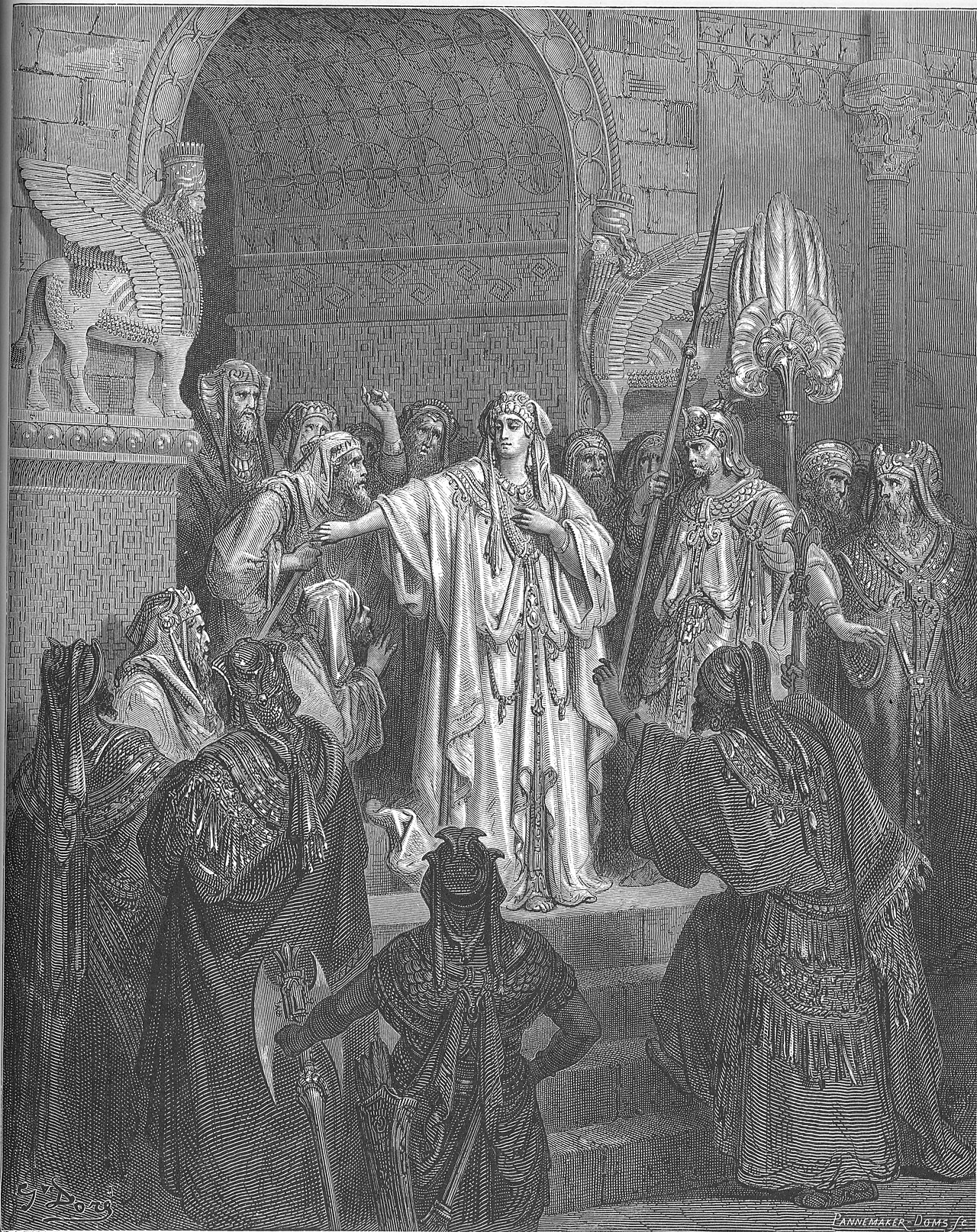
in Esther 1Queen Vashti, however, refused to come at the king’s command brought by his eunuchs. And the king became furious, and his anger burned within him.
BSB
The same verse in ASV and KJV ▾
ASV
But the queen Vashti refused to come at the king’s commandment by the chamberlains: therefore was the king very wroth, and his anger burned in him.
KJV
But the queen Vashti refused to come at the king’s commandment by his chamberlains: therefore was the king very wroth, and his anger burned in him.
⋯
This verse in Esther 1
Commentary
11 notes on this verseVashti refused to come - And much should she be commended for it. What woman, possessing even a common share of prudence and modesty, could consent to expose herself to the view of such a group of drunken Bacchanalians? Her courage was equal to her modesty: she would resist the royal mandate, rather than violate the rules of chaste decorum. Her contempt of worldly grandeur, when brought in competition with what every modest woman holds dear and sacred, is worthy of observation.
This site's exposition
made a feast for the women in the royal house
on Esther 1:9-12
Vashti hosts her own feast for the women, a mirror court inside the court, before the king, merry with wine on the seventh day, sends for her to be displayed before the princes wearing the crown royal. The readings on her refusal are named and neither is pressed as settled: many of the bench read a queen guarding her dignity against an indecent summons before drunken men, while others read plain disobedience to a lawful royal command. Either way the text records only the refusal and the king’s burning anger, and leaves the reason to the reader.
The record, by era
The Medieval Church2 voices
"So on the seventh day when the king was very festive, and after he had drunk too much and grown heated from the wine, he ordered Mehuman, and Biztha, and Harbona, and Bigtha, and Abigtha, and Zethar, and Carcas, the seven eunuchs who ministered in …
But let us hear what Scripture has to say about the stubbornness of Vashti, that most foolish of queens: "So the king was angered, and enflamed by his excessive rage he questioned his wise men, who were always at his side according to royal custom; …
The Puritans and the Awakening3 voices
Perhaps she refused in a haughty manner, and then it was certainly evil; she scorned to come at the king's commandment. What a mortification was this to him! While he was showing the glory of his kingdom he showed the reproach of his family, that he had a wife that would do as she pleased.
If he had not been put out of the possession of himself by drinking to excess, he would not have done such a thing, but would have been angry at any one that should have mentioned it. When the wine is in the wit is out, and men's reason departs from them. However, perhaps it was not her wisdom to deny him.
8 And the drinking was according to the law; none did compel: for so the king had appointed to all the officers of his house, that they should do according to every man's pleasure. 9 Also Vashti the queen made a feast for the women in the royal house which belonged to king Ahasuerus. Which of the kings of Persia this Ahasuerus was the learned are not agreed.
quarantine:scripture (2026-07-29) — scripture-overlap:88%@v8-10
4 more voices on this verse
The Puritans and the Awakening3 voices
He would have consulted his own comfort and credit more if he had stifled his resentment, had passed by the affront his wife gave him, and turned it off with a jest. Though he was very angry, he would not do any thing in this matter till he advised with his privy-counsellors; as he had seven chamberlains to execute his orders, who are named (
quarantine:debris (2026-07-29) — unbalanced-parens
How does this Heathen prince shame many, that are called Christians, who think they do not make their friends welcome, unless they make them drunk, and under pretense of sending the health round, send the sin round, and death with it! Women - While the king entertained the men. For this was the common custom of the Persians, that men and women did not feast together.
But the queen refused to came at the king's commandment by his chamberlains,....
The Nineteenth Century1 voice
A commentator
Jamieson, Fausset & Brown1802–1910
Commentary Critical and Explanatory on the Whole Bible (1871)
On the seventh day, when the heart of the king was merry with wine--As the feast days advanced, the drinking was more freely indulged in, so that the close was usually marked by great excesses of revelry. he commanded . . . the seven chamberlains--These were the eunuchs who had charge of the royal harem.
How the passage was read
What the Jewish commentators add
Queen Vashti refused. Our Rabbis said because leprosy broke out on her, 24 Ibid. Vashti did not refuse out of modesty. She was as lewd as her husband and would have attended had she not broken out with leprosy.
1 more on this passage, in their own words ▾
For the king would thus place matters. For such was the king’s custom in every judgment, to present the matter “before all who were versed in procedural and legal concerns.” 27 The Midrash states that Achashveirosh originally sought the advice of the Sages and asked them to judge Vashti.
This section is reception history: how the passage was read and kept in the Jewish tradition. Where a reading parts from an essential of the Christian faith, the section says so at that point.
Texts and citation data: Sefaria; each excerpt follows its version’s licence. 1 further source is cited on this chapter that carry no English text this site may quote or only restate the verse.
The words behind it
15 Hebrew wordsEvery Hebrew word of this verse in the order it stands, with what it means and the door to its own study. The last column counts the times a word stands in the whole Bible: the rarer the word, the more the places it appears belong together.
| Hebrew | Sound | Meaning | Word study | In the Bible |
|---|---|---|---|---|
| וַתְּמָאֵ֞ן | vatemaen | and she refused | H3985 → | |
| הַמַּלְכָּ֣ה | hamalkah | the queen | H4436 → | 35 times |
| וַשְׁתִּ֗י | vashti | Vashti | H2060 → | 10 times |
| לָבוֹא֙ | lavo' | to come | H935 → | 2568 times |
| בִּדְבַ֣ר | bidvar | at [the] word of | H1697 → | 1440 times |
| הַמֶּ֔לֶךְ | hamelekh | the king | H4428 → | 2525 times |
| אֲשֶׁ֖ר | ʾasher | which | H834 → | 5497 times |
| בְּיַ֣ד | beyad | [was] by [the] hand of | H3027 → | 1618 times |
| הַסָּרִיסִ֑ים | hasarisim | the eunuchs | H5631 → | 42 times |
| וַיִּקְצֹ֤ף | vaiyiktzof | and he was angry | H7107 → | |
| הַמֶּ֙לֶךְ֙ | hamelekh | the king | H4428 → | 2525 times |
| מְאֹ֔ד | meod | exceedingly | H3966 → | |
| וַחֲמָת֖וֹ | vachamato | and rage his | H2534 → | 125 times |
| בָּעֲרָ֥ה | baarah | it burned | H1197 → | |
| בֽוֹ׃ | vo | in <the> him |
וַתְּמָאֵ֞ןand she refused
vatemaenH3985 →
הַמַּלְכָּ֣הthe queen
hamalkahH4436 →35 times
וַשְׁתִּ֗יVashti
vashtiH2060 →10 times
לָבוֹא֙to come
lavo'H935 →2568 times
בִּדְבַ֣רat [the] word of
bidvarH1697 →1440 times
הַמֶּ֔לֶךְthe king
hamelekhH4428 →2525 times
אֲשֶׁ֖רwhich
ʾasherH834 →5497 times
בְּיַ֣ד[was] by [the] hand of
beyadH3027 →1618 times
הַסָּרִיסִ֑יםthe eunuchs
hasarisimH5631 →42 times
וַיִּקְצֹ֤ףand he was angry
vaiyiktzofH7107 →
הַמֶּ֙לֶךְ֙the king
hamelekhH4428 →2525 times
מְאֹ֔דexceedingly
meodH3966 →
וַחֲמָת֖וֹand rage his
vachamatoH2534 →125 times
בָּעֲרָ֥הit burned
baarahH1197 →
בֽוֹ׃in <the> him
vo
A shaded row is a word that stands 400 times or fewer in the Bible.
The walk
8 stopsEach card is a verse this one points to, and under it the verses that one points to in turn. Where several paths arrive at the same place, that place is listed first: the text keeps returning to it.
Through
Genesis 3:16To the woman He said: “I will sharply increase your pain in childbirth; in pain you will bring forth children. Your desire will be for your husband, and he will rule over you.”
it leads to
- Colossians 3:18
Wives, submit to your husbands, as is fitting in the Lord.
Reached by 2 separate paths from here.
- 1 Corinthians 11:3
But I want you to understand that the head of every man is Christ, and the head of the woman is man, and the head of Christ is God.
Reached by 2 separate paths from here.
- Titus 2:5
to be self-controlled, pure, managers of their households, kind, and submissive to their own husbands, so that the word of God will not be discredited.
- 1 Timothy 2:15
Women, however, will be saved through childbearing, if they continue in faith, love, and holiness, with self-control.
- Colossians 3:18
Through
1 Peter 3:1Wives, in the same way, submit yourselves to your husbands, so that even if they refuse to believe the word, they will be won over without words by the behavior of their wives
it leads to
- Ephesians 5:22–24
Wives, submit to your husbands as to the Lord.
Reached by 2 separate paths from here.
- Ephesians 5:33
Nevertheless, each one of you also must love his wife as he loves himself, and the wife must respect her husband.
- Titus 2:3–6
Older women, likewise, are to be reverent in their behavior, not slanderers or addicted to much wine, but teachers of good.
- Ephesians 5:22–24
Through
Proverbs 20:2The terror of a king is like the roar of a lion; whoever provokes him forfeits his own life.
it leads to
- Proverbs 19:12
A king’s rage is like the roar of a lion, but his favor is like dew on the grass.
- Proverbs 19:12
Where this verse is studied
On this page
Studies4
On this verse
On this chapter
About Esther
This page draws on Adam Clarke, Commentary on the Bible; Jamieson, Fausset & Brown, Commentary Critical and Explanatory on the Whole Bible; John Gill, Exposition of the Old Testament; John Gill, Exposition of the Old Testament (1748-1763); John Wesley, Explanatory Notes upon the Old Testament; Matthew Henry, Commentary on the Whole Bible; Rabanus Maurus, Commentary on Esther and W. F. Adeney, Ezra, Nehemiah and Esther (Expositor's Bible).