
1 Samuel 6:12
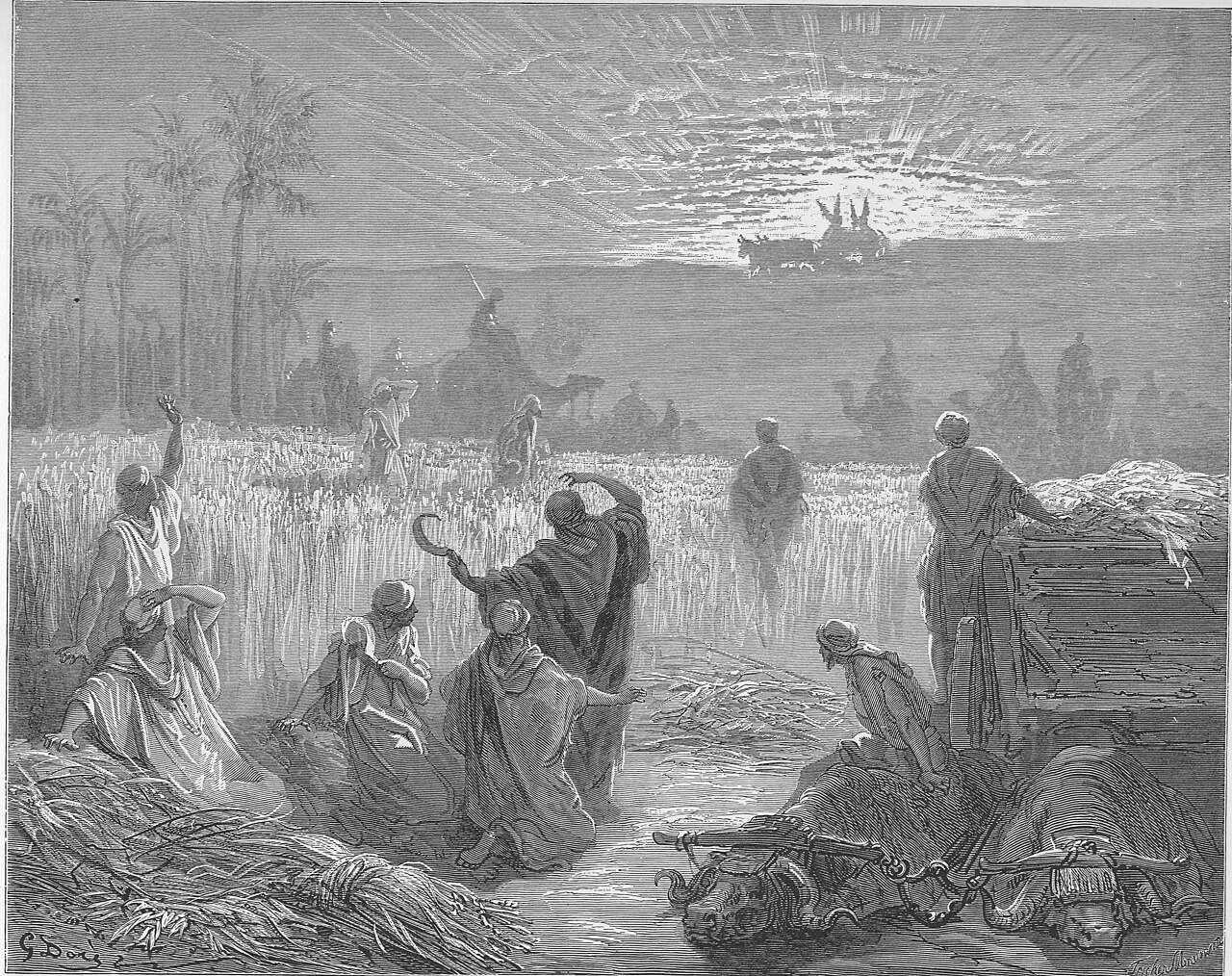
in 1 Samuel 6And the cows headed straight up the road toward Beth-shemesh, staying on that one highway and lowing as they went, never straying to the right or to the left. The rulers of the Philistines followed behind them to the border of Beth-shemesh.
BSB
The same verse in ASV and KJV ▾
ASV
And the kine took the straight way by the way to Beth-shemesh; they went along the highway, lowing as they went, and turned not aside to the right hand or to the left; and the lords of the Philistines went after them unto the border of Beth-shemesh.
KJV
And the kine took the straight way to the way of Beth–shemesh, and went along the highway, lowing as they went, and turned not aside to the right hand or to the left; and the lords of the Philistines went after them unto the border of Beth–shemesh.
⋯
This verse in 1 Samuel 6
Commentary
15 notes on this verseYou are aware, then, that when the ark of the testimony was seized by the enemies of Ashdod, and a terrible and incurable malady had broken out among them, they resolved to place it on a cart to which they yoked cows that had recently calved, for the purpose of ascertaining by trial whether or not they had been plagued by God's power on account of the ark, and if God wished it to be taken back to the place from which it had been carried away.
This site's exposition
They took two milk cows, hitched them to the cart
on 1 Samuel 6:10-12
The men do as instructed, hitching two milk cows to the cart and penning up their calves. Gill notes that Philistines lift the ark here and are not struck as Uzzah later was, because the law's prohibition bound Israel. The cows head “straight up the road toward Beth-shemesh”, “lowing as they went”, and the five rulers who follow read that obedience as their answer.
This site's exposition
And the cows headed straight up the road
The cows low for their penned calves and still keep the road away from them. Albert Barnes saw the lowing as proof that nature pulled one way while God drove them the other. John Wesley said the rulers followed to prevent any trick.
The record, by era
The Medieval Church5 voices
A commentator
Gregory the DialogistMorals on the Book of Job, Book 7.42 · Written before 604.
proposed
For it is not that holy people do not love their fleshly kin, to give them all things necessary, but they subdue this very fondness within themselves from love of spiritual things, in order so to temper it by the control of discretion, that they may be never led by it, even in a small measure and in the very least degree, to deviate from the straight path. And these are well conveyed to us by the representation of the cows, which going along towards the hilly lands under the ark of the Lord, proceed at one and the same time with fondness and with hardened feeling; as it is written, "And the men did so: and took two milk cows and tied them to the cart and shut up their calves at home; and they laid the ark of the Lord upon the cart." And soon after: "And the cows took the straight way to the way of Beth-shemesh, and they went along by one way, lowing as they went, and did not turn aside to the right hand or to the left." For observe, when the calves were shut up at home, the cows, which are fastened to the wagon bearing the ark of the Lord, moan and go their way, they give forth lowings from deep within, and yet [they] never alter their steps from following the path. They feel love indeed shown by compassion but never bend their necks behind. Thus, they must go on their way, who, being placed under the yoke of the sacred law, henceforth carry the Lord's ark in interior knowledge, so as never to deviate from the course of righteousness which they have entered upon, in order to take compassion on the necessities of relatives. For Beth-shemesh is rendered "the house of the sun." Thus to go to Beth-shemesh with the ark of the Lord placed on them is in company with heavenly knowledge to draw near to the seat of light eternal. […]
But the cows went straight, etc. The teachers went straight through Christ, leading to the kingdom of heaven. Indeed, the way to Beth-shemesh, that is, the house of the sun, is the very same that says: "I am the way, the truth, and the life" …
They journeyed on the same path, progressing and groaning, etc. They walked on the same path of faith and truth, indeed groaning, as people, being separated from those they love; yet they were more willing, when necessity arose, to hasten eagerly to the sacrifice of …
A commentator
Gregory the DialogistCommentary on 1 Kings, Book 3, Chapter 4 · Written before 604.
proposed
15. To go straight along the road that leads to Beth-shemesh is, in the pursuit of heavenly perfection, to maintain affliction of the flesh through the virtue of discretion. For the cows by no means walk in a straight line if discretion is not preserved in the affliction of the flesh. For when the flesh is afflicted beyond measure, that same flesh, utterly spent, is unable to render aid to the spirit. And if it is not worthily afflicted, while it grows proud, it disdains, as though free and untamed, to serve the mind.
A commentator
Gregory the Dialogist40 Homilies on the Gospels, Homily 37 · Written before 604.
proposed
We know that when the ark of the Lord was returned from the land of the Philistines to the land of the Israelites, it was placed on a cart. They yoked cows that had recently borne young to the cart, and shut up their calves at home. "And the cows went straight on over the way that leads to Beth-shemesh, keeping to the one road, lowing as they went; they turned neither to the right nor to the left." What do these cows represent but the faithful of the church? When they ponder the sacred precepts, it is as if they are carrying the ark of the Lord placed upon them. We should also notice that they are described as having recently borne young. Many who are inwardly set on the way toward God are externally bound by their unspiritual feelings, but they do not turn aside from the right road because they are carrying the ark of God in their hearts.The cows were going to Beth-shemesh, a name meaning "house of the sun." The prophet says, "For you who fear the Lord, the sun of righteousness shall rise." If we are moving on toward the dwelling place of the everlasting sun, we do right not to turn aside from the route toward God on account of our unspiritual feelings. We must consider with all our energy that the cows yoked to God's cart moan as they go, lowing from their depths, but do not turn aside from their road. So surely must God's preachers, so must all believers within holy church do. They must be compassionate toward their neighbors through their love, while not deviating from God's way through their compassion.
7 more voices on this verse
The Puritans and the Awakening3 voices
Loving - Testifying at once both their natural and vehement inclination to their calves, and the supernatural power which over-ruled them to a contrary course. The lords went - To prevent all imposture, and to get assurance of the truth of the event. All which circumstances tended to the greater illustration of God's glory.
They went on lowing for their young ones, by which it appeared that they had not forgotten them, but that nature was sensible of the grievance of going from them; the power of the God of nature therefore appeared so much the greater, in overruling one of the strongest instincts of nature.
And the kine took the straight way to the way of Bethshemesh,....
The Nineteenth Century4 voices
Lowing as they went - Calling for their calves. To the right hand or to the left - Some think they were placed where two roads met; one going to Ekron, the other to Beth-shemesh. It is possible that they were put in such circumstances as these for the greater certainty of the affair: to have turned from their own homes, from their calves and known pasture, and to have taken the road to a strange country, must argue supernatural influence.
A commentator
Jamieson, Fausset & Brown1802–1910
Commentary Critical and Explanatory on the Whole Bible (1871)
Beth-shemesh--that is, "house of the sun," now Ain Shems [ROBINSON], a city of priests in Judah, in the southeast border of Dan, lying in a beautiful and extensive valley.
A commentator
Jamieson, Fausset & Brown1802–1910
Commentary Critical and Explanatory on the Whole Bible (1871)
proposed
the lords of the Philistines went after them--to give their tribute of homage, to prevent imposture, and to obtain the most reliable evidence of the truth. The result of this journey tended to their own deeper humiliation, and the greater illustration of God's glory.
quarantine:debris (2026-07-29) — starts-lowercase
A commentator
Albert Barnes1798–1870
Notes, Explanatory and Practical, on the Old and New Testaments (1832-1869)
proposed
Lowing as they went - Milking cows had been chosen on purpose to make the sign more significant. Nature would obviously dispose the cows to go toward their calves; their going in an opposite direction was therefore plainly a divine impulse overruling their natural inclination. And this is brought out more distinctly by the mention of their lowing, which was caused by their remembering their calves. And the lords ... - This circumstance of the five satraps of the Philistines accompanying the ark in person both made it impossible for the Israelites to practice any deceit (compare Mat 27:63-66), and is also a striking testimony to the agitation caused among the Philistines by the plagues inflicted on them since the ark had been in their country.
How the passage was read
What the Jewish commentators add
On the verses either side of this one
And they rejoiced to see. They were going to see how it came alone, and out of their joy, they behaved with levity, for they did not gaze at it with awe and respect.
This section is reception history: how the passage was read and kept in the Jewish tradition. Where a reading parts from an essential of the Christian faith, the section says so at that point.
Texts and citation data: Sefaria; each excerpt follows its version’s licence. 7 further sources are cited on this chapter that carry no English text this site may quote or only restate the verse.
The words behind it
24 Hebrew wordsEvery Hebrew word of this verse in the order it stands, with what it means and the door to its own study. The last column counts the times a word stands in the whole Bible: the rarer the word, the more the places it appears belong together.
| Hebrew | Sound | Meaning | Word study | In the Bible |
|---|---|---|---|---|
| וַיִשַּׁ֨רְנָה | vayisharnah | and they were straight | H3474 → | 25 times |
| הַפָּר֜וֹת | haparot | the cows | H6510 → | 26 times |
| בַּדֶּ֗רֶךְ | baderekh | in the road | H1870 → | 707 times |
| עַל־ | ʾal- | on | H5921 → | 5755 times |
| דֶּ֙רֶךְ֙ | derekh | [the] road of | H1870 → | 707 times |
| בֵּ֣ית | beit | Beth | H1053 → | 42 times |
| שֶׁ֔מֶשׁ | shemesh | Shemesh | H1053 → | 42 times |
| בִּמְסִלָּ֣ה | bimsilah | on a highway | H4546 → | |
| אַחַ֗ת | ʾachat | one | H259 → | 971 times |
| הָלְכ֤וּ | halekhu | they went | H1980 → | 1546 times |
| הָלֹךְ֙ | halokh | continuously <to go> | H1980 → | 1546 times |
| וְגָע֔וֹ | vegao | and lowed | H1600 → | |
| וְלֹא־ | velo'- | and not | H3808 → | 5168 times |
| סָ֖רוּ | saru | they turned aside | H5493 → | 299 times |
| יָמִ֣ין | yamin | right [hand] | H3225 → | 140 times |
| וּשְׂמֹ֑אול | usemol | and left [hand] | H8040 → | |
| וְסַרְנֵ֤י | vesarnei | and [the] rulers of | H5633 → | 22 times |
| פְלִשְׁתִּים֙ | felishtim | [the] Philistines | H6430 → | 287 times |
| הֹלְכִ֣ים | holekhim | [were] going | H1980 → | 1546 times |
| אַחֲרֵיהֶ֔ם | ʾachareihem | after them | H310 → | 715 times |
| עַד־ | ʾad- | to | H5704 → | 1261 times |
| גְּב֖וּל | gevul | [the] border of | H1366 → | 240 times |
| בֵּ֥ית | beit | Beth | H1053 → | 42 times |
| שָֽׁמֶשׁ׃ | shamesh | Shemesh | H1053 → | 42 times |
וַיִשַּׁ֨רְנָהand they were straight
vayisharnahH3474 →25 times
הַפָּר֜וֹתthe cows
haparotH6510 →26 times
בַּדֶּ֗רֶךְin the road
baderekhH1870 →707 times
עַל־on
ʾal-H5921 →5755 times
דֶּ֙רֶךְ֙[the] road of
derekhH1870 →707 times
בֵּ֣יתBeth
beitH1053 →42 times
שֶׁ֔מֶשׁShemesh
shemeshH1053 →42 times
בִּמְסִלָּ֣הon a highway
bimsilahH4546 →
אַחַ֗תone
ʾachatH259 →971 times
הָלְכ֤וּthey went
halekhuH1980 →1546 times
הָלֹךְ֙continuously <to go>
halokhH1980 →1546 times
וְגָע֔וֹand lowed
vegaoH1600 →
וְלֹא־and not
velo'-H3808 →5168 times
סָ֖רוּthey turned aside
saruH5493 →299 times
יָמִ֣יןright [hand]
yaminH3225 →140 times
וּשְׂמֹ֑אולand left [hand]
usemolH8040 →
וְסַרְנֵ֤יand [the] rulers of
vesarneiH5633 →22 times
פְלִשְׁתִּים֙[the] Philistines
felishtimH6430 →287 times
הֹלְכִ֣ים[were] going
holekhimH1980 →1546 times
אַחֲרֵיהֶ֔םafter them
ʾachareihemH310 →715 times
עַד־to
ʾad-H5704 →1261 times
גְּב֖וּל[the] border of
gevulH1366 →240 times
בֵּ֥יתBeth
beitH1053 →42 times
שָֽׁמֶשׁ׃Shemesh
shameshH1053 →42 times
A shaded row is a word that stands 400 times or fewer in the Bible.
The walk
3 stopsEach card is a verse this one points to, and under it the verses that one points to in turn. Where several paths arrive at the same place, that place is listed first: the text keeps returning to it.
Through
Numbers 20:19“We will stay on the main road,” the Israelites replied, “and if we or our herds drink your water, we will pay for it. There will be no problem; only let us pass through…
it leads to
- Deuteronomy 2:28
You can sell us food to eat and water to drink in exchange for silver. Only let us pass through on foot,
- Deuteronomy 2:6
You are to pay them in silver for the food you eat and the water you drink.’”
- Exodus 12:38
And a mixed multitude also went up with them, along with great droves of livestock, both flocks and herds.
- Deuteronomy 2:28
Where this verse is studied
On this page
Studies1
About 1 Samuel
This page draws on 12 works. Open the list of works
This page draws on Adam Clarke, Commentary on the Bible; Albert Barnes, Notes, Explanatory and Practical, on the Old and New Testaments (1832-1869); Bede, Commentary on Samuel; Gregory the Dialogist, Morals on the Book of Job, Book 7.42; Gregory the Dialogist, Commentary on 1 Kings, Book 3, Chapter 4; Gregory the Dialogist, 40 Homilies on the Gospels, Homily 37; Jamieson, Fausset & Brown, Commentary Critical and Explanatory on the Whole Bible; John Gill, Exposition of the Old Testament; John Gill, Exposition of the Old Testament (1748-1763); John Wesley, Explanatory Notes upon the Old Testament; Justin Martyr, Dialogue with Trypho, Chapter CXXXII and Matthew Henry, Commentary on the Whole Bible.