
1 Samuel 31:4
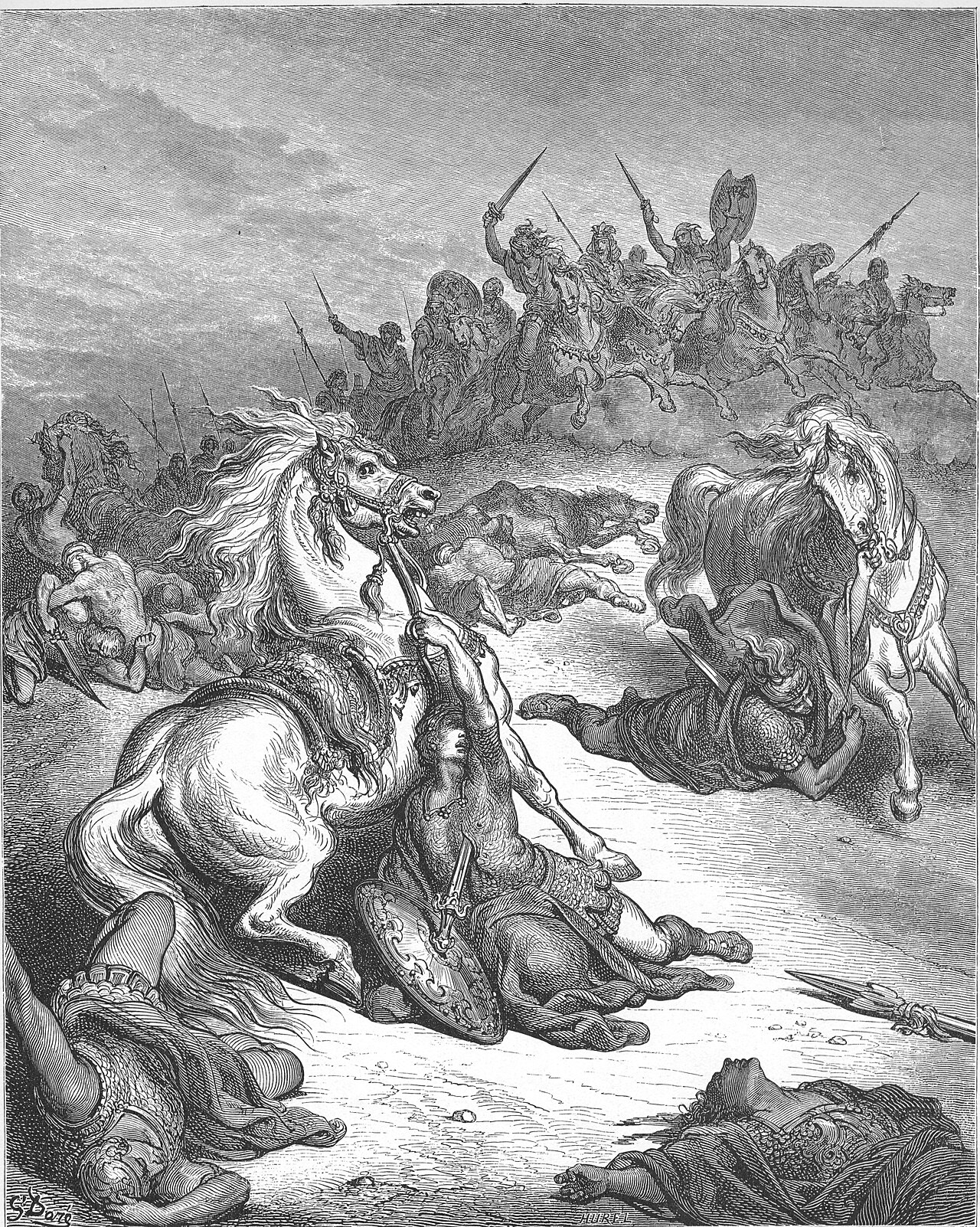
in 1 Samuel 31Then Saul said to his armor-bearer, “Draw your sword and run it through me, or these uncircumcised men will come and run me through and torture me!” But his armor-bearer was terrified and refused to do it. So Saul took his own sword and fell on it.
BSB
The same verse in ASV and KJV ▾
ASV
Then said Saul to his armorbearer, Draw thy sword, and thrust me through therewith, lest these uncircumcised come and thrust me through, and abuse me. But his armorbearer would not; for he was sore afraid. Therefore Saul took his sword, and fell upon it.
KJV
Then said Saul unto his armourbearer, Draw thy sword, and thrust me through therewith; lest these uncircumcised come and thrust me through, and abuse me. But his armourbearer would not; for he was sore afraid. Therefore Saul took a sword, and fell upon it.
⋯
This verse in 1 Samuel 31
Commentary
7 notes on this verseThen said Saul unto his armourbearer,.... Who, the Jews (b) say, was Doeg the Edomite, promoted to this office for slaying the priests: draw thy sword, and thrust me through therewith; for if he was wounded, yet not mortally, and it is certain he did not so apprehend it.
This site's exposition
sore wounded of the archers
on 1 Samuel 31:3-5
Saul's request that his armourbearer run him through, and the refusal born of fear, plays out the sentence Samuel had spoken to him from beyond the grave at Endor, that he and his sons would be with Samuel by the morrow, the word chapter 15 had already fixed when Saul spared Agag against the ban on Amalek. The armourbearer's fear answers Saul's own fear of Philistine abuse, and in the end neither man dies by an enemy's hand; both fall on their own swords. The text narrates the act without comment and passes no verdict beyond the one Samuel had already spoken.
This site's exposition
Draw your sword and run it through me
Adam Clarke, following Dr. Delaney, notes that the Hebrew says Saul took the sword, the one his armor-bearer refused to draw. On that reading Saul and his armor-bearer died by one sword. John Gill records a Jewish tradition that the armor-bearer was Doeg the Edomite, who had killed the priests at Nob.
The record, by era
The Medieval Church2 voices
And Saul said to his armor-bearer: Draw your sword, etc. The armor-bearer of Saul signifies the doctors of the law; for just as the arms and arrows of the Philistines are the deceits of the wicked, so on the contrary, the arms of the Israelites …
And his armor-bearer did not want, etc. There is no doubt that among the reprobate teachers of the law there have been some who, through a sinister interpretation, did not want the sharpness of the word to kill their own listeners, and yet those listeners …
The Nineteenth Century2 voices
Draw thy sword, and thrust me through - Dr. Delaney has some good observations on this part of the subject: “Saul and his armor-bearer died by the same sword. That his armor-bearer died by his own sword is out of all doubt; the text expressly tells us so; and that Saul perished by the same sword is sufficiently evident. Draw Thy sword, says he to him, and thrust me through; which, when he refused, Saul, says the text, took The sword, (את החרב eth hachereb, the very sword), and fell upon it. What sword?
A commentator
Jamieson, Fausset & Brown1802–1910
Commentary Critical and Explanatory on the Whole Bible (1871)
proposed
the battle went sore against Saul, &c.--He seems to have bravely maintained his ground for some time longer; but exhausted with fatigue and loss of blood, and dreading that if he fell alive into the enemy's hands, they would insolently maltreat him (Jos 8:29;
quarantine:debris (2026-07-29) — starts-lowercase+unbalanced-parens
The words behind it
28 Hebrew wordsEvery Hebrew word of this verse in the order it stands, with what it means and the door to its own study. The last column counts the times a word stands in the whole Bible: the rarer the word, the more the places it appears belong together.
| Hebrew | Sound | Meaning | Word study | In the Bible |
|---|---|---|---|---|
| וַיֹּ֣אמֶר | vaiyomer | and he said | H559 → | 5305 times |
| שָׁאוּל֩ | shaul | Saul | H7586 → | 402 times |
| לְנֹשֵׂ֨א | lenose' | to [the] bearer of | H5375 → | 656 times |
| כֵלָ֜יו | khelav | armor his | H3627 → | 325 times |
| שְׁלֹ֥ף | shelof | draw out | H8025 → | |
| חַרְבְּךָ֣׀ | charbekha | sword your | H2719 → | 413 times |
| וְדָקְרֵ֣נִי | vedakereni | and pierce through me | H1856 → | |
| בָ֗הּ | vah | with <the> it | ||
| פֶּן־ | pen- | lest | H6435 → | 133 times |
| יָ֠בוֹאוּ | yavou | they should come | H935 → | 2568 times |
| הָעֲרֵלִ֨ים | haarelim | the uncircumcised [men] | H6189 → | 35 times |
| הָאֵ֤לֶּה | haeleh | <the> these | H428 → | 746 times |
| וּדְקָרֻ֙נִי֙ | udekaruni | and they will pierce through me | H1856 → | |
| וְהִתְעַלְּלוּ־ | vehitalelu- | and they will deal wantonly | H5953 → | |
| בִ֔י | vi | with <the> me | ||
| וְלֹ֤א | velo' | and not | H3808 → | 5168 times |
| אָבָה֙ | ʾavah | he was willing | H14 → | 54 times |
| נֹשֵׂ֣א | nose' | [the] bearer of | H5375 → | 656 times |
| כֵלָ֔יו | khelav | armor his | H3627 → | 325 times |
| כִּ֥י | ki | for | H3588 → | 4482 times |
| יָרֵ֖א | yare' | he was afraid | H3372 → | 315 times |
| מְאֹ֑ד | meod | exceedingly | H3966 → | 300 times |
| וַיִּקַּ֤ח | vaiyikach | and he took | H3947 → | 966 times |
| שָׁאוּל֙ | shaul | Saul | H7586 → | 402 times |
| אֶת־ | ʾet- | <obj.> | H853 → | 10935 times |
| הַחֶ֔רֶב | hacherev | the sword | H2719 → | 413 times |
| וַיִּפֹּ֖ל | vaiyipol | and he fell | H5307 → | 435 times |
| עָלֶֽיהָ׃ | ʾaleiha | on it | H5921 → | 5755 times |
וַיֹּ֣אמֶרand he said
vaiyomerH559 →5305 times
שָׁאוּל֩Saul
shaulH7586 →402 times
לְנֹשֵׂ֨אto [the] bearer of
lenose'H5375 →656 times
כֵלָ֜יוarmor his
khelavH3627 →325 times
שְׁלֹ֥ףdraw out
shelofH8025 →
חַרְבְּךָ֣׀sword your
charbekhaH2719 →413 times
וְדָקְרֵ֣נִיand pierce through me
vedakereniH1856 →
בָ֗הּwith <the> it
vah
פֶּן־lest
pen-H6435 →133 times
יָ֠בוֹאוּthey should come
yavouH935 →2568 times
הָעֲרֵלִ֨יםthe uncircumcised [men]
haarelimH6189 →35 times
הָאֵ֤לֶּה<the> these
haelehH428 →746 times
וּדְקָרֻ֙נִי֙and they will pierce through me
udekaruniH1856 →
וְהִתְעַלְּלוּ־and they will deal wantonly
vehitalelu-H5953 →
בִ֔יwith <the> me
vi
וְלֹ֤אand not
velo'H3808 →5168 times
אָבָה֙he was willing
ʾavahH14 →54 times
נֹשֵׂ֣א[the] bearer of
nose'H5375 →656 times
כֵלָ֔יוarmor his
khelavH3627 →325 times
כִּ֥יfor
kiH3588 →4482 times
יָרֵ֖אhe was afraid
yare'H3372 →315 times
מְאֹ֑דexceedingly
meodH3966 →300 times
וַיִּקַּ֤חand he took
vaiyikachH3947 →966 times
שָׁאוּל֙Saul
shaulH7586 →402 times
אֶת־<obj.>
ʾet-H853 →10935 times
הַחֶ֔רֶבthe sword
hacherevH2719 →413 times
וַיִּפֹּ֖לand he fell
vaiyipolH5307 →435 times
עָלֶֽיהָ׃on it
ʾaleihaH5921 →5755 times
A shaded row is a word that stands 400 times or fewer in the Bible.
The walk
8 stopsEach card is a verse this one points to, and under it the verses that one points to in turn. Where several paths arrive at the same place, that place is listed first: the text keeps returning to it.
Through
2 Samuel 17:23When Ahithophel saw that his advice had not been followed, he saddled his donkey and set out for his house in his hometown. He put his affairs in order and hanged himself. So he…
it leads to
- Matthew 27:5
So Judas threw the silver into the temple and left. Then he went away and hanged himself.
- 2 Samuel 15:12
While Absalom was offering the sacrifices, he sent for Ahithophel the Gilonite, David’s counselor, to come from his hometown of Giloh. So the conspiracy gained strength, and Absalom’s following kept increasing.
- 2 Kings 20:1
In those days Hezekiah became mortally ill. The prophet Isaiah son of Amoz came to him and said, “This is what the LORD says: ‘Put your house in order, for you are about to…
- Psalms 5:10
Declare them guilty, O God; let them fall by their own devices. Drive them out for their many transgressions, for they have rebelled against You.
- 1 Kings 16:18
When Zimri saw that the city was captured, he entered the citadel of the royal palace and burned it down upon himself. So he died
- Matthew 27:5
Through
2 Samuel 1:20Tell it not in Gath; proclaim it not in the streets of Ashkelon, lest the daughters of the Philistines rejoice, and the daughters of the uncircumcised exult.
it leads to
- Micah 1:10
Do not tell it in Gath; do not weep at all. Roll in the dust in Beth-leaphrah.
- 1 Samuel 18:6
As the troops were returning home after David had killed the Philistine, the women came out of all the cities of Israel to meet King Saul with singing and dancing, with joyful songs, and…
- Micah 1:10
Through
2 Samuel 1:6“I happened to be on Mount Gilboa,” he replied, “and there was Saul, leaning on his spear, with the chariots and the cavalry closing in on him.
it leads to
- 1 Samuel 28:4
The Philistines came together and camped at Shunem, while Saul gathered all Israel and camped at Gilboa.
- 1 Samuel 28:4
About 1 Samuel
Who and where
1 name in this verse with a page on the site.
This page draws on Adam Clarke, Commentary on the Bible; Bede, Commentary on Samuel; Jamieson, Fausset & Brown, Commentary Critical and Explanatory on the Whole Bible; John Gill, Exposition of the Old Testament (1748-1763) and Keil and Delitzsch, Biblical Commentary on the Books of Samuel.