
1 Samuel 21:2
in 1 Samuel 21“The king has given me a mission,” David replied. “He told me no one is to know about the mission or charge. And I have directed my young men to meet me at a certain place.
BSB
The same verse in ASV and KJV ▾
ASV
And David said unto Ahimelech the priest, The king hath commanded me a business, and hath said unto me, Let no man know anything of the business whereabout I send thee, and what I have commanded thee: and I have appointed the young men to such and such a place.
KJV
And David said unto Ahimelech the priest, The king hath commanded me a business, and hath said unto me, Let no man know any thing of the business whereabout I send thee, and what I have commanded thee: and I have appointed my servants to such and such a place.
⋯
This verse in 1 Samuel 21
Commentary
10 notes on this verseNo wonder that these dispensations were uprightly made use of in the Old Testament and that holy men sometimes lied in praiseworthy or at least in pardonable fashion, since we see that far greater things were permitted them because it was a time of beginnings.
This site's exposition
Why are you alone? Why is no one with you
on 1 Samuel 21:1-2
David reaches Nob alone, and Ahimelech trembles and asks why no one is with him, exposing the change before David explains anything. Ahimelech later tells Saul at 22:10 that he inquired of the LORD for David at this visit, though it is not narrated here. The mission David invents for the king is the first outright lie of his exile, and the older writers read it as fear overtaking faith.
This site's exposition
The king has given me a mission
The mission is invented, and Barnes sets it beside the excuse David gave Jonathan for Saul at 20:6. It costs the priests of Nob their lives at 22:18. Wesley and Jamieson, Fausset and Brown both hear David's later prayer against the way of lying in Psalm 119:29.
The record, by era
The Medieval Church1 voice
And David said to Achimelech the priest: "The king has commanded me a certain matter," etc. The Lord said to the apostles, the heirs of the everlasting kingdom and priesthood: "The people of persecutors and unbelievers commanded me, as much as possible, not to call …
The Puritans and the Awakening3 voices
People should be free with their faithful ministers. David was a man of great faith and courage, and yet now both failed him, and he fell thus foully through fear and cowardice, and both owing to the weakness of his faith. Had he trusted God aright, he would not have used such a sorry sinful shift as this for his own preservation.
The king, &c. - This seems to be a plain lie extorted from him, by fear. But it was pernicious to all the priests there. Whence David afterwards declares his repentance for this sin of lying, Psalm 1xix, 29.
And David said unto Ahimelech the priest,....
The Nineteenth Century1 voice
The king hath commanded me a business - All said here is an untruth, and could not be dictated by the Spirit of the Lord; but there is no reason to believe that David was under the influence of Divine inspiration at this time. It is well known that from all antiquity it was held no crime to tell a lie, in order to save life.
2 more voices on this verse
The Nineteenth Century2 voices
A commentator
Jamieson, Fausset & Brown1802–1910
Commentary Critical and Explanatory on the Whole Bible (1871)
David probably supposed, like many other persons, that a lie is quite excusable which is told for the sole purpose of saving the speaker's life. But what is essentially sinful, can never, from circumstances, change its immoral character; and David had to repent of this vice of lying (Ps 119:29).
A commentator
Albert Barnes1798–1870
Notes, Explanatory and Practical, on the Old and New Testaments (1832-1869)
proposed
A fresh instance of David’s unscrupulous readiness of invention (compare 1Sa 20:6).
How the passage was read
What the Jewish commentators add
On the verses either side of this one
And [David] arose and went. And Jonathan went into the city.
This section is reception history: how the passage was read and kept in the Jewish tradition. Where a reading parts from an essential of the Christian faith, the section says so at that point.
Texts and citation data: Sefaria; each excerpt follows its version’s licence. 6 further sources are cited on this chapter that carry no English text this site may quote or only restate the verse.
The words behind it
27 Hebrew wordsEvery Hebrew word of this verse in the order it stands, with what it means and the door to its own study. The last column counts the times a word stands in the whole Bible: the rarer the word, the more the places it appears belong together.
| Hebrew | Sound | Meaning | Word study | In the Bible |
|---|---|---|---|---|
| וַיֹּ֨אמֶר | vaiyomer | and he said | H559 → | 5305 times |
| דָּוִ֜ד | david | David | H1732 → | 999 times |
| לַאֲחִימֶ֣לֶךְ | laachimelekh | to Ahimelech | H288 → | 16 times |
| הַכֹּהֵ֗ן | hakohen | the priest | H3548 → | 750 times |
| הַמֶּלֶךְ֮ | hamelekh | the king | H4428 → | 2525 times |
| צִוַּ֣נִי | tzivani | he commanded me | H6680 → | 494 times |
| דָבָר֒ | davar | a matter | H1697 → | 1440 times |
| וַיֹּ֣אמֶר | vaiyomer | and he said | H559 → | 5305 times |
| אֵלַ֗י | ʾelai | to me | H413 → | 5510 times |
| אִ֣ישׁ | ʾish | anyone | H376 → | 1663 times |
| אַל־ | ʾal- | may not | H408 → | 724 times |
| יֵ֧דַע | yeda' | he know | H3045 → | 945 times |
| מְא֛וּמָה | meumah | anything | H3972 → | 32 times |
| אֶת־ | ʾet- | <obj.> | H853 → | 10935 times |
| הַדָּבָ֛ר | hadavar | the matter | H1697 → | 1440 times |
| אֲשֶׁר־ | ʾasher- | which | H834 → | 5497 times |
| אָנֹכִ֥י | ʾanokhi | I | H595 → | 359 times |
| שֹׁלֵֽחֲךָ֖ | sholechakha | [am] sending you | H7971 → | 845 times |
| וַאֲשֶׁ֣ר | vaasher | and which | H834 → | 5497 times |
| צִוִּיתִ֑ךָ | tzivitikha | I have commanded you | H6680 → | 494 times |
| וְאֶת־ | veet | and <obj.> | H853 → | 10935 times |
| הַנְּעָרִ֣ים | hanearim | the young men | H5288 → | 239 times |
| יוֹדַ֔עְתִּי | yoda'ti | I have directed | H3045 → | 945 times |
| אֶל־ | ʾel- | to | H413 → | 5510 times |
| מְק֥וֹם | mekom | a place of | H4725 → | 401 times |
| פְּלֹנִ֖י | peloni | a certain one | H6423 → | |
| אַלְמוֹנִֽי׃ | ʾalmoni | a certain one | H492 → |
וַיֹּ֨אמֶרand he said
vaiyomerH559 →5305 times
דָּוִ֜דDavid
davidH1732 →999 times
לַאֲחִימֶ֣לֶךְto Ahimelech
laachimelekhH288 →16 times
הַכֹּהֵ֗ןthe priest
hakohenH3548 →750 times
הַמֶּלֶךְ֮the king
hamelekhH4428 →2525 times
צִוַּ֣נִיhe commanded me
tzivaniH6680 →494 times
דָבָר֒a matter
davarH1697 →1440 times
וַיֹּ֣אמֶרand he said
vaiyomerH559 →5305 times
אֵלַ֗יto me
ʾelaiH413 →5510 times
אִ֣ישׁanyone
ʾishH376 →1663 times
אַל־may not
ʾal-H408 →724 times
יֵ֧דַעhe know
yeda'H3045 →945 times
מְא֛וּמָהanything
meumahH3972 →32 times
אֶת־<obj.>
ʾet-H853 →10935 times
הַדָּבָ֛רthe matter
hadavarH1697 →1440 times
אֲשֶׁר־which
ʾasher-H834 →5497 times
אָנֹכִ֥יI
ʾanokhiH595 →359 times
שֹׁלֵֽחֲךָ֖[am] sending you
sholechakhaH7971 →845 times
וַאֲשֶׁ֣רand which
vaasherH834 →5497 times
צִוִּיתִ֑ךָI have commanded you
tzivitikhaH6680 →494 times
וְאֶת־and <obj.>
veetH853 →10935 times
הַנְּעָרִ֣יםthe young men
hanearimH5288 →239 times
יוֹדַ֔עְתִּיI have directed
yoda'tiH3045 →945 times
אֶל־to
ʾel-H413 →5510 times
מְק֥וֹםa place of
mekomH4725 →401 times
פְּלֹנִ֖יa certain one
peloniH6423 →
אַלְמוֹנִֽי׃a certain one
ʾalmoniH492 →
A shaded row is a word that stands 400 times or fewer in the Bible.
The walk
8 stopsEach card is a verse this one points to, and under it the verses that one points to in turn. Where several paths arrive at the same place, that place is listed first: the text keeps returning to it.
Through
Colossians 3:9Do not lie to one another, since you have taken off the old self with its practices,
it leads to
- Ephesians 4:25
Therefore each of you must put off falsehood and speak truthfully to his neighbor, for we are all members of one another.
Reached by 2 separate paths from here.
- Ephesians 4:22
to put off your former way of life, your old self, which is being corrupted by its deceitful desires;
- Leviticus 19:11
You must not steal. You must not lie or deceive one another.
- Romans 6:6
We know that our old self was crucified with Him so that the body of sin might be rendered powerless, that we should no longer be slaves to sin.
- John 8:44
You belong to your father, the devil, and you want to carry out his desires. He was a murderer from the beginning, refusing to uphold the truth, because there is no truth in him.…
- Ephesians 4:25
Through
Galatians 2:12For before certain men came from James, he used to eat with the Gentiles. But when they arrived, he began to draw back and separate himself, for fear of those in the circumcision group.
it leads to
- Acts 10:28
He said to them, “You know how unlawful it is for a Jew to associate with a foreigner or visit him. But God has shown me that I should not call any man impure…
- Luke 15:2
So the Pharisees and scribes began to grumble: “This man welcomes sinners and eats with them.”
- Acts 10:28
Through
1 Kings 13:18Then the prophet replied, “I too am a prophet like you, and an angel spoke to me by the word of the LORD, saying, ‘Bring him back with you to your house, so that…
it leads to
- 1 John 4:1
Beloved, do not believe every spirit, but test the spirits to see whether they are from God. For many false prophets have gone out into the world.
- 1 John 4:1
Where this verse is studied
On this page
About 1 Samuel
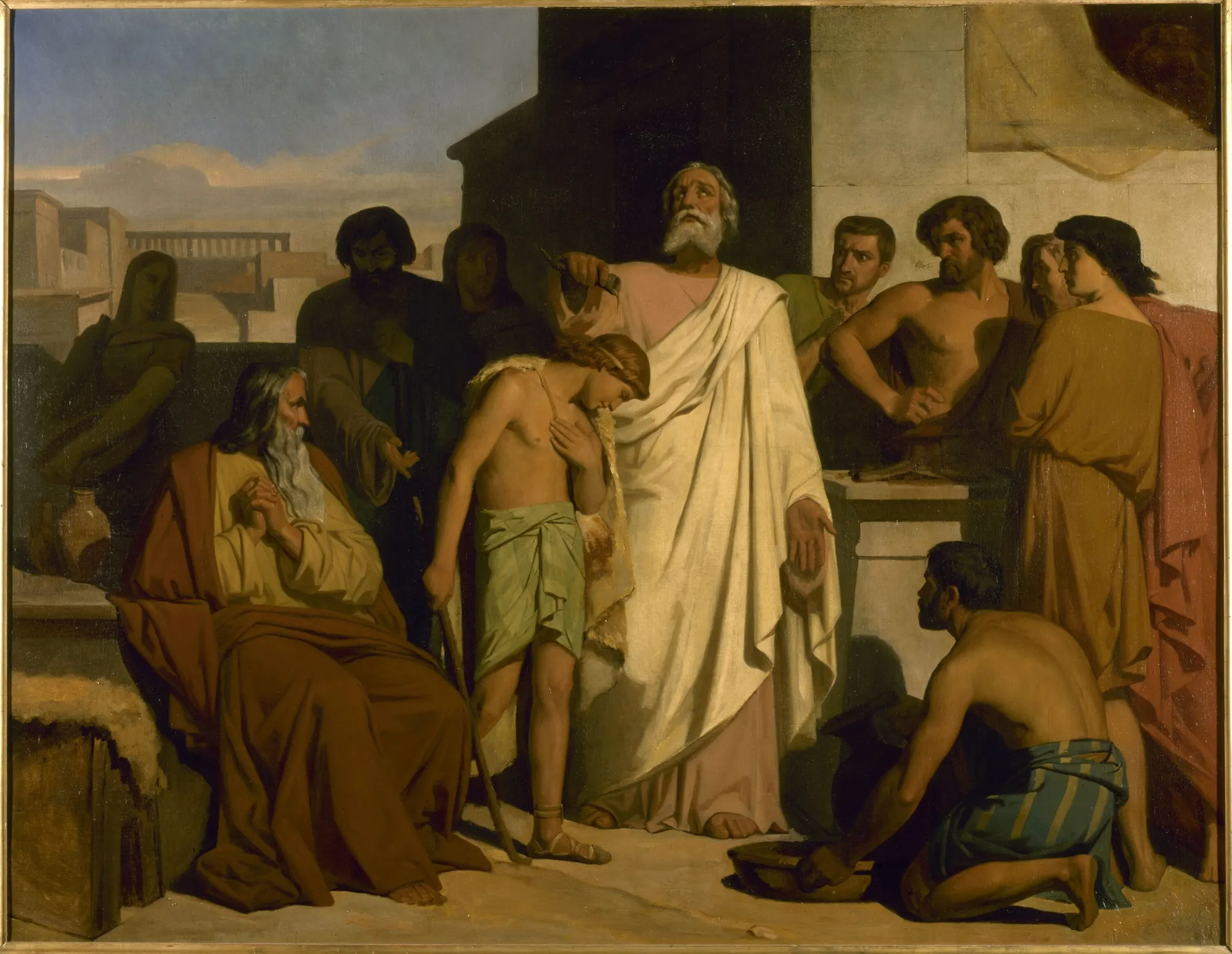
Who and where
1 name in this verse with a page on the site.
This page draws on 9 works. Open the list of works
This page draws on Adam Clarke, Commentary on the Bible; Albert Barnes, Notes on the Old Testament; Albert Barnes, Notes, Explanatory and Practical, on the Old and New Testaments (1832-1869); Bede, Commentary on Samuel; Jamieson, Fausset & Brown, Commentary Critical and Explanatory on the Whole Bible; John Cassian, CONFERENCE 17.18.1-2; John Gill, Exposition of the Old Testament (1748-1763); John Wesley, Explanatory Notes upon the Old Testament and Matthew Henry, Commentary on the Whole Bible.