
1 Samuel 8:5
in 1 Samuel 8“Look,” they said, “you are old, and your sons do not walk in your ways. Now appoint a king to judge us like all the other nations.”
BSB
The same verse in ASV and KJV ▾
ASV
and they said unto him, Behold, thou art old, and thy sons walk not in thy ways: now make us a king to judge us like all the nations.
KJV
And said unto him, Behold, thou art old, and thy sons walk not in thy ways: now make us a king to judge us like all the nations.
⋯
This verse in 1 Samuel 8
Commentary
7 notes on this verseMake us a king - Hitherto, from the time in which they were a people, the Israelites were under a theocracy, they had no other king but God. Now they desire to have a king like the other nations around them, who may be their general in battle; for this is the point at which they principally aim.
This site's exposition
all the elders of Israel gathered together
on 1 Samuel 8:4-6
The elders come and ask, “Now appoint a king to judge us like all the other nations”, the words Deuteronomy 17:14 foretold Israel would say. The complaint against his sons is real. Samuel takes it as a personal grievance and prays, and the Lord's answer in verse 7 corrects him.
This site's exposition
you are old
The elders give two reasons, Samuel's age and his sons' conduct, and ask for a king. Adam Clarke notes that God alone had been Israel's king, and the elders wanted a king like the nations to lead them in battle. Matthew Henry notes they ask for any king at all.
The record, by era
The Medieval Church1 voice
A commentator
Gregory the DialogistCommentary on 1 Kings, Book 4, Chapter 1 · Written before 604.
proposed
3. But for those who were living under spiritual governance, to ask for a king—what else is it than to eagerly desire to transform that same spiritual leadership into secular domination? Yet when holy men see that they are despised by their subjects, what displeases them is not so much that they are despised, but that those who despise them do not please God.
The Puritans and the Awakening2 voices
They knew it was in vain to court Samuel to take upon him the title and dignity of a king, but he must appoint them one. They do not say, "Give us a king that is wise and good, and will judge better than thy sons do," but, "Give us a king," any body that will but make a figure.
And said unto him, behold, thou art old,....
The Nineteenth Century1 voice
Make us a king - Hitherto, from the time in which they were a people, the Israelites were under a theocracy, they had no other king but God. Now they desire to have a king like the other nations around them, who may be their general in battle; for this is the point at which they principally aim.
The words behind it
16 Hebrew wordsEvery Hebrew word of this verse in the order it stands, with what it means and the door to its own study. The last column counts the times a word stands in the whole Bible: the rarer the word, the more the places it appears belong together.
| Hebrew | Sound | Meaning | Word study | In the Bible |
|---|---|---|---|---|
| וַיֹּאמְר֣וּ | vaiyomeru | and they said | H559 → | 5305 times |
| אֵלָ֗יו | ʾelav | to him | H413 → | 5510 times |
| הִנֵּה֙ | hineh | here! | H2009 → | 843 times |
| אַתָּ֣ה | ʾatah | you | H859 → | 1094 times |
| זָקַ֔נְתָּ | zakanta | you have become old | H2204 → | 27 times |
| וּבָנֶ֕יךָ | uvaneikha | and sons your | H1121 → | 4930 times |
| לֹ֥א | lo' | not | H3808 → | 5168 times |
| הָלְכ֖וּ | halekhu | they have walked | H1980 → | 1546 times |
| בִּדְרָכֶ֑יךָ | bidrakheikha | in ways your | H1870 → | 707 times |
| עַתָּ֗ה | ʾatah | now | H6258 → | 433 times |
| שִֽׂימָה־ | simah- | appoint ! | H7760 → | 584 times |
| לָּ֥נוּ | lanu | for <the> us | ||
| מֶ֛לֶךְ | melekh | a king | H4428 → | 2525 times |
| לְשָׁפְטֵ֖נוּ | leshafetenu | to judge us | H8199 → | 202 times |
| כְּכָל־ | kekhol- | like all | H3605 → | 5413 times |
| הַגּוֹיִֽם׃ | hagoyim | the nations | H1471 → |
וַיֹּאמְר֣וּand they said
vaiyomeruH559 →5305 times
אֵלָ֗יוto him
ʾelavH413 →5510 times
הִנֵּה֙here!
hinehH2009 →843 times
אַתָּ֣הyou
ʾatahH859 →1094 times
זָקַ֔נְתָּyou have become old
zakantaH2204 →27 times
וּבָנֶ֕יךָand sons your
uvaneikhaH1121 →4930 times
לֹ֥אnot
lo'H3808 →5168 times
הָלְכ֖וּthey have walked
halekhuH1980 →1546 times
בִּדְרָכֶ֑יךָin ways your
bidrakheikhaH1870 →707 times
עַתָּ֗הnow
ʾatahH6258 →433 times
שִֽׂימָה־appoint !
simah-H7760 →584 times
לָּ֥נוּfor <the> us
lanu
מֶ֛לֶךְa king
melekhH4428 →2525 times
לְשָׁפְטֵ֖נוּto judge us
leshafetenuH8199 →202 times
כְּכָל־like all
kekhol-H3605 →5413 times
הַגּוֹיִֽם׃the nations
hagoyimH1471 →
A shaded row is a word that stands 400 times or fewer in the Bible.
The walk
5 stopsEach card is a verse this one points to, and under it the verses that one points to in turn. Where several paths arrive at the same place, that place is listed first: the text keeps returning to it.
Through
Numbers 23:9For I see them from atop the rocky cliffs, and I watch them from the hills. Behold, a people dwelling apart, not reckoning themselves among the nations.
it leads to
- Deuteronomy 33:28
So Israel dwells securely; the fountain of Jacob lives untroubled in a land of grain and new wine, where even the heavens drip with dew.
- Deuteronomy 32:8
When the Most High gave the nations their inheritance, when He divided the sons of man, He set the boundaries of the peoples according to the number of the sons of God.
- Exodus 33:16
For how then can it be known that Your people and I have found favor in Your sight, unless You go with us? How else will we be distinguished from all the other people…
- Esther 3:8
Then Haman informed King Xerxes, “There is a certain people scattered and dispersed among the peoples of every province of your kingdom. Their laws are different from everyone else’s, and they do not obey…
- Ezra 9:2
Indeed, the Israelites have taken some of their daughters as wives for themselves and their sons, so that the holy seed has been mixed with the people of the land. And the leaders and…
- Deuteronomy 33:28
Where this verse is studied
On this page
Studies5
On this chapter
About 1 Samuel
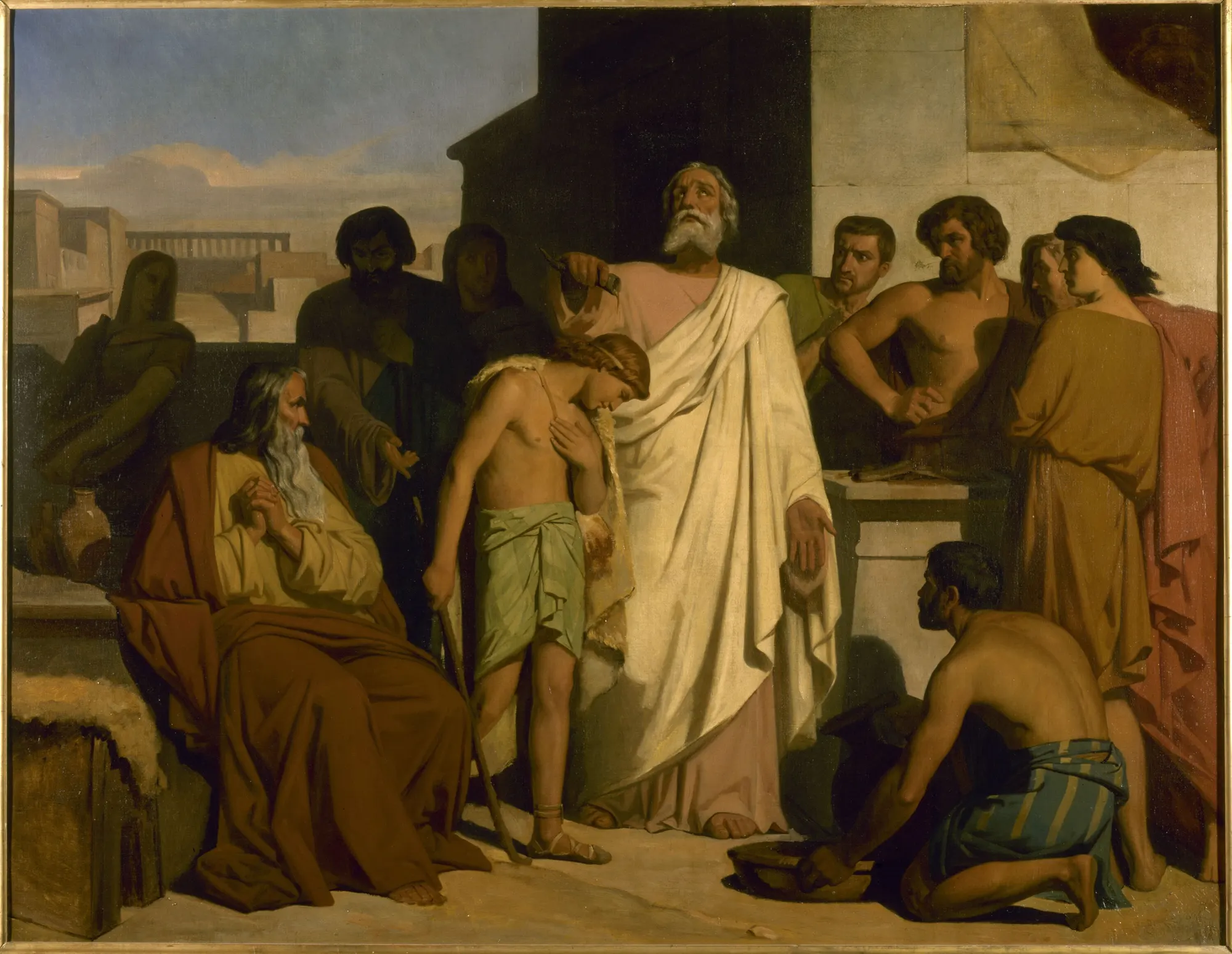
This page draws on Adam Clarke, Commentary on the Bible; Gregory the Dialogist, Commentary on 1 Kings, Book 4, Chapter 1; John Gill, Exposition of the Old Testament (1748-1763) and Matthew Henry, Commentary on the Whole Bible.