
1 Chronicles 28:2
in 1 Chronicles 28Then King David rose to his feet and said, “Listen to me, my brothers and my people. It was in my heart to build a house as a resting place for the ark of the covenant of the LORD and as a footstool for our God. I had made preparations to build it,
BSB
The same verse in ASV and KJV ▾
ASV
Then David the king stood up upon his feet, and said, Hear me, my brethren, and my people: as for me, it was in my heart to build a house of rest for the ark of the covenant of Jehovah, and for the footstool of our God; and I had made ready for the building.
KJV
Then David the king stood up upon his feet, and said, Hear me, my brethren, and my people: As for me, I had in mine heart to build an house of rest for the ark of the covenant of the Lord, and for the footstool of our God, and had made ready for the building:
⋯
This verse in 1 Chronicles 28
Commentary
8 notes on this verseDavid - stood up upon his feet - He was now very old, and chiefly confined to his bed, (see 1Ki 1:47); and while he was addressing his son Solomon, he continued on the bed; but when all the principal nobles of his kingdom came before him he received strength to arise and address them, standing on his feet.
This site's exposition
summoned all the leaders of Israel
on 1 Chronicles 28:1-2
David summons the national leadership to Jerusalem. This scene moves the charge to Solomon from the private setting of chapter 22 into a public assembly. He calls the coming house “a house as a resting place for the ark” and “a footstool for our God”.
This site's exposition
rose to his feet and
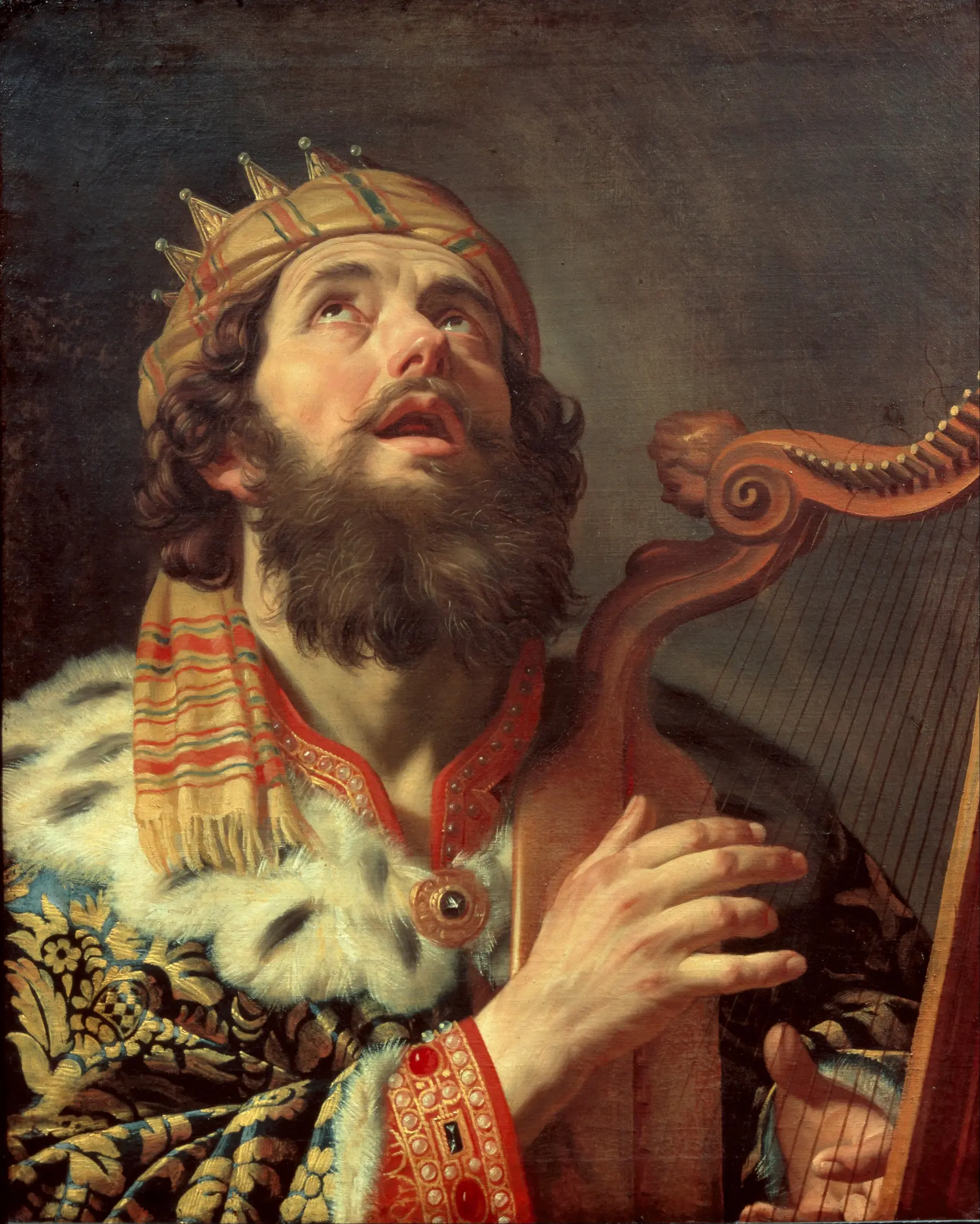
King David rises to his feet. Adam Clarke notes that David was old and mostly kept to his bed, as 1 Kings 1:47 shows, yet stood to speak to the nobles. Matthew Henry reads the footstool as the earth and its temples, with heaven as God's throne of glory.
The record, by era
The Puritans and the Awakening4 voices
This he had signified to Solomon before, ch. xxii. A house of rest for the ark is here said to be a house of rest for the footstool of our God; for heaven is his throne of glory; the earth, and the most magnificent temples that can be built upon it, are but his footstool: so much difference is there between the manifestations of the divine glory in the upper and lower world.
), in reverence to God whose will he was to declare, and in reverence to this solemn assembly of the Israel of God, as if he looked upon himself, though major singulis -- greater than any individual among them, yet minor universis -- less than the whole of them together.
quarantine:debris (2026-07-29) — leading-punctuation+unbalanced-parens
Foot-stool - An house for the ark is here styled an house for the foot-stool of our God. Heaven is his throne: the earth and the most magnificent temples thereon are but his foot-stool. So much difference is there between the manifestations of his glory, in the upper and in the lower world!
Then David the king stood up upon his feet,....
The Nineteenth Century1 voice
A commentator
Albert Barnes1798–1870
Notes, Explanatory and Practical, on the Old and New Testaments (1832-1869)
proposed
My brethren - David retains the modest phrase of a king not born in the purple, but raised from the ranks of the people (see 1Sa 30:23; 2Sa 19:12). No later Jewish monarch would have thus addressed his subjects. The footstool of our God - David views the ark as God’s “footstool,” because he was enthroned above it visibly in the Shechinah, or luminous cloud, present from time to time above the mercy seat and between the cherubim (compare the marginal references).
How the passage was read
What the Jewish commentators add
On the verses either side of this one
And David assembled all the leaders of Israel These are the leaders, the leaders of the tribes, as it is written (above:16): “And over the tribes of Israel, the leader of the Reubenites was..”
This section is reception history: how the passage was read and kept in the Jewish tradition. Where a reading parts from an essential of the Christian faith, the section says so at that point.
Texts and citation data: Sefaria; each excerpt follows its version’s licence. 5 further sources are cited on this chapter that carry no English text this site may quote or only restate the verse.
The words behind it
23 Hebrew wordsEvery Hebrew word of this verse in the order it stands, with what it means and the door to its own study. The last column counts the times a word stands in the whole Bible: the rarer the word, the more the places it appears belong together.
| Hebrew | Sound | Meaning | Word study | In the Bible |
|---|---|---|---|---|
| וַיָּ֨קָם | vaiyakom | and he arose | H6965 → | 628 times |
| דָּוִ֤יד | david | David | H1732 → | 999 times |
| הַמֶּ֙לֶךְ֙ | hamelekh | the king | H4428 → | 2525 times |
| עַל־ | ʾal- | on | H5921 → | 5755 times |
| רַגְלָ֔יו | raglav | feet his | H7272 → | |
| וַיֹּ֕אמֶר | vaiyomer | and he said | H559 → | 5305 times |
| שְׁמָע֖וּנִי | shemauni | listen to me | H8085 → | 1159 times |
| אַחַ֣י | ʾachai | O brothers my | H251 → | 630 times |
| וְעַמִּ֑י | veami | and people my | H5971 → | 1873 times |
| אֲנִ֣י | ʾani | I | H589 → | 874 times |
| עִם־ | ʾim- | [was] with | H5973 → | 1050 times |
| לְבָבִ֡י | levavi | heart my | H3824 → | 252 times |
| לִבְנוֹת֩ | livnot | to build | H1129 → | 376 times |
| בֵּ֨ית | beit | a house of | H1004 → | 2046 times |
| מְנוּחָ֜ה | menuchah | rest | H4496 → | |
| לַאֲר֣וֹן | laaron | for [the] ark of | H727 → | 202 times |
| בְּרִית־ | berit- | [the] covenant of | H1285 → | 284 times |
| יְהוָ֗ה | yahweh | Yahweh | H3068 → | 6520 times |
| וְלַהֲדֹם֙ | velahadom | and to [the] footstool of | H1916 → | |
| רַגְלֵ֣י | raglei | [the] feet of | H7272 → | |
| אֱלֹהֵ֔ינוּ | ʾeloheinu | God our | H430 → | 2601 times |
| וַהֲכִינ֖וֹתִי | vahakhinoti | and I prepared | H3559 → | 217 times |
| לִבְנֽוֹת׃ | livnot | to build | H1129 → | 376 times |
וַיָּ֨קָםand he arose
vaiyakomH6965 →628 times
דָּוִ֤ידDavid
davidH1732 →999 times
הַמֶּ֙לֶךְ֙the king
hamelekhH4428 →2525 times
עַל־on
ʾal-H5921 →5755 times
רַגְלָ֔יוfeet his
raglavH7272 →
וַיֹּ֕אמֶרand he said
vaiyomerH559 →5305 times
שְׁמָע֖וּנִיlisten to me
shemauniH8085 →1159 times
אַחַ֣יO brothers my
ʾachaiH251 →630 times
וְעַמִּ֑יand people my
veamiH5971 →1873 times
אֲנִ֣יI
ʾaniH589 →874 times
עִם־[was] with
ʾim-H5973 →1050 times
לְבָבִ֡יheart my
levaviH3824 →252 times
לִבְנוֹת֩to build
livnotH1129 →376 times
בֵּ֨יתa house of
beitH1004 →2046 times
מְנוּחָ֜הrest
menuchahH4496 →
לַאֲר֣וֹןfor [the] ark of
laaronH727 →202 times
בְּרִית־[the] covenant of
berit-H1285 →284 times
יְהוָ֗הYahweh
yahwehH3068 →6520 times
וְלַהֲדֹם֙and to [the] footstool of
velahadomH1916 →
רַגְלֵ֣י[the] feet of
ragleiH7272 →
אֱלֹהֵ֔ינוּGod our
ʾeloheinuH430 →2601 times
וַהֲכִינ֖וֹתִיand I prepared
vahakhinotiH3559 →217 times
לִבְנֽוֹת׃to build
livnotH1129 →376 times
A shaded row is a word that stands 400 times or fewer in the Bible.
The walk
8 stopsEach card is a verse this one points to, and under it the verses that one points to in turn. Where several paths arrive at the same place, that place is listed first: the text keeps returning to it.
Through
Isaiah 66:1This is what the LORD says: “Heaven is My throne, and earth is My footstool. What kind of house will you build for Me? Or where will My place of repose be?
it leads to
- Psalms 132:7
Let us go to His dwelling place; let us worship at His footstool.
Reached by 3 separate paths from here.
- Acts 7:48–50
However, the Most High does not dwell in houses made by human hands. As the prophet says:
- Acts 17:24
The God who made the world and everything in it is the Lord of heaven and earth and does not live in temples made by human hands.
- Matthew 5:34–35
But I tell you not to swear at all: either by heaven, for it is God’s throne;
- 1 Kings 8:27
But will God indeed dwell upon the earth? Even heaven, the highest heaven, cannot contain You, much less this temple I have built.
- Psalms 132:7
Through
Acts 7:49‘Heaven is My throne and the earth is My footstool. What kind of house will you build for Me, says the Lord, or where will My place of repose be?
it leads to
- Isaiah 66:1
This is what the LORD says: “Heaven is My throne, and earth is My footstool. What kind of house will you build for Me? Or where will My place of repose be?
Reached by 2 separate paths from here.
- Psalms 11:4
The LORD is in His holy temple; the LORD is on His heavenly throne. His eyes are watching closely; they examine the sons of men.
- John 4:21
“Believe Me, woman,” Jesus replied, “a time is coming when you will worship the Father neither on this mountain nor in Jerusalem.
- Isaiah 66:1
Where this verse is studied
On this page
About 1 Chronicles
Who and where
1 name in this verse with a page on the site.
This page draws on Adam Clarke, Commentary on the Bible; Albert Barnes, Notes, Explanatory and Practical, on the Old and New Testaments (1832-1869); John Gill, Exposition of the Old Testament (1748-1763); John Wesley, Explanatory Notes upon the Old Testament; Keil, The Books of the Chronicles and Matthew Henry, Commentary on the Whole Bible.