
Romanschapter 13
14 verses · Paul · AD 56 or 57 · Paul's letters
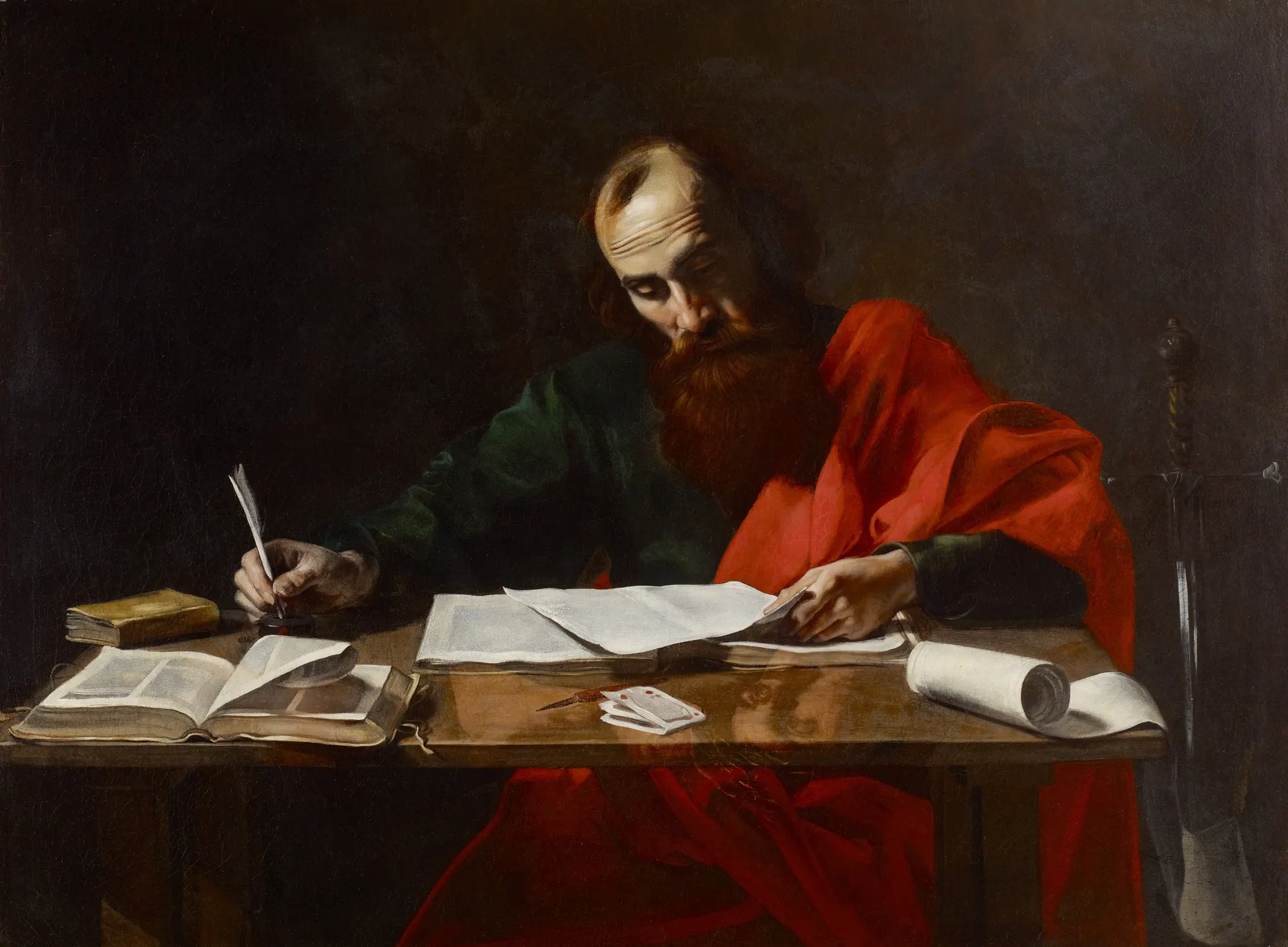
For he is God’s servant for your good. But if you do wrong, be afraid, for he does not carry the sword in vain. He is God’s servant, an agent of retribution to the wrongdoer.
Introduction
Paul, Paul's letters, Romans Overview.
Paul wrote this chapter to believers in the capital of the empire, a city he had not yet visited. They lived under Roman magistrates and Roman taxes, and some of them had been driven from the city under an earlier emperor. The chapter turns from life inside the church to the believer's place under rulers and among neighbors. Listen for how often the words owe and due return, and for the one debt that stays open. Listen also for the change of light at the close. Hear it as teaching for anyone who must live well under rulers he did not choose.
Context
- Who
- House churches in the imperial capital, where any hint of sedition could destroy them.
- What
- Paul's teaching on the believer's duty to the governing authorities, on love as the one debt always owed, and on living as people of the coming day.
- Where
- Written from Corinth, in the Roman province of Achaia, to the church in Rome, the capital of the empire.
- When
- About AD 57, during Paul's three months in Greece before he carried the collection to Jerusalem, a dating most scholars accept with good confidence.
- Why
- To show believers in Rome how the renewed life of chapter 12 is lived under earthly rulers and among neighbors while their salvation draws near.
Historical context
Taxes were a live grievance exactly when this letter was written. The historian Tacitus reports that in AD 58 public anger at the tax contractors was so intense that Nero considered abolishing indirect taxes altogether. Paul's specific mention of paying tribute and customs lands in that atmosphere.
Show the rest of the historical context, 3 more paragraphs
Indirect taxes were farmed out: the state sold the right to collect, and the collectors made their profit on top. That system produced the hatred attached to tax collectors throughout the New Testament, and it made "pay what you owe" a harder instruction than it sounds.
Christians in Rome were vulnerable. They were a small, unlicensed movement associated in official minds with recent Jewish disturbances, meeting privately at night in a city that distrusted private associations. A reputation for sedition would have been fatal, and within a decade the accusation of hatred of the human race would be used against them.
The chapter's ending, with night nearly over and armour to be put on, uses the ordinary rhythm of a city that shut down after dark. Roman moralists themselves treated night as the time of carousing and quarrels.
Significance
The first hearers were told that the governing authority, whatever its character, held its position under God and served a purpose in restraining evil, and that this obligation stopped short of anything resembling worship.
Show the rest of the significance, 1 more paragraph
Then Paul cancels the debt list with one exception. Owe no one anything except to love one another, because love does no wrong to a neighbour and so fulfils the Law. Taxes get paid; love never gets finished.
The heads below are this chapter's scenes. The numbered points under each are its verses.
Be Subject to the Higher Powers
Romans 13:1-2
submit himself to the governing authorities: Paul grounds the command on one fact, that no authority exists except the one God gives. The office stands whatever the man who holds it is like. Whoever resists it opposes what God has set in place and brings judgment on himself.
Romans 13:1
As therefore the devil lied at the beginning, so did he also in the end, when he said, "All these are delivered unto me, and to whomsoever I will I give them." For it is not he who has appointed the kingdoms of this world, but God; for "the heart of the king is in the hand of God." And the Word also says by Solomon, "By me kings do reign, and princes administer justice. By me chiefs are raised up, and by me kings rule the earth."
Irenaeus · written before 202 · Against Heresies Book Vpatristic
3 more voices on this verseWhat preachers and commentators have said about this verse, in their own words.
Romans 13:1
“By him kings reign, Prov. viii. The usurpation of power and the abuse of power are not of God, for he is not the author of sin; but the power itself is. As our natural powers, though often abused and made instruments of sin, are from God's creating power, so civil powers are from God's governing power.”
Matthew Henry · Commentary on the Whole Bible (1707-1721)puritan
Romans 13:1
“Let every soul be subject to the supreme powers - An admonition peculiarly needful for the Jews. Power, in the singular number, is the supreme authority; powers are they who are invested with it.”
John Wesley · Explanatory Notes upon the New Testament (1755)evangelical
Romans 13:1
“Let every soul be subject unto the higher powers,.... The apostle having finished his exhortations to this church, in relation to the several duties incumbent upon both officers and private Christians, as members of a church, and with reference to each other, and their moral conduct in the world; proceeds to advise, direct, and exhort them to such duties as were relative to them as members of a civil society; the former chapter contains his Christian Ethics, and this his Christian Politics.”
whoever resists authority is opposing what God has set in place: Clarke hears a play on one Greek root, the man who sets himself in order against authority opposing the order God has set in place. The judgment those who resist bring on themselves comes from God, whose authority stands in the ruler's. The penalty is God's own.
Romans 13:2
“And therefore he says: Therefore he who resists the power resists the ordinance of God; and those who resist acquire damnation for themselves. He is not here speaking of those powers which bring persecutions upon the faith; for in that case it must be said: We ought to obey God rather than men. Rather he is speaking of those ordinary powers which are not a terror to the good work, but to the evil: and whoever resists these certainly procures damnation for himself according to the quality of his deeds.”
Origen of Alexandria · written before 253 · Commentary on the Epistle to the Romanspatristic
2 more voices on this verse
Romans 13:2
“Whosoever resisteth the power - Ὁ αντιτασσομενος, He who sets himself in order against this order of God; τῃ του Θεου διαταγῃ, and they who resist, οἱ ανθεστηκοτες, they who obstinately, and for no right reason, oppose the ruler, and strive to unsettle the constitution, and to bring about illegal changes, Shall receive to themselves damnation - Κριμα, condemnation; shall be condemned both by the spirit and letter of that constitution, which, under pretense of defending or improving, they are indirectly labouring to subvert.”
Adam Clarke · Commentary on the Bible (1810-1826)evangelical
Romans 13:2
“Whosoever therefore resisteth the power--"So that he that setteth himself against the authority." resisteth the ordinance of God; and they that resist shall receive to themselves damnation--or, "condemnation," according to the old sense of that word; that is, not from the magistrate, but from God, whose authority in the magistrate's is resisted.”
Jamieson, Fausset & Brown · Commentary Critical and Explanatory on the Whole Bible (1871)reformed
Romans 13:3-4
do what is right, and you will have his approval: The ruler is called God's servant twice in verse 4, once for the good of the one who obeys and once against the wrongdoer. The sword names the state's power to punish, and an agent of retribution repays a wrong with the penalty it has earned.
Romans 13:3
“For rulers - The apostle here speaks of rulers “in general.” It may not be “universally” true that they are not a terror to good works, for many of them have “persecuted” the good; but it is generally true that they who are virtuous have nothing to fear from the laws. It is “universally” true that the design of their appointment by God was, not to injure and oppress the good, but to detect and punish the evil. Magistrates, “as such,” are not a terror to good works.”
2 more voices on this verse
Romans 13:3
“A terror to evil works - Only. Wouldest thou then not be afraid - There is one fear which precedes evil actions, and deters from them: this should always remain. There is another fear which follows evil actions: they who do well are free from this.”
John Wesley · Explanatory Notes upon the New Testament (1755)evangelical
Romans 13:3
“This is a good argument, but it is low for a Christian. We must be subject, not only for wrath, but for conscience' sake; not so much formidine pœnæ--from the fear of punishment, as virtutis amore--from the love of virtue.”
Matthew Henry · Commentary on the Whole Bible (1707-1721)puritan
For he is God’s servant for your good: Irenaeus traced the ruler's office to man's departure from God. Men who had lost the fear of God were given the fear of man to restrain murder and greed. The sword serves the good.
Romans 13:4
For since man, by departing from God, reached such a pitch of fury as even to look upon his brother as his enemy, and engaged without fear in every kind of restless conduct, and murder, and avarice; God imposed upon mankind the fear of man, as they did not acknowledge the fear of God, in order that, being subjected to the authority of men, and kept under restraint by their laws, they might attain to some degree of justice, and exercise mutual forbearance through dread of the sword suspended full in their view, as the apostle says: "For he beareth…
Irenaeus · written before 202 · Against Heresies Book Vpatristic
1 more voice on this verse
Romans 13:4
“First, As a holy God, that hates sin, against which, as it appears and puts up its head, a public testimony is thus borne. Secondly, As King of nations, and the God of peace and order, which are hereby preserved. Thirdly, As the protector of the good, whose persons, families, estates, and names, are by this means hedged about.”
Matthew Henry · Commentary on the Whole Bible (1707-1721)puritan
Romans 13:5-7
as a matter of conscience: Submission is owed for two reasons, to escape punishment and as a matter of conscience. Conscience is the inward sense of what is owed to God, and it holds when no officer is watching. Verse 7 lists four dues, each paid to the one it belongs to.
Romans 13:5
“Therefore it is necessary to be subject, not only because of wrath, but also because of conscience. For on this account you also pay tributes. For they are God's ministers, attending upon this very thing. By these words Paul indeed orders the Church of God, that, doing nothing adverse to the princes and powers of this world, it may through quiet and tranquillity of life carry out the work of righteousness and piety.”
Origen of Alexandria · written before 253 · Commentary on the Epistle to the Romanspatristic
1 more voice on this verse
Romans 13:5
“Wherefore - διό dio. The “reasons” why we should be subject, which the apostle had given, were two, (1) That government was appointed by God. (2) That violation of the laws would necessarily expose to punishment. Ye must needs be - It is “necessary” ἀναγκή anagkē to be. This is a word stronger than what implies mere “fitness” or propriety. It means that it is a matter of high obligation and of “necessity” to be subject to the civil ruler.”
This is also why you pay taxes: Irenaeus answered teachers who read the authorities of verse 1 as angelic powers by pointing to the taxes here, which are paid to human rulers. Theophylact reads the payment as a confession that the ruler serves those who pay him. Taxes support God's servants at their work.
Romans 13:6
“For this cause pay ye tribute also - Because civil government is an order of God, and the ministers of state must be at considerable expense in providing for the safety and defense of the community, it is necessary that those in whose behalf these expenses are incurred should defray that expense; and hence nothing can be more reasonable than an impartial and moderate taxation, by which the expenses of the state may be defrayed, and the various officers, whether civil or military, who are employed for the service of the public, be adequately remunerated.”
Adam Clarke · Commentary on the Bible (1810-1826)evangelical
Pay everyone what you owe him: Theodore of Mopsuestia reads taxes as the levy on property and revenue as the levy on goods. Respect and honor are owed as surely as taxes.
Love Is the Fulfilment of the Law
Romans 13:8-10
he who loves his neighbor has fulfilled the law: Every debt is paid off except the debt of love. Paul lists four commandments from the second half of the Ten Commandments. He sums them in one decree drawn from Leviticus 19:18, for love does no wrong to its neighbor and so fulfills the whole law.
Romans 13:8
“Owe no man anything, but to love one another--"Acquit yourselves of all obligations except love, which is a debt that must remain ever due" [HODGE]. for he that loveth another hath fulfilled the law--for the law itself is but love in manifold action, regarded as matter of duty.”
Jamieson, Fausset & Brown · Commentary Critical and Explanatory on the Whole Bible (1871)reformed
2 more voices on this verse
Romans 13:8
“To love one another - An eternal debt, which can never be sufficiently discharged; but yet if this be rightly performed, it discharges all the rest. For he that loveth another - As he ought. Hath fulfilled the whole law - Toward his neighbour.”
John Wesley · Explanatory Notes upon the New Testament (1755)evangelical
Romans 13:8
“Owe no man any thing, but to love one another - In the preceding verses the apostle has been showing the duty, reverence, and obedience, which all Christians, from the highest to the lowest, owe to the civil magistrate; whether he be emperor, king, proconsul, or other state officer; here he shows them their duty to each other: but this is widely different from that which they owe to the civil government: to the first they owe subjection, reverence, obedience, and tribute; to the latter they owe nothing but mutual love, and those offices which necessarily spring from it.”
Adam Clarke · Commentary on the Bible (1810-1826)evangelical
are summed up in this one decree: Chrysostom marks the verb summed up, which gathers every commandment of the law into one decree. Tertullian pressed the verse against Marcion, for the decree that sums the law comes from the law itself. So the God who gave the law is the God of love.
Romans 13:9
“For this - “This” which follows is the sum of the laws. “This” is to regulate us in our conduct toward our neighbor. The word “this” here stands opposed to “that” in Rom 13:11. This law of love would prompt us to seek our neighbor’s good; “that” fact, that our salvation is near, would prompt us to be active and faithful in the discharge of all the duties we owe to him.”
1 more voice on this verse
Romans 13:9
“He that tempts others to sin, and defiles their minds and consciences, though he may pretend the most passionate love ( Prov. vii. 15, 18 ), does really hate them, just as the devil does, who wars against the soul.”
Matthew Henry · Commentary on the Whole Bible (1707-1721)puritan
Cross references
Romans 13:9
- QuotingExodus 20:13“You shall not murder.”
'Thou shalt not commit adultery... kill... steal', commandments summed in love
- QuotingLeviticus 19:18“Do not seek revenge or bear a grudge against any of your people, but love your neighbor as yourself. I am the LORD.”
'Thou shalt love thy neighbour as thyself', the fulfilling of the law
Love does no wrong to its neighbor: Chrysostom finds two virtues in love here, abstaining from every wrong and doing good, and the fulfillment of the law holds both. Aquinas sets the verse out as a syllogism, since every commandment of the law aims to keep a man from wrong. The one who loves keeps them all.
Romans 13:10
“But that this is the first and greatest commandment, and that the next [has respect to love] towards our neighbour, the Lord has taught, when He says that the entire law and the prophets hang upon these two commandments. Moreover, He did not Himself bring down [from heaven] any other commandment greater than this one, but renewed this very same one to His disciples, when He enjoined them to love God with all their heart, and others as themselves.”
Irenaeus · written before 202 · Against Heresies Book IVpatristic
1 more voice on this verse
Romans 13:10
“For it is a sin not only to devise evil against thy neighbour, but to withhold good from those to whom it is due; both are forbidden together, Prov. iii. This proves that love is the fulfilling of the law, answers all the end of it; for what else is that but to restrain us from evil-doing, and to constrain us to well-doing?”
Matthew Henry · Commentary on the Whole Bible (1707-1721)puritan
The Night Is Far Spent: Put Ye On the Lord Jesus
Romans 13:11-12
wake up from your slumber: The hour has come to wake from sleep, for salvation stands nearer now than when the Roman Christians first believed. The present age is the last dark stretch before morning, so the deeds of darkness are laid aside for the armor of light.
Romans 13:11
BUT what "salvation" is this? The question is important because we very commonly speak of "salvation" as that state of Divine Grace into which everyone that believes in Jesus is introduced when he passes from death unto life, being delivered from the power of darkness and translated into the kingdom of God's dear Son. This sweet assurance we celebrate in our hymns of praise— "The moment a sinner believes And trusts in His crucified God, His pardon at once he receives, Redemption in full through His blood."
1 more voice on this verse
Romans 13:11
“The apostle therefore, for the obviating of this reproach and the clearing of Christianity from it, shows that obedience to civil magistrates is one of the laws of Christ, whose religion helps to make people good subjects; and it was very unjust to charge upon Christianity that faction and rebellion to which its principles and rules are so directly contrary.”
Matthew Henry · Commentary on the Whole Bible (1707-1721)puritan
The night is nearly over: Theodore of Mopsuestia reads the night as the time before Christ came and the day as the age His coming opened. Diodorus of Tarsus makes the day the rest of this life, the time for good works, and the night the time when work ends.
Romans 13:12
“The night--of evil is far spent, the day--of consummated triumph over it is at hand: let us therefore cast off--as a dress the works of darkness--all works holding of the kingdom and period of darkness, with which, as followers of the risen Saviour, our connection has been dissolved. and let us put on the armour of light--described at length in Eph 6:11-18.”
Jamieson, Fausset & Brown · Commentary Critical and Explanatory on the Whole Bible (1871)reformed
1 more voice on this verse
Romans 13:12
“The night is far spent - If we understand this in reference to the heathen state of the Romans, it may be paraphrased thus: The night is far spent - heathenish darkness is nearly at an end. The day is at hand - the full manifestation of the Sun of righteousness, in the illumination of the whole Gentile world approaches rapidly. The manifestation of the Messiah is regularly termed by the ancient Jews יום yom, day, because previously to this all is night, Bereshith rabba sect. 91, fol.”
Adam Clarke · Commentary on the Bible (1810-1826)evangelical
Romans 13:13-14
behave decently, as in the daytime: The six vices pair into three: appetite, sex, and temper. Against them stands the command to clothe yourself with the Lord Jesus Christ, worn like the armor of light.
Romans 13:13
“Let us walk - To “walk” is an expression denoting “to live;” let us “live,” or “conduct,” etc. Honestly - The word used here means rather in a “decent’ or “becoming” manner; in a manner “appropriate” to those who are the children of light. As in the day - As if all our actions were seen and known. People by day, or in open light, live decently; their foul and wicked deeds are done in the night. The apostle exhorts Christians to live as if all their conduct were seen, and they had nothing which they wished to conceal.”
1 more voice on this verse
Romans 13:13
“Whence the apostle also says: "The night is past, and the day is at hand." Therefore this present age is the night: but the age to come is the day. Whence the apostle says: "The night is past, and the day is at hand. Let us walk honestly, as in the day," he says. As we are to live in the day, that is, in the age to come, so let us now live.”
Jerome · written before 420 · Homily 46, on Psalm 133patristic
clothe yourselves with the Lord Jesus Christ: Chrysostom marks that the vices of verse 13 are named as deeds. The virtue set against them is the Lord Jesus Christ Himself, put on like the armor of light.
Romans 13:14
“Put ye on the Lord Jesus - This is in reference to what is said, Rom 13:13: Let us put on decent garments - let us make a different profession, unite with other company, and maintain that profession by a suitable conduct. Putting on, or being clothed with Jesus Christ, signifies receiving and believing the Gospel; and consequently taking its maxims for the government of life, having the mind that was in Christ. The ancient Jews frequently use the phrase putting on the shechinah, or Divine majesty, to signify the soul’s being clothed with immortality, and rendered fit for glory.”
Adam Clarke · Commentary on the Bible (1810-1826)evangelical
3 more voices on this verse
Romans 13:14
“But put ye on the Lord Jesus Christ - Herein is contained the whole of our salvation. It is a strong and beautiful expression for the most intimate union with him, and being clothed with all the graces which were in him.”
John Wesley · Explanatory Notes upon the New Testament (1755)evangelical
Romans 13:14
“Christ must be in us before He can be on us. Divine Grace puts Christ within and enables us to put on Christ without. Christ must be in the heart by faith before He can be in the life by holiness. If you need light from a lantern, the first business is to light the candle inside it—and then, as a consequence—the light shines through to be seen of men. When Christ is formed in you, the hope of Glory—do not conceal your love to Him but put Him on in your conduct as the Glory of your hope!”
Romans 13:14
“It forbids an anxious encumbering care. Indulging ourselves in an irregular desire. We are not forbidden barely to provide for the body (it is a lamp that must be supplied with oil), but we are forbidden to fulfil the lusts thereof.”
Matthew Henry · Commentary on the Whole Bible (1707-1721)puritan
How this psalm is built
The form: An exhortation that sets out the believer's duty first toward superiors and then toward all, under the one debt of love, as Aquinas classes it.
The patterns in this chapter
| Device | What it does | Where to see it |
|---|---|---|
| God's servant, said three times | Verse 4 calls the ruler God's servant twice, once for the good of the one who does right and once as the agent of retribution to the wrongdoer, and verse 6 calls the authorities God's servants a third time. Origen marks that Paul calls the worldly power and the judge of this world God's minister, and that he repeats the title more than once.Origen of Alexandria, COMMENTARY ON THE EPISTLE TO THE ROMANS, on Romans 13:4. | Romans 13:4, Romans 13:6 |
| Four dues in one verse | Verse 7 names four things owed, taxes, revenue, respect and honor, and gives each the same frame, to whom it is due. The first two are paid in money and the last two in regard. Matthew Henry reads the list as a command to pay readily and cheerfully, before the law compels it, and notes that the lands where the gospel was first preached were provinces under Rome.Matthew Henry, Commentary on the Whole Bible, on Romans 13:7. | Romans 13:7 |
| Four commandments summed in one decree | Verse 9 quotes four commandments, on adultery, murder, theft and coveting, adds any other commandments, and gathers them all under one decree: “Love your neighbor as yourself.” The word love stands five times in verses 8 to 10. John Chrysostom marks that Paul says the commandments are summed up in this saying, so that the whole of them is contained in brief.John Chrysostom, Homily on Romans 23, on Romans 13:9. | Romans 13:8, Romans 13:9, Romans 13:10 |
| Night and day, darkness and light | Verses 12 to 14 set night against day and darkness against light, and a garment taken off against a garment put on. Verse 13 then names six vices in three pairs, each pair after the word not in. John Chrysostom marks that the vices are called works while the virtue is called armor, and at the close the armor is the Lord Jesus Christ Himself.John Chrysostom, Homily on Romans 24, on Romans 13:14. | Romans 13:12, Romans 13:13, Romans 13:14 |
The structure
8 more paragraphs on the patterns
Romans 12 to 15 turn the argument of chapters 1 to 11 into daily life, and chapter 13 stands in the middle of that unit. Chapter 12 closed by forbidding the believer to repay evil and by leaving vengeance to God, and chapter 13 names the ruler as God's servant, an agent of retribution to the wrongdoer. Thomas Aquinas reads the chapter in two parts, the duty toward superiors in verses 1 to 7 and the duty toward all from verse 8 (Commentary on Romans, on Romans 13:1). Theophylact of Ohrid ties the seam the same way, since Paul turns to the authorities after teaching kindness even toward enemies (Commentary on Romans, on Romans 13:1). The chapter hands two things to chapter 14: love as the one debt, which returns at 14:15, and the dissension and jealousy of 13:13, which the dispute over food and days puts to the test.
The debate
The readers differ over how far submission runs. Origen of Alexandria holds that verse 2 speaks of the ordinary powers that punish evil, and that toward powers which persecute the faith the rule is to obey God before men (COMMENTARY ON THE EPISTLE TO THE ROMANS, on Romans 13:2). Tertullian sets the line at idolatry, with honor paid to emperors within the limits of Christian discipline (On Idolatry, on Romans 13:1). Theodoret of Cyrus binds priests, bishops and monks to obey secular rulers as far as obedience is consistent with godliness (INTERPRETATION OF THE LETTER TO THE ROMANS, on Romans 13:1). Matthew Henry holds that the power itself is from God while its usurpation and abuse are from sin (Commentary on the Whole Bible, on Romans 13:1).
The night and the day of verse 12 are also read more than one way. Theodore of Mopsuestia takes the night as the time before Christ came and the day as the time since (PAULINE COMMENTARY FROM THE GREEK CHURCH, on Romans 13:12). Diodorus of Tarsus takes the day as the rest of this life, the time for good works (PAULINE COMMENTARY FROM THE GREEK CHURCH, on Romans 13:12). Augustine of Hippo notes how many years had passed since Paul wrote, and holds that the Lord's coming is nearer still (LETTER 77, on Romans 13:12).
The Old Testament in the chapter
Verse 9 quotes four of the Ten Commandments from Exodus 20 and Deuteronomy 5, and sums them with the command of Leviticus 19:18, “Love your neighbor as yourself.” Jamieson, Fausset and Brown record that the clause on false witness is wanting in the most ancient manuscripts, and that Paul keeps to the second table of the law because love of neighbor is his subject (Commentary Critical and Explanatory on the Whole Bible, on Romans 13:9). Irenaeus (Against Heresies Book V, on Romans 13:1) and Diodorus of Tarsus (PAULINE COMMENTARY FROM THE GREEK CHURCH, on Romans 13:1) set Proverbs 8:15, where kings reign by wisdom, beside verse 1.
Where to go deeper
The authorities of verses 1 to 7 have their own page at /featured/the-governing-authorities, and the coin and its two claims at /featured/render-to-caesar. The law fulfilled in love stands at /featured/the-law-fulfilled and /featured/the-greatest-commandment. The garment of verses 12 to 14 is taught at /featured/put-off-put-on, and the day that has drawn near at /featured/second-coming.
Keep studying
Studies17
Words12
Subjects1
Sources for this chapter
The summary
Jamieson, Fausset & Brown, Commentary Critical and Explanatory; John Calvin, Commentaries; John Wesley, Explanatory Notes Upon the New Testament and Matthew Henry, Complete Commentary.
The form and classifications
Albert Barnes, Notes, Explanatory and Practical, on the Old and New Testaments (1832-1869), on Romans 13:1; John Chrysostom, Homily on Romans 23, on Romans 13:1 and Thomas Aquinas, Commentary on Romans, on Romans 13:1.
The exposition
Adam Clarke, Commentary on the Bible; Augustine, Confessions; Augustine of Hippo; Charles Hodge, Commentary on the Epistle to the Romans; Diodorus of Tarsus, PAULINE COMMENTARY FROM THE GREEK CHURCH; Gennadius of Constantinople, PAULINE COMMENTARY FROM THE GREEK CHURCH; Irenaeus, Against Heresies Book V; Jamieson, Fausset & Brown, Commentary Critical and Explanatory on the Whole Bible; John Calvin, Commentary on the Epistle to the Romans; John Chrysostom; John Gill, Exposition of the New Testament; John Wesley, Explanatory Notes upon the New Testament; Matthew Henry, Commentary on the Whole Bible; Robert Haldane, Exposition of the Epistle to the Romans; Tertullian; Theodore of Mopsuestia, PAULINE COMMENTARY FROM THE GREEK CHURCH; Theophylact of Ohrid, Commentary on Romans and Thomas Aquinas, Commentary on Romans.