
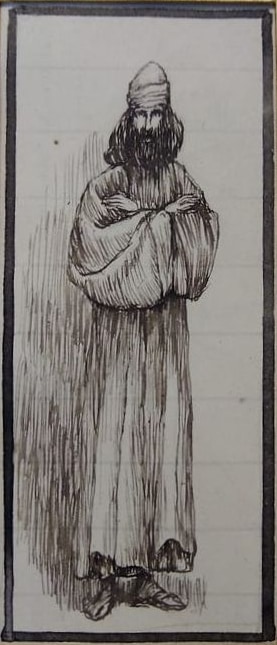
Joelchapter 1
20 verses · Joel · 9th century BC · The Twelve
This is the word of the LORD that came to Joel son of Pethuel:
Introduction
Joel, The Twelve, Joel Overview.
Joel son of Pethuel is named in the book's first line, and no king is named to date him. He spoke to Judah after a plague of locusts had stripped the land, in a country whose food, trade and temple offerings all came from grain, wine and oil. This chapter is a call to mourn, and it moves through the whole people one group at a time. Listen for who is summoned and what each has lost. Notice where the grief becomes a gathering at the house of the LORD. Watch for the phrase this chapter brings in, which the rest of the book carries to its end.
Context
- Who
- Farmers, vinedressers, and priests looking at stripped fields
- What
- A call to lament over a locust plague and a drought that have stripped Judah's fields and stopped the temple offerings.
- Where
- Judah, its fields, vineyards and orchards, and the house of the LORD in Jerusalem.
- When
- The book names no king, so the date is uncertain: the early reading places it about 835 to 800 BC under Joash, and the late reading after the exile, about 500 to 400 BC.
- Why
- To bring the whole nation to fast and cry out to the LORD, and to read the plague as a warning of the Day of the LORD.
Historical context
Desert locusts are not oversized grasshoppers. When crowding triggers the swarming phase they change colour and behaviour, form swarms that can run to billions of insects covering hundreds of square miles, travel over a hundred miles in a day on the wind, and eat roughly their own body weight daily. Modern swarms have been recorded stripping a region bare in hours. Joel's readers had just watched it.
Show the rest of the historical context, 3 more paragraphs
The four Hebrew words for the locust in the opening verse have been read as four life stages of the same insect, four successive waves, or four poetic names piled up for effect. What they describe together is total loss, one wave finishing what the last one left.
The specific damage listed is exactly what swarms do. Grain is taken in the field, the vine is stripped, and the fig tree is barked, locusts gnaw the bark off young branches, which kills the tree rather than merely costing a season. Pomegranate, palm, and apple are all named, because when the leaf is gone the orchard is gone for years.
The religious consequence is concrete. The daily grain offering and drink offering required flour, oil, and wine, and the swarm had eaten all three. The temple's regular worship physically stopped for lack of supplies, which is why the priests are told to gird themselves with sackcloth and lie all night on the altar steps.
Significance
The command that opens the book is to tell the children, and their children after them, so that the disaster becomes a story a family passes down. Joel treats the swarm as a message, not just a misfortune.
Show the rest of the significance, 1 more paragraph
Calling a fast and a solemn assembly meant shutting the country down and gathering the elders and all the inhabitants to the house of the LORD to cry out. For hearers, that was the one action a ruined agricultural people could still take.
This chapter in Jewish lifeWhat this chapter is in Jewish life and reading.
What is done
The site's own table in src/lib/hebraic/readings.ts, probed for this lane, printed no weekly portion and no Haftarah from this chapter, and no festival reading for the book. The same probe printed 54 weekly portions and 6 festival readings in the table as a whole, and a search of the file for the name Joel printed 0. That table carries the Haftarah of each weekly portion and the books read whole at the feasts, and it carries nothing for the special Sabbaths or the fast days. This card therefore names no public reading of the chapter and leaves that question to a source that holds those readings.
The corpus ties the call to a fast in the fourteenth verse to the tractate Taanit. Rashi glosses the verb there as "designate a fast", and under the same verse the corpus carries Taanit 12b:12 and Jerusalem Talmud Taanit 1:6:2. Under the eighteenth verse it carries Jerusalem Talmud Taanit 2:1:13. The corpus holds these locators without their text, so they are cited by ref alone.
How it is read
Rashi is the one commentator on this chapter whose English the corpus carries. He is quoted here from The Judaica Press complete Tanach with Rashi, translated by A. J. Rosenberg, which Sefaria reports as CC-BY, and every quotation of it is held to fifty words or fewer because the translation is modern. His notes quote the verse in that translation's wording, and those words are never quoted here.
Rashi opens on the prophet's name and on his date. He names the father as the prophet Samuel and reads the name Pethuel as a description of him, "The son of Samuel the prophet who persuaded God with his prayer". He then reports a second view as the view of others. Some place the prophecy in the seven years of famine Elisha foretold. Those years fell "during the days of Jehoram son of Ahab" (Rashi on Joel 1:1:1).
The locusts of the fourth verse he reads as real locusts foretold. "Gazam, arbeh, yelek, hasil are species of locusts", and the prophecy was that they would come in those days and strip the trees and the field (Rashi on Joel 1:4:1). When the sixth verse calls them a nation, he takes the word as a figure: "He named these locusts as a host of nations" (Rashi on Joel 1:6:1).
The rest of his notes on the chapter are glosses on the Hebrew. He reads the strong wine of the fifth verse as good wine, and gives the Aramaic word for lamentation at the eighth (Rashi on Joel 1:5:1 and 1:8:1). At the ninth he explains a verb form by setting it beside a verse of Job (Rashi on Joel 1:9:1). At the seventeenth he gives the Old French moisir, to become moldy (Rashi on Joel 1:17:1). The cattle of the eighteenth verse he describes as "closed in and astray in the forests and in the wilderness" (Rashi on Joel 1:18:1). At the twentieth he reports Dunash on the verb for the cry of the beasts. Dunash gives each creature its own Hebrew verb: the hind cries, the lion roars and the calf lows. The horse whinnies, the bird chirps and the dog barks (Rashi on Joel 1:20:1).
Rashi's other notes on the chapter are short glosses on single words and phrases. They stand at Rashi on Joel 1:2:1, Rashi on Joel 1:7:1, Rashi on Joel 1:11:1, Rashi on Joel 1:12:1, Rashi on Joel 1:15:1, Rashi on Joel 1:16:1 and Rashi on Joel 1:19:1.
The corpus carries seven further notes on this chapter without an English text, each marked linked because Sefaria holds no English version of the ref. They stand cited and unquoted at Ibn Ezra on Joel 1:1:1, Ibn Ezra on Joel 1:2:1, Ibn Ezra on Joel 1:3:1, Ibn Ezra on Joel 1:4:1 and Ibn Ezra on Joel 1:10:1. The rest stand at Ibn Ezra on Joel 1:13:1 and Radak on Joel 1:3:1.
What the rabbis say
The corpus carries 40 rabbinic locators on this chapter and the text of none, so each is cited and linked here rather than quoted. On the first verse it holds Bamidbar Rabbah 10:5, Midrash Shmuel 1:6, Ruth Rabbah (Lerner) 4:3:3 and Ruth Rabbah 4:3. On the second verse it holds Midrash Lekach Tov, Deuteronomy 33:1:2, Midrash Tannaim on Deuteronomy 33:1:3 and Sifrei Devarim 342:2. On the third verse it holds Shemot Rabbah 13:4 and Shemot Rabbah 13:5. On the fourth verse it holds Chullin 65a:9, Chullin 65b:6, Ein Yaakov (Glick Edition), Shabbat 2:22, Ein Yaakov (Glick Edition), Taanit 1:9, Ein Yaakov, Shabbat 2:29 and Ein Yaakov, Taanit 1:11. It holds Midrash Sekhel Tov, Shemot 10:1:1, Otzar Midrashim, Chuppah of Eliyahu, Seven Chupot or Eliyahu's Chuppah 5 and Shabbat 33a:1 there as well. On the fifth verse it holds Midrash Aggadah, Deuteronomy 3:23:3, Pesikta DeRav Kahana 16:8, Pesikta Rabbati 29:1 and Pesikta Rabbati 29:21.
On the sixth verse it holds Otzar Midrashim, Midrash Shelosha v'Arba'ah 4:9 and Vayikra Rabbah 5:3. On the seventh verse it holds Midrash Lekach Tov, Genesis 30:37:4, Midrash Sekhel Tov, Bereshit 30:37:3 and Midrash Sekhel Tov, Bereshit 40:10:2. On the eighth verse it holds Ein Yaakov (Glick Edition), Sanhedrin 11:87, Pesikta Rabbati 33:1 and Sanhedrin 104b:7. On the fourteenth verse it holds Jerusalem Talmud Taanit 1:6:2 and Taanit 12b:12. On the seventeenth verse it holds Jerusalem Talmud Peah 7:3:14.
On the eighteenth verse it holds Jerusalem Talmud Taanit 2:1:13, Mekhilta DeRabbi Shimon Ben Yochai 14:3, Mekhilta DeRabbi Yishmael, Tractate Vayehi Beshalach 2:6 and Midrash Sekhel Tov, Shemot 14:3:4. It holds Otzar Midrashim, Midrashim on Sefer Yonah, Midrash Yonah (version 1) 3, Pesikta DeRav Kahana 24:11 and Yalkut Shimoni on Torah 230:5 there as well. What each of them teaches is a saying of the rabbis, and is reported as theirs wherever this site quotes one. The quotations wait on a fetch that carries the text.
Sources: Rashi, Rashi on Joel 1:1:1 to 1:20:1, The Judaica Press complete Tanach with Rashi, translated by A. J. Rosenberg, reported CC-BY; Ibn Ezra, Ibn Ezra on Joel 1:1:1, 1:2:1, 1:3:1, 1:4:1, 1:10:1, 1:13:1, cited by ref because the corpus carries no English text; Radak, Radak on Joel 1:3:1, cited by ref because the corpus carries no English text; The Sefaria corpus, scripts/data/sources/sefaria/joel/1.json, the 40 Talmud and Midrash locators of this chapter; The site's own files, src/lib/hebraic/readings.ts, printing no portion and no Haftarah for this chapter and no festival reading for this book.
The heads below are this chapter's scenes. The numbered points under each are its verses.
What one locust swarm left, the next one ate
Joel 1:1-4
the word of the LORD that came to Joel: Joel is named only as the son of Pethuel, and no king or era is given. Verse 4 names four in sequence, "the devouring locust", "the swarming locust", "the young locust" and "the destroying locust". The charge "Tell it to your children" makes the disaster a testimony handed down.
Joel 1:1
“Hath this been, &c.--that is, Hath any so grievous a calamity as this ever been before? No such plague of locusts had been since the ones in Egypt. Ex 10:14 is not at variance with this verse, which refers to Judea, in which Joel says there had been no such devastation before.”
Jamieson, Fausset & Brown · Commentary Critical and Explanatory on the Whole Bible (1871)reformed
Hear this, O elders: The elders are called first because they held the longest memory in the land. Joel asks them to search their own lifetime and their fathers' for anything like this plague. Nobody living could name one.
Joel 1:2
“Hear this, ye old men - By reason of their age they had known and heard much; they had heard from their fathers, and their father’s fathers, much which they had not known themselves. Among the people of the east, memories of past times were handed down from generation to generation, for periods, which to us would seem incredible. Israel was commanded, so to transmit the vivid memories of the miracles of God.”
1 more voice on this verse
Joel 1:2
“Ye old men - Instead of הזקנים hazzekenim old men, a few MSS. have הכהנים haccohanim, ye priests, but improperly. Hath this been in your days - He begins very abruptly; and before he proposes his subject, excites attention and alarm by intimating that he is about to announce disastrous events, such as the oldest man among them has never seen, nor any of them learnt from the histories of ancient times.”
Adam Clarke · Commentary on the Bible (1810-1826)evangelical
Tell it to your children: The plague is to be told to the children, and by them to their children and the next generation. Albert Barnes sets the command beside Psalm 78:5, where the fathers were charged to make God's works known. Each generation tells the next.
What the devouring locust has left: The devouring, swarming, young and destroying locust follow one another, each eating what the last one left. The four may be stages of one locust's growth, separate swarms, or names stacked for force. On every reading nothing green is left.
Joel 1:4
“That which the palmerworm hath left - Here he begins to open his message, and the words he chooses show that he is going to announce a devastation of the land by locusts, and a famine consequent on their depredations. What the different insects may be which he specifies is not easy to determine. I shall give the words of the original, with their etymology. The palmerworm, גזם gazam, from the same root, to cut short; probably the caterpillar, or some such blight, from its cutting the leaves of the trees into pieces for its nourishment.”
Adam Clarke · Commentary on the Bible (1810-1826)evangelical
Wake, drunkards; mourn, farmers: the harvest is gone
Joel 1:5-7
Wake up, you drunkards, and weep: The drunkards are roused first because the vine is the first loss: the sweet wine "has been cut off from your mouth". Verse 6 calls the swarm "a nation", with "the teeth of a lion", an insect plague told in an invading army's words.
Joel 1:5
“It should touch them in a tender part; the new wine which they loved so well should be cut off from their mouth. Note, It is just with God to take away those comforts which are abused to luxury and excess, to recover the corn and wine which are prepared for Baal, which are made the food and fuel of a base lust. And to them judgments of that kind are most grievous.”
Matthew Henry · Commentary on the Whole Bible (1707-1721)puritan
For a nation has invaded My land: The swarm that invaded is called a nation, powerful and without number, with a lion's teeth. John Wesley reads each insect as weak alone and strong in its multitude. The land it has invaded is the LORD's own.
Joel 1:6
“A nation is come up upon my land - That real locusts are intended there can be little doubt; but it is thought that this may be a double prophecy, and that the destruction by the Chaldeans may also be intended, and that the four kinds of locusts mentioned above may mean the four several attacks made on Judea by them.”
Adam Clarke · Commentary on the Bible (1810-1826)evangelical
1 more voice on this verse
Joel 1:6
“Strong - Mighty in power, and undaunted in courage, if you refer it to the Assyrian or Babylonians; if to those vermin, they are, though each weak by itself, yet in those multitudes, strong and irresistible.”
John Wesley · Explanatory Notes upon the Old Testament (1765)evangelical
It has laid waste My grapevine: Locusts gnaw the bark from young branches, which can leave a vine or a fig tree barren for years. The white branches are wood stripped bare. In 1 Kings 4:25 the vine and the fig tree are the picture of Judah living in safety.
Joel 1:7
“He hath laid my vine waste, and barked my fig tree - This describes an extremity of desolation.”
2 more voices on this verse
Joel 1:7
“O wretched beings, who by going after the praises of men waste to themselves all the fruits of their labors, and while they aim to show themselves to the eyes of others, blast all that they do. When the evil spirits prompt them to boastfulness, taking them for a prey they strip bare their works, as we have said.”
Gregory the Dialogist · written before 604 · Morals on the Book of Job 2:8.82patristic
Joel 1:7
“He hath laid my vine waste - The locusts have eaten off both leaves and bark. חשף חשפה chasoph chasaphah, he hath made it clean bare; שדד שדה suddad sadeh, the field is laid waste, Joe 1:10; and כשד משדי kesod mishshaddai, a destruction from the Almighty, Joe 1:15; are all paronomasias in which this prophet seems to delight.”
Adam Clarke · Commentary on the Bible (1810-1826)evangelical
Joel 1:8-10
Wail like a virgin dressed in sackcloth: The call to "Wail like a virgin dressed in sackcloth, grieving for the husband of her youth" turns the plague from farming to grief. With the "Grain and drink offerings" cut off from the house of the LORD, worship itself stops, and the priests mourn with nothing to bring.
Joel 1:8
“Lament like a virgin - for the husband of her youth - Virgin is a very improper version here. The original is בתולה bethulah, which signifies a young woman or bride not a virgin, the proper Hebrew for which is עלמה almah. See the notes on Isa 7:14 (note), and Mat 1:23 (note).”
Adam Clarke · Commentary on the Bible (1810-1826)evangelical
Grain and drink offerings have been cut off: The grain and drink offerings went with every daily sacrifice, made from flour, oil and wine. With the fields stripped, the daily worship of the temple could no longer be kept. The priests mourn a stopped service.
Joel 1:9
“The meat offering and the drink offering is cut off - The meat offering and drink offering were part of every sacrifice. If the materials for these, the grain and wine, ceased, through locusts or drought or the wastings of war, the sacrifice must become mangled and imperfect. The priests were to mourn for the defects of the sacrifice; they lost also their own subsistence, since the altar was, to them, in place of all other inheritance.”
1 more voice on this verse
Joel 1:9
“The greatest sorrow to the mind of a religious Jew, and what ought to impress the whole nation with a sense of God's displeasure, is the cessation of the usual temple-worship. meat offering--Hebrew, mincha; "meat" not in the English sense "flesh," but the unbloody offering made of flour, oil, and frankincense.”
Jamieson, Fausset & Brown · Commentary Critical and Explanatory on the Whole Bible (1871)reformed
The field is ruined: Field and land are spoken of as mourners. The three crops named, grain, new wine and oil, were the staples of Judah's table and its trade. Deuteronomy 7:13 lists the same three as the LORD's blessing on an obedient people.
Joel 1:10
“Thus, "a man of the field," in Hebrew, is a "hunter"; a "man of the ground" or "land," an "agriculturist" (Ge 25:27). "Field" and "land" are here personified. new wine--from a Hebrew root implying that it takes possession of the brain, so that a man is not master of himself.”
Jamieson, Fausset & Brown · Commentary Critical and Explanatory on the Whole Bible (1871)reformed
Joel 1:11-12
Be dismayed, O farmers: Farmers and vinedressers are told to wail "over the wheat and barley, because the harvest of the field has perished". Verse 12 names the grapevine, the fig tree, the pomegranate, the palm and the apple, then "all the trees of the orchard".
The grapevine is dried up: Every tree of the orchard fails. Adam Clarke quotes a traveller in North Africa who watched locusts eat everything green or juicy in their path. The verse ties the withered trees to the loss of human joy.
Joel 1:12
“The vine is dried up - Dr. Shaw observes that in Barbary, in the month of June, the locusts collect themselves into compact bodies a furlong or more square, and march on, eating up every thing that is green or juicy, and letting nothing escape them, whether vegetables or trees. They destroy the pomegranate, the palm, the apple, (תפוח tappuach, the citron tree), the vine, the fig, and every tree of the field. See the note on Joe 2:2 (note).”
Adam Clarke · Commentary on the Bible (1810-1826)evangelical
Gird yourselves, priests, and call a solemn assembly
Joel 1:13-14
Put on sackcloth and lament, O priests: The priests are given their task, "Put on sackcloth and lament", since the offerings they bring "are withheld from the house of your God". Verse 14 gathers "the elders and all the residents of the land" to the house of the LORD for a fast and "a solemn assembly".
Joel 1:13
“Gird yourselves - that is, with haircloth, as is elsewhere expressed Isa 22:12; Jer 4:8; Jer 6:26. The outward affliction is an expression of the inward grief, and itself excites to further grief. This their garment of affliction and penitence, they were not to put off day and night. Their wonted duty was to “offer up sacrifice for their own sins and the sins of the people” Heb 7:27, and to entreat God for them.”
Consecrate a fast: Joel turns grief into an act. The solemn assembly was a day of restraint, Adam Clarke explains, kept from food and from all ordinary work. Everyone from the elders down is called to the house of the LORD to cry out together.
Joel 1:14
“Call a solemn assembly - עצרה atsarah signifies a time of restraint, as the margin has it. The clause should be translated - consecrate a fast, proclaim a time of restraint; that is, of total abstinence from food, and from all secular employment. All the elders of the land and the representatives of the people were to be collected at the temple to cry unto the Lord, to confess their sins, and pray for mercy. The temple was not yet destroyed. This prophecy was delivered before the captivity of Judah.”
Adam Clarke · Commentary on the Bible (1810-1826)evangelical
The day of the LORD is at hand; even the beasts cry out
Joel 1:15-18
Alas for the day!: The cry "Alas for the day" opens the book's refrain, "the Day of the LORD is near", which returns at 2:1, 2:11 and 3:14. In Hebrew "destruction from the Almighty" is a wordplay, shod mishaddai, the noun sounding like the divine name Shaddai.
Has not the food been cut off: Food is cut off before the hearers' very eyes. Joy and gladness have gone from the house of God, where harvests were brought with thanks. Albert Barnes notes that the judgment is spoken of as already done.
Joel 1:16
“Is not the meat cut off before our eyes? - The prophet exhibits the immediate judgment, as if it were already fullilled in act.”
The seeds lie shriveled beneath the clods: Drought now finishes what the locusts began. Seed sown in hope shrivels in dry ground, and the empty storehouses fall into ruin. Jerome reads the verse with the next, the barns destroyed and the cattle left without pasture.
Joel 1:17
“The seed is rotten under their clods - When the sprout was cut off as low as possible by the locusts, there was no farther germination. The seed rotted away.”
Adam Clarke · Commentary on the Bible (1810-1826)evangelical
2 more voices on this verse
Joel 1:17
“What is a basket of dung, except the memory of sins? For the sins of the flesh are called dung. Hence it is also said through the prophet: "The beasts have rotted in their dung." For the beasts to rot in their dung is for carnal people to end their lives in the stench of luxury.”
Gregory the Dialogist · written before 604 · Forty Gospel Homilies, Homily 31patristic
Joel 1:17
“The seed is rotten under the clods - Not only was all to be cut off for the present, but, with it, all hope for the future. The scattered seed, as it lay, each under its clod known to God, was dried up, and so decayed. The garners lay desolate, nay, were allowed to go to ruin, in hopelessness of any future harvest.”
How the cattle groan!: The animals share the land's loss. Adam Clarke hears in the sound of the Hebrew words the groaning and lowing of the beasts themselves. Herds with no pasture wander, and even the sheep, which can graze on thin ground, suffer.
Joel 1:18
“How do the beasts groan! - I really think that the neighing of horses, or braying of asses, is wonderfully expressed by the sound of the original: מה נאנחה בהמה mah Neenchah behemah, how do the horses neigh! how do the asses bray! בהמה behemah is a collective name for all domestic cattle, and those used in husbandry. Cattle are perplexed - They are looking everywhere, and wandering about to find some grass, and know not which way to run.”
Adam Clarke · Commentary on the Bible (1810-1826)evangelical
Joel 1:19-20
To You, O LORD, I call: The prophet's own prayer closes the chapter, "To You, O LORD, I call", the first time Joel speaks for himself instead of summoning others. Fire joins drought, for "fire has consumed the open pastures", read by some as the locust picture heightened and by others as a real fire.
Joel 1:19
“O Lord, to Thee will I cry - This is the only hope left, and contains all hopes. From the Lord was the infliction; in Him is the healing. The prophet appeals to God by His own Name, the faithful Fulfiller of His promises, Him who Is, and who had promised to hear all who call upon Him. Let others call to their idols, if they would, or remain stupid and forgetful, the prophet would cry unto God, and that earnestly.”
Even the beasts of the field pant for You: Even the beasts of the field are pictured panting toward God for water, with the streams dried up. Matthew Henry sets this beside Psalm 104:21, where the young lions seek their food from God. The chapter ends with the creatures joining the prophet's call.
Joel 1:20
“The beasts are here said to cry unto God, as from him the lions seek their meat ( Ps. civ. 21 ) and the young ravens, Job xxxviii. The complaints of the brute-creatures here are for want of water ( The rivers are dried up, through the excessive heat), and for want of grass, for the fire has devoured the pastures of the wilderness.”
Matthew Henry · Commentary on the Whole Bible (1707-1721)puritan
How this psalm is built
The patterns in this chapter
| Device | What it does | Where to see it |
|---|---|---|
| Four names for one ruin | Verse 4 names the locust four times, the devouring, the swarming, the young and the destroying, and each eats what the one before it left. Adam Clarke reads the verse as the opening of Joel's message, a devastation of the land by locusts with a famine following it.Adam Clarke, Commentary on the Bible, 1810 to 1826, on Joel 1:4. | Joel 1:4 |
| Each company called in turn | The chapter summons one group after another: the elders at verse 2, the drunkards at verse 5, the farmers and vinedressers at verse 11 and the priests at verse 13. The prophet's own prayer closes the chapter at verse 19.Matthew Henry, Commentary on the Whole Bible, 1710, on Joel 1. | Joel 1:2, Joel 1:5, Joel 1:11, Joel 1:13, Joel 1:19 |
How this chapter is built
1 more paragraph on the patterns
The chapter opens on a question to the elders and a charge to tell the children. Verse 4 states the loss once, and the calls that follow go to each company the loss has reached, the drinkers, the farmers and the priests. Verse 14 turns lament into an assembly at the house of the LORD. Verse 15 names the Day of the LORD for the first time in the book. The chapter closes on the prophet's own prayer, with the animals joining it.
Keep studying
Sources for this chapter
The summary
Jamieson, Fausset & Brown, Commentary Critical and Explanatory; John Calvin, Commentaries; John Wesley, Notes on the Old Testament and Matthew Henry, Complete Commentary.
The exposition
Adam Clarke, Commentary on the Bible; Albert Barnes, Notes, Explanatory and Practical, on the Old and New Testaments (1832-1869); Carl Friedrich Keil, The Twelve Minor Prophets; Edward Bouverie Pusey, The Minor Prophets: A Commentary; Jamieson, Fausset & Brown, Commentary Critical and Explanatory on the Whole Bible; Jerome, Commentary on Joel; John Gill, Exposition of the Old Testament; John Wesley, Explanatory Notes upon the Old Testament and Matthew Henry, Commentary on the Whole Bible.