
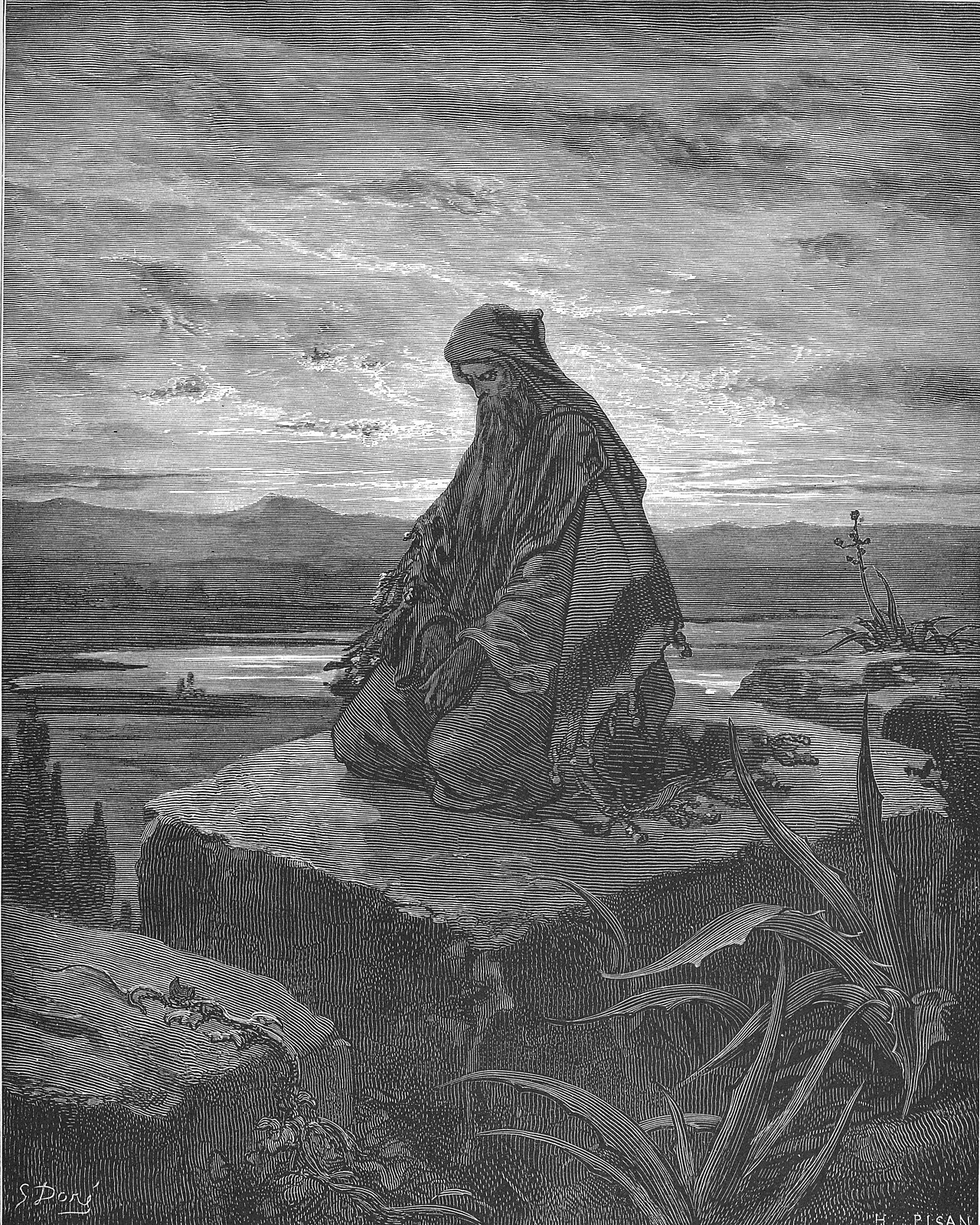
Isaiahchapter 56
12 verses · Isaiah · 8th century BC · The Prophets
This is what the LORD says: “Maintain justice and do what is right, for My salvation is coming soon, and My righteousness will be revealed.
Introduction
Isaiah, The Prophets, Isaiah Overview.
Isaiah opens the last section of his book here, and he speaks to two groups who had been shut out of Israel's worship by name. One was the foreigner who had joined himself to the LORD. The other was the eunuch, often a boy taken captive and cut for palace service. The chapter is set at the temple gates and ends with a rebuke of Israel's own leaders. Listen for what each group had lost and what exactly the LORD offers in its place. Listen also for the one line from here that Jesus spoke aloud in the temple.
Context
- Who
- Foreigners and eunuchs who had been told they did not qualify
- What
- A promise that foreigners and eunuchs who keep the LORD's covenant will be welcomed into His house, followed by a charge against Israel's careless leaders.
- Where
- The temple courts in Jerusalem, at the boundary between who may come in and who may not.
- When
- Spoken about 700 to 690 BC on the site's reading, addressed to the community that would be restored after the exile.
- Why
- To set the terms of belonging to the LORD's people as keeping His covenant and His Sabbaths, and to rebuke the watchmen who failed them.
Historical context
Two groups are named because two groups had been shut out by name. The Law of Moses barred the emasculated man from the assembly of the LORD, and it restricted certain foreign peoples. Those were not abstract categories. Empires routinely castrated captured boys for palace and harem service, so a Judean family taken to Babylon could easily produce a son who was a court official and permanently excluded from his own people's worship.
Show the rest of the historical context, 3 more paragraphs
What the eunuch is offered answers the exact thing he lost. He says, I am a dry tree, a man whose family line ends with him, in a culture where the name carried on through sons was your only afterlife on earth. God offers him a place and a name in my house and within my walls, better than of sons and of daughters, an everlasting name that shall not be cut off.
The Sabbath is named repeatedly here for a practical reason. In exile there was no temple, no altar, and no land, so the two things that could still be kept anywhere were circumcision and the Sabbath. Keeping the Sabbath became the visible line between remaining a Jew and dissolving into the empire.
The last section turns on watchmen and sheepdogs, and the language is rough. Israel's watchmen are blind, they are all ignorant, they are all dumb dogs that cannot bark, lying down and loving to slumber. A shepherd's dog earns its food by barking at what comes out of the dark; a dog that sleeps through it is worse than useless. Then the shepherds themselves: they cannot understand, they all look to their own way, every one for his own gain.
Significance
The line that gave the chapter its later fame is the reason for the whole thing: my house shall be called a house of prayer for all peoples. Jesus quoted it in the temple courts, in the outer court where the foreigners stood, which was exactly the space that had been turned into a market.
Show the rest of the significance, 1 more paragraph
For first hearers, the immediate word was about the standard of admission. It is not ancestry and it is not intactness. It is holding fast my covenant and choosing the things that please me.
This chapter in Jewish lifeWhat this chapter is in Jewish life and reading.
What is done
The site's own table in src/lib/hebraic/readings.ts sets this chapter in one prophetic reading of the annual cycle. It is read as the Haftarah of Vayelech, Isaiah 55:6 to 56:8, in both rites, on the Sabbath of the portion Deuteronomy 31:1 to 31:30. A congregation keeping that cycle hears the verses of each reference read aloud after the Torah portion of its Sabbath.
The corpus joins the chapter to the weeks of the Torah portions through the works arranged by portion. Under the first verse it carries Bereshit Rabbati, Parashat Vayechi 34. Under the third verse it carries Midrash Tanchuma Buber, Bamidbar 31:1 and Midrash Tanchuma, Bamidbar 25:1. Under the fourth verse it carries Midrash Tanchuma, Mishpatim 16:1. Under the fifth verse it carries Midrash Tanchuma, Vayakhel 1:5. Under the twelfth verse it carries Midrash Tanchuma, Ki Tisa 14:4.
How it is read
Two commentators on this chapter carry English in the corpus. Rashi is quoted from The Judaica Press complete Tanach with Rashi, translated by A. J. Rosenberg, which Sefaria reports as CC-BY, and every quotation of it is held to fifty words or fewer because the translation is modern. Ibn Ezra is quoted from the version Sefaria titles Commentary of Ibn Ezra on Isaiah - trans. by M. Friedlander, 1873, which it reports as Public Domain.
Ibn Ezra draws a teaching from the first verse: "We may learn from this verse that the coming of Messiah is delayed because of our sins". The Sabbath of the second and fourth verses he reads as the sign of the covenant, kept because God declared the day holy (Ibn Ezra on Isaiah 56:1:1 and 56:4:1).
Rashi reads the foreigner and the eunuch of the third verse as two men with a doubt. The foreigner asks why he should become converted if God will separate him from His people when He pays their reward. The eunuch calls himself a withered tree, without remembrance (Rashi on Isaiah 56:3:1 and 56:3:2). Rashi reads the house of prayer for all peoples as a house for the proselytes with Israel. Ibn Ezra compares Solomon's prayer in 1 Kings 8:41 (Rashi on Isaiah 56:7:1; Ibn Ezra on Isaiah 56:7:1). The others gathered in the eighth verse are the converts who join Israel (Rashi on Isaiah 56:8:1).
The last verses turn hard, and Rashi reads them so. The beasts of the field are the proselytes who draw near, and the beasts of the forest the mighty of the nations who refused (Rashi on Isaiah 56:9:1). The blind watchmen are the leaders who do not see the results, and the greedy dogs are shepherds who know no satiety (Rashi on Isaiah 56:10:1 and 56:11:2).
The corpus carries two further notes on this chapter without an English text, each marked linked because Sefaria holds no English version of the ref. They stand cited and unquoted at Radak on Isaiah 56:1:1 and 56:5:1.
What the rabbis say
The corpus carries forty rabbinic locators on this chapter and the text of none, so each is cited and linked here rather than quoted. On the first verse it holds Bava Batra 10a:12, Bereshit Rabbati, Parashat Vayechi 34, Devarim Rabbah 5:7 and Ein Yaakov (Glick Edition), Bava Batra 1:18. It holds Ein Yaakov (Glick Edition), Makkot 3:7 there as well. On the second verse it holds Ein Yaakov (Glick Edition), Shabbat 16:9, Ein Yaakov, Shabbat 16:10, Mekhilta DeRabbi Shimon Ben Yochai 16:27 and Mekhilta DeRabbi Yishmael, Tractate Vayassa 6:1.
On the third verse it holds Bamidbar Rabbah 5:3, Midrash Lekach Tov, Deuteronomy 29:20:1, Midrash Tanchuma Buber, Bamidbar 31:1 and Midrash Tanchuma, Bamidbar 25:1. On the fourth verse it holds Ein Yaakov, Sanhedrin 11:21, Mekhilta DeRabbi Yishmael, Tractate Nezikin 18:6 and Midrash Tanchuma, Mishpatim 16:1. It holds Otzar Midrashim, Midrashim on Megilat Esther, Midrash on the Megillah (of Esther) 6 there as well. On the fifth verse it holds Ein Yaakov (Glick Edition), Sanhedrin 11:22, Midrash Lekach Tov, Exodus 1:1:1, Midrash Shmuel 23:2 and Midrash Tanchuma, Vayakhel 1:5.
On the sixth verse it holds Bamidbar Rabbah 8:2, Mekhilta DeRabbi Yishmael, Tractate Nezikin 18:5, Midrash Lekach Tov, Exodus 22:20:3 and Otzar Midrashim, Midrash Vayosha ('And He Saved') 8:8. On the seventh verse it holds Berakhot 7a:1, Bereshit Rabbah 13:5, Eikhah Rabbah 1:23 and Ein Yaakov (Glick Edition), Berakhot 1:31. On the tenth verse it holds Mekhilta DeRabbi Shimon Ben Yochai 31:6 and Otzar Midrashim, Midrashim of Rabbi Akiba, The Enlarged Letters 22. On the eleventh verse it holds Berakhot 56b:12, Midrash Tehillim 4:14, Otzar Midrashim, Perek Shirah ('Chapter of Song') 1:90 and Yalkut Shimoni on Torah 187:1.
On the twelfth verse it holds Ein Yaakov, Taanit 1:49, Midrash Tanchuma, Ki Tisa 14:4, Taanit 11a:7 and Tanna DeBei Eliyahu Rabbah 25:1. On the nineteenth verse it holds Otzar Midrashim, Midrash Gadol u'Gedolah 42. What each of them teaches is a saying of the rabbis, and is reported as theirs wherever this site quotes one. The quotations wait on a fetch that carries the text.
Sources: Rashi, Rashi on Isaiah 56:2:1 to 56:12:2, The Judaica Press complete Tanach with Rashi, translated by A. J. Rosenberg, reported CC-BY; Ibn Ezra, Ibn Ezra on Isaiah 56:1:1 to 56:7:1, Commentary of Ibn Ezra on Isaiah - trans. by M. Friedlander, 1873, reported Public Domain; Radak, Radak on Isaiah 56:1:1 and 56:5:1, cited by ref because the corpus carries no English text; The Sefaria corpus, scripts/data/sources/sefaria/isaiah/56.json, the 40 Talmud and Midrash locators of this chapter; The site's own files, src/lib/hebraic/readings.ts, the Haftarah entries for Vayelech (Isaiah 55:6 to 56:8).
The heads below are this chapter's scenes. The numbered points under each are its verses.
Eunuchs and Foreigners: a House of Prayer for All Peoples
Isaiah 56:1-2
The command “Maintain justice and do what is right” rests on a promise: “for My salvation is coming soon, and My righteousness will be revealed”. Justice toward others and the keeping of the Sabbath stand together, and Barnes sets the chapter at the return from exile.
Isaiah 56:1
“It is because "the righteousness of the Lord approaches to us," that we, on our part, ought to draw near to him. The Lord calls himself "righteous," and declares that this is "his righteousness," not because he keeps it shut up in himself, but because he pours it out on men. In like manner he calls it "his salvation," by which he delivers men from destruction.”
John Calvin · Commentaries (1554)reformed
1 more voice on this verseWhat preachers and commentators have said about this verse, in their own words.
Isaiah 56:1
“He tells us what are his expectations of duty from us, in consideration thereof. Say not, "We see the salvation near, and therefore we may live as we list, for there is no danger now of missing it or coming short of it;" that is turning the grace of God into wantonness. But, on the contrary, when the salvation is near double your guard against sin.”
Matthew Henry · Commentary on the Whole Bible (1707-1721)puritan
the son of man who holds it fast: Barnes notes that the Hebrew word for man here names a man of humble rank. Jamieson, Fausset & Brown picture the one who holds it fast as a man gripping a precious thing he fears to lose. Wesley reads keeping the Sabbath as the whole worship of God.
Isaiah 56:2
“A proof that the Sabbath, in the spirit of its obligation, was to be binding under the Gospel (Isa 66:23). That gospel times are referred to is plain, from the blessing not being pronounced on the man who observed the sacrificial ritual of the Jewish law. layeth hold--image from one grasping firmly some precious object which he is afraid of having forcibly snatched from him.”
Jamieson, Fausset & Brown · Commentary Critical and Explanatory on the Whole Bible (1871)reformed
2 more voices on this verse
Isaiah 56:2
“We are not just if we rob God of his time. Sabbath-sanctification is here put for all the duties of the first table, the fruits of our love to God, as justice and judgment are put for all those of the second table, the fruits of our love to our neighbour.”
Matthew Henry · Commentary on the Whole Bible (1707-1721)puritan
Isaiah 56:2
That keepeth the Sabbath from polluting it - Kimchi has an excellent note here. “The Sabbath is sanctified when it is distinguished in dignity; and separated from other days. 1. As to the body, in meat, drink, and clean clothing. 2. As to the soul, that it be empty of worldly occupations, and be busily employed in the words of the law and wisdom, and in meditation on the works of the Lord.” The rabbins say, “Jerusalem had never been destroyed, had not the Sabbaths been profaned in it.”
Adam Clarke · Commentary on the Bible (1810-1826)evangelical
Isaiah 56:3-5
Let no foreigner who has joined himself to the LORD say: The foreigner and the eunuch are named together. The eunuch is given “in My house and within My walls, a memorial and a name better than that of sons and daughters”. “I am but a dry tree” gives way to “an everlasting name that will not be cut off”.
Isaiah 56:3
“This barrier between Jews and Gentiles was to be broken down (Eph 2:14-16). eunuch-- (Ac 8:27, &c.). Eunuchs were chamberlains over harems, or court ministers in general. dry tree--barren (compare Lu 23:31); not admissible into the congregation of Israel (De 23:1-3). Under the Gospel the eunuch and stranger should be released from religious and civil disabilities.”
Jamieson, Fausset & Brown · Commentary Critical and Explanatory on the Whole Bible (1871)reformed
1 more voice on this verse
Isaiah 56:3
“The stranger - The stranger, the Gentile, who by birth is a stranger to God, that hath turned from dumb idols to the living God. The eunuch - Who is here joined with the stranger, because he was forbidden to enter into the congregation of the Lord, Deut. xxiii, 1.”
John Wesley · Explanatory Notes upon the Old Testament (1765)evangelical
Jerome reads the eunuchs who thought themselves a dry tree as promised a place in heaven, and names Ebed-melech and the eunuch of Candace. Thomas Aquinas reads keeping the Sabbaths as worship, and to choose what pleases God as obedience. Barnes takes the plural Sabbaths to cover all religious observance.
Isaiah 56:4
“For thus saith the Lord unto the eunuchs - Even the eunuchs, who have hitherto been excluded from the privileges of the people of God, and who have been regarded as a separated and degraded people, shall be admitted to the same privileges as others. That keep my sabbaths - The word is used here in the plural, though the weekly Sabbath is probably particularly intended. It may be, however, that the word is used to represent religious observances in general (see the notes at Isa 56:2).”
a memorial and a name: Jamieson, Fausset & Brown read a place within the walls as entry past the outer court into the holiest (Heb 10:19-20). The old versions read them, Clarke notes, where Hebrew has him. Aphrahat gives the name better than sons and daughters to those who stay unmarried for Christ.
Isaiah 56:5
“Will I give in mine house - That is, they shalt be admitted to all the privileges of entering my house of prayer, and of being regarded as my true worshippers, and this shall be to them a more invaluable privilege than would be any earthly advantages. The word ‘house’ here refers undoubtedly to the temple, regarded as emblematic of the place of public worship in all ages. And within my walls - The walls of the city where God dwelt, referring primarily to the walls of Jerusalem.”
1 more voice on this verse
Isaiah 56:5
“And what could be greater than the reward the Lord bestowed upon His mother, whom He honored above all others? For He deemed no gift more abundant than virginity, as Scripture teaches us. For thus the Lord spoke through Isaiah: Let not the eunuch say, I am but a dry tree.”
Ambrose of Milan · written before 397 · On the Instruction of the Virgin and the Perpetual Virginity of Mary, 6.45patristic
And the foreigners who join themselves to the LORD: The promise widens from the eunuch to every foreigner who joins himself to the LORD. They “hold fast to My covenant”, the grip named of the eunuch in verse 4. Solomon's prayer at 1 Kings 8:41-43 asked the same for the foreigner who comes to the temple, at its dedication.
Isaiah 56:6
“The sons of the stranger - The Gentiles. That join themselves to the Lord - Who shall enter into the Christian covenant by baptism and faith in Christ, as the Jews and proselytes did by circumcision. To serve him - To live according to the Gospel, and ever do that which is right in the sight of the Lord. To love the name of the Lord - The name of Jesus, the Christ, the Savior of sinners, the Anointed of God, and the Giver of the Holy Spirit to his followers.”
Adam Clarke · Commentary on the Bible (1810-1826)evangelical
I will bring them to My holy mountain: The foreigners of verse 6 are brought in, so the altar itself is opened to them. The line follows that Jesus quoted, “for My house will be called a house of prayer for all the nations”. Mark 11:17 keeps the words for all the nations.
Isaiah 56:7
“Is it not written, "He says, 'My house shall be called a house of prayer for all the nations' "? We read this in Isaiah: "But you have made it a den of thieves." …Where we read, "You have made it a den of thieves," John's Gospel had instead, "You have made it a house of business." Wherever there are thieves, there is a house of trafficking. Would that it were applied only to the Jews and not the Christians! We would, indeed, weep for them but rejoice for ourselves.”
Jerome · written before 420 · HOMILIES ON MARK 83 (Mark 11:15-17)patristic
Cross references
Isaiah 56:7
- Quoted inLuke 19:46He declared to them, “It is written: ‘My house will be a house of prayer.’ But you have made it ‘a den of robbers.’”
'My house is the house of prayer' (temple cleansing)
- Quoted inMark 11:17Then Jesus began to teach them, and He declared, “Is it not written: ‘My house will be called a house of prayer for all the nations’? But you have made it ‘a den of robbers.’”
'house of prayer for all nations' (temple cleansing)
- Quoted inMatthew 21:13And He declared to them, “It is written: ‘My house will be called a house of prayer.’ But you are making it ‘a den of robbers.’”
'My house shall be called the house of prayer' (temple cleansing, w/ Jer 7:11)
who gathers the dispersed of Israel: The Lord GOD, “who gathers the dispersed of Israel”, gives the promise behind the chapter. The foreigners of verses 3 to 7 are the others: “I will gather to them still others besides those already gathered”. Delitzsch notes gathers is a participle in the Hebrew, a work still going on.
Isaiah 56:8
“The Lord God - This verse is a continuation of the promise made in the previous verses, that those of other nations would be united to the ancient people of God. The sense is, that Yahweh would not only gather back to their country those who were scattered abroad in other lands, but would also call to the same privileges multitudes of those who were now aliens and strangers.”
1 more voice on this verse
Isaiah 56:8
“The Lord - Who will gather to himself, and bring into their own land, those that are cast out of their own land. Yet - I will make a far more comprehensive gathering of the Gentiles.”
John Wesley · Explanatory Notes upon the Old Testament (1765)evangelical
Blind Watchmen and Dumb Dogs That Cannot Bark
Isaiah 56:9-12
Come, all you beasts of the field: The tone breaks at once with a call to plunder: “Come, all you beasts of the field; eat greedily”. The reason is the failure of those set to guard: “Israel’s watchmen are blind”, “mute dogs, they cannot bark”. The chapter turns from foreigners welcomed to leaders who fail their post.
Isaiah 56:9
“All ye beasts of the field - This evidently commences a new subject, and refers to some invasion of the land of Judea. In the previous chapter, the prophet had comforted the people by the assurance of the coming of the Messiah, and by the fact that they should be enlarged by the accession of the Gentiles. He proceeds here to a more disagreeable part of the subject. The design is, to reprove particularly the sins of the rulers of the people, and to assure them that such conduct would incur the vengeance of heaven.”
2 more voices on this verse
Isaiah 56:9
“The Roman armies came upon them as beasts of the forest to devour them, and they quite took away their place and nation. Note, When God has bloody work to do he has beasts of prey within call, to be employed in doing it. The reason of these judgments is here given.”
Matthew Henry · Commentary on the Whole Bible (1707-1721)puritan
Isaiah 56:9
We have often seen the mass of the other nations called "the woodlands." These are the beasts of God's calling worthy to be called up due to their fear. Aquila has instead, "all the beasts," "all his living beings," and then, the second time, "all his living things." Do they belong to someone or to God? For he does not call them simply "beasts" but "his."
Eusebius of Caesarea · written before 339 · Commentary on Isaiah 2:45patristic
Israel’s watchmen are blind: Barnes derives the word for watchmen from a verb meaning to look far, used of sentries on a wall and then of prophets (Ezek 3:17). Jerome reads these blind watchmen as the scribes and Pharisees. Gregory reads the bark of these mute dogs as the preacher's rebuke of sin.
Isaiah 56:10
“His watchmen are blind - Kimchi observes, “The flock is intrusted to the care of these watchmen. The wild beasts come; these dogs bark not; and the wild beasts devour the flock. Thus they do not profit the flock. Yea, they injure it; for the owner trusts in them, that they will watch and be faithful; but they are not. These are the false teachers and careless shepherds.” Dumb dogs, they cannot bark - See note on Isa 62:6. Sleeping “Dreamers” - הזים hozim, ενυπνιαζομενοι, Septuagint.”
Adam Clarke · Commentary on the Bible (1810-1826)evangelical
1 more voice on this verse
Isaiah 56:10
“If the light that is in us be darkness, how great is that darkness! Christ describes the Pharisees to be blind leaders of the blind, Matt. xv. The beasts of the field come to devour, and the watchmen are blind, and are not aware of them.”
Matthew Henry · Commentary on the Whole Bible (1707-1721)puritan
Like ravenous dogs, they are never satisfied: Barnes gives ravenous as strong of soul in the Hebrew, an insatiable appetite, and the Greek version makes them dogs shameless in soul. Matthew Henry sets their own gain beside Philippians 2:21, where all seek their own interests. Jamieson, Fausset & Brown see shepherds blind to the people's needs.
Isaiah 56:11
“Yea, they are greedy dogs - Margin, ‘Strong of appetite.’ Literally, ‘Strong of soul’ (עזי־נפשׁ ‛azēy-nephesh. Jerome renders it, Canes impudentissimi. So the Septuagint, Κύνες ἀναιδεῖς τῇ ψυχῇ Kunes anaideis tē psuchē - ‘Dogs impudent in soul.’ They were greedy and insatiable in that which the soul or the appetite demands. The idea here is, that the prophets to whom reference is here made were sensual, and disposed to gorge themselves; living only for carnal indulgence, insensible to the rights of others, and never satisfied.”
1 more voice on this verse
Isaiah 56:11
“They are every one looking to his own way, minding his own private interests, and have no regard at all to the public welfare. It was St. Paul's complaint of the watchmen in his time ( Phil. ii. 21 ), All seek their own, not the things that are Jesus Christ's.”
Matthew Henry · Commentary on the Whole Bible (1707-1721)puritan
let us imbibe the strong drink: Jerome notes this line came into the Greek from the Hebrew. Barnes hears the watchmen at a drinking bout, and sets the scene beside 22:13. Wesley gives imbibe as drink taken to drunkenness, and Jamieson, Fausset & Brown read tomorrow like today as a habit they mean to keep.
Isaiah 56:12
I will fetch wine “Let us provide wine” - For אקחה ekchah, first person singular, an ancient MS. has נקחה nikchah, first person plural; and another ancient MS. has אק ak upon a rasure. So the Syriac, Chaldee, and Vulgate render it. The spirit of this Epicurean sentiment is this: Let us indulge ourselves in the present time to the utmost, and instead of any gloomy forebodings of the future, let us expect nothing but increasing hilarity for every day we shall live. Thus they, “Counting on long years of pleasure here, Are quite unfurnished for the world to come.”
Adam Clarke · Commentary on the Bible (1810-1826)evangelical
Keep studying
Studies6
Sources for this chapter
The summary
Jamieson, Fausset & Brown, Commentary Critical and Explanatory; John Calvin, Commentaries; John Wesley, Notes on the Old Testament and Matthew Henry, Complete Commentary.
The exposition
Adam Clarke, Commentary on the Bible; Albert Barnes; Aphrahat the Persian Sage, DEMONSTRATIONS 6:6; Franz Delitzsch, Biblical Commentary on the Prophecies of Isaiah; Gregory the Dialogist, Forty Gospel Homilies, Homily 40; Jamieson, Fausset & Brown, Commentary Critical and Explanatory on the Whole Bible; Jerome; John Gill, Exposition of the Old Testament; John Wesley, Explanatory Notes upon the Old Testament; Matthew Henry, Commentary on the Whole Bible and Thomas Aquinas, Commentary on Isaiah.