
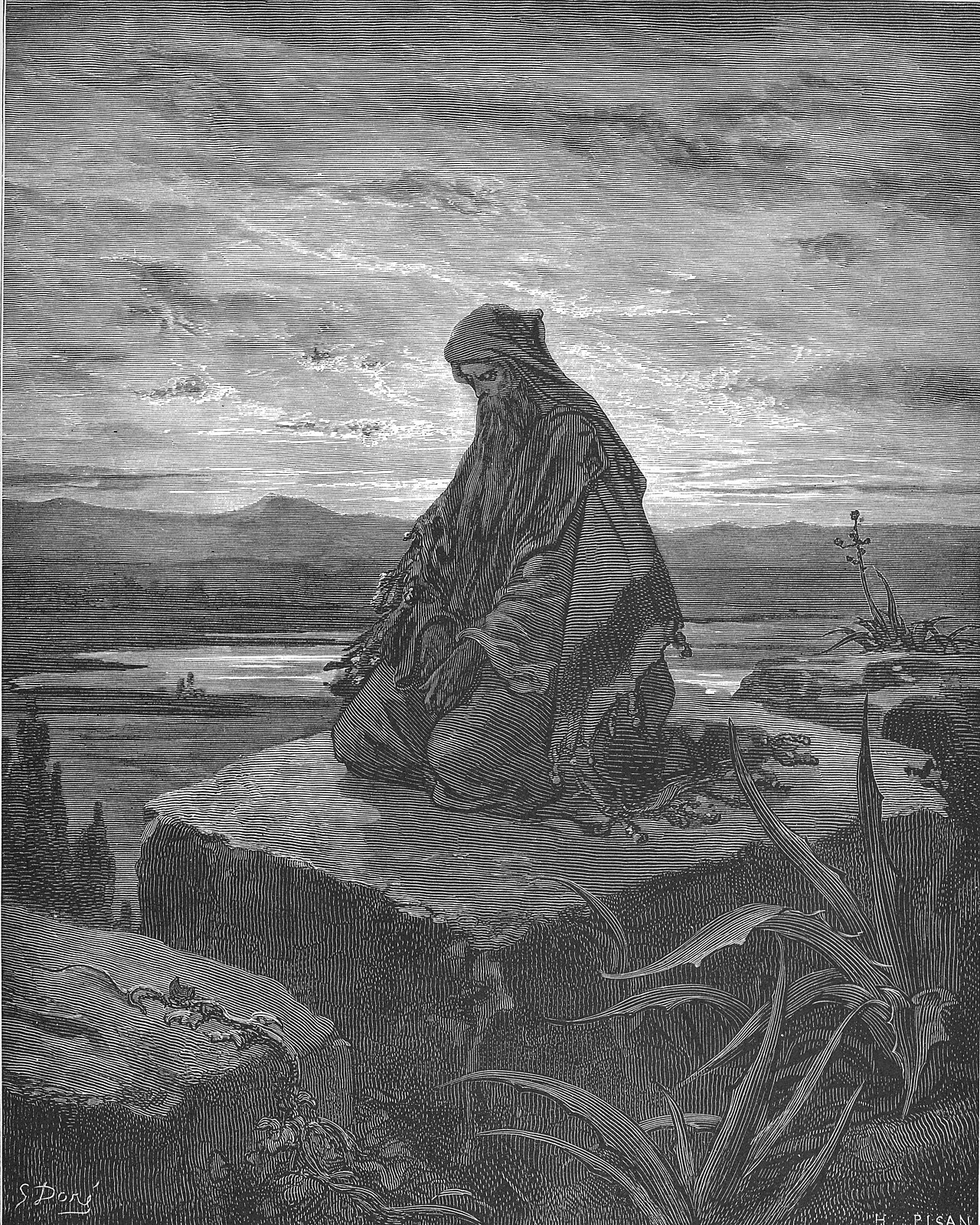
Isaiahchapter 35
10 verses · Isaiah · 8th century BC · The Prophets
Then the eyes of the blind will be opened and the ears of the deaf unstopped.
Introduction
Isaiah, The Prophets, Isaiah Overview.
This chapter is the answer to the one before it, and the two are meant to be read together. Isaiah wrote it for a people who would be scattered and would need a road home. Its first hearers knew the dry south, where the desert flowers for a few weeks after the winter rain and then fades. The chapter speaks to tired and frightened people and gives them a reason to be strong. Listen for the road at its centre, and for the four healings the Gospels later show Jesus doing.
Context
- Who
- A people about to be scattered, being shown the road back
- What
- A promise that the desert will bloom, that the weak will be healed, and that the redeemed will return to Zion on a highway called the Way of Holiness.
- Where
- The dry southern country made fertile, with a raised highway running through it to Zion.
- When
- Spoken most likely about 705 to 700 BC; it looks ahead to the return of God's people.
- Why
- To strengthen a weary and fearful people with the promise that their God will come to save them and bring them home.
Historical context
The flowering desert is a real event on a small scale. After the winter rains, the Negev throws up crocus and asphodel across ground that looked dead a week before, and it lasts a few weeks. Isaiah takes that brief annual miracle and makes it permanent, then piles on the three regions everyone used as the standard of lushness, the glory of Lebanon with its cedar forests, the splendor of Carmel on the coastal ridge, and the plain of Sharon.
Show the rest of the historical context, 3 more paragraphs
One word in the middle is a desert traveler's word. The parched ground becoming a pool is literally the mirage becoming a pool, the shimmer on the horizon that has killed men who walked toward it. Isaiah says the mirage turns into actual water.
The highway is the center of the chapter, and every detail is a traveler's relief. Ancient roads were unimproved tracks, and the dangers were lions in the scrub, bandits in the passes, and getting lost. This road is raised and cleared, it is named so nobody has to ask directions, the way of holiness, no lion is on it, no ravenous beast goes up it, and it is so plainly marked that even a fool cannot wander off it.
The healings listed are the same four that the Gospels record and that the deaf and blind of Isaiah's own generation would have known were incurable: blind eyes opened, deaf ears unstopped, the lame man leaping like a deer, and the tongue of the mute singing.
Significance
Chapter 34 emptied a country and filled it with owls. Chapter 35 fills an empty country with people walking home. The two are meant to be read as one pair.
Show the rest of the significance, 1 more paragraph
The instruction in the middle is addressed to people who are already worn out: strengthen the weak hands, steady the shaky knees, say to the fearful-hearted, be strong, do not fear. The reason given is not that the danger is small. It is that your God will come.
This chapter in Jewish lifeWhat this chapter is in Jewish life and reading.
What is done
No part of this chapter is read aloud in the synagogue. The site's own table in src/lib/hebraic/readings.ts printed parashot 0 and haftarah uses 0 for Isaiah 35, and no festival reading for the book. The table records Isaiah only as a source of Haftarot, and none of the Haftarot it records reaches this chapter.
The chapter is met instead in the study of the weekly portions, and the corpus names the doors. Under the fourth verse it carries Midrash Tanchuma Buber, Vaera 15:1 and Midrash Tanchuma, Vaera 13:5. Under the fifth verse it carries Midrash Tanchuma Buber, Metzora 7:1 and Midrash Tanchuma Buber, Vayigash 9:1. Under the sixth verse it carries Midrash Tanchuma Buber, Appendix to Devarim 1:1 and Midrash Tanchuma, Devarim 2:1. Each of those locators is named for the Torah portion whose study it belongs to.
How it is read
Rashi is quoted here from The Judaica Press complete Tanach with Rashi, translated by A. J. Rosenberg, which Sefaria reports as CC-BY, and Ibn Ezra from the Commentary of Ibn Ezra on Isaiah translated by M. Friedlander in 1873, which Sefaria reports as public domain. Ibn Ezra records the same dispute over this chapter as over the one before it. "According to all the commentators except R. Moses Hakkohen, this prophecy refers to the Messianic period". Rabbi Moses Hakkohen reads it of the fugitives who returned in the time of Hezekiah after the death of the king of Assyria (Ibn Ezra on Isaiah 35:3:1).
Rashi reads it of the end, and he reads the desert as the city. The wasteland is Jerusalem and the desert is Zion, and they rejoice at the downfall of the nations (Rashi on Isaiah 35:1:2). The command to strengthen weak hands he reads from the grammar. The form of the verb means strengthen others, which is what all the prophets did who brought tidings of salvation (Rashi on Isaiah 35:3:1). The hasty of heart are those "Who hurry the redemption and are troubled by its delay" (Rashi on Isaiah 35:4:1).
The blind, the deaf and the lame of the fifth and sixth verses Rashi reads as Israel. The deaf are those who did not listen to the prophets, and he cites the deaf and blind of chapter 42 of this book (Rashi on Isaiah 35:5:2 and 35:6:1). A Christian reader should note that this classical reading takes the healings as the restoring of a people. The everlasting joy of the last verse is a joy they have known before, on the way out of Egypt, when the Lord went before them by day (Rashi on Isaiah 35:10:1).
What the rabbis say
The corpus carries forty rabbinic locators on this chapter and the text of none, so each is cited by ref here and none is quoted or paraphrased. On the first verse it holds Bamidbar Rabbah 1:2, Bamidbar Rabbah 15:10, Bamidbar Rabbah 15:11, Bamidbar Rabbah 23:4, Ein Yaakov, Yoma 1:30 and Ein Yaakov, Yoma 4:4. On the second verse it holds Bamidbar Rabbah 12:4, Ein Yaakov (Glick Edition), Yoma 1:24, Ein Yaakov (Glick Edition), Yoma 4:3, Jerusalem Talmud Yoma 4:4:12 and Midrash Lekach Tov, Numbers 33:2:1. The same verse also carries Shir HaShirim Rabbah 3:10:3. On the third verse it holds Vayikra Rabbah 19:5. On the fourth verse it holds Midrash Tanchuma Buber, Vaera 15:1, Midrash Tanchuma, Vaera 13:5 and Otzar Midrashim, Midrashim of Rabbi Shimon bar Yochai, Prayer of Rabbi Shimon Bar Yochai 10. The same verse also carries Yalkut Shimoni on Torah 182:3. On the fifth verse it holds Aggadat Bereshit 56:1, Aggadat Bereshit 70:2, Bereshit Rabbah 95:1, Mekhilta DeRabbi Yishmael, Tractate Shirah 1:1, Midrash Tanchuma Buber, Metzora 7:1 and Midrash Tanchuma Buber, Vayigash 9:1.
On the sixth verse it holds Ein Yaakov (Glick Edition), Sanhedrin 11:12, Ein Yaakov, Sanhedrin 11:9, Mekhilta DeRabbi Shimon Ben Yochai 15:1 and Midrash Sekhel Tov, Shemot 15:1:1. The same verse also carries Midrash Tanchuma Buber, Appendix to Devarim 1:1 and Midrash Tanchuma, Devarim 2:1. On the eighth verse it holds Mekhilta DeRabbi Shimon Ben Yochai 15:19 and Midrash Aggadah, Deuteronomy 1:1:12. On the ninth verse it holds Midrash Lekach Tov, Numbers 24:17:1 and Otzar Midrashim, Midrashim on The Messiah, Aggadah on The Messiah 4. On the tenth verse it holds Aggadat Bereshit 36:1, Bamidbar Rabbah 23:14, Berakhot 55b:9, Ein Yaakov (Glick Edition), Sanhedrin 11:129, Ein Yaakov (Glick Edition), Shabbat 9:10 and Ein Yaakov, Shabbat 9:11.
The corpus files one further locator under a verse number this chapter does not reach. The site's table in src/data/bible/chapter-verse-counts.json counts the chapter at 10 verses in the Berean Standard Bible. The corpus files Yalkut Shimoni on Torah 743:26 at the number 11. It is cited as the corpus files it, and the anchor is left for a check against the source. What each of them teaches is a saying of the rabbis, and it is reported as theirs wherever this site quotes one. The quotations wait on a fetch that carries the text.
Sources: Rashi, Rashi on Isaiah 35:1:1 to 35:10:2, The Judaica Press complete Tanach with Rashi, translated by A. J. Rosenberg, reported CC-BY; Ibn Ezra, Ibn Ezra on Isaiah 35:3:1 to 35:3:2, Commentary of Ibn Ezra on Isaiah, translated by M. Friedlander, 1873, reported public domain; The Sefaria corpus, scripts/data/sources/sefaria/isaiah/35.json, the 40 Talmud and Midrash locators of this chapter; The site's own files, src/lib/hebraic/readings.ts, printing no portion, no Haftarah and no festival reading for this chapter, and src/data/bible/chapter-verse-counts.json for the verse count.
The heads below are this chapter's scenes. The numbered points under each are its verses.
The Desert Shall Rejoice and Blossom as the Rose
Isaiah 35:1-2
The wilderness and the land will be glad: The chapter turns from Edom's wasteland in chapter 34 to a wasteland transformed, where the desert will rejoice and blossom like a rose. The glory of Lebanon will be given to it, the splendor of Carmel and Sharon. Edom's desolation and Zion's flowering stand side by side, judgment and restoration.
Isaiah 35:1
“The wilderness and the solitary place - This is evidently figurative language, such as is often employed by the prophets. The word rendered ‘solitary place’ (ציה tsı̂yâh), denotes properly a dry place, a place without springs and streams of water; and as such places produce no verdure, and nothing to sustain life, the word comes to mean a desert. Such expressions are often used in the Scriptures to express moral or spiritual desolation; and in this sense evidently the phrase is used here.”
1 more voice on this verseWhat preachers and commentators have said about this verse, in their own words.
Isaiah 35:1
“A moral wilderness is meant. for them--namely, on account of the punishment inflicted according to the preceding prophecy on the enemy; probably the blessings set forth in this chapter are included in the causes for joy (Isa 55:12). rose--rather, "the meadow-saffron," an autumnal flower with bulbous roots; so Syriac translation.”
Jamieson, Fausset & Brown · Commentary Critical and Explanatory on the Whole Bible (1871)reformed
They will see the glory of the LORD: The land blooms so that its people will see the glory of the LORD. Cyril of Alexandria reads the two names in this line, the LORD and God, as one person, the Emmanuel, truly God and incarnate. The rejoicing desert frames that sight.
Isaiah 35:2
“Rejoice even with joy and singing “The well-watered plain of Jordan shall also rejoice” - For ורנן veranen, the Septuagint read ירדן yarden, τα ερηνα του Ιορδανου, “the deserts of Jordan.” Four MSS. read גלת gulath; see Jos 15:19: “Irrigua Jordani;” Houbigant. גידת gidoth, Ripae Jordani, “the banks of Jordan;” Kennicott. See De S. Poesi Hebr. Praelect. 20 note. Unto it - For לה lah, to it, nine MSS. of Kennicott’s and four of De Rossi’s read לך lecha, to thee. See ibid.”
Adam Clarke · Commentary on the Bible (1810-1826)evangelical
2 more voices on this verse
Isaiah 35:2
“Whatever was excellent an desirable in the Mosaic economy is translated into the evangelical institutes. The glory of God shining forth: They shall see the glory of the Lord. God will manifest himself more than ever in his grace and love to mankind (for that is his glory and excellency), and he shall give them eyes to see it, and hearts to be duly affected with it.”
Matthew Henry · Commentary on the Whole Bible (1707-1721)puritan
Isaiah 35:2
“Observe how he names him Lord and calls him God, seeing that he speaks in the Spirit; note that he knew the Emmanuel would not be simply a man bearing God nor, of a truth, as one assumed as an agent. But he knew that he was truly God and incarnate.… For our Lord Jesus Christ showed himself to us having divine strength, and his arm with authority, that is, with power and dominion.”
Cyril of Alexandria · written before 444 · LETTER 1:31patristic
Isaiah 35:3-4
Strengthen the limp hands: The comfort goes straight to the discouraged: Strengthen the limp hands and steady the feeble knees. Its ground is stated plainly, your God will come with vengeance, and He will come to save you. Hebrews 12:12 takes up the same words, strengthen your limp hands and weak knees.
Isaiah 35:3
“Therefore the traders came from Gilead, that is, from their possessions of or dwelling in the law, and brought their wares to the church, so that that balm might heal the sins of the nations. Of them it is said, "Be strong, you hands that are feeble and you knees that are without strength." The balm is unspoiled faith. Such a faith Peter exhibited when he said to the lame man, "In the name of Jesus Christ of Nazareth, arise and walk." And he arose and walked, as was right.”
Ambrose of Milan · written before 397 · On Joseph the Patriarch 3.17patristic
Say to those with anxious hearts: Anxious hearts renders a Hebrew phrase meaning hasty hearts, and Albert Barnes reads it of those ready to flee before enemies, as at Isaiah 30:16. He takes the command to say these words as given to the teachers of the people. God will come to save.
Isaiah 35:4
“Say to them - This is still an address to the ministers of religion, to make use of all the consolations which these truths and predictions furnish to confirm and strengthen the people of God. Of a fearful heart - Of a timid, pusillanimous heart; those who tremble before their enemies. The Hebrew is, as in the Margin, ‘Of a hasty heart;’ that is, of those who are disposed to flee before their enemies (see the note at Isa 30:16).”
The Highway of Holiness for the Ransomed of the LORD
Isaiah 35:5-6
the eyes of the blind will be opened: The signs of the new age come as a list, the eyes of the blind opened, and the lame will leap like a deer. When John sends to ask: Are You the One who was to come, Jesus answers at Matthew 11:5, The blind receive sight, the lame walk.
Isaiah 35:5
"God was in Christ reconciling the world to himself," and the Creator himself was wearing the creature which was to be restored to the image of its Creator. And after the divinely miraculous works had been performed, the performance of which the spirit of prophecy had once predicted, "then shall the eyes of the blind be opened and the ears of the deaf shall hear; then shall the lame man leap like a deer, and the tongue of the dumb shall speak plainly."
Leo the Great · written before 461 · SERMON 54:4patristic
1 more voice on this verse
Isaiah 35:5
“These miracles Christ wrought to prove that he was sent of God ( John iii. 2 ), nay, working them by his own power and in his own name, he proved that he was God, the same who at first made man's mouth, the hearing ear, and the seeing eye. When he would prove to John's disciples his divine mission he did it by miracles of this kind, in which this scripture was fulfilled.”
Matthew Henry · Commentary on the Whole Bible (1707-1721)puritan
the lame will leap like a deer: Albert Barnes points to the lame man at the temple gate in Acts 3:8, who went walking and leaping and praising God. The deer here is the stag, quick and sure-footed. The waters that gush forth in the wilderness belong to the same new creation.
Isaiah 35:6
“Then shall the lame man leap - This was literally fulfilled after the coming of the Messiah Act 14:10; Act 3:8. It is an emblem of the general joy which the coming of the Messiah would impart, and is an instance of the blessings which it would convey. As an hart - The word used here denotes the stag, or male deer. In Arabic it denotes the wild, or mountain-goat. The word sometimes refers to any species of deer or antelope, and this is referred to here from its quick and sprightly nature.”
2 more voices on this verse
Isaiah 35:6
“Now what can they [i.e., those who deny the incarnation] say to this, or how can they dare to face this at all? For the prophecy not only indicated that God is to sojourn here but also announces the signs and the time of his coming. For they connect the blind recovering their sight, and the lame walking, and the deaf hearing, and the tongue of the one who stammers being made plain, with the divine coming which is to take place.”
Athanasius of Alexandria · written before 373 · On the Incarnation of the Word 38patristic
Isaiah 35:6
“This was fulfilled when the Holy Ghost fell upon the Gentiles that heard the word ( Acts x. 44 ); then were the fountains of life opened, whence streams flowed, that watered the earth abundantly. These waters are said to break out, which denotes a pleasing surprise to the Gentile world, such as brought them, as it were, into a new world.”
Matthew Henry · Commentary on the Whole Bible (1707-1721)puritan
Isaiah 35:7-8
The parched ground will become a pool: The water imagery continues: The parched ground will become a pool, the thirsty land springs of water. A road appears, a highway called the Way of Holiness. The unclean will not travel it, and even the simple are kept safe on it, for fools will not stray onto it.
Isaiah 35:7
“In the thirsty land, where no water was, nor ordinances ( Ps. lxiii. 1 ), there shall be springs of water, a gospel ministry, and by that the administration of all gospel ordinances in their purity and plenty, which are the river that makes glad the city of our God, Ps. xlvi.”
Matthew Henry · Commentary on the Whole Bible (1707-1721)puritan
Jamieson, Fausset and Brown read those who walk in the Way as the Holy One walking the highway with his people. Even fools will keep to it and never stray. The unclean have no place on a highway called the Way of Holiness.
Isaiah 35:8
“And a highway - The word ודרך vederech is by mistake added to the first member of the sentence from the beginning of the following member. Sixteen MSS. of Dr. Kennicott’s, seven ancient, and two of De Rossi’s have it but once; so likewise the Syriac, Septuagint, and Arabic. Err therein - A MS. of Dr. Kennicott’s adds בו bo, in it, which seems necessary to the sense, and so the Vulgate, per eam, “by it. “One of De Rossi’s has שם sham, there.”
Adam Clarke · Commentary on the Bible (1810-1826)evangelical
Isaiah 35:9-10
No lion will be there: The road is safe: No lion will be there, but the redeemed will walk upon it. The redeemed of the LORD will return and enter Zion with singing, crowned with everlasting joy. That joy without end answers the smoke of Isaiah 34:10, which will ascend forever.
Isaiah 35:9
“No lion shall be there - Lions abounded in all the countries adjacent to Palestine. They are, therefore, often referred to by the sacred writers, as objects of dread and alarm. The leading idea in the language of Isaiah in this whole passage, is that of a way constructed from Babylon to Judea, so straight and plain that the most simple of the people might find it and walk in it. But such a path would lie through desert sands. It would be in the region infested with lions and other wild beasts.”
2 more voices on this verse
Isaiah 35:9
“Those that walk in the way of holiness may proceed with a holy security and serenity of mind, knowing that nothing can do them any real hurt; they shall be quiet from the fear of evil. It was in Hezekiah's days, some time after the captivity of the ten tribes, that God, being displeased with the colonies settled there, sent lions among them, 2 Kings xvii.”
Matthew Henry · Commentary on the Whole Bible (1707-1721)puritan
Isaiah 35:9
“He also sets out the security of the way: no lion shall be there, above: they shall not hurt, nor shall they kill in all my holy mountain (Isa 11:9).”
Thomas Aquinas · written before 1274 · Commentary on Isaiahpatristic
the redeemed of the LORD will return: The redeemed renders peduyey, to redeem by paying a price, and Adam Clarke hears in the word for sighing, anachah, the very sound of sorrow. Everlasting joy crowns those the LORD has bought. They enter Zion singing.
Isaiah 35:10
“Those that by faith are made citizens of the gospel Zion may go on their way rejoicing ( Acts viii. 39 ); they shall sing in the ways of the Lord, and be still praising him. They rejoice in Christ Jesus, and the sorrows and signs of their convictions are made to flee away by the power of divine consolations.”
Matthew Henry · Commentary on the Whole Bible (1707-1721)puritan
2 more voices on this verse
Isaiah 35:10
“The ransomed - פדויי peduyey, from פדה padah, “to redeem by paying a price.” Those for whom a price was paid down to redeem them from bondage and death. Sighing shall flee away - אנחה anachah. Never was a sorrowful accent better expressed than in this strong guttural word, an-ach-ah; nearly the same with the Irish in their funeral wailings, och-och-on. The whole nation express all their mournful accents by these three monosyllables. This chapter contains the following parts: - 1. We have here blessed promises of the latter-day glory.”
Adam Clarke · Commentary on the Bible (1810-1826)evangelical
Isaiah 35:10
“Language: literally, applying to the return from Babylon; figuratively and more fully to the completed redemption of both literal and spiritual Israel. joy upon . . . heads-- (Ps 126:2). Joy manifested in their countenances. Some fancy an allusion to the custom of pouring oil "upon the head," or wearing chaplets in times of public festivity (Ec 9:8).”
Jamieson, Fausset & Brown · Commentary Critical and Explanatory on the Whole Bible (1871)reformed
Keep studying
Sources for this chapter
The summary
Jamieson, Fausset & Brown, Commentary Critical and Explanatory; John Calvin, Commentaries; John Wesley, Notes on the Old Testament and Matthew Henry, Complete Commentary.
The exposition
Adam Clarke, Commentary on the Bible; Albert Barnes; Cyril of Alexandria, LETTER 1:31; Franz Delitzsch, Biblical Commentary on the Prophecies of Isaiah; George Adam Smith, The Book of Isaiah, Expositor's Bible; Jamieson, Fausset & Brown, Commentary Critical and Explanatory on the Whole Bible; John Gill, Exposition of the Old Testament and Matthew Henry, Commentary on the Whole Bible.