
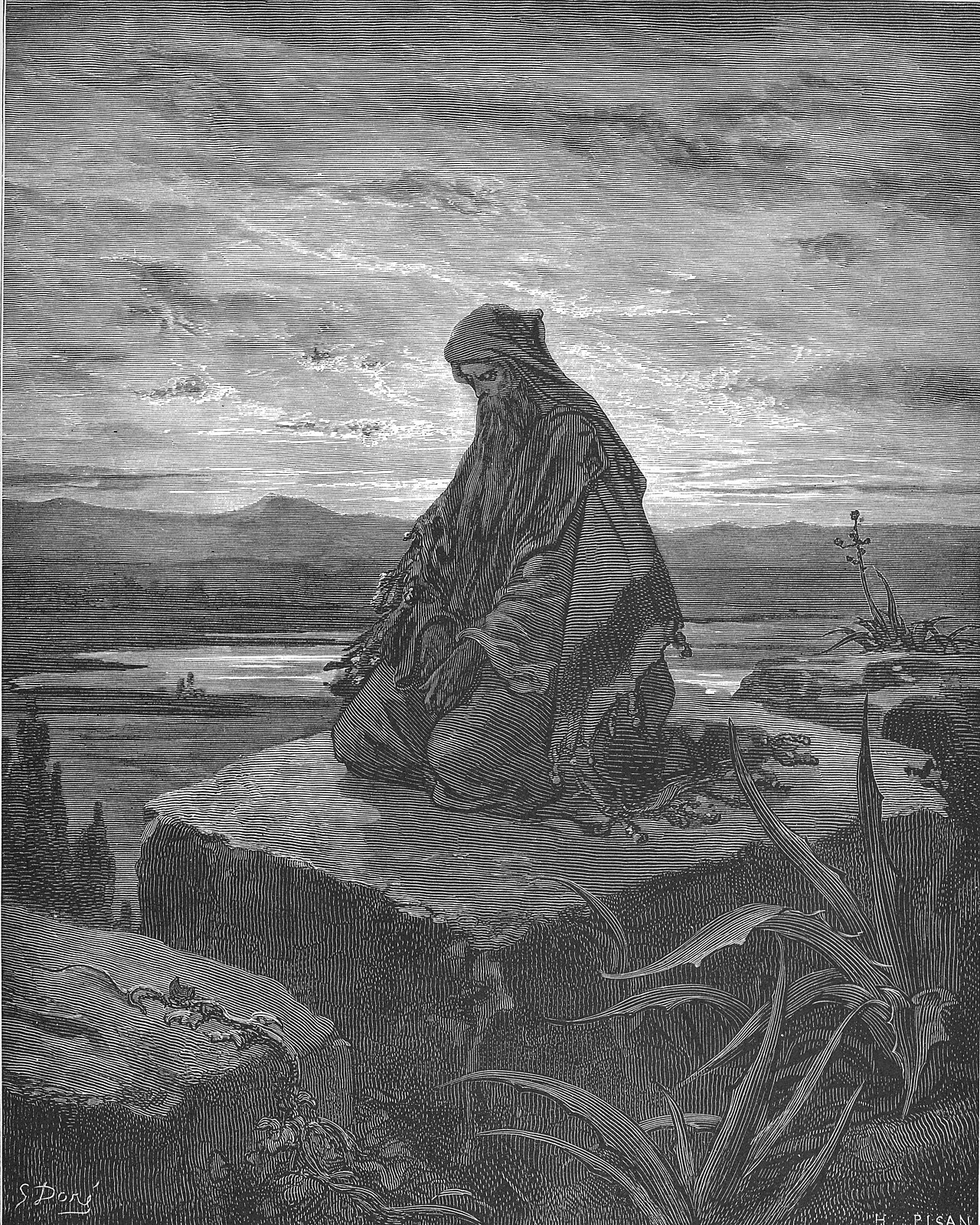
Isaiahchapter 26
21 verses · Isaiah · 8th century BC · The Prophets
You will keep in perfect peace the steadfast of mind, because he trusts in You.
Introduction
Isaiah, The Prophets, Isaiah Overview.
This chapter is the song that Judah will sing on that day, written ahead of time for a future generation. It was given to people who lived behind city walls and trusted them. The song mixes praise, confession and prayer, and it speaks honestly about labor that produced nothing. Listen for the promise of perfect peace, for the line about the dead that is one of the clearest in the Old Testament, and for the closing call to shut the doors and wait. The last verse points into the chapter after it.
Context
- Who
- Judeans who lived behind walls and knew exactly what they were worth
- What
- A song of trust in God as a strong city, a prayer of longing in the night, and a promise that the dead will rise.
- Where
- The land of Judah and a strong city with open gates, set against a lofty city brought down to the dust.
- When
- Spoken most likely between about 715 and 700 BC, and written as the hymn of a future day.
- Why
- To teach God's people to trust Him as their wall, to wait for Him through judgment, and to hope in the rising of the dead.
Historical context
The opening is a gate liturgy. A traveler approaching a city called up to the gatekeepers, and there were songs for the moment the gates opened. Here the strong city has salvation for walls and outer defenses, and the order is to open the gates so the righteous nation that keeps faith can come in. The walls are not stone in this song, which is the point.
Show the rest of the historical context, 4 more paragraphs
The middle turns on a road. Isaiah says the path of the just is level, and God makes it smooth, the language of a graded highway, the rare luxury of the ancient world, against the rutted tracks people actually walked. In the same breath the lofty city is brought down to the dust, and the foot tramples it: the feet of the poor and the steps of the needy.
The labor image is the honest part. We have been with child, we have been in pain, and we have given birth to wind, the crushing experience of hard labor that produces nothing. That is how the nation describes its own record.
Against it comes one of the plainest resurrection lines in the Old Testament: your dead shall live, my dead bodies shall arise; awake and sing, you who dwell in the dust, and the earth shall give up the dead. Written centuries before Daniel's clearer statement, and long before the debate between Pharisees and Sadducees, it is a bodily hope, not a shadowy one.
The last two verses are Passover night. Come, my people, go into your rooms and shut the doors behind you; hide yourself for a little while until the indignation passes. Israel's whole story began with a night when families stayed inside behind marked doors while judgment went through the land.
Significance
A people whose safety had always been a wall was handed a song in which the wall is God's own salvation, and the qualification for entry is trust rather than citizenship.
Show the rest of the significance, 1 more paragraph
For those who had already buried a generation to Assyria, the resurrection line was not theory. It was the only answer that made God's promises to the dead mean anything.
This chapter in Jewish lifeWhat this chapter is in Jewish life and reading.
What is done
No part of this chapter is read aloud in the synagogue. The site's own table in src/lib/hebraic/readings.ts printed parashot 0 and haftarah uses 0 for Isaiah 26, and no festival reading for the book. The table records Isaiah only as a source of Haftarot, and none of the Haftarot it records reaches this chapter.
The chapter is met instead in the study of the weekly portions, and the corpus names the doors. Under the fifteenth verse it carries Midrash Tanchuma, Pinchas 16:1. Each of those locators is named for the Torah portion whose study it belongs to.
How it is read
Rashi is quoted here from The Judaica Press complete Tanach with Rashi, translated by A. J. Rosenberg, which Sefaria reports as CC-BY. The corpus carries no English for any other commentator on this chapter. Rashi reads the chapter as the song of the returned exiles. The strong city is Jerusalem. The righteous nation that enters its gates is the nation "that waited and longed in its exile many days" for God to keep His word through the prophets (Rashi on Isaiah 26:1:1 and 26:2:2). The feet of the poor he reads as the King Messiah, "who is referred to as a poor man riding on a donkey". He cites Zechariah 9:9 for it (Rashi on Isaiah 26:6:1). A Christian reader knows Zechariah 9:9 from the entry into Jerusalem, and Rashi cites it here of the King Messiah.
Rashi states his method in this chapter more plainly than anywhere else in these twenty-two. He says he has seen many Aggadic midrashim on these verses and finds them unfit for the grammar or the context. "I had to explain it according to its order" (Rashi on Isaiah 26:11:1). He then gives the midrash from Eliyahu Zuta and the accent of the Hebrew word that rules it out.
Two notes read the chapter's hope of resurrection as a pair. At the fourteenth verse the prophet prays that the wicked "shall not live in the World to Come" (Rashi on Isaiah 26:14:1). At the nineteenth he prays the opposite for the righteous: "I beseech You that those who were slain for Your sake come to life" (Rashi on Isaiah 26:19:1). Between them stands the image of a woman in labour, which Rashi reads as the exile mistaking its pains for the signs of redemption (Rashi on Isaiah 26:17:1 and 26:18:1). The chambers of the twentieth verse are "the synagogues and the study houses", or the chambers of the heart, as Rabbi Tanhuma expounded it (Rashi on Isaiah 26:20:1).
What the rabbis say
The corpus carries forty rabbinic locators on this chapter and the text of none, so each is cited by ref here and none is quoted or paraphrased. On the first verse it holds Mekhilta DeRabbi Yishmael, Tractate Shirah 1:10, Midrash Sekhel Tov, Shemot 15:21:5 and Shir HaShirim Rabbah 1:5:3. On the second verse it holds Bereshit Rabbati, Parashat Lech Lecha 25, Ein Yaakov (Glick Edition), Sanhedrin 11:132 and Ein Yaakov (Glick Edition), Shabbat 16:18. On the third verse it holds Bereshit Rabbah 22:6 and Ein Yaakov, Menakhot 3:8. On the fourth verse it holds Bereshit Rabbah 12:10 and Bereshit Rabbati, Parashat Bereshit 6. On the fifth verse it holds Ein Yaakov (Glick Edition), Rosh Hashanah 4:4 and Rosh Hashanah 31b:2.
On the sixth verse it holds Aggadat Bereshit 59:2 and Chagigah 3a:12. On the eighth verse it holds Bereshit Rabbah 98:14 and Tanna DeBei Eliyahu Rabbah 15:1. On the ninth verse it holds Aggadat Bereshit 78:1 and Bamidbar Rabbah 3:1. On the tenth verse it holds Bereshit Rabbah 67:5 and Bereshit Rabbati, Parashat Bereshit 31. On the eleventh verse it holds Midrash Tehillim 145:1 and Otzar Midrashim, Midrashim of Rabbi Akiba, Aleph Bet of Rabbi Akiba (Version 1) 33.
On the twelfth verse it holds Berakhot 56b:8 and Berakhot 56b:9. On the thirteenth verse it holds Midrash Tehillim 28:2. On the fourteenth verse it holds Bamidbar Rabbah 21:23 and Ein Yaakov (Glick Edition), Ketubot 13:16. On the fifteenth verse it holds Midrash Tanchuma, Pinchas 16:1 and Otzar Midrashim, Hashkem, Midrash Hashkem ('Arise Early') 9. On the sixteenth verse it holds Midrash Tehillim 63:1 and Shemot Rabbah 46:4.
On the seventeenth verse it holds Pirkei DeRabbi Eliezer 34:4. On the eighteenth verse it holds Jerusalem Talmud Niddah 1:3:5 and Jerusalem Talmud Yevamot 4:11:2. On the nineteenth verse it holds Aggadat Bereshit 44:4 and Ein Yaakov (Glick Edition), Ketubot 13:14. On the twentieth verse it holds Aggadat Bereshit 47:1 and Avodah Zarah 4b:6. On the twenty-first verse it holds Avot DeRabbi Natan, Recension B 42:8 and Jerusalem Talmud Taanit 2:1:14. What each of them teaches is a saying of the rabbis, and it is reported as theirs wherever this site quotes one. The quotations wait on a fetch that carries the text.
Sources: Rashi, Rashi on Isaiah 26:1:1 to 26:21:1, The Judaica Press complete Tanach with Rashi, translated by A. J. Rosenberg, reported CC-BY; The Sefaria corpus, scripts/data/sources/sefaria/isaiah/26.json, the 40 Talmud and Midrash locators of this chapter; The site's own files, src/lib/hebraic/readings.ts, printing no portion, no Haftarah and no festival reading for this chapter, and src/data/bible/chapter-verse-counts.json for the verse count.
The heads below are this chapter's scenes. The numbered points under each are its verses.
A Strong City: Perfect Peace for the Steadfast Mind
Isaiah 26:1-3
We have a strong city: The song opens with "We have a strong city", the answer to the lofty city of verse 5. Verse 3 gives the most quoted line, "You will keep in perfect peace the steadfast of mind". Barnes notes that the Hebrew behind perfect peace doubles the word itself, shalom shalom.
Isaiah 26:1
“In that day shall this song be sung - By the people of God, on their restoration to their own land. We have a strong city - Jerusalem. This does not mean that it was then strongly fortified, but that God would guard it, and that thus it would be strong. Jerusalem was easily capable of being strongly fortified Psa 25:2; but the idea here is, that Yahweh would be a protector, and that this would constitute its strength.”
1 more voice on this verseWhat preachers and commentators have said about this verse, in their own words.
Isaiah 26:1
“The church is a strong city, for it has walls and bulwarks, or counterscarps, and those of God's own appointing; for he has, in his promise, appointed salvation itself to be its defence. Those that are designed for salvation will find that to be their protection, 1 Pet. i.”
Matthew Henry · Commentary on the Whole Bible (1707-1721)puritan
The gates of the strong city open for a righteous nation, and Jamieson, Fausset and Brown hear the returning exiles calling at Jerusalem. Revelation 21:25 has the same open gates. Clarke counts converted Gentiles in that nation.
Isaiah 26:2
“The righteous nation - The converted Gentiles shall have the gates opened - a full entrance into all the glories and privileges of the Gospel; being fellow heirs with the converted Jews. The Jewish peculiarity is destroyed, for the middle wall of partition is broken down. The truth - The Gospel itself - as the fulfillment of all the ancient types, shadows, and ceremonies; and therefore termed the truth, in opposition to all those shadowy rites and ceremonies. “The law was given by Moses; but grace and Truth came by Jesus Christ; “Joh 1:17, and see the note there.”
Adam Clarke · Commentary on the Bible (1810-1826)evangelical
1 more voice on this verse
Isaiah 26:2
“Address of the returning people to the gates of Jerusalem (type of the heavenly city, Heb 12:22); Antitypically (Re 22:14; 21:25, 27). righteous nation--that had not apostatized during the captivity.”
Jamieson, Fausset & Brown · Commentary Critical and Explanatory on the Whole Bible (1871)reformed
You will keep in perfect peace: Keep means to guard, and Jamieson, Fausset and Brown picture a garrison set around the one who trusts. The Hebrew behind mind means a thing formed, and Horsley took it as the workmanship of God. Trust holds it steady.
Isaiah 26:3
“Thou wilt keep him - The following verses to Isa 26:11, contain moral and religious reflections, and seem designed to indicate the resignation evinced by the ‘righteous nation’ during their long afflictions. Their own feelings they are here represented as uttering in the form of general truths to be sources of consolation to others. In perfect peace - Hebrew as in the Margin, ‘Peace, peace;’ the repetition of the word denoting, as is usual in Hebrew, emphasis, and here evidently meaning undisturbed, perfect peace.”
1 more voice on this verse
Isaiah 26:3
"Keep," literally, "guard as with a garrison." HORSLEY translates, (God's) workmanship (the Hebrew does not probably mean "mind," but "a thing formed," Eph 2:10), so constantly "supported"; or else "formed and supported (by Thee) Thou shalt preserve (it, namely, the righteous nation) in perpetual peace."
Jamieson, Fausset & Brown · Commentary Critical and Explanatory on the Whole Bible (1871)reformed
Isaiah 26:4-6
the Rock eternal: Everlasting strength in verse four carries a margin, the Hebrew tsur olamim, literally the Rock of ages. Gill and Clarke both note the reading and press it as a title for God rather than a bare adjective. The lofty city in verse five answers the strong city of verse one.
Isaiah 26:4
“In the Lord Jehovah “In Jehovah” - In Jah Jehovah, Heb.; but see Houbigant, and the note on Isa 12:2 (note). Everlasting strength - צור עולמים tsur olamim, “the rock of ages; “or, according to Rab. Maimon, - the eternal Fountain, Source, or Spring. Does not this refer to the lasting streams from the rock in the desert? And that rock was Christ. ge han hoped in the Lord fro the everlastinge worldis. - Old Ms. Bible.”
Adam Clarke · Commentary on the Bible (1810-1826)evangelical
He has humbled those who dwell on high: Barnes names the lofty city as Babylon and links it to the fortress of 25:12. Henry calls the humbling of the proud the glory of God, the truth James 4:6 repeats. Its height ends in dust.
Isaiah 26:5
“He can do it, be it ever so well fortified. He will do it, for he resists the proud. It is his glory to do it, for he proves himself to be God by looking on the proud and abasing them, Job xl.”
Matthew Henry · Commentary on the Whole Bible (1707-1721)puritan
The roles reverse. The city that trampled the poor now lies under their feet. Barnes reads the poor as the captives Babylon had despised, oppressed and overcome.
Isaiah 26:6
“The foot shall tread it down, even the feet of the poor - That is, evidently, those who had been despised by them, and who had been overcome and oppressed by them. The obvious reference here is to the Jews who had been captives there. The idea is not necessarily that the ‘poor’ referred to here I would be among the conquerors, but that when the Babylonians should be overcome, and their city destroyed, those who were then oppressed should be in circumstances of comparative prosperity.”
With My Soul Have I Desired Thee in the Night
Isaiah 26:7-9
The path of the righteous is level: In verse 7 the Hebrew words behind "level" and "upright" come from one root: "The path of the righteous is level". Verses 8 and 9 turn to longing, "My soul longs for You in the night". The stated hope follows, that "the people of the world learn righteousness".
Isaiah 26:7
“The way of the just is uprightness - The Hebrew is literally, ‘The way to the just is uprightness;’ the word ‘way’ probably refers to God’s way, or his dealings with the righteous. The sentiment is, that his dealings with them are just; that though they are afflicted and oppressed, yet that his ways are right, and they will yet perceive it. This is language supposed to be used by the captive Jews after they had seen the proud city of Babylon taken, and after God had come forth to restore them to their own land.”
Your name and renown are the desire: Waiting and walking go together here, the people keeping to the path of God's judgments while His answer delays. Clarke notes that the ancient versions read the verb as placing confidence in His name. The name itself is what the soul desires.
Isaiah 26:8
“Have we waited for thee “We have placed our confidence in thy name” - The Septuagint, Syriac, and Chaldee read קוינו kavinu, without the pronoun annexed.”
Adam Clarke · Commentary on the Bible (1810-1826)evangelical
My soul longs for You in the night: Night and dawn together mark a desire that never stops, and Barnes reads them as constant seeking. Gregory the Dialogist took the night as this present life, where the things of God are seen through mist. Judgment becomes a teacher.
Isaiah 26:9
“With my soul ... in the night - By desiring God in the night, and by seeking him early, is meant that the desire to seek him was unremitted and constant. The prophet speaks of the pious Jews who were in captivity in Babylon; and says that it was the object of their unremitted anxiety to please God, and to do his will. For when thy judgments are in the earth - This is given as a reason for what had just been said, that in their calamity they had sought God without ceasing.”
2 more voices on this verse
Isaiah 26:9
“For "night" is this present life, and as long as we are in it, we are covered with a mist of uncertain imaginations as far as the sight of inward objects is concerned. For the prophet was sensible that he was held by a certain mist in his sight of the Lord, when he says, "My soul longed for you in the night." As if he were to say, I long to behold you in the obscurity of this present life, but I am still surrounded by the mist of infirmity.”
Gregory the Dialogist · written before 604 · Morals on the Book of Job, Book 23, Section 39patristic
Isaiah 26:9
“Early - Betimes in the morning. For - And good reason it is that we should thus desire and seek thee in the way of thy judgments, because this is the very design of thy judgments, that men should thereby be awakened to learn and return to their duty; and this is a common effect, that those who have been careless in prosperity, are made wiser and better by afflictions.”
John Wesley · Explanatory Notes upon the Old Testament (1765)evangelical
Isaiah 26:10-11
Though grace is shown to the wicked man: Verse ten answers verse nine's hope with its limit, favour shown the wicked does not by itself teach him righteousness. Barnes reads this as the case against mere leniency, kindness without judgment leaves the heart unchanged. The lifted hand in verse eleven goes unseen until the moment it falls.
Isaiah 26:10
“In the land - Even in God's church, and among his people, where righteousness is taught and practiced. Will not behold - Tho' God gives such plain discoveries of his majesty and glory, not only in his word, but also in works, and especially in this glorious work of his patience and mercy to wicked men, yet they will not acknowledge it.”
John Wesley · Explanatory Notes upon the Old Testament (1765)evangelical
2 more voices on this verse
Isaiah 26:10
When, by such faith and knowledge, the Lord's people have embraced this true life, they surely receive the joy of heaven. The wicked, on the other hand, since they don't care about the Lord's life, are rightly deprived of its blessings. For, "let the wicked be taken away so that he shall not see the glory of the Lord." In the end they, like everyone else, shall hear the universal proclamation of the promise, "Awake, sleeper, and rise up from the dead." They shall rise and knock on the doors of heaven, saying, "Open to us."
Athanasius of Alexandria · written before 373 · Festal Letter 7:2patristic
Isaiah 26:10
“Let favor be showed to the wicked - This is designed as an illustration of the sentiment in the previous verse - that judgments were needful in order that wicked people might be brought to the ways of righteousness. The truth is general, that though wicked people are favored with success in their enterprises, yet the effect will not be to lead them to the ways of virtue and religion. How often is this illustrated in the conduct of wicked people!”
Your hand is upraised: The raised hand is the gesture of a blow about to fall, and Wesley reads the blindness as the same stubbornness shown under every stroke. Zeal is jealous love for a people. The enemies will see it at last in the fire.
Isaiah 26:11
“Lord, when thy hand is lifted up - This is an explanation of the sentiment expressed in the former verse. The lifting up of the hand here refers, doubtless, to the manifestations of the majesty and goodness of the Lord. They will not see - They are blind to all the exhibitions of power, mercy, and goodness. But they shall see - They shall yet be brought to recognize thy hand. They shall see thy favor toward thy children, and thy judgment on thy foes.”
Isaiah 26:12-15
You will establish peace for us: Verse 12 credits the LORD with all the nation has done, "For all that we have accomplished, You have done for us". Verse 14 answers, "The dead will not live; the departed spirits will not rise", and the LORD has "wiped out all memory of them".
Isaiah 26:12
“Thou wilt ordain peace - The word ‘peace’ here seems to stand opposed to the evils of various kinds which they had experienced in the captivity at Babylon; and to refer net only to peace, but also to prosperity, and to the continued divine favor. For thou hast wrought all our works in us - Or rather, ‘for us’ (לנוּ lânû). It is owing to thy hand that we are saved.”
other lords besides You have had dominion: Barnes names the other lords as the kings of Babylon, and Gill applies the verse to sin and Satan before grace comes. Henry hears the lesson of 2 Chronicles 12:8, where Judah learns the difference between serving God and serving foreign kings. One name is confessed.
Isaiah 26:13
“O Lord our God, other lords besides thee have had dominion over us,.... Sin and Satan have the dominion over the Lord's people, in a state of unregeneracy; before the good work of grace is wrought in them, every lust is a lord, and is served and obeyed: and Satan is the god of this world by usurpation, and leads men captive at his will. Some think that the idols the Jews had served and worshipped, called "Baalim" or lords, are meant, and that this is a confession of their sin; but that word is not here used.”
2 more voices on this verse
Isaiah 26:13
“Other lords beside thee have had dominion - The allusion here is to the kings of Babylon who had subdued and oppressed them, and who in their long captivity had held them in subjection to their laws. But by thee only will we make mention of thy name - This may be better rendered, ‘but only thee, thy name will we henceforward commemorate.’ The words ‘by thee,’ and ‘thy name,’ are put in apposition, and denote the same thing. The word ‘make mention’ (נזכיר nazekiyr) means literally to cause to be remembered; to commemorate; to celebrate.”
Isaiah 26:13
“For the Son of God indeed, being himself the Word, is Lord of all. But we once were subject from the first to the slavery of corruption and the curse of the law. Then by degrees fashioning for ourselves things that were not, we served, as says the blessed apostle, "them which by nature are no gods." Ignorant of the true God, we preferred things that were not to the truth.”
Athanasius of Alexandria · written before 373 · Discourses Against the Arians 2.15.14patristic
The dead will not live: The departed spirits are the Rephaim, the shades of the dead who greet the fallen king of Babylon in 14:9. Jamieson, Fausset and Brown read them as the other lords of verse 13. In verse 19 the dead of the LORD will live and rise.
Isaiah 26:14
“They are dead - That is, the kings and tyrants to whom reference is made in Isa 26:13. The principal enemies of the Jews, who had oppressed them, were slain when Babylon was taken by Cyrus (see the notes at Isa. 13; 14) They shall not live - They shall not again live, and be permitted to harass and enslave us.”
1 more voice on this verse
Isaiah 26:14
“They--The "other lords" or tyrants (Isa 26:13). shall not live--namely, again. deceased--Hebrew, "Rephaim"; powerless, in the land of shades (Isa 14:9, 10). therefore--that is, inasmuch as.”
Jamieson, Fausset & Brown · Commentary Critical and Explanatory on the Whole Bible (1871)reformed
You have enlarged the nation: The doubled cry echoes the promise of 9:3, and Barnes sees the nation enlarged by its children and by converts. Henry notes that the glory given to the LORD stands at the center. The borders of the land are His work.
Isaiah 26:15
“Thou hast increased the nation - That is, the Jewish nation (see the note at Isa 9:3). The nation was not only enlarged by its regular increase of population, but many converts attended them on their return from Babylon, and probably many came in from surrounding nations on the rebuilding of their capital. Thou hadst removed it far ... - Or rather, thou hast extended far all the borders of the land.”
1 more voice on this verse
Isaiah 26:15
“But observe, Between the mention of the increasing of them and that of the removing of them it is said, Thou art glorified; for the judgments God inflicts upon his people for their sins are for his honour, as well as the mercies he bestows upon them in performance of his promise.”
Matthew Henry · Commentary on the Whole Bible (1707-1721)puritan
Thy Dead Shall Live: Enter Thou into Thy Chambers
Isaiah 26:16-18
they poured out a quiet prayer: Verse 16 says of Judah in distress, "they sought You", and "they poured out a quiet prayer". Verse 17 likens their pain to "a woman with child". Verse 18 admits the labor failed, "we gave birth to wind", and "We have given no salvation to the earth".
Isaiah 26:16
“In affliction those will seek God early who before sought him slowly, Hos. v. 15 . It will make men fervent and fluent in prayer. "They poured out a prayer, as the drink-offerings were poured out, when thy chastening was upon them." But it is to be feared, when the chastening is off them, they will by degrees return to their former carelessness, as they had often done.”
Matthew Henry · Commentary on the Whole Bible (1707-1721)puritan
1 more voice on this verse
Isaiah 26:16
“Lord, in trouble have they visited thee “O Jehovah, in affliction we have sought thee” - So the Septuagint and two MSS. have פקדנוך pekadnucha, in the first person plural. And so perhaps it should be צקנו tsaknu, in the first person; but how the Septuagint read this word is not clear; and this last member of the verse is extremely obscure. For למו lamo, “on them,” the Septuagint read לנו lanu, “on us,” in the first person likewise; a frequent mistake; see note on Isa 10:29.”
Adam Clarke · Commentary on the Bible (1810-1826)evangelical
As a woman with child about to give birth: Birth pain is a frequent picture of anguish in Scripture, and Barnes reads it here as the grief of Judah under Babylon. Henry adds that the pain sharpened their prayers into cries. They rose in the sight of God.
Isaiah 26:17
“Their prayers were quickened by the acuteness of their pains, and became as strong and vehement as the cries of a woman in sore travail. So have we been in thy sight, O Lord! It was a comfort and satisfaction to them, in their distress, that God had his eye upon them, that all their miseries were in his sight; he was no stranger to their pangs or their prayers.”
Matthew Henry · Commentary on the Whole Bible (1707-1721)puritan
1 more voice on this verse
Isaiah 26:17
“Like as a woman with child ... - This verse is designed to state their griefs and sorrows during the time of their oppression in Babylon. The comparison used here is one that is very frequent in the sacred writings to represent any great suffering (see Psa 48:6; Jer 6:24; Jer 13:21; Jer 22:23; Jer 49:24; Jer 50:43; Mic 4:9-10).”
but we gave birth to wind: Jamieson, Fausset and Brown set the people's failure against the promise of verse 19. What Judah labored for in vain, God will accomplish. Their own efforts left the land without security.
Isaiah 26:18
“Isaiah also, proclaiming the resurrection to the people, says that he is the announcer of the Lord's message, for we read thus: "For the mouth of the Lord has spoken, and they shall speak in that day." And what the mouth of the Lord declared that the people should say is set forth later on, where it is written: "Because of your fear, O Lord, we have been with child and have brought forth the Spirit of your salvation, which you have poured forth upon the earth.”
Ambrose of Milan · written before 397 · On the Death of Satyrus 2.67patristic
2 more voices on this verse
Isaiah 26:18
“We have - brought forth wind - The learned Professor Michaelis explains this image in the following manner: “Rariorem morbum describi, empneumatosin, aut ventosam molam, dictum; quo quae laborant diu et sibi et peritis medicis gravidae videntur,tandemque post omnes verae graviditatis molestias et labored ventum ex utero emittunt: quem morbum passim describunt medici. “Syntagma Comment., vol. ii., p. 165. The empneumatosis, or windy inflation of the womb, is a disorder to which females are liable.”
Adam Clarke · Commentary on the Bible (1810-1826)evangelical
Isaiah 26:18
“The "we" is in antithesis to "Thy," "my" (Isa 26:19), what we vainly attempt, God will accomplish. not wrought . . . deliverance in . . . earth--literally, "the land (Judea) is not made security," that is, is not become a place of security from our enemies. neither . . . world fallen--The "world" at large, is in antithesis to "the earth," that is, Judea.”
Jamieson, Fausset & Brown · Commentary Critical and Explanatory on the Whole Bible (1871)reformed
Your dead will live: The verse promises, "Your dead will live; their bodies will rise". It stands beside Daniel 12:2 among the Old Testament texts on the rising of the dead. It calls, "Awake and sing, you who dwell in the dust", and adds, "For your dew is like the dew of the morning".
Isaiah 26:19
Then, too, Isaiah himself has plainly declared that there shall be joy of this nature at the resurrection of the just, when he says: "The dead shall rise again; those, too, who are in the tombs shall arise, and those who are in the earth shall rejoice. For the dew from Thee is health to them."
Irenaeus · written before 202 · Against Heresies 5:34.1patristic
2 more voices on this verse
Isaiah 26:19
“Thy dead men shall live - Very various interpretations have been given of this verse, which may be seen at length by comparing Vitringa, Rosenmuller, Gesenius, and Poole’s Synopsis. In Isa 26:14, the chorus is represented as saying of the dead men and tyrants of Babylon that had oppressed the captive Jews, that they should not rise, and should no more oppress the people of God.”
Isaiah 26:19
“However, as Jesus is the antitype to Israel (Mt 2:15), English Version gives a true sense, and one ultimately contemplated in the prophecy: Christ's dead body being raised again is the source of Jehovah's people (all, and especially believers, the spiritual Israelites) also being raised (1Co 15:20-22).”
Jamieson, Fausset & Brown · Commentary Critical and Explanatory on the Whole Bible (1871)reformed
Isaiah 26:20-21
enter your rooms and shut your doors: "Go, my people, enter your rooms", the Passover instruction of Exodus 12:22 given as a promise of shelter "until the wrath has passed". Then "The earth will reveal her bloodshed", and Gill sets this beside the blood that cried from the ground in Genesis 4:10.
Isaiah 26:20
"The hairs of your head are numbered." If the hairs, I suppose the teeth would be more easily numbered. But there is no object in numbering them if they are some day to perish. "The hour will come in which all who are in the tombs shall hear the voice of the Son of God and shall come forth." … Then shall be fulfilled what God says by the prophet, "Go, my people, into your closets for a little while, until my anger pass." The closets signify the graves, out of which is brought forth which had been laid therein.
Jerome · written before 420 · Against John of Jerusalem 33patristic
2 more voices on this verse
Isaiah 26:20
“Comes my people, enter thou into thy chambers - An exhortation to patience and resignation under oppression, with a confident expectation of deliverance by the power of God manifestly to be exerted in the destruction of the oppressor. It seems to be an allusion to the command of Moses to the Israelites, when the destroying angel was to go through the land of Egypt, “not to go out at the door of their houses until the morning;” Exo 12:22. And before the passage of the Red Sea: “Fear ye not, stand still, and see the salvation of Jehovah.”
Adam Clarke · Commentary on the Bible (1810-1826)evangelical
Isaiah 26:20
“We must be faith find a way into these chambers, and there hide ourselves; that is, with a holy security and serenity of mind, we must put ourselves under the divine protection. Come, as Noah into the ark, for he shut the doors about him. When dangers are threatening it is good to retire, and lie hid, as Elijah did by the brook Cherith.”
Matthew Henry · Commentary on the Whole Bible (1707-1721)puritan
the LORD is coming out of His dwelling: Barnes places the dwelling in heaven and points to Micah 1:3, where the LORD comes from His dwelling to tread the heights of the earth. Henry places it at the mercy seat, left only for judgment. Hidden bloodshed comes to trial.
Isaiah 26:21
“For, behold, the Lord cometh out of his place - That is, from heaven, which is the dwelling-place or residence of God Psa 115:3; Eze 3:12; Mic 1:3. When God executes vengeance, he is represented as coming from his abode, his dwelling-place, his capitol, as a monarch goes forth to war to destroy his foes. To punish the inhabitants of the earth - The land of Chaldea, or of Babylon.”
1 more voice on this verse
Isaiah 26:21
“Some observe that God's place is the mercy-seat; there he delights to be; when he punishes he comes out of his place, for he has no pleasure in the death of sinners.”
Matthew Henry · Commentary on the Whole Bible (1707-1721)puritan
Keep studying
Studies8
People and groups1
Words12
Subjects1
Sources for this chapter
The summary
Jamieson, Fausset & Brown, Commentary Critical and Explanatory; John Calvin, Commentaries; John Wesley, Notes on the Old Testament and Matthew Henry, Complete Commentary.
The exposition
Adam Clarke, Commentary on the Bible; Albert Barnes; Franz Delitzsch, Biblical Commentary on the Prophecies of Isaiah; Gregory the Dialogist, Morals on the Book of Job, Book 23, Section 39; Jamieson, Fausset & Brown, Commentary Critical and Explanatory on the Whole Bible; John Calvin, Commentary on the Book of the Prophet Isaiah; John Gill; John Wesley, Explanatory Notes upon the Old Testament and Matthew Henry, Commentary on the Whole Bible.