
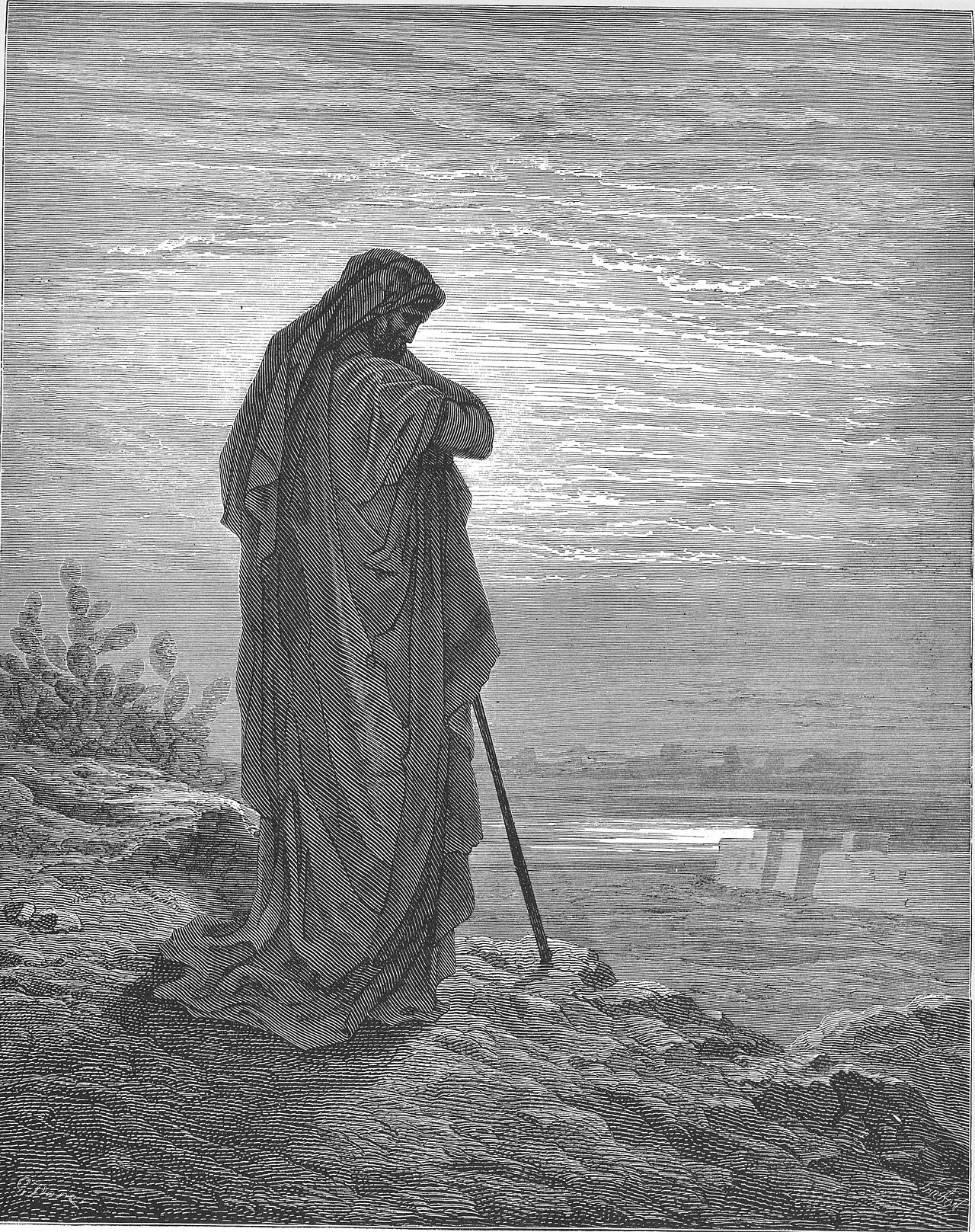
Amoschapter 3
15 verses · Amos · about 760 BC · The Twelve
Can two walk together without agreeing where to go?
Introduction
Amos, The Twelve, Amos Overview.
This chapter opens the second part of the book, a series of messages to Israel that each begin with a call to hear. Amos was a herdsman, and he argues here the way a man from the hills would argue, from lions, birds and traps. His hearers believed that being God's chosen people kept them safe. The chapter answers that belief directly. Listen for the chain of questions, each with an answer every hearer already knew. Notice the evidence a shepherd had to bring his master after a lion attack, and what that picture says about Samaria.
Context
- Who
- Israelites who thought being chosen meant being exempt
- What
- A message to the whole family brought out of Egypt, a chain of questions drawn from country life, and a sentence on Samaria and Bethel.
- Where
- Samaria, the capital of the northern kingdom, and the shrine at Bethel.
- When
- About 760 BC, in the reign of Jeroboam II of Israel; the book gives no exact year.
- Why
- To show that being chosen by God brings a stricter judgment, and that the prophet speaks because God has spoken.
Historical context
The chain of questions in the middle is a countryman's logic, and every image comes from the hills Amos worked. A lion roars over prey it has already caught, not while stalking. A bird does not fall into a trap where no bait was set. And a trumpet sounding in a town means one thing, which is why nobody stays calm.
Show the rest of the historical context, 3 more paragraphs
The two-legs-and-a-piece-of-an-ear detail is legal, not colourful. Under the Law, and under the wider law codes of the region, a hired shepherd who lost an animal to a predator had to produce the remains as evidence or pay for it himself. Amos is saying Israel will be recovered like that: proof of what was destroyed, not a living flock.
The horns of the altar were the four projections at its corners. A man fleeing a blood-avenger could grab them and claim sanctuary, and the Bible records people doing exactly that. Amos says the horns themselves will be cut off, the last refuge removed.
The winter house and the summer house, and the houses of ivory, were real buildings owned by real people. Excavations at Samaria have turned up hundreds of carved ivory inlays, panels, furniture fittings, figures in Phoenician and Egyptian style, the fittings of the very houses Amos names. The luxury he is describing is in a museum today.
Significance
You only have I known of all the families of the earth, therefore I will punish you for all your iniquities. That inversion is the point of the whole chapter. Election was heard in Israel as a shield; Amos says it is the basis of a higher liability.
Show the rest of the significance, 1 more paragraph
The line about God doing nothing without revealing his secret to his servants the prophets told hearers how to treat the man in front of them. If it is God's word, an unimpressive Judean fig-picker is not the issue.
This chapter in Jewish lifeWhat this chapter is in Jewish life and reading.
What is done
The first eight verses of this chapter close the Haftarah of Vayeshev. The site's table in src/lib/hebraic/readings.ts records that reading as Amos 2:6 to 3:8, the prophetic lesson after Genesis 37:1 to 40:23, and the probe printed it for both the Ashkenazi and the Sephardi rite. The reading stops at the eighth verse, where the lion has roared and the prophet must speak. The rest of the chapter, from the ninth verse, is not read in the cycle.
How it is read
Rashi is the one commentator on this chapter whose English the corpus carries, quoted here from The Judaica Press complete Tanach with Rashi, translated by A. J. Rosenberg, which Sefaria reports as CC-BY. The translation is modern, so every quotation from it is fifty words or fewer.
The second verse is the one a Christian reader knows best, and Rashi reads its verb as love. The Hebrew says the Lord knew Israel alone, and Rashi's gloss runs, "I loved you, but you rebelled against Me" (Rashi on Amos 3:2:1). He adds that the Sages read the verse another way. "But our Sages expounded on it in a different manner in Tractate Avodah Zarah (4a)." The corpus carries that passage as Avodah Zarah 4a:11, without its text.
The questions that follow Rashi reads as Amos's answer to those who told the prophets to be silent. Nothing happens without its cause, so "do the prophets prophesy from their own mind unless they were commanded?" (Rashi on Amos 3:3:1). The lion, the bird, the snare and the shophar are each given their plain sense first. At the sixth verse he gives two readings of the whole run. In the first the lion "is Nebuchadnezzar". In the second, "The prophets compare the holy spirit that comes upon them from the roar of a lion" (Rashi on Amos 3:6:2). He then draws the lesson for the hearer. "So should you quake before the words of the prophets who look out for you to deliver you from the evil, that it not come" (Rashi on Amos 3:6:2). The eighth verse closes the run on the prophet himself. "So has the Holy One, blessed be He, spoken to the prophets to prophesy. Who will not prophesy?" (Rashi on Amos 3:8:1).
The second half of the chapter turns to Samaria. The nations are called as witnesses. "You Philistines and Egyptians, announce this", Rashi writes, so that from the mountains they may look into the city and see its ways (Rashi on Amos 3:9:1). The shepherd who snatches two legs from the lion's mouth "saves little" (Rashi on Amos 3:12:1). The winter house and the summer house are the houses of the rich. "Since they were delicate, the wealthy people would build for themselves two houses, one for the winter and one for the summer" (Rashi on Amos 3:15:1).
The corpus carries nine further notes on this chapter without an English text, each marked linked because Sefaria holds no English version of the ref. They stand cited and unquoted at Metzudat David on Amos 3:1:1, at Radak on Amos 3:1:1, 3:7:1, 3:8:1 and 3:14:1, at Ibn Ezra on Amos 3:2:1, 3:9:1 and 3:13:1 and at Rashi on Amos 3:4:2.
What the rabbis say
The corpus carries forty rabbinic locators on this chapter, eight it files under Talmud and thirty-two under Midrash, and the text of none, so each is cited by ref here rather than quoted. On the first verse it holds Sifrei Devarim 1:2. On the second verse it holds Aggadat Bereshit 8:3, Avodah Zarah 4a:11, Ein Yaakov (Glick Edition), Avodah Zarah 1:7 and Otzar Midrashim, Midrash Yitbarach ('May He Be Blessed') 1:17. It also holds Otzar Midrashim, Midrash Yitbarach ('May He Be Blessed') 1:3 and Shemot Rabbah 15:15. On the third verse it holds Otzar Midrashim, Baraita of Samuel HaKatan 1:4.
On the fourth verse it holds Avot DeRabbi Natan 39:2. On the fifth verse it holds Bamidbar Rabbah 12:3, Devarim Rabbah 5:9, Mekhilta DeRabbi Shimon Ben Yochai 19:18 and Midrash Tehillim 91:2. On the sixth verse it holds Otzar Midrashim, Pesikta, Pesikta Chadata 38, Pesikta DeRav Kahana 24:1 and Pesikta Rabbati 40:1. On the seventh verse it holds Avot DeRabbi Natan, Recension B 1:5, Bereshit Rabbah 49:2, Bereshit Rabbah 99:2, Bereshit Rabbati, Parashat Miketz 2 and Ein Yaakov (Glick Edition), Sanhedrin 10:5. It also holds Ein Yaakov, Sanhedrin 10:8.
On the eighth verse it holds Aggadat Bereshit 56:1, Aggadat Bereshit 8:1, Avot DeRabbi Natan 2:6, Avot DeRabbi Natan, Recension B 3:3, Berakhot 56b:12 and Chullin 59b:9. On the tenth verse it holds Mekhilta DeRabbi Yishmael, Tractate Bachodesh 4:3. On the twelfth verse it holds Mekhilta DeRabbi Shimon Ben Yochai 22:12, Mekhilta DeRabbi Yishmael, Tractate Nezikin 16:15, Otzar Midrashim, Perek Tzedakot 1:17 and Otzar Midrashim, The Ten Exiles 1:5. It also holds Seder Olam Rabbah 22:1. On the thirteenth verse it holds Aggadat Bereshit 53:2.
On the fifteenth verse it holds Esther Rabbah 1:12, Kohelet Rabbah 6:3:1, Midrash Shmuel 2:1, Otzar Midrashim, The Order of Arakim 1:11 and Yoma 10a:15. What each of them teaches is a saying of the rabbis, and it is reported as theirs wherever this site quotes one. The quotations wait on a fetch that carries the text.
Sources: Rashi, Rashi on Amos 3:2:1 to 3:15:1, The Judaica Press complete Tanach with Rashi, translated by A. J. Rosenberg, reported CC-BY; Metzudat David, Metzudat David on Amos 3:1:1, cited by ref because the corpus carries no English text; Radak, Radak on Amos 3:1:1, 3:7:1, 3:8:1 and 3:14:1, cited by ref because the corpus carries no English text; Ibn Ezra, Ibn Ezra on Amos 3:2:1, 3:9:1 and 3:13:1, cited by ref because the corpus carries no English text; Rashi (the notes without English), Rashi on Amos 3:4:2, cited by ref because the corpus carries no English text; The Sefaria corpus, scripts/data/sources/sefaria/amos/3.json, the 40 Talmud and Midrash locators of this chapter; The site's own files, src/lib/hebraic/readings.ts, the entry for Vayeshev (Genesis 37:1 to 40:23) with its Haftarah Amos 2:6 to 3:8, printed by the probe for both rites.
The heads below are this chapter's scenes. The numbered points under each are its verses.
You only have I known of all the families of the earth
Amos 3:1-2
the LORD has spoken against you: The book's argument turns on "Only you have I known from all the families of the earth." The Hebrew verb yada, to know, is the word of covenant intimacy. The conclusion follows, "therefore I will punish you for all your iniquities," so privilege is the ground of a heavier reckoning.
Amos 3:1
“Amos, like Hosea, rebukes Israel directly, Judah indirectly. He had warned each nation separately. Now, ere he concentrates himself on Israel, he sums up what he had before said to Judah and in the Person of God. “Ye have been alike in My gifts to you, alike in your waste of them and your sins; alike ye shall be in your punishment.” What was said to Israel was said also to Judah: what was directed first to the former people, belongs to us, the later.”
1 more voice on this verseWhat preachers and commentators have said about this verse, in their own words.
Amos 3:1
“Compare Jer 8:3, and Mic 2:3, on "family" for the nation. However, as the prophecy following refers to the ten tribes, they must be chiefly, if not solely, meant: they were the majority of the nation; and so Amos concedes what they so often boasted, that they were the elect people of God [CALVIN], but implies that this only heightens their sins.”
Jamieson, Fausset & Brown · Commentary Critical and Explanatory on the Whole Bible (1871)reformed
Adam Clarke reads known as the Lord taking Israel for His own people, approving, loving, feeding, sustaining and defending them. The word therefore draws judgment out of that very choice. Clarke adds that the punishment will be in proportion to the privileges they enjoyed and the grace they abused.
Amos 3:2
“You only have I known - I have taken no other people to be my own people. I have approved of you, loved you, fed, sustained, and defended you; but because you have forsaken me, have become idolatrous and polluted, therefore will I punish you. And the punishment shall be in proportion to the privileges you have enjoyed, and the grace you have abused.”
Adam Clarke · Commentary on the Bible (1810-1826)evangelical
Can two walk together? The lion has roared
Amos 3:3-6
Can two walk together: A run of proverbs builds one argument: two walk together by agreement, a lion roars, and "a ram’s horn" sounds because danger is real. The last question presses the rule to its hardest edge: "If calamity comes to a city, has not the LORD caused it?"
Amos 3:3
“Sacred parables or enigmas must have many meanings. They are cast on the mind, to quicken it and rouse it by their very mystery. They are taken from objects which in different lights, represent different things, and so suggest them. This series of brief parables have, all of them, this in common, that each thing spoken of is alternately cause and effect, and where the one is found, ‘there’ must be the other. From the effect you can certainly infer the cause, without which it could not be, and from the cause you may be sure of the effect.”
Does a lion roar in the forest: Jamieson, Fausset and Brown apply the picture to Israel: where a corrupt nation is, God's instruments of punishment are sure to be. Albert Barnes connects the roar back to Amos 1:2 and to Hosea 11:10. Cyril of Alexandria asks why Israel should accuse God when He gives the threat.
Amos 3:4
“Where a corrupt nation is, there God's instruments of punishment are sure also to be. The lion roars loudly only when he has prey in sight. Will a young lion cry out . . . if he--the "lion," not the "young lion." have taken nothing?--The young lion just weaned lies silent, until the old lion brings the prey near; then the scent rouses him.”
Jamieson, Fausset & Brown · Commentary Critical and Explanatory on the Whole Bible (1871)reformed
1 more voice on this verse
Amos 3:4
“Those who study the habits of wild beasts say that the lion, when it is in need of food, roams about powerfully through mountains and glens and forests, turning its eye this way and that, and seeking to catch something of the animals grazing in the woods. But when it sees something suitable for food, then it comes near and makes its attack, roaring terribly and harshly. Why then, He says, do you accuse God, because He makes the threat before the attack of terrible things?”
Cyril of Alexandria · written before 444 · Commentary on Amospatristic
Does a bird land in a snare: A snare springs only when something touches it. Jamieson, Fausset and Brown read the trap as the enemy closing on Israel, and Israel caught in judgment as the bird. Matthew Henry draws the lesson that a sinful people must see their own sin as the thing that has entangled them.
Amos 3:5
The foe corresponds to the "snare," suddenly springing from the ground and enclosing the bird on the latter touching it; the Hebrew is literally, "Shall the snare spring from the earth?" Israel entangled in judgments answers to the bird "taken."
Jamieson, Fausset & Brown · Commentary Critical and Explanatory on the Whole Bible (1871)reformed
1 more voice on this verse
Amos 3:5
“When God has come forth to contend with a sinful people it is necessary that they should understand, 1. That it is their own sin that has entangled them; for can a bird fall in a snare upon the earth where no gin is for him?”
Matthew Henry · Commentary on the Whole Bible (1707-1721)puritan
has not the LORD caused it?: Jamieson, Fausset and Brown draw the line this way: the evil of sin is from ourselves, and the evil of trouble is from God. Adam Clarke likewise takes the calamity as punishment for sin. Cyril of Alexandria argues that disease, siege and ruined crops lie in God's power alone.
Amos 3:6
“Shall a trumpet be blown - The sign of alarm and invasion. And the people not be afraid? - Not take the alarm, and provide for their defense and safety? Shall there be evil in a city - Shall there be any public calamity on the wicked, that is not an effect of my displeasure? The word does not mean moral evil, but punishment for sin; calamities falling on the workers of iniquity. Natural evil is the punishment of moral evil: God sends the former when the latter is persisted in.”
Adam Clarke · Commentary on the Bible (1810-1826)evangelical
2 more voices on this verse
Amos 3:6
“But perhaps you say that the outcome of these matters grieves you not moderately. Will there then be an affliction in a city, perchance, which the Lord has not done? It is like as if one should say: Will there then be anyone among men able to afflict a city either with diseases or sieges or destructions of crops or even in some other such way? But if no one of men could do such things, and it lies rather in the authority and power of God, why are you angry with those who announce it beforehand?”
Cyril of Alexandria · written before 444 · Commentary on Amospatristic
Amos 3:6
“Yet Israel is not alarmed, though God threatens judgments. shall there be evil in a city, and the Lord hath not done it?--This is the explanation of the preceding similes: God is the Author of all the calamities which come upon you, and which are foretold by His prophets. The evil of sin is from ourselves; the evil of trouble is from God, whoever be the instruments.”
Jamieson, Fausset & Brown · Commentary Critical and Explanatory on the Whole Bible (1871)reformed
Amos 3:7-8
Surely the Lord GOD does nothing: The rule is "Surely the Lord GOD does nothing without revealing His plan to His servants the prophets." "The lion has roared" takes up the image of 1:2 as Amos's defense, the compulsion he names to Amaziah at 7:14-15. The closing question has only one answer: "who will not prophesy?"
Amos 3:7
“Surely the Lord God will do - For the Lord God “doeth” Nothing, but He revealeth His secret unto His servants the prophets - So our Lord saith, “And now I have told you before it come to pass, that, when it is come to pass, ye may believe” (Joh 14:29; compare Joh 13:19). While it is yet a “secret” counsel within Himself, He admitteth to it His servants the prophets.”
1 more voice on this verse
Amos 3:7
“The secret of God is with them; it is in some sense with all the righteous ( Prov. iii. 32 ), with all that fear God ( Ps. xxv. 14 ), but in a peculiar manner with the prophets, to whom the Spirit of prophecy is a Spirit of revelation.”
Matthew Henry · Commentary on the Whole Bible (1707-1721)puritan
Matthew Henry names two forces, an inner impulse like the fire in the bones of Jeremiah 20:9 and a plain command to deliver the word. Cyril of Alexandria adds that the prophets bring no wrath themselves. Adam Clarke suggests prophesy here means to plead against the coming vengeance.
Amos 3:8
“The lion hath roared - God hath sent forth a terrible alarm, Who will not fear? Can any hear such denunciations of Divine wrath and not tremble? The Lord God hath spoken - And those only who are in communion with him have heard the speech. Who can but prophesy? Who can help proclaiming at large the judgment threatened against the nation? But I think נבא naba, here, is to be taken in its natural and ideal signification, to pray, supplicate, or deprecate vengeance.”
Adam Clarke · Commentary on the Bible (1810-1826)evangelical
2 more voices on this verse
Amos 3:8
"A lion will roar, and who will not be afraid? The Lord God has spoken, and who will not prophesy?" It is not the prophets, he says, who bring on the things that come from wrath; how could they? For they are also human in nature, just like you, but they have been honored by God by learning all the things that He might wish to fulfill, and to bring upon cities and lands either good things, perhaps, or things that are accustomed to cause pain.
Cyril of Alexandria · written before 444 · Commentary on Amospatristic
Amos 3:8
“Nay, and besides the prophetic impulse which went along with the inspiration, and made the word like a fire in their bones ( Jer. xx. 9 ), they received a command from God to deliver what they had been charged with; and they would have been false to their trust if they had not done it. Necessity was laid upon them, as upon the preachers of the gospel, 1 Cor. ix.”
Matthew Henry · Commentary on the Whole Bible (1707-1721)puritan
ConnectionsAmos 1:2
Rescued like two legs or a piece of an ear
Amos 3:9-10
Proclaim to the citadels of Ashdod: The summons calls Israel's old enemies, "the citadels of Ashdod" and "the citadels of Egypt," to witness. The charge is that "they know not how to do right," and the powerful "store up violence and destruction in their citadels." Pagan nations now see what Israel's leaders deny.
Amos 3:9
“If they have grown impudent in sin, let them bear the shame: " Publish it in Ashdod, in Egypt. " 1. Let them see how black the charge is, and how well proved. Let them observe the behaviour of the inhabitants of Samaria; let them look off from the adjacent hills, and they may see how rude and boisterous they are, and hear how loud they cry of their sin is, as was that of Sodom.”
Matthew Henry · Commentary on the Whole Bible (1707-1721)puritan
2 more voices on this verse
Amos 3:9
“Publish - “ye,” they are the words of God, commissioning His prophets In (on) the palaces of Ashdod - , that is, on the flat roofs of their high buidings, from where all can hear And in (on) the palaces in the land of Egypt - Theodoret: “Since ye disbelieve, I will manifest to Ashdodites and Egyptians the transgressions of which ye are guilty.” Amos had already pronounced God’s sentence on “the palaces of Ashdod” and all Philistia, for their sins against Himself in His people (see the notes at Amo 1:6-8).”
Amos 3:9
“Tumults - The seditious counsels, and rebellious conspiracies among them. The oppressed - Multitudes of oppressed ones, as the usurpers took it to be their interest to crush all they feared or suspected. In the midst - Yea, throughout the whole kingdom of Samaria.”
John Wesley · Explanatory Notes upon the Old Testament (1765)evangelical
Adam Clarke observes that people who do wrong to their own ruin must be ignorant of what is right and of their own good. He adds the proverb that none are so blind as those who will not see, since they had closed their own eyes.
Amos 3:10
“For they know not to do right - So we may naturally say that they who are doing wrong, and to their own prejudice and ruin, must certainly be ignorant of what is right, and what is their own interest. But we say again “There are none so blind as those who will not see.” Their eyes, saith the Lord, they have closed.”
Adam Clarke · Commentary on the Bible (1810-1826)evangelical
Amos 3:11-12
"An enemy will surround the land" and "plunder your citadels," and 2 Kings 17:5-6 records Assyria's siege of Samaria. The shepherd who saves "two legs or a piece of an ear" follows Exodus 22:13, where the remains are evidence the beast was killed. So the remnant rescued proves the disaster.
Amos 3:11
“Therefore thus saith the Lord God - There was no human redress. The oppressor was mighty, but mightier the Avenger of the poor. Man would not help; therefore God would. “An adversary” there shall be, “even round about the land;” literally, “An enemy, and around the land!” The prophets speaks, as seeing him. The abruptness tells how suddenly that enemy should come, and hem in the whole land on all sides. What an unity in their destruction!”
the shepherd snatches from the mouth: Adam Clarke reads the picture as a remnant so small it serves only as proof. Jamieson, Fausset and Brown weigh the word behind the couch, which Gesenius read as damask and they read as the city Damascus. Matthew Henry sees those at ease on their couches going first into captivity.
Amos 3:12
“As the shepherd taketh out of the mouth of the lion - Scarcely any of you shall escape; and those that do shall do so with extreme difficulty, just as a shepherd, of a whole sheep carried away by a lion, can recover no more than two of its legs, or a piece of its ear, just enough to prove by the marks on those parts, that they belonged to a sheep which was his own.”
Adam Clarke · Commentary on the Bible (1810-1826)evangelical
1 more voice on this verse
Amos 3:12
“The parallelism of "Samaria" to "Damascus," and the Septuagint favor English Version rather than GESENIUS: "on a damask couch." The Hebrew pointing, though generally expressing damask, may express the city "Damascus"; and many manuscripts point it so.”
Jamieson, Fausset & Brown · Commentary Critical and Explanatory on the Whole Bible (1871)reformed
Horns of the altar cut off, winter and summer houses smashed
Amos 3:13-15
testify against the house of Jacob: The oracle falls on Bethel, where Jeroboam I set up a calf at 1 Kings 12:29. There "the horns of the altar will be cut off," the horns a fugitive held for asylum at 1 Kings 1:50. The winter and summer houses recall Ahab's ivory palace at 1 Kings 22:39.
Amos 3:13
“Hear ye and testify ye in - (Rather unto or against ) the house of Israel; first “hear” yourselves, then “testify,” that is, solemnly “protest,” in the Name of God; and “bear witness unto” and “against” them, so that the solemn words may sink into them. It is of little avail to “testfy,” unless we first “hear;” nor can man “bear witness” to what he doth not know; nor will words make an “impression,” that is, leave a trace of themselves, be stamped in or on people’s souls, unless the soul which utters them have first hearkened unto them.”
the horns of the altar: The Lord's visit on Israel's sins begins at Bethel. Adam Clarke sees the sentence fulfilled when Josiah pulled down the altars there and burned bones upon them, citing 2 Kings 23:15-16. Jamieson, Fausset and Brown read the verse as the reason the nations are called to witness in verse 13.
Amos 3:14
“In the day that I shall visit - When Josiah made a reformation in the land he destroyed idolatry, pulled down the temples and altars that had been consecrated to idol worship, and even burnt the bones of the priests of Baal and the golden calves upon their own altars. See 2Ki 23:15, 2Ki 23:16, etc.”
Adam Clarke · Commentary on the Bible (1810-1826)evangelical
1 more voice on this verse
Amos 3:14
“That--rather, "since," or "for." This verse is not, as English Version translates, the thing which the witnesses cited are to "testify" (Am 3:13), but the reason why God calls on the heathen to witness Samaria's guilt; namely, in order to justify the punishment which He declares He will inflict.”
Jamieson, Fausset & Brown · Commentary Critical and Explanatory on the Whole Bible (1871)reformed
the winter house along with the summer house: Albert Barnes cites Jerome that the winter house faced south and the summer house north, so the owners could temper heat and cold. John Wesley calls the summer house a house of pleasure. Barnes draws the lesson that luxury and pride follow on idolatry.
Amos 3:15
“The winter-house - Which probably was in the chief city, whither the great men retired in the winter. The summer-house - The houses of pleasure, where the nobles and rich men spent the summer time.”
John Wesley · Explanatory Notes upon the Old Testament (1765)evangelical
1 more voice on this verse
Amos 3:15
“And I will smite the winter house with the summer house - Upon idolatry, there follow luxury and pride. “So wealthy were they,” says Jerome, “as to possess two sorts of houses, “the winter house” being turned to the south, the “summer house” to the north, so that, according to the variety of the seasons, they might temper to them the heat and cold.””
Keep studying
Sources for this chapter
The summary
Jamieson, Fausset & Brown, Commentary Critical and Explanatory; John Calvin, Commentaries; John Wesley, Notes on the Old Testament and Matthew Henry, Complete Commentary.
The exposition
Adam Clarke, Commentary on the Bible; Albert Barnes; Carl Friedrich Keil, The Twelve Minor Prophets; Cyril of Alexandria, Commentary on Amos; Edward Bouverie Pusey, The Minor Prophets: A Commentary; Jamieson, Fausset & Brown, Commentary Critical and Explanatory on the Whole Bible; Jamieson, Fausset and Brown, Commentary Critical and Explanatory on the Whole Bible; John Calvin, Commentaries on the Twelve Minor Prophets; John Gill, Exposition of the Old Testament; John Wesley, Explanatory Notes upon the Old Testament and Matthew Henry, Commentary on the Whole Bible.