
Amos 3:6
in Amos 3If a ram’s horn sounds in a city, do the people not tremble? If calamity comes to a city, has not the LORD caused it?
BSB
The same verse in ASV and KJV ▾
ASV
Shall the trumpet be blown in a city, and the people not be afraid? shall evil befall a city, and Jehovah hath not done it?
KJV
Shall a trumpet be blown in the city, and the people not be afraid? shall there be evil in a city, and the Lord hath not done it?
⋯
This verse in Amos 3
Commentary
17 notes on this verse(Verse 3 onwards) Will two walk together unless they have agreed? Does a lion roar in the forest unless it has prey? Does a lion's cub give a cry from its den without capturing something? Does a bird fall into a trap on the ground without a trapper? Does a trap spring up from the ground before catching something? If a trumpet is blown in a city, will not the people be afraid? If there is calamity in a city, has not the Lord caused it?
This site's exposition
Can two walk together, except they be agreed
on Amos 3:3-6
A string of short proverbs builds a single argument by accumulation, two walking together only by agreement, a lion roaring only over prey already taken, a bird caught only where a snare was laid, a trumpet raising alarm only because danger is real. Each image insists that effect follows cause, and the last question presses the principle to its hardest edge, shall there be evil in a city and the Lord hath not done it, a line the bench reads as divine sovereignty over calamity as judgment rather than a claim that God authors moral evil, the distinction the older commentators are careful to draw. The whole run of questions defends the next section's claim, that Amos speaks because the Lord has spoken, not by his own choice.
The record, by era
The Church Fathers3 voices
But perhaps you say that the outcome of these matters grieves you not moderately. Will there then be an affliction in a city, perchance, which the Lord has not done? It is like as if one should say: Will there then be anyone among men able to afflict a city either with diseases or sieges or destructions of crops or even in some other such way? But if no one of men could do such things, and it lies rather in the authority and power of God, why are you angry with those who announce it beforehand?
As it is impossible for two people to share a journey at the same time, he is saying, unless indicating to each other where and why they are traveling, or for a lion to roar if there is no prey, or for a bird to …
A commentator
John ChrysostomHOMILY AGAINST THOSE WHO SAY THAT DEMONS GOVERN HUMAN AFFAIRS 1:4–5 · Written in the 5th century.
proposed
I do not say these things in arrogance, but I have the prophet Amos standing at my side, crying and saying, "There is no evil in the city which the Lord has not done." Now evil is a many-faceted term. I wish that you shall learn the exact meaning of each expression, in order that on account of ambiguity you may not confound the nature of the things and fall into blasphemy. There is then evil, which is really evil; fornication, adultery, covetousness, and the countless dreadful things, which are worthy of the utmost reproach and punishment. Again there is evil, which rather is not evil but is called so, famine, pestilence, death, disease, and other of a similar nature. For these would not be evils. On this account I said they are called so only. Why then? Because, were they evils intended to become the sources of good to us, chastening our pride, goading our sloth and leading us on to zeal, making us more attentive.
The Medieval Church2 voices
It is, then, customary for sacred Scripture to speak of his permission as an action and deed, but even when it goes so far as to say that God "creates evil" and that "there is not evil in a city which the Lord has not done," it still does not show God to be the author of evil. On the contrary, since the word evil is ambiguous it has two meanings, for it sometimes means what is by nature evil, being the opposite of virtue and against God's will, while at other times it means what is evil and painful in relation to our sensibility, which is to say, tribulation and distress. Now while these last seem to be evil, because they cause pain, actually they are good because to such as understand them they are a source of conversion and salvation. It is these last that Scripture says are permitted by God. Moreover, one must know that we too cause them because involuntary evils spring from voluntary ones.
But if there were no evils in the world, much good would be lost to man, as well in respect of knowledge, as also in respect of desire and love of good: for good is better known in contrast with evil; and while evil results …
10 more voices on this verse
The Puritans and the Awakening4 voices
): Shall there be evil in a city, in a family, in a nation, and the Lord has not done it, appointed it, and performed what he appointed? The evil of sin is from ourselves; it is our own doing. But the evil of trouble, personal or public, is from God, and is his doing; whoever are the instruments, God is the principal agent.
quarantine:debris (2026-07-29) — leading-punctuation+unbalanced-parens
Evil - Such as plague or famine. Done it - Either immediately by his own hand, or by the hands of those he employs. Whoever are the instruments, God is the principal agent.
Shall a trumpet be blown in the city,....
Of the sins that were found among them, by which God was provoked thus to threaten, thus to punish, that they might justify God in his controversy with them, and, unless they repented and reformed, might expect no other than that God should proceed in his controversy,
The Nineteenth Century6 voices
Shall a trumpet be blown - The sign of alarm and invasion. And the people not be afraid? - Not take the alarm, and provide for their defense and safety? Shall there be evil in a city - Shall there be any public calamity on the wicked, that is not an effect of my displeasure? The word does not mean moral evil, but punishment for sin; calamities falling on the workers of iniquity. Natural evil is the punishment of moral evil: God sends the former when the latter is persisted in.
A commentator
Jamieson, Fausset & Brown1802–1910
Commentary Critical and Explanatory on the Whole Bible (1871)
Yet Israel is not alarmed, though God threatens judgments. shall there be evil in a city, and the Lord hath not done it?--This is the explanation of the preceding similes: God is the Author of all the calamities which come upon you, and which are foretold by His prophets. The evil of sin is from ourselves; the evil of trouble is from God, whoever be the instruments.
A commentator
Jamieson, Fausset & Brown1802–1910
Commentary Critical and Explanatory on the Whole Bible (1871)
proposed
Can two walk together, except they be agreed?--Can God's prophets be so unanimous in prophesying against you, if God's Spirit were not joined with them, or if their prophecies were false? The Israelites were "at ease," not believing that God was with the prophets in their denunciations of coming ruin to the nation (Am 6:1, 3; compare 1Ki 22:18, 24, 27;
quarantine:debris (2026-07-29) — unbalanced-parens
WE have all felt grieved when reading our bills of mortality to observe the mysterious spread of cholera in our great city. It is high time that it should be made the subject of special prayer, and that the nation should seek unto the Lord for its removal. While as yet there has been but comparatively little of the evil, we should be humbled under it, that we may be spared a greater outbreak. There are different ways of looking at this disease.
WE have all felt grieved when reading our bills of mortality to observe the mysterious spread of cholera in our great city. It is high time that it should be made the subject of special prayer, and that the nation should seek unto the Lord for its removal. While as yet there has been but comparatively little of the evil, we should be humbled under it, that we may be spared a greater outbreak. There are different ways of looking at this disease. Men viewing it from one point of view have frequently despised those who have regarded it under another aspect. Occasionally Christian men indignantly express themselves concerning those who speak of cholera as the product of ascertained and governable causes to be checked and even prevented by due attention to the laws of health. I have never shared in that indignation. It seems to me that this disease is, to a great extent, in our own hands and that if all men would take scrupulous care as to cleanliness, and if better dwellings were provided for the poor, and if overcrowding were effectually prevented, and if the water supply could be larger, and other sanitary improvements could be carried out, the disease, most probably, would not occur. Or, if it did visit us occasionally, as the result of filth in other countries, it would be in a very mitigated form. I am thankful that there are many men of intelligence and scientific information who can speak well upon this point, and I hope they will never cease to speak until all men learn that the laws of cleanliness and health are as binding upon us as those of morality. So far from a Christian man being angry with those who instruct the people in useful secular knowledge, he ought rather to be thankful for them and hope that their teaching may be powerful with the masses.
A commentator
Albert Barnes1798–1870
Notes, Explanatory and Practical, on the Old and New Testaments (1832-1869)
proposed
Is there evil in the city and the Lord hath not done it? - Evil is of two sorts, evil of sin, and evil of punishment. There is no other; for evil of nature, or evil of fortune, are evils, by God’s Providence, punishing the evil of sin. Augustine, c. Adim. 26: “Evil, which is sin, the Lord hath not done; evil, which is punishment for sin, the Lord bringeth.” The Providence of God governing and controlling all things, man doth ill which he wills, so as to suffer ill which he wills not. Only, evil which is by God’s Providence the punishment of sin is in this life remedial and through final impenitence alone becomes purely judicial. Rib.: “Refer not, the prophet would say, the ills which ye suffer and will suffer, to any other causes, as people are accustomed to do. God, in His displeasure, sends them upon you. And that ye may know this the more certainly, whatever He shall send He will first reveal to the prophets and by them ye shall be forewarned. See then that ye despise not my words, or the words of the other prophets. People ascribe their sufferings to fortune, accident, any cause, rather than the displeasure of God. The intemperate will think anything the cause of their illness rather than their intemperance. People love the things of the world and cannot and will not be persuaded that so many evils are brought on them by the things which they love. So then God explains through the prophets the punishment which He purposes to bring on people.”
The words behind it
14 Hebrew wordsEvery Hebrew word of this verse in the order it stands, with what it means and the door to its own study. The last column counts the times a word stands in the whole Bible: the rarer the word, the more the places it appears belong together.
| Hebrew | Sound | Meaning | Word study | In the Bible |
|---|---|---|---|---|
| אִם־ | ʾim- | <if>? | H518 → | 1069 times |
| יִתָּקַ֤ע | yitaka' | is it blown | H8628 → | |
| שׁוֹפָר֙ | shofar | a trumpet | H7782 → | |
| בְּעִ֔יר | beir | in a city | H5892 → | 1090 times |
| וְעָ֖ם | veam | and [the] people | H5971 → | 1873 times |
| לֹ֣א | lo' | not | H3808 → | 5168 times |
| יֶחֱרָ֑דוּ | yecheradu | they tremble | H2729 → | |
| אִם־ | ʾim- | or? | H518 → | 1069 times |
| תִּהְיֶ֤ה | tihyeh | is it | H1961 → | 3559 times |
| רָעָה֙ | raah | calamity | H7451 → | 662 times |
| בְּעִ֔יר | beir | in a city | H5892 → | 1090 times |
| וַיהוָ֖ה | vayahweh | and Yahweh | H3068 → | 6520 times |
| לֹ֥א | lo' | not | H3808 → | 5168 times |
| עָשָֽׂה׃ | ʾasah | he has done [it] | H6213 → | 2628 times |
אִם־<if>?
ʾim-H518 →1069 times
יִתָּקַ֤עis it blown
yitaka'H8628 →
שׁוֹפָר֙a trumpet
shofarH7782 →
בְּעִ֔ירin a city
beirH5892 →1090 times
וְעָ֖םand [the] people
veamH5971 →1873 times
לֹ֣אnot
lo'H3808 →5168 times
יֶחֱרָ֑דוּthey tremble
yecheraduH2729 →
אִם־or?
ʾim-H518 →1069 times
תִּהְיֶ֤הis it
tihyehH1961 →3559 times
רָעָה֙calamity
raahH7451 →662 times
בְּעִ֔ירin a city
beirH5892 →1090 times
וַיהוָ֖הand Yahweh
vayahwehH3068 →6520 times
לֹ֥אnot
lo'H3808 →5168 times
עָשָֽׂה׃he has done [it]
ʾasahH6213 →2628 times
A shaded row is a word that stands 400 times or fewer in the Bible.
The walk
8 stopsEach card is a verse this one points to, and under it the verses that one points to in turn. Where several paths arrive at the same place, that place is listed first: the text keeps returning to it.
Through
Genesis 50:20As for you, what you intended against me for evil, God intended for good, in order to accomplish a day like this—to preserve the lives of many people.
it leads to
- Romans 8:28
And we know that God works all things together for the good of those who love Him, who are called according to His purpose.
- Psalms 119:71
It was good for me to be afflicted, that I might learn Your statutes.
- Genesis 45:5–8
And now, do not be distressed or angry with yourselves that you sold me into this place, because it was to save lives that God sent me before you.
- Genesis 37:18–20
Now Joseph’s brothers saw him in the distance, and before he arrived, they plotted to kill him.
- Acts 2:23
He was delivered up by God’s set plan and foreknowledge, and you, by the hands of the lawless, put Him to death by nailing Him to the cross.
- Romans 8:28
Through
Isaiah 45:7I form the light and create the darkness; I bring prosperity and create calamity. I, the LORD, do all these things.
it leads to
- Ecclesiastes 7:13–14
Consider the work of God: Who can straighten what He has bent?
- Psalms 75:7
but it is God who judges; He brings down one and exalts another.
- Job 2:10
“You speak as a foolish woman speaks,” he told her. “Should we accept from God only good and not adversity?” In all this, Job did not sin in what he said.
- Ecclesiastes 7:13–14
About Amos
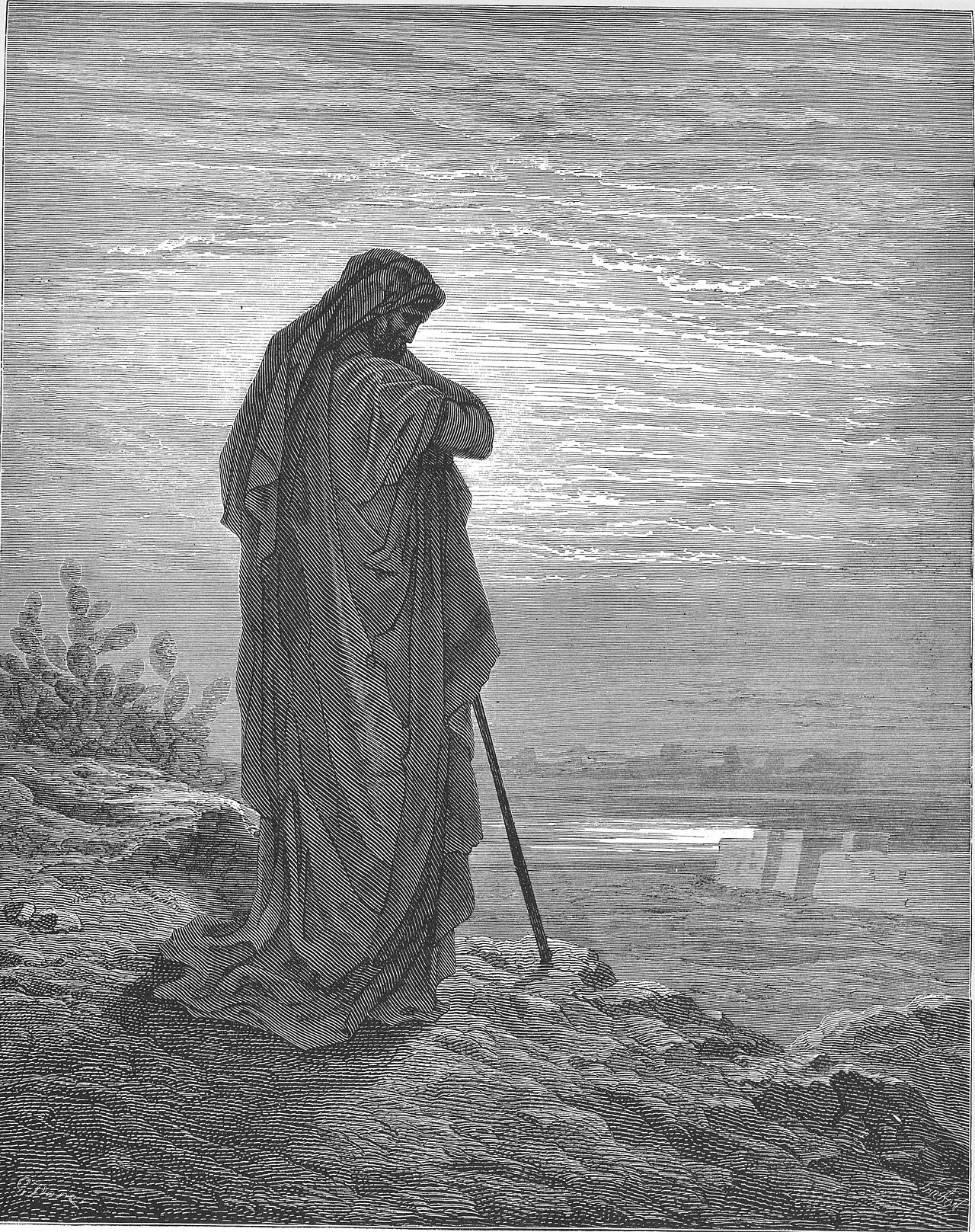
This page draws on 15 works. Open the list of works
This page draws on Adam Clarke, Commentary on the Bible; Albert Barnes, Notes, Explanatory and Practical, on the Old and New Testaments (1832-1869); Charles Spurgeon, The Metropolitan Tabernacle Pulpit, Sermon No. 705: “The Voice Of Cholera” (lightly modernized text, CCEL edition); Cyril of Alexandria, Commentary on Amos; Jamieson, Fausset & Brown, Commentary Critical and Explanatory on the Whole Bible; Jamieson, Fausset and Brown, Commentary Critical and Explanatory on the Whole Bible; Jerome, Commentary on Amos; John Chrysostom, HOMILY AGAINST THOSE WHO SAY THAT DEMONS GOVERN HUMAN AFFAIRS 1:4–5; John Damascene, ORTHODOX FAITH 4:20; John Gill, Exposition of the Old Testament; John Gill, Exposition of the Old Testament (1748-1763); John Wesley, Explanatory Notes upon the Old Testament; Matthew Henry, Commentary on the Whole Bible; Theodoret of Cyrus, COMMENTARY ON AMOS 3:6–8 and Thomas Aquinas, Commentary (church-history corpus).