
Proverbs 1:2
in Proverbs 1for gaining wisdom and discipline, for comprehending words of insight,
BSB
The same verse in ASV and KJV ▾
ASV
To know wisdom and instruction; To discern the words of understanding;
KJV
To know wisdom and instruction; to perceive the words of understanding;
⋯
This verse in Proverbs 1
Commentary
15 notes on this verseA commentator
Jamieson, Fausset & Brown1802–1910
Commentary Critical and Explanatory on the Whole Bible (1871)
To know . . . instruction--literally, "for knowing," that is, such is the design of these writings. wisdom--or the use of the best means for the best ends, is generally employed in this book for true piety. instruction--discipline, by which men are trained. to perceive--literally, "for perceiving," the design (as above) understanding--that is, words which enable one to discern good and evil.
This site's exposition
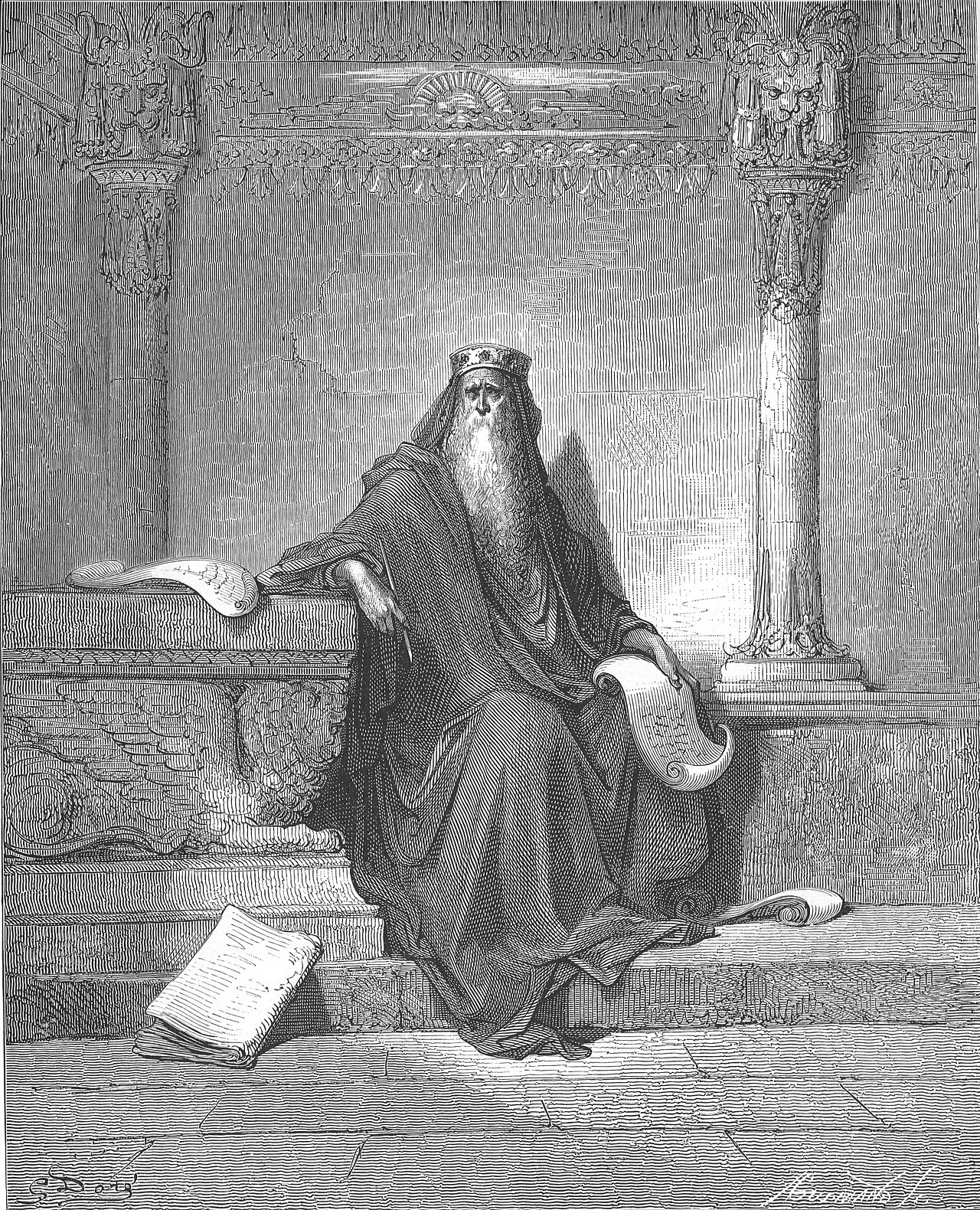
The proverbs of Solomon the son of David
on Proverbs 1:1-4
The book opens with a header before it opens with a thought, naming its author, his sonship to David, and his office as king of Israel. The same formula returns at 10:1, 22:17, 24:23, 25:1, 30:1 and 31:1, the book's own record of how the whole collection was gathered under one name across generations. The purpose clauses that follow set the aim high at once: not information but wisdom, instruction, and understanding, and for the untaught a subtilty they do not yet have.
The record, by era
The Church Fathers5 voices
The proverb, according to barbarian philosophy, is called a mode of prophecy, and the parable is so called, and the enigma in addition. Further also, they are called wisdom; and again, as something different from it, "instruction and words of prudence," and "turnings of words" and "true righteousness"; and again, "teaching to direct judgment" and "subtlety to the simple," which is the result of training, and "perception and thought," with which the young catechumen is imbued.
A proverb is a cryptic saying that has an indirect meaning. [Solomon] ruled in Israel, in order to understand wisdom and instruction. Wisdom is the spiritual knowledge pertaining to God, bodiless hosts and judgment; it also includes teaching about providence and unveils contemplation on the subjects of ethics, natural sciences and theology. Or rather, wisdom is the knowledge of both physical and spiritual worlds and of the judgment and providence pertaining to them. On the other hand, instruction is the disciplining of the passions of that passionate or unreasonable part of the soul. One who has advanced to the level of theology has learned wisdom.
A commentator
Didymus the BlindCOMMENTARY ON THE PROVERBS OF SOLOMON, FRAGMENT 1:1 · Written before 398.
proposed
A proverb is a saying such as, "War is pleasant to the inexperienced," or "A drop constantly falling hollows a stone." The name proverb derived from the fact that once roads were marked off with no signs. Now there are signs, which are called miliaria …
A proverb is a saying that, under the guise of physical things, signifies intelligible things.
You ask me … why it is that sometimes in my writings I quote examples from secular literature and thus defile the whiteness of the church with the foulness of heathenism. I will now briefly answer your question.… Both in Moses and in the prophets there are passages cited from Gentile books, and … Solomon proposed questions to the philosophers of Tyre and answered others put by them.
8 more voices on this verse
The Church Fathers2 voices
A commentator
Augustine of HippoEXPLANATIONS OF THE PSALMS 72:3 · Written in the 5th century.
proposed
The purpose for which the royal Father gave to the royal Son his judgment and his justice is sufficiently shown when he says, "To judge your people in justice," that is, for the purpose of judging your people. Such an idiom is found in … the Proverbs of Solomon, for the purpose of knowing wisdom and discipline.
"To know wisdom and instruction." He who knows the wisdom of God, receives from Him also instruction, and learns by it the mysteries of the Word; and they who know the true heavenly wisdom will easily understand the words of these mysteries. Wherefore he says: "To understand the difficulties of words; " for things spoken in strange language by the Holy Spirit become intelligible to those who have their hearts right with God.
The Medieval Church2 voices
To know wisdom, etc. To know wisdom and discipline is to understand how to believe rightly, how one ought to live, to have truly learned where to direct the intention of the heart, and to know what is fitting to do. When it adds:
To understand the words of prudence, etc., it advises those whom it teaches not only to embrace wisdom, which they have once perceived, and to know how to serve the virtue of discipline they have recognized, but also to eagerly listen to the words of …
The Puritans and the Awakening2 voices
To know wisdom and instruction,....
This book will help us, 1. To form right notions of things, and to possess our minds with clear and distinct ideas of them, that we may know wisdom and instruction, that wisdom which is got by instruction, by divine revelation, may know both how to speak and act wisely ourselves and to give instruction to others.
The Nineteenth Century2 voices
To know wisdom - That is, this is the design of parabolical writing in general; and the particular aim of the present work. This and the two following verses contain the interpretation of the term parable, and the author’s design in the whole book. The first verse is the title, and the next three verses are an explanation of the nature and design of this very important tract.
A commentator
Albert Barnes1798–1870
Notes, Explanatory and Practical, on the Old and New Testaments (1832-1869)
proposed
The writer’s purpose is to educate. He is writing what might be called an ethical handbook for the young, though not for the young only. Of all books in the Old Testament, this is the one which we may think of as most distinctively educational. A comparison of it with a similar manual, the “sayings of the fathers,” in the Mishna, would help the student to measure the difference between Scriptural and rabbinical teaching. Wisdom - The power by which human personality reaches its highest spiritual perfection, by which all lower elements are brought into harmony with the highest, is presently personified as life-giving and creative. Compare the notes of Job 28:23, etc. Instruction - i. e., discipline or training, the practical complement of the more speculative wisdom. Understanding - The power of distinguishing right from wrong, truth from its counterfeit. The three words σοφία sophia, παιδεία paideia, φρόνησις phronēsis (Septuagint), express very happily the relation of the words in the Hebrew.
How the passage was read
What the Jewish commentators add
On the verses either side of this one
The proverbs of All his words are illustrations and allegories. He compared the Torah to a good woman, and he compared idolatry to a harlot.
This section is reception history: how the passage was read and kept in the Jewish tradition. Where a reading parts from an essential of the Christian faith, the section says so at that point.
Texts and citation data: Sefaria; each excerpt follows its version’s licence. 5 further sources are cited on this chapter that carry no English text this site may quote or only restate the verse.
The words behind it
6 Hebrew wordsEvery Hebrew word of this verse in the order it stands, with what it means and the door to its own study. The last column counts the times a word stands in the whole Bible: the rarer the word, the more the places it appears belong together.
| Hebrew | Sound | Meaning | Word study | In the Bible |
|---|---|---|---|---|
| לָדַ֣עַת | ladaat | to learn | H3045 → | 945 times |
| חָכְמָ֣ה | chokhmah | wisdom | H2451 → | 153 times |
| וּמוּסָ֑ר | umusar | and discipline | H4148 → | 50 times |
| לְ֝הָבִ֗ין | lehavin | to teach | H995 → | 170 times |
| אִמְרֵ֥י | ʾimrei | words of | H561 → | 49 times |
| בִינָֽה׃ | vinah | understanding | H998 → | 38 times |
לָדַ֣עַתto learn
ladaatH3045 →945 times
חָכְמָ֣הwisdom
chokhmahH2451 →153 times
וּמוּסָ֑רand discipline
umusarH4148 →50 times
לְ֝הָבִ֗יןto teach
lehavinH995 →170 times
אִמְרֵ֥יwords of
ʾimreiH561 →49 times
בִינָֽה׃understanding
vinahH998 →38 times
A shaded row is a word that stands 400 times or fewer in the Bible.
The walk
8 stopsEach card is a verse this one points to, and under it the verses that one points to in turn. Where several paths arrive at the same place, that place is listed first: the text keeps returning to it.
Through
Proverbs 17:16Why should the fool have money in his hand with no intention of buying wisdom?
it leads to
- Proverbs 21:25–26
The craving of the slacker kills him because his hands refuse to work.
- Proverbs 23:23
Invest in truth and never sell it—in wisdom and instruction and understanding.
- Proverbs 18:15
The heart of the discerning acquires knowledge, and the ear of the wise seeks it out.
- Acts 28:26–27
‘Go to this people and say, “You will be ever hearing but never understanding; you will be ever seeing but never perceiving.”
- Proverbs 8:4–5
“To you, O men, I call out, and my cry is to the sons of men.
- Proverbs 21:25–26
Through
Proverbs 7:4Say to wisdom, “You are my sister,” and call understanding your kinsman,
it leads to
- Proverbs 4:6–8
Do not forsake wisdom, and she will preserve you; love her, and she will guard you.
- Proverbs 2:2–4
if you incline your ear to wisdom and direct your heart to understanding,
- Job 17:14
and say to corruption, ‘You are my father,’ and to the worm, ‘My mother,’ or ‘My sister,’
- Proverbs 4:6–8
Where this verse is studied
On this page
Studies2
On this verse
On this chapter
About Proverbs
This page draws on 13 works. Open the list of works
This page draws on Adam Clarke, Commentary on the Bible; Albert Barnes, Notes, Explanatory and Practical, on the Old and New Testaments (1832-1869); Augustine of Hippo, EXPLANATIONS OF THE PSALMS 72:3; Bede, Commentary on Proverbs; Clement of Alexandria, The Stromata Book 6; Didymus the Blind, COMMENTARY ON THE PROVERBS OF SOLOMON, FRAGMENT 1:1; Evagrius Ponticus, SCHOLIA ON PROVERBS 1:1.1; Hippolytus of Rome, Hippolytus Exegetical Fragments; Jamieson, Fausset & Brown, Commentary Critical and Explanatory on the Whole Bible; Jerome, LETTER 70.2; John Gill, Exposition of the Old Testament (1748-1763); Matthew Henry, Commentary on the Whole Bible and Origen of Alexandria, EXPOSITION ON PROVERBS, FRAGMENT 1:1.