
Romans 3:28
in Romans 3For we maintain that a man is justified by faith apart from works of the law.
BSB
The same verse in ASV and KJV ▾
ASV
We reckon therefore that a man is justified by faith apart from the works of the law.
KJV
Therefore we conclude that a man is justified by faith without the deeds of the law.
⋯
This verse in Romans 3
Commentary
7 notes on this verseon Romans 3:27-28
"Where then is your boasting? It has been shut out. By what law? Of works? No, but by the law of faith. For we reckon that a man is justified by faith without the works of the law." Again and yet more often we admonish those who desire to attend more carefully to Paul's writings to hold more tenaciously to that distinction which we spoke of above — how he pursues now the case of circumcision, now that of uncircumcision, that is, of the Jews or of the Gentiles, always along a separate track.
This site's exposition
Where, then, is boasting
on Romans 3:27-28
Boasting is excluded, and the shape of the doctrine excludes it. A righteousness received as a gift leaves a man nothing to boast about. Verse 28 puts the principle plainly: a man is justified by faith, and works of the law have no part in it.
The record, by era
The Church Fathers1 voice
Paul did not say "we hold" because he was himself uncertain. He said it in order to counter those who concluded from this that anyone who wished to could be justified simply by willing faith. Note carefully that Paul does not say simply "without the …
The Puritans and the Awakening3 voices
Therefore we conclude,.... This is the conclusion from the premises, the sum total of the whole account: that a man is justified by faith without the deeds of the law. The subject of justification is, "man", not in opposition to angels; nor does it design the Jew against the Gentile, though some have so thought; but the apostle names neither Jew nor Gentile, but "man", to show that Christ's righteousness is unto all, and every man, that believes, be he who he will; and is to be understood indefinitely, that every man that is justified is justified by faith.
We conclude then that a man is justified by faith - And even by this, not as it is a work, but as it receives Christ; and, consequently, has something essentially different from all our works whatsoever.
It was by their obedience to the moral law that the Pharisees looked for justification, Luke xviii. Now there are two things from which the apostle here argues: the guiltiness of man, to prove that we cannot be justified by the works of the law, and the glory of God, to prove that we must be justified by faith.
The Nineteenth Century1 voice
A commentator
Jamieson, Fausset & Brown1802–1910
Commentary Critical and Explanatory on the Whole Bible (1871)
This therefore stamps falsehood upon every form of "justification by works," whereas the doctrine that. manifestly and entirely excludes "boasting"; and this is the best evidence of its truth. Inference second: This and no other way of salvation is adapted alike to Jew and Gentile.
The words behind it
8 Greek wordsEvery Greek word of this verse in the order it stands, with what it means and the door to its own study. The last column counts the times a word stands in the whole Bible: the rarer the word, the more the places it appears belong together.
| Greek | Sound | Meaning | Word study | In the Bible |
|---|---|---|---|---|
| λογιζόμεθα | logizometha | We reckon | G3049 → | 40 times |
| γὰρ | gar | therefore | G1063 → | 1039 times |
| δικαιοῦσθαι | dikaiousthai | to be justified | G1344 → | 38 times |
| πίστει | pistei | by faith | G4102 → | 242 times |
| ἄνθρωπον | anthropon | a man | G444 → | 549 times |
| χωρὶς | choris | apart from | G5565 → | 40 times |
| ἔργων | ergon | works | G2041 → | 168 times |
| νόμου. | nomou | of the Law. | G3551 → | 192 times |
λογιζόμεθαWe reckon
logizomethaG3049 →40 times
γὰρtherefore
garG1063 →1039 times
δικαιοῦσθαιto be justified
dikaiousthaiG1344 →38 times
πίστειby faith
pisteiG4102 →242 times
ἄνθρωπονa man
anthroponG444 →549 times
χωρὶςapart from
chorisG5565 →40 times
ἔργωνworks
ergonG2041 →168 times
νόμου.of the Law.
nomouG3551 →192 times
A shaded row is a word that stands 400 times or fewer in the Bible.
The walk
8 stopsEach card is a verse this one points to, and under it the verses that one points to in turn. Where several paths arrive at the same place, that place is listed first: the text keeps returning to it.
Through
Galatians 2:16know that a man is not justified by works of the law, but by faith in Jesus Christ. So we, too, have believed in Christ Jesus, that we may be justified by faith in…
it leads to
- Acts 13:38–39
Therefore let it be known to you, brothers, that through Jesus the forgiveness of sins is proclaimed to you.
Reached by 3 separate paths from here.
- Philippians 3:9
and be found in Him, not having my own righteousness from the law, but that which is through faith in Christ, the righteousness from God on the basis of faith.
- Psalms 143:2
Do not bring Your servant into judgment, for no one alive is righteous before You.
- Romans 3:19–28
Now we know that whatever the law says, it says to those who are under the law, so that every mouth may be silenced and the whole world held accountable to God.
- 1 Peter 1:18–21
For you know that it was not with perishable things such as silver or gold that you were redeemed from the empty way of life you inherited from your forefathers,
- Acts 13:38–39
Through
Galatians 3:8The Scripture foresaw that God would justify the Gentiles by faith, and foretold the gospel to Abraham: “All nations will be blessed through you.”
it leads to
- Genesis 12:3
I will bless those who bless you and curse those who curse you; and all the families of the earth will be blessed through you.”
- Genesis 22:18
And through your offspring all nations of the earth will be blessed, because you have obeyed My voice.”
- Genesis 12:3
Through
Titus 3:7so that, having been justified by His grace, we would become heirs with the hope of eternal life.
it leads to
- Romans 8:17
And if we are children, then we are heirs: heirs of God and co-heirs with Christ—if indeed we suffer with Him, so that we may also be glorified with Him.
- Romans 8:17
Where this verse is studied
On this page
Studies10
On this verse
About Romans
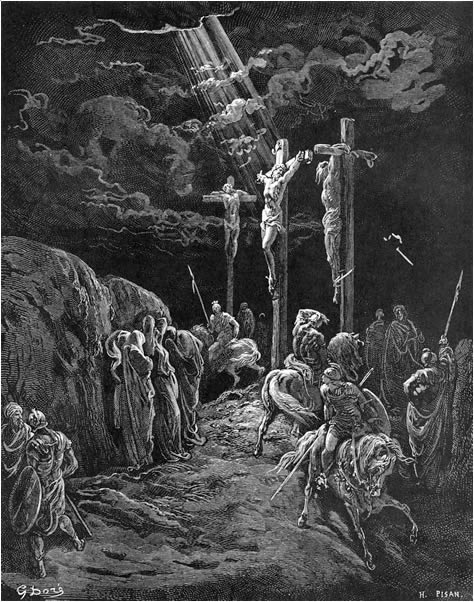
This page draws on Charles Hodge, Commentary on the Epistle to the Romans; Jamieson, Fausset & Brown, Commentary Critical and Explanatory on the Whole Bible; John Gill, Exposition of the New Testament (1746-1748); John Wesley, Explanatory Notes upon the New Testament; Martin Luther, Preface to the Epistle to the Romans; Matthew Henry, Commentary on the Whole Bible; Origen of Alexandria, COMMENTARY ON THE EPISTLE TO THE ROMANS and Theodore of Mopsuestia, PAULINE COMMENTARY FROM THE GREEK CHURCH.