
Psalms 77:16
in Psalms 77The waters saw You, O God; the waters saw You and swirled; even the depths were shaken.
BSB
The same verse in ASV and KJV ▾
ASV
The waters saw thee, O God; The waters saw thee, they were afraid: The depths also trembled.
KJV
The waters saw thee, O God, the waters saw thee; they were afraid: the depths also were troubled.
⋯
This verse in Psalms 77
Commentary
16 notes on this verseThe waters saw you, O God, the waters saw you, and they feared. For the moment let us speak according to the letter; let us cling to the earth for the sake of the simpler folk. When the people passed through the Red Sea and through the Jordan, the waters understood their Creator, and the people did not understand. And the depths were troubled. "The sea saw, and fled: the Jordan was turned back." The great sound of the waters. "The clouds shook out the waters," it has in the Hebrew. The clouds gave forth their voice.
This site's exposition
The waters saw You
on Psalms 77:16-18
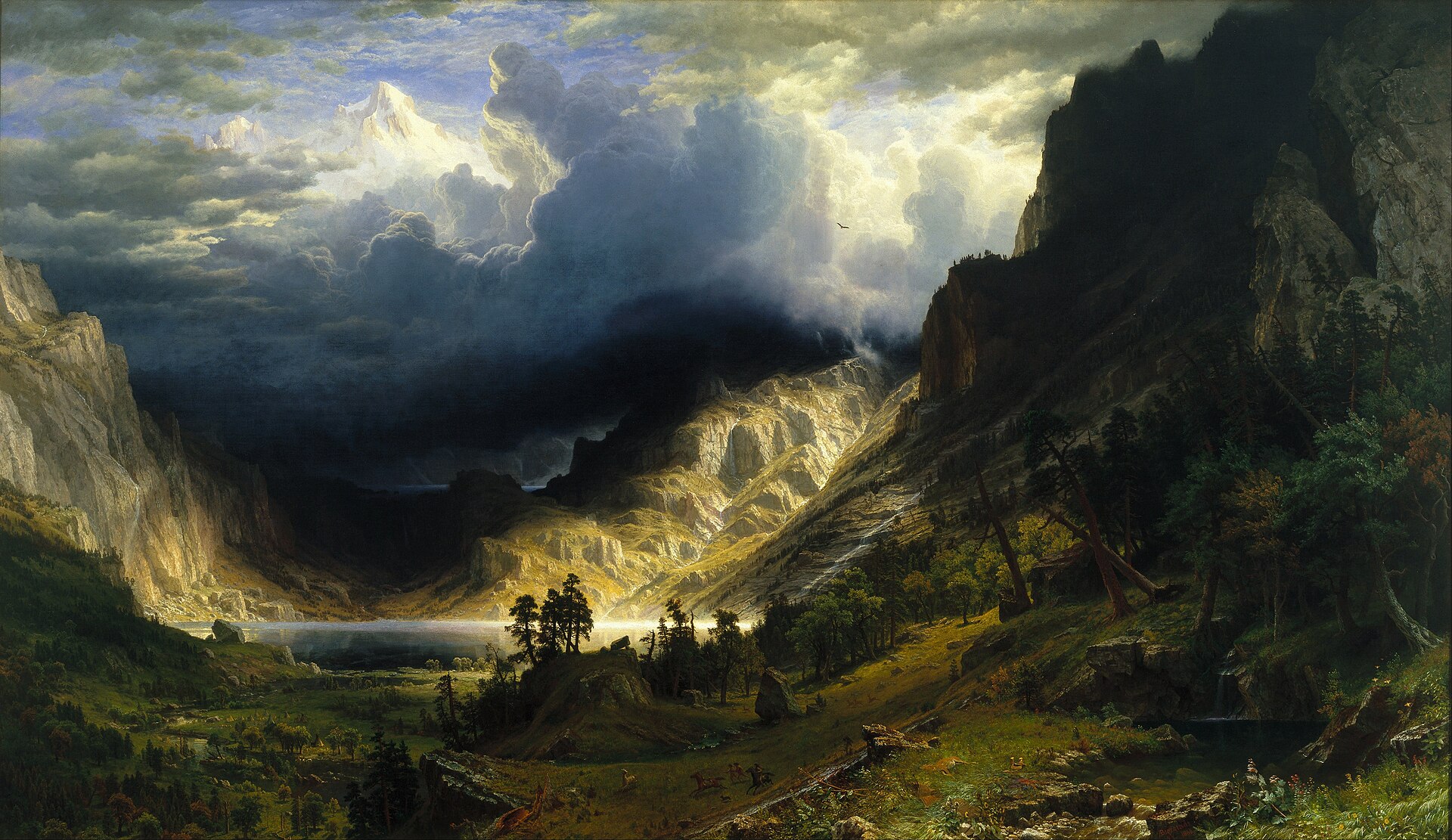
The clouds poured down water, the skies thundered, and His arrows flashed back and forth. The waters saw God and swirled, the depths were shaken, and the earth quaked. Only sea and sky move here, and God moves them.
The record, by era
The Church Fathers5 voices
"When our Lord had arrived and had entered the boat with Simon, the wind abated." The Arian, therefore, who contradicts the birth [of the Lord] is also rejected, through the word that those who were in the boat spoke, "They came and worshiped him, and …
Your lightnings shone upon the world. Here what do you do, O Jew? Your way is in the sea, and your paths in many waters. Make even this to be said either of the sea or of the Jordan. And your footsteps shall not be known. This, according to the letter, how do you understand it? For the sake of the simpler folk we have spoken according to the letter: let us return, then, to the spiritual understanding. The waters saw you, O God. Let us speak from the Revelation of John. "The many waters," he says, "are many peoples." The waters saw you, O God. What waters? "And let the waters that are above the heavens praise the name of the Lord." The waters saw you, O God. What waters? Pure minds and souls. The waters saw you, and they feared. The fear was not from hatred, but from faith. And the depths were troubled. Let us say something according to the spiritual understanding. In the beginning of Genesis it is written: "And over the waters," it says, "the Spirit was borne." And then it is written: "Over the depths," it says, "darkness was borne." See, then, what is said in the beginning of Genesis. This according to the spiritual understanding. Over the waters, it says, the Spirit was borne. Already at that time baptism was signified. For there could be no baptism without the Spirit. But over the depths, darkness. This is the abyss into which the demons beg not to be sent by Jesus. Over the depths, then, darkness. In the waters was cleanness, in the depths darkness. What the depths are, you understand while I am silent: since the demons dread to go into the abyss. The clouds gave forth their voice. The clouds are the prophets: who kept silence to the Jews, but spoke to us. The clouds gave forth their voice. For your arrows have passed through. The preaching of the word of Christ has run into the whole world. The voice of your thunder in the wheel. […]
This is not the only example of the obedience of water available to us, for elsewhere we find it written, "The waters saw you, O God; the waters saw you, and they were afraid." What is said here of the waters does not seem to be without a semblance of truth, since elsewhere the prophet also speaks in the same manner: "The sea saw and fled; Jordan was turned back." Who does not know how in actual fact the sea fled at the crossing of the Hebrews? When the waters were divided, the people crossed over, believing because of the dust under their feet that the sea had fled and that the waters had vanished. Therefore, the Egyptian believed what he saw and entered in, but the waters that had fled returned for him. The waters, then, know how to gather, how to fear and how to flee, when commanded to do so by God. Let us imitate these waters, and let us recognize one congregation of the Lord, one church.
Your lightnings shone upon the world: the apostolic preaching. The earth was moved and trembled. Unless our earth had been moved and troubled, we would not be Christians. The earth was moved and trembled. For the Spirit of the Lord rests upon no one, save upon him who is humble and quiet and trembles at his words.
And he continues how? "The waters have seen You, O God, and they have feared and the abysses have been troubled" [Psalm 77:16]. What are the waters? The peoples. What are these waters has been asked in the Apocalypse, [Revelation 17:15] the answer was, the peoples. There we find most clearly waters put by a figure for peoples. But above he had said, "You have made known in the peoples Your virtue." With reason therefore, "the waters have seen You, and they have feared." They have been changed because they have feared. What are the abysses? The depths of waters. What man among the peoples is not troubled, when the conscience is smitten? You seek the depth of the sea, what is deeper than human conscience? That is the depth which was troubled, when God redeemed with His arm His people. In what manner were the abysses troubled? When all men poured forth their consciences in confession.
9 more voices on this verse
The Puritans and the Awakening3 voices
): The waters gave way, and a lane was made through that crowd instantly, as if they had seen God himself at the head of the armies of Israel, and had retired for fear of him.
quarantine:debris (2026-07-29) — leading-punctuation+unbalanced-parens
The waters saw thee, O God,....
In singing this psalm we must take shame to ourselves for all our sinful distrusts of God, and of his providence and promise, and give to him the glory of his power and goodness by a thankful commemoration of what he has done for us formerly and a cheerful dependence on him for the future.
The Nineteenth Century6 voices
The waters saw thee, O God, the waters saw thee; they were afraid. As if conscious of its Maker's presence, the sea was ready to flee from before his face. The conception is highly poetical, the psalmist has the scene before his mind's eye, and describes it gloriously. The water saw its God, but man refuses to discern him; it was afraid, but proud sinners are rebellious and fear not the Lord. The depths also were troubled. To their heart the floods were made afraid.
The waters saw thee, O God, the waters saw thee; they were afraid. As if conscious of its Maker's presence, the sea was ready to flee from before his face. The conception is highly poetical, the psalmist has the scene before his mind's eye, and describes it gloriously. The water saw its God, but man refuses to discern him; it was afraid, but proud sinners are rebellious and fear not the Lord. The depths also were troubled. To their heart the floods were made afraid. Quiet caves of the sea, far down in the abyss, were moved with fear; and the lowest channels were left bare, as the water rushed away from its place, in terror of the God of Israel.
A commentator
Charles Spurgeon1834–1892
The Metropolitan Tabernacle Pulpit, Sermon No. 3548: “The Saint's Trials and the Divine Deliverances” (lightly modernized text, CCEL edition) · Written before 1892.
proposed
THIS Psalm describes the condition of a child of God under deep depression of spirit. He is much tried and bowed, and yet, at the same time, the saint at last gets the victory and, before the Psalm is over, the clouds are all removed from the sky and the heart rejoices in the sunlight of Divine Love. It is known to every Believer that the experience of a Christian is very variable. We are like our own strange weather in this land. South winds blow and all is warm and balmy, but in a few hours the north wind comes, or the cutting east wind—and soon the ground is covered with snow or hard white frost—and yet, perhaps, in another day or two there will be a storm! Some Believers have all spiritual weathers in a week. Being somewhat excitable, perhaps naturally, they readily take to themselves wings and mount aloft, but then as a high soar is often followed by a great fall, these very Believers are soon sighing and crying out of the very depths and half doubt whether they are the people of God at all! Nor must I say that is common to merely excitable people. Some of the very noblest heroes in the Christian army have had a very dark experience to go through. If you read the life of Martin Luther, of whom we may well say that never braver soldier fought beneath the banner of the Cross, you will find him the subject of the most terrible exercises. He was strong in his God, but he was very weak in himself—subject to ferocious temptations—temptations the like of which probably few of us have ever known because we are not men of his gigantic mold, and God does not allow trials to come upon us which were only suitable for him.
A commentator
Charles Spurgeon1834–1892
The Metropolitan Tabernacle Pulpit, Sermon No. 3548: “The Saint's Trials and the Divine Deliverances” (lightly modernized text, CCEL edition) · Written before 1892.
proposed
THIS Psalm describes the condition of a child of God under deep depression of spirit. He is much tried and bowed, and yet, at the same time, the saint at last gets the victory and, before the Psalm is over, the clouds are all removed from the sky and the heart rejoices in the sunlight of Divine Love. It is known to every Believer that the experience of a Christian is very variable. We are like our own strange weather in this land.
The waters saw thee - What a fine image! He represents God approaching the Red Sea; and the waters, seeing him, took fright, and ran off before him, dividing to the right and left to let him pass. I have not found any thing more majestic than this. The depths also were troubled - Every thing appears here to have life and perception. The waters see the Almighty, do not wait his coming, but in terror flee away! The deeps, uncovered, are astonished at the circumstance; and as they cannot fly, they are filled with trouble and dismay. Under the hand of such a poet, inanimate nature springs into life; all thinks, speaks, acts; all is in motion, and the dismay is general.
A commentator
Albert Barnes1798–1870
Notes, Explanatory and Practical, on the Old and New Testaments (1832-1869)
proposed
The waters saw thee ... - The waters of the Red Sea and the Jordan. There is great sublimity in this expression; in representing the waters as conscious of the presence of God, and as fleeing in consternation at his presence. Compare Rev 20:11; Hab 3:10-11. They were afraid - On the word used here - חול chûl - see Psa 10:5, note; Psa 55:4, note. It may mean here to tremble or quake, as in pain Deu 2:25; Joe 2:6. - Alarm, distress, anguish, came over the waters at the presence of God; and they trembled, and fled. The depths also were troubled - The deep waters, or the waters “in” the depths. It was not a ripple on the surface; but the very depths - the usually calm and undisturbed waters that lie below the surface - were heaved into commotion at the divine presence.
The words behind it
9 Hebrew wordsEvery Hebrew word of this verse in the order it stands, with what it means and the door to its own study. The last column counts the times a word stands in the whole Bible: the rarer the word, the more the places it appears belong together.
| Hebrew | Sound | Meaning | Word study | In the Bible |
|---|---|---|---|---|
| רָ֘א֤וּךָ | raukha | they saw you | H7200 → | 1300 times |
| מַּ֨יִם׀ | mayim | [the] waters | H4325 → | 581 times |
| אֱֽלֹהִ֗ים | ʾelohim | O God | H430 → | 2601 times |
| רָא֣וּךָ | raukha | they saw you | H7200 → | 1300 times |
| מַּ֣יִם | mayim | [the] waters | H4325 → | 581 times |
| יָחִ֑ילוּ | yachilu | they writhed in agony | H2342 → | 58 times |
| אַ֝֗ף | ʾaf | also | H637 → | 134 times |
| יִרְגְּז֥וּ | yirgezu | they trembled | H7264 → | 41 times |
| תְהֹמֽוֹת׃ | tehomot | [the] deeps | H8415 → | 36 times |
רָ֘א֤וּךָthey saw you
raukhaH7200 →1300 times
מַּ֨יִם׀[the] waters
mayimH4325 →581 times
אֱֽלֹהִ֗יםO God
ʾelohimH430 →2601 times
רָא֣וּךָthey saw you
raukhaH7200 →1300 times
מַּ֣יִם[the] waters
mayimH4325 →581 times
יָחִ֑ילוּthey writhed in agony
yachiluH2342 →58 times
אַ֝֗ףalso
ʾafH637 →134 times
יִרְגְּז֥וּthey trembled
yirgezuH7264 →41 times
תְהֹמֽוֹת׃[the] deeps
tehomotH8415 →36 times
A shaded row is a word that stands 400 times or fewer in the Bible.
The walk
7 stopsEach card is a verse this one points to, and under it the verses that one points to in turn. Where several paths arrive at the same place, that place is listed first: the text keeps returning to it.
Through
Exodus 14:21Then Moses stretched out his hand over the sea, and all that night the LORD drove back the sea with a strong east wind that turned it into dry land. So the waters were…
it leads to
- Exodus 15:8
At the blast of Your nostrils the waters piled up; like a wall the currents stood firm; the depths congealed in the heart of the sea.
Reached by 2 separate paths from here.
- Isaiah 63:12
who sent His glorious arm to lead them by the right hand of Moses, who divided the waters before them to gain for Himself everlasting renown,
- Psalms 66:6
He turned the sea into dry land; they passed through the waters on foot; there we rejoiced in Him.
- Nehemiah 9:11
You divided the sea before them, and they crossed through it on dry ground. You hurled their pursuers into the depths like a stone into raging waters.
- Psalms 74:13
You divided the sea by Your strength; You smashed the heads of the dragons of the sea;
- Exodus 15:8
Through
Habakkuk 3:15You trampled the sea with Your horses, churning the great waters.
it leads to
- Psalms 77:19
Your path led through the sea, Your way through the mighty waters, but Your footprints were not to be found.
- Habakkuk 3:8
Were You angry at the rivers, O LORD? Was Your wrath against the streams? Did You rage against the sea when You rode on Your horses, on Your chariots of salvation?
- Psalms 77:19
Where this verse is studied
About Psalms
This page draws on 12 works. Open the list of works
This page draws on Adam Clarke, Commentary on the Bible; Albert Barnes, Notes on the Book of Psalms; Albert Barnes, Notes, Explanatory and Practical, on the Old and New Testaments (1832-1869); Ambrose of Milan, The Six Days of Creation 3.1.2; Augustine of Hippo, Exposition on Psalm 77; Charles Spurgeon, The Treasury of David, Vol. 3; Charles Spurgeon, The Metropolitan Tabernacle Pulpit, Sermon No. 3548: “The Saint's Trials and the Divine Deliverances” (lightly modernized text, CCEL edition); Ephrem the Syrian, COMMENTARY ON TATIAN'S DIATESSARON 12:9; Franz Delitzsch, Biblical Commentary on the Psalms; Jerome, Homily 10, on Psalm 76; John Gill, Exposition of the Old Testament (1748-1763) and Matthew Henry, Commentary on the Whole Bible.