
Psalms 77:18
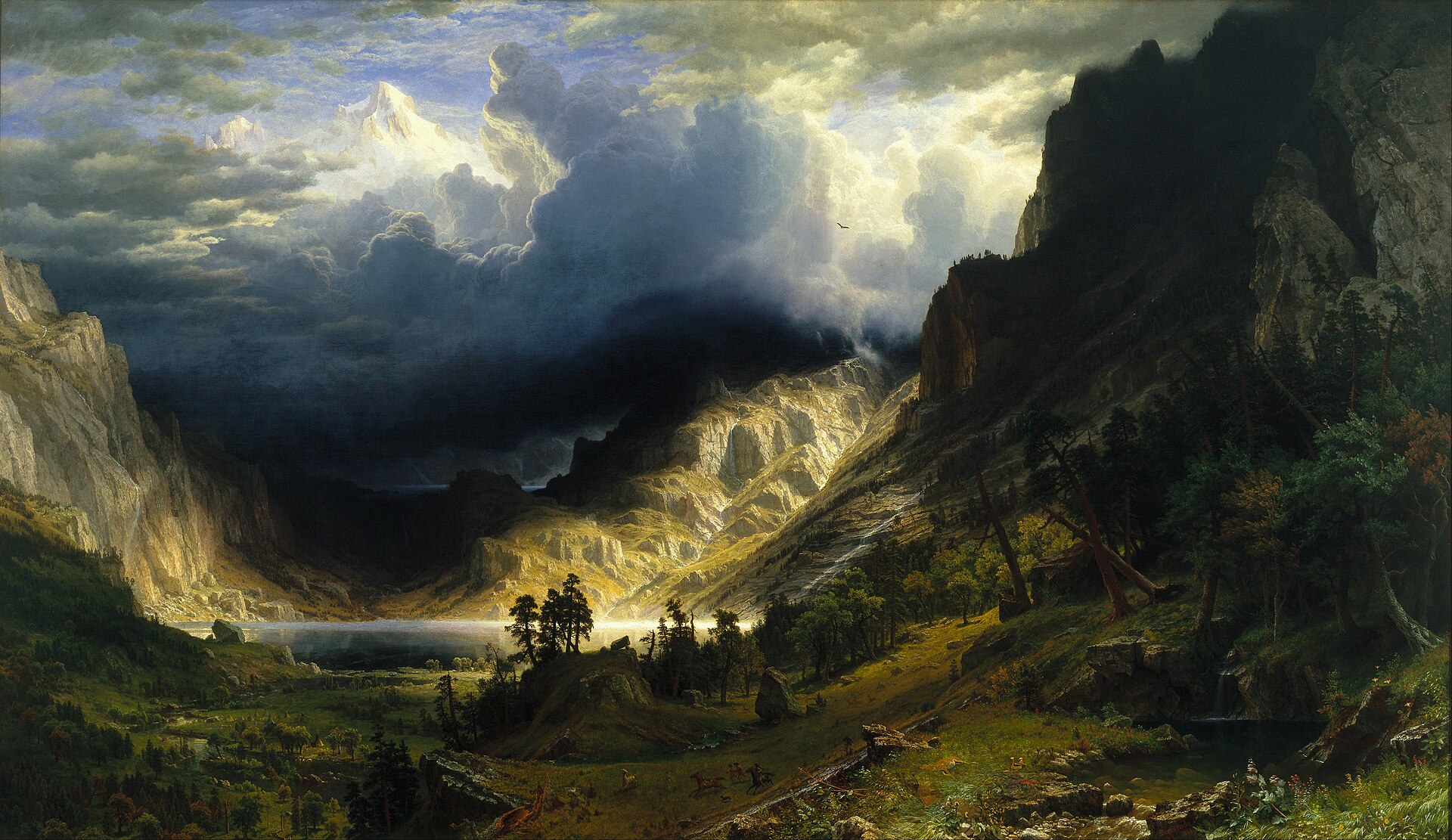
in Psalms 77Your thunder resounded in the whirlwind; the lightning lit up the world; the earth trembled and quaked.
BSB
The same verse in ASV and KJV ▾
ASV
The voice of thy thunder was in the whirlwind; The lightnings lightened the world: The earth trembled and shook.
KJV
The voice of thy thunder was in the heaven: the lightnings lightened the world: the earth trembled and shook.
⋯
This verse in Psalms 77
Commentary
14 notes on this verseThe waters saw you, O God, the waters saw you, and they feared. For the moment let us speak according to the letter; let us cling to the earth for the sake of the simpler folk. When the people passed through the Red Sea and through the Jordan, the waters understood their Creator, and the people did not understand. And the depths were troubled. "The sea saw, and fled: the Jordan was turned back." The great sound of the waters. "The clouds shook out the waters," it has in the Hebrew. The clouds gave forth their voice.
This site's exposition
The waters saw You
on Psalms 77:16-18
The clouds poured down water, the skies thundered, and His arrows flashed back and forth. The waters saw God and swirled, the depths were shaken, and the earth quaked. Only sea and sky move here, and God moves them.
The record, by era
The Church Fathers4 voices
"When our Lord had arrived and had entered the boat with Simon, the wind abated." The Arian, therefore, who contradicts the birth [of the Lord] is also rejected, through the word that those who were in the boat spoke, "They came and worshiped him, and …
Your lightnings shone upon the world. Here what do you do, O Jew? Your way is in the sea, and your paths in many waters. Make even this to be said either of the sea or of the Jordan. And your footsteps shall not be known. This, according to the letter, how do you understand it? For the sake of the simpler folk we have spoken according to the letter: let us return, then, to the spiritual understanding. The waters saw you, O God. Let us speak from the Revelation of John. "The many waters," he says, "are many peoples." The waters saw you, O God. What waters? "And let the waters that are above the heavens praise the name of the Lord." The waters saw you, O God. What waters? Pure minds and souls. The waters saw you, and they feared. The fear was not from hatred, but from faith. And the depths were troubled. Let us say something according to the spiritual understanding. In the beginning of Genesis it is written: "And over the waters," it says, "the Spirit was borne." And then it is written: "Over the depths," it says, "darkness was borne." See, then, what is said in the beginning of Genesis. This according to the spiritual understanding. Over the waters, it says, the Spirit was borne. Already at that time baptism was signified. For there could be no baptism without the Spirit. But over the depths, darkness. This is the abyss into which the demons beg not to be sent by Jesus. Over the depths, then, darkness. In the waters was cleanness, in the depths darkness. What the depths are, you understand while I am silent: since the demons dread to go into the abyss. The clouds gave forth their voice. The clouds are the prophets: who kept silence to the Jews, but spoke to us. The clouds gave forth their voice. For your arrows have passed through. The preaching of the word of Christ has run into the whole world. The voice of your thunder in the wheel. […]
Your lightnings shone upon the world: the apostolic preaching. The earth was moved and trembled. Unless our earth had been moved and troubled, we would not be Christians. The earth was moved and trembled. For the Spirit of the Lord rests upon no one, save upon him who is humble and quiet and trembles at his words.
"The voice of Your thunder is in the wheel" [Psalm 77:18]. What is this? How are we to understand it? May the Lord give aid. When boys we were wont to imagine, whenever we heard thunderings from Heaven, that carriages were going forth as it were from the stables. For thunder does make a sort of rolling like carriages. Must we return to these boyish thoughts, in order to understand, "the voice of Your thunder is in the wheel," as though God has certain carriages in the clouds, and the passing along of the carriages does raise that sound? Far be it. This is boyish, vain, trifling. What is then, "The voice of Your thunder is in the wheel"? Your voice rolls. Not even this do I understand. What shall we do? Let us question Idithun himself, to see whether perchance he may himself explain what he has said: "The voice," he says, "of Your thunder is in the wheel." I do not understand. I will hear what you say, "Your lightnings have appeared to the round world." Say then, I had no understanding. The round world is a wheel. For the circuit of the round world is with reason called also an "orb:" whence also a small wheel is called an "orbiculus." "The voice of Your thunder is in the wheel:" Your "lightnings have appeared to the round world." Those clouds in a wheel have gone about the round world, have gone about with thundering and with lightning, they have shaken the abyss, with commandments they have thundered, with miracles they have lightened. "Unto every land has gone forth the sound of them, and unto the ends of the orb the words of them." "The land has been moved and made to tremble:" that is, all men that dwell in the land. But by a figure the land itself is sea. Why? Because all nations are called by the name of sea, inasmuch as human life is bitter, and exposed to storms and tempests. […]
The Puritans and the Awakening1 voice
): The voice of thy thunder was heard in the heaven (that was the sound which the skies sent forth); the lightnings lightened the world --those were the arrows which went abroad, by which the host of the Egyptians was discomfited, with so much terror that the earth of the adjacent coast trembled and shook.
quarantine:debris (2026-07-29) — leading-punctuation+unbalanced-parens
7 more voices on this verse
The Puritans and the Awakening2 voices
The voice of thy thunder was in the heaven,....
In singing this psalm we must take shame to ourselves for all our sinful distrusts of God, and of his providence and promise, and give to him the glory of his power and goodness by a thankful commemoration of what he has done for us formerly and a cheerful dependence on him for the future.
The Nineteenth Century5 voices
The voice of thy thunder was in the heaven, or in the whirlwind. Rushing on with terrific swiftness and bearing all before it, the storm was as a chariot driven furiously, and a voice was heard (even thy voice, O Lord!) out of the fiery car, even as when a mighty man in battle urges forward his charger, and shouts to it aloud. All heaven resounded with the voice of the Lord. The lightnings lightened the world. The entire globe shone in the blaze of Jehovah's lightnings.
The voice of thy thunder was in the heaven, or in the whirlwind. Rushing on with terrific swiftness and bearing all before it, the storm was as a chariot driven furiously, and a voice was heard (even thy voice, O Lord!) out of the fiery car, even as when a mighty man in battle urges forward his charger, and shouts to it aloud. All heaven resounded with the voice of the Lord. The lightnings lightened the world. The entire globe shone in the blaze of Jehovah's lightnings. No need for other light amid the battle of that terrible night, every wave gleamed in the fire flashes, and the shore was lit up with the blaze. How pale were men's faces in that hour, when all around the fire leaped from sea to shore, from crag to hill, from mountain to star, till the whole universe was illuminated in honour of Jehovah's triumph. The earth trembled and shook. It quaked and quaked again. Sympathetic with the sea, the solid shore forgot its quiescence and heaved in dread. How dreadful art thou, O God, when thou comest forth in thy majesty to humble thine arrogant adversaries.
A commentator
Charles Spurgeon1834–1892
The Metropolitan Tabernacle Pulpit, Sermon No. 3548: “The Saint's Trials and the Divine Deliverances” (lightly modernized text, CCEL edition) · Written before 1892.
proposed
THIS Psalm describes the condition of a child of God under deep depression of spirit. He is much tried and bowed, and yet, at the same time, the saint at last gets the victory and, before the Psalm is over, the clouds are all removed from the sky and the heart rejoices in the sunlight of Divine Love. It is known to every Believer that the experience of a Christian is very variable. We are like our own strange weather in this land. South winds blow and all is warm and balmy, but in a few hours the north wind comes, or the cutting east wind—and soon the ground is covered with snow or hard white frost—and yet, perhaps, in another day or two there will be a storm! Some Believers have all spiritual weathers in a week. Being somewhat excitable, perhaps naturally, they readily take to themselves wings and mount aloft, but then as a high soar is often followed by a great fall, these very Believers are soon sighing and crying out of the very depths and half doubt whether they are the people of God at all! Nor must I say that is common to merely excitable people. Some of the very noblest heroes in the Christian army have had a very dark experience to go through. If you read the life of Martin Luther, of whom we may well say that never braver soldier fought beneath the banner of the Cross, you will find him the subject of the most terrible exercises. He was strong in his God, but he was very weak in himself—subject to ferocious temptations—temptations the like of which probably few of us have ever known because we are not men of his gigantic mold, and God does not allow trials to come upon us which were only suitable for him.
A commentator
Charles Spurgeon1834–1892
The Metropolitan Tabernacle Pulpit, Sermon No. 3548: “The Saint's Trials and the Divine Deliverances” (lightly modernized text, CCEL edition) · Written before 1892.
proposed
THIS Psalm describes the condition of a child of God under deep depression of spirit. He is much tried and bowed, and yet, at the same time, the saint at last gets the victory and, before the Psalm is over, the clouds are all removed from the sky and the heart rejoices in the sunlight of Divine Love. It is known to every Believer that the experience of a Christian is very variable. We are like our own strange weather in this land.
A commentator
Albert Barnes1798–1870
Notes, Explanatory and Practical, on the Old and New Testaments (1832-1869)
proposed
The voice of thy thunder was in the heaven - Compare the notes at Psa 29:1-11. The word rendered “heaven” here - גלגל galgal - means properly “a wheel,” as of a chariot, Isa 5:28; Eze 10:2, Eze 10:6; Eze 23:24; Eze 26:10. Then it means a “whirlwind,” as that which rolls along, Eze 10:13. Then it is used to denote chaff or stubble, as driven along before a whirlwind, Psa 83:13; Isa 17:13. It is never used to denote heaven. It means here, undoubtedly, the whirlwind; and the idea is, that in the ragings of the storm, or of the whirlwind, the voice of God was heard - the deep bellowing thunder - as if God spoke to people. The lightnings lightened the world - The whole earth seemed to be in a blaze. The earth trembled and shook - See the notes at Psa 29:1-11.
The words behind it
9 Hebrew wordsEvery Hebrew word of this verse in the order it stands, with what it means and the door to its own study. The last column counts the times a word stands in the whole Bible: the rarer the word, the more the places it appears belong together.
| Hebrew | Sound | Meaning | Word study | In the Bible |
|---|---|---|---|---|
| ק֤וֹל | kol | [the] sound of | H6963 → | 506 times |
| רַעַמְךָ֨׀ | raamkha | thunder your | H7482 → | 6 times |
| בַּגַּלְגַּ֗ל | bagalgal | [was] in the whirlwind | H1534 → | |
| הֵאִ֣ירוּ | heiru | they lit up | H215 → | 43 times |
| בְרָקִ֣ים | verakim | lightning flashes | H1300 → | 21 times |
| תֵּבֵ֑ל | tevel | [the] world | H8398 → | 36 times |
| רָגְזָ֖ה | ragezah | it trembled | H7264 → | 41 times |
| וַתִּרְעַ֣שׁ | vatirash | and it shook | H7493 → | 30 times |
| הָאָֽרֶץ׃ | haaretz | the earth | H776 → | 2504 times |
ק֤וֹל[the] sound of
kolH6963 →506 times
רַעַמְךָ֨׀thunder your
raamkhaH7482 →6 times
בַּגַּלְגַּ֗ל[was] in the whirlwind
bagalgalH1534 →
הֵאִ֣ירוּthey lit up
heiruH215 →43 times
בְרָקִ֣יםlightning flashes
verakimH1300 →21 times
תֵּבֵ֑ל[the] world
tevelH8398 →36 times
רָגְזָ֖הit trembled
ragezahH7264 →41 times
וַתִּרְעַ֣שׁand it shook
vatirashH7493 →30 times
הָאָֽרֶץ׃the earth
haaretzH776 →2504 times
A shaded row is a word that stands 400 times or fewer in the Bible.
The walk
8 stopsEach card is a verse this one points to, and under it the verses that one points to in turn. Where several paths arrive at the same place, that place is listed first: the text keeps returning to it.
Through
Revelation 11:19Then the temple of God in heaven was opened, and the ark of His covenant appeared in His temple. And there were flashes of lightning, and rumblings, and peals of thunder, and an earthquake,…
it leads to
- Revelation 4:5
From the throne came flashes of lightning, and rumblings, and peals of thunder. Before the throne burned seven torches of fire. These are the seven Spirits of God.
Reached by 2 separate paths from here.
- Revelation 16:21
And great hailstones weighing almost a hundred pounds each rained down on them from above. And men cursed God for the plague of hail, because it was so horrendous.
- Revelation 15:5–8
After this I looked, and the temple—the tabernacle of the Testimony—was opened in heaven.
- Ezekiel 38:22
I will execute judgment upon him with plague and bloodshed. I will pour out torrents of rain, hailstones, fire, and sulfur on him and on his troops and on the many nations with him.
- Revelation 8:5
Then the angel took the censer, filled it with fire from the altar, and hurled it to the earth; and there were peals of thunder, and rumblings, and flashes of lightning, and an earthquake.
- Revelation 4:5
Through
Judges 5:4O LORD, when You went out from Seir, when You marched from the land of Edom, the earth trembled, the heavens poured out rain, and the clouds poured down water.
it leads to
- Deuteronomy 33:2
He said: “The LORD came from Sinai and dawned upon us from Seir; He shone forth from Mount Paran and came with myriads of holy ones, with flaming fire at His right hand.
- Deuteronomy 33:2
Through
Exodus 19:16On the third day, when morning came, there was thunder and lightning. A thick cloud was upon the mountain, and a very loud blast of the ram’s horn went out, so that all the…
it leads to
- Hebrews 12:18–19
For you have not come to a mountain that can be touched and that is burning with fire; to darkness, gloom, and storm;
- Psalms 18:11–14
He made darkness His hiding place, and storm clouds a canopy around Him.
- Hebrews 12:18–19
About Psalms
This page draws on 10 works. Open the list of works
This page draws on Albert Barnes, Notes on the Book of Psalms; Albert Barnes, Notes, Explanatory and Practical, on the Old and New Testaments (1832-1869); Augustine of Hippo, Exposition on Psalm 77; Charles Spurgeon, The Treasury of David, Vol. 3; Charles Spurgeon, The Metropolitan Tabernacle Pulpit, Sermon No. 3548: “The Saint's Trials and the Divine Deliverances” (lightly modernized text, CCEL edition); Ephrem the Syrian, COMMENTARY ON TATIAN'S DIATESSARON 12:9; Franz Delitzsch, Biblical Commentary on the Psalms; Jerome, Homily 10, on Psalm 76; John Gill, Exposition of the Old Testament (1748-1763) and Matthew Henry, Commentary on the Whole Bible.