
Psalms 119:47
in Psalms 119I delight in Your commandments because I love them.
BSB
The same verse in ASV and KJV ▾
ASV
And I will delight myself in thy commandments, Which I have loved.
KJV
And I will delight myself in thy commandments, which I have loved.
⋯
This verse in Psalms 119
Commentary
8 notes on this verseThis site's exposition
May Your loving devotion come to me
on Psalms 119:41-48
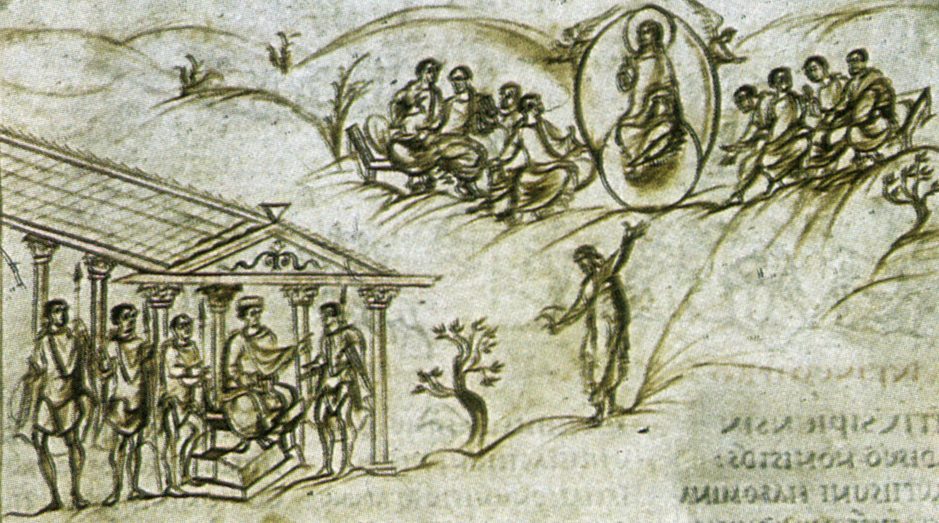
Mercy comes first here, the loving devotion and the salvation asked for before any promise to obey. Then the word is for speaking: an answer to the man who taunts, and testimonies spoken before kings without shame. Verse 48 lifts the hands to the commandments.
The record, by era
The Church Fathers1 voice
"And I meditated," he saith, "on Thy commandments, which I have loved" (ver. 47). "My hands also have I lifted up unto Thy commandments, which I have loved" (ver. 48); or, as some copies read, "which I have loved exceedingly," or "too much," or "vehemently," as they have chosen to render the Greek word σφόδρα. He then loved the commandments of God because he walked at liberty; that is, through the Holy Spirit, through whom love itself is shed abroad, and enlargeth the hearts of the faithful. But he loved, both in thought and in acts. With a view to thought, he saith, "And I meditated:" as to action, "My hands also have I lifted up." But to both sentences, he hath annexed the words, "which I have loved:" for "the end of the commandment is love out of a pure heart."...The following words, "And my study was in Thy statutes," relate to both. This expression most of the translators have preferred to this, "I rejoiced in," or "I talked of," a version which some have given from the Greek ἠδολέσχουν. For he who keepeth the commandments of God, which he loveth, both in thought and in works taking delight in them, is exercised with joy, and with a certain abundance of speech, in the judgments of God.
The Puritans and the Awakening1 voice
And I will delight myself in thy commandments,.... In perusing and practising them; which I have loved; a good man loves the law of God, and the commandments of Christ, and delights in them after the inward man.
The Nineteenth Century3 voices
A commentator
Jamieson, Fausset & Brown1802–1910
Commentary Critical and Explanatory on the Whole Bible (1871)
proposed
To freedom from reproach, when imbued with God's truth, there is added "great boldness in the faith" [1Ti 3:13], accompanied with increasing delight in the holy law itself, which becomes an element of happiness.
"And I will delight myself in thy commandments, which I have loved. Next to liberty and courage comes delight. When we have done our duty, we find a great reward in it. If David had not spoken for his Master before kings, he would have been afraid to think of the law which he had neglected; but after speaking up for his Lord he feels a sweet serenity of heart when musing upon the word. Obey the command, and you will love it; carry the yoke, and it will be easy, and rest will come by it. After speaking of the law the Psalmist was not wearied of his theme, but he retired to meditate upon it; he discoursed and then he delighted, he preached and then repaired to his study to renew his strength by feeding yet again upon the precious truth. Whether he delighted others or not when he was speaking, he never failed to delight himself when he was musing on the word of the Lord. He declares that he loved the Lord's commands, and by this avowal he unveils the reason for his delight in them: where our love is, there is our delight. David did not delight in the courts of kings, for there he found places of temptation to shame, but in the Scriptures he found himself at home; his heart was in them, and they yielded him supreme pleasure. No wonder that he spoke of keeping the law, which he loved; Jesus says, "If a man love me, he will keep my words." No wonder that he spoke of walking at liberty, and speaking boldly, for true love is ever free and fearless. Love is the fulfilling of the law; where love to the law of God reigns in the heart the life must be full of blessedness. Lord, let thy mercies come to us that we may love thy word and way, and find our whole delight therein. The verse is in the future, and hence it sets forth, not only what David had done, but what he would do; he would in time to come delight in his Lord's command.
"And I will delight myself in thy commandments, which I have loved. Next to liberty and courage comes delight. When we have done our duty, we find a great reward in it. If David had not spoken for his Master before kings, he would have been afraid to think of the law which he had neglected; but after speaking up for his Lord he feels a sweet serenity of heart when musing upon the word. Obey the command, and you will love it; carry the yoke, and it will be easy, and rest will come by it.
2 more voices on this verse
The Nineteenth Century2 voices
Thy commandments, which I have loved - O shame to Christians who feel so little affection to the Gospel of Christ, when we see such cordial, conscientious, and inviolate attachment in a Jew to the laws and ordinances of Moses, that did not afford a thousandth part of the privileges!
A commentator
Albert Barnes1798–1870
Notes, Explanatory and Practical, on the Old and New Testaments (1832-1869)
proposed
And I will delight myself ... - See the notes at Psa 119:16.
The words behind it
4 Hebrew wordsEvery Hebrew word of this verse in the order it stands, with what it means and the door to its own study. The last column counts the times a word stands in the whole Bible: the rarer the word, the more the places it appears belong together.
| Hebrew | Sound | Meaning | Word study | In the Bible |
|---|---|---|---|---|
| וְאֶשְׁתַּֽעֲשַׁ֥ע | veeshtaasha' | and I may delight myself | H8173 → | 9 times |
| בְּמִצְוֹתֶ֗יךָ | bemitzvoteikha | in commandments your | H4687 → | 181 times |
| אֲשֶׁ֣ר | ʾasher | which | H834 → | 5497 times |
| אָהָֽבְתִּי׃ | ʾahaveti | I love | H157 → | 211 times |
וְאֶשְׁתַּֽעֲשַׁ֥עand I may delight myself
veeshtaasha'H8173 →9 times
בְּמִצְוֹתֶ֗יךָin commandments your
bemitzvoteikhaH4687 →181 times
אֲשֶׁ֣רwhich
ʾasherH834 →5497 times
אָהָֽבְתִּי׃I love
ʾahavetiH157 →211 times
A shaded row is a word that stands 400 times or fewer in the Bible.
The walk
8 stopsEach card is a verse this one points to, and under it the verses that one points to in turn. Where several paths arrive at the same place, that place is listed first: the text keeps returning to it.
Through
John 4:34Jesus explained, “My food is to do the will of Him who sent Me and to finish His work.
it leads to
- John 6:38
For I have come down from heaven, not to do My own will, but to do the will of Him who sent Me.
- John 5:30
I can do nothing by Myself; I judge only as I hear. And My judgment is just, because I do not seek My own will, but the will of Him who sent Me.
- Job 23:12
I have not departed from the command of His lips; I have treasured the words of His mouth more than my daily bread.
- John 17:4
I have glorified You on earth by accomplishing the work You gave Me to do.
- John 19:30
When Jesus had received the sour wine, He said, “It is finished.” And bowing His head, He yielded up His spirit.
- John 6:38
Through
Psalms 119:97Oh, how I love Your law! All day long it is my meditation.
it leads to
- Psalms 1:2
But his delight is in the Law of the LORD, and on His law he meditates day and night.
Reached by 2 separate paths from here.
- Proverbs 2:10
For wisdom will enter your heart, and knowledge will delight your soul.
- Psalms 119:159
Consider how I love Your precepts, O LORD; give me life according to Your loving devotion.
- Psalms 1:2
Where this verse is studied
About Psalms
This page draws on Adam Clarke, Commentary on the Bible; Albert Barnes, Notes, Explanatory and Practical, on the Old and New Testaments (1832-1869); Augustine of Hippo, Exposition on Psalm 119; Charles Spurgeon, The Treasury of David, Vol. 6; Jamieson, Fausset & Brown, Commentary Critical and Explanatory on the Whole Bible; John Gill, Exposition of the Old Testament; John Gill, Exposition of the Old Testament (1748-1763) and Matthew Henry, Commentary on the Whole Bible.