
Psalms 109:11
in Psalms 109May the creditor seize all he owns, and strangers plunder the fruits of his labor.
BSB
The same verse in ASV and KJV ▾
ASV
Let the extortioner catch all that he hath; And let strangers make spoil of his labor.
KJV
Let the extortioner catch all that he hath; and let the strangers spoil his labour.
⋯
This verse in Psalms 109
Commentary
9 notes on this verseLet the moneylender search out all his substance. You gave him money, O Lord, you gave to him as also to the others. But what did he do? He did not bind it up in a napkin, nor bury it in the earth, nor was he negligent: but when he had the Lord's talent and money, he took a price from the enemies of the Lord, and sold his own Lord. Therefore I say to you, O Lord, exact from him the interest of your money. And let strangers plunder his labors.
This site's exposition
May his children wander as beggars
on Psalms 109:10-13
The children wander as beggars, and the creditor takes everything the man owns. Strangers plunder what his labor made, and no kindness is to reach him or his fatherless children. The descendants are cut off and the name blotted out.
The record, by era
The Church Fathers1 voice
"Let there be no man to help him" [Psalm 109:11]: that is, to guard his posterity; wherefore followeth, "nor to have compassion on his fatherless children."
The Puritans and the Awakening2 voices
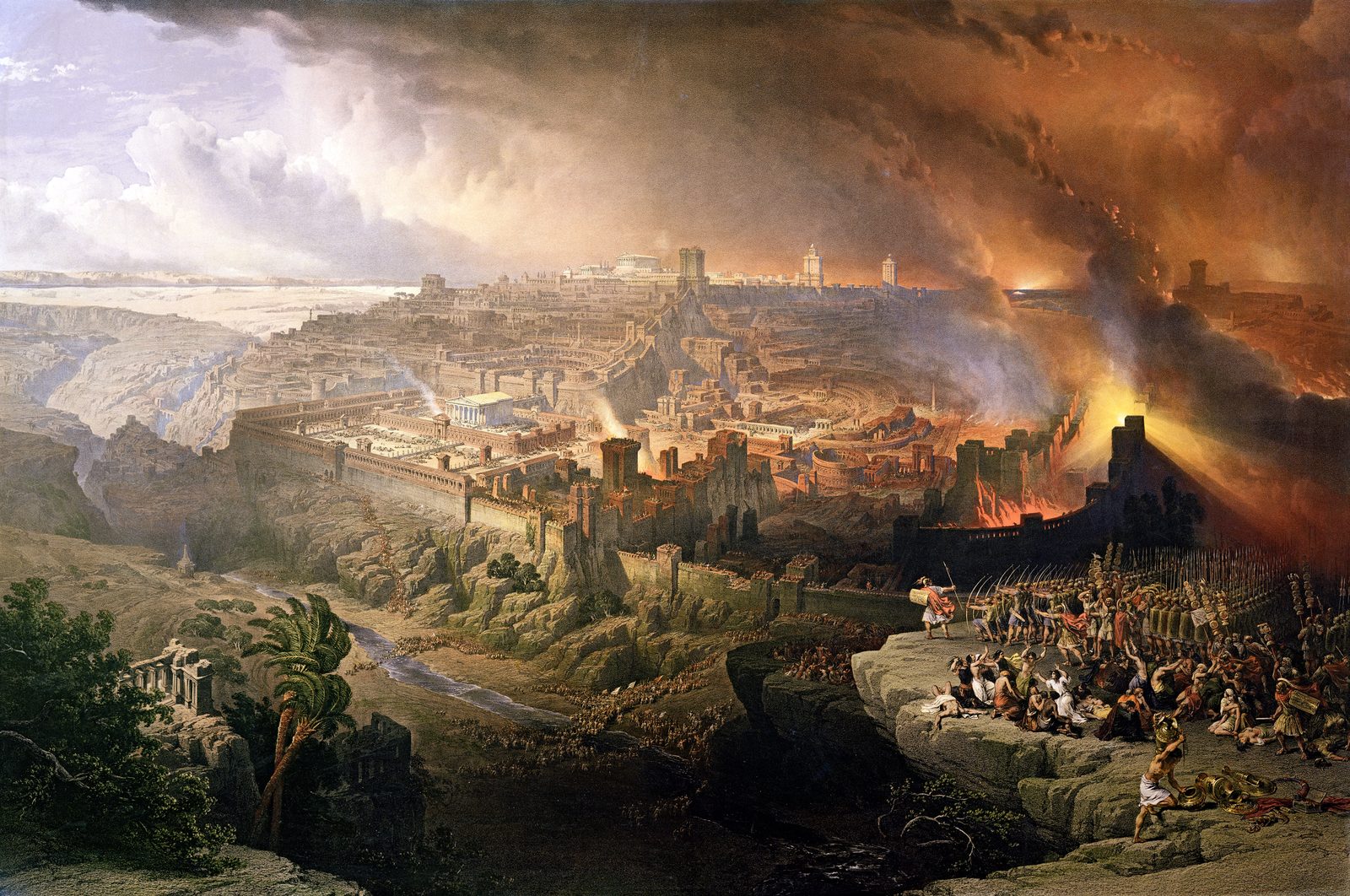
Let the extortioner catch all that he hath,.... Or, "lay a snare for all" (c); as the Romans did, by bringing in their army, invading the land of Judea, and besieging the city of Jerusalem; who are "the extortioner or exacter that demanded tribute of them"; which they refused to pay, and therefore they seized on all they had for it. The Syriac and Arabic versions render it, "the creditor"; who sometimes for a debt would take wife and children, and all that a man had; see 2Ki 4:
): Let the extortioner, the officer, seize all that he has and let the stranger, who was nothing akin to his estate, spoil his labour, either for his crimes or for his debts, Job
quarantine:debris (2026-07-29) — leading-punctuation+unbalanced-parens
The Nineteenth Century2 voices
Let the extortioner catch all that he hath. A doom indeed. Those who have once fallen into the hands of the usurer can tell you what this means: it were better to be a fly in the web of a spider. In the most subtle, worrying, and sweeping manner the extortioner takes away, piece by piece, his victim's estate, till not a fraction remains to form a pittance for old age.
Let the extortioner catch all that he hath. A doom indeed. Those who have once fallen into the hands of the usurer can tell you what this means: it were better to be a fly in the web of a spider. In the most subtle, worrying, and sweeping manner the extortioner takes away, piece by piece, his victim's estate, till not a fraction remains to form a pittance for old age. Baiting his trap, watching it carefully, and dexterously driving his victim into it, the extortioner by legal means performs unlawful deeds, catches his bird, strips him of every feather, and cares not if he die of starvation. He robs with law to protect him, and steals with the magistrate at his back: to fall into his clutches is worse than to be beset by professed thieves. And let the strangers spoil his labour, —so that his kindred may have none of it. What with hard creditors and pilfering strangers the estate must soon vanish! Extortion drawing one way, and spoliation the other, a known moneylender and an unknown robber both at work, the man's substance would soon disappear, and rightly so, for it was gathered by shameless means. This too has been frequently seen. Wealth amassed by oppression has seldom lasted to the third generation: it was gathered by wrong and by wrong it is scattered, and who would decree that it should be otherwise? Certainly those who suffer beneath high handed fraud will not wish to stay the retribution of the Almighty, nor would those who see the poor robbed and trampled on desire to alter the divine arrangements by which such evils are recompensed even in this life.
2 more voices on this verse
The Nineteenth Century2 voices
Let the strangers spoil his labor - Many of these execrations were literally fulfilled in the case of the miserable Jews, after the death of our Lord. They were not only expelled from their own country, after the destruction of Jerusalem, but they were prohibited from returning; and so taxed by the Roman government, that they were reduced to the lowest degree of poverty. Domitian expelled them from Rome; and they were obliged to take up their habitation without the gate Capena, in a wood contiguous to the city, for which they were obliged to pay a rent, and where the whole of their property was only a basket and a little hay. See Juvenal, Sat. ver. 11: - Substitit ad veteres arcus, madidamque Capenam: Hic ubi nocturne Numa constituebat amicae, Nunc sacri fontis nemus, et delubra locantur Judaes: quorum cophinus, foenumque supellex: Omnis enim populo mercedem pendere jussa est Arbor, et ejectis mendicat silva Camoenis. He stopped a little at the conduit gate, Where Numa modelled once the Roman state; In nightly councils with his nymph retired: Though now the sacred shades and founts are hired By banished Jews, who their whole wealth can lay In a small basket, on a wisp of hay. Yet such our avarice is, that every tree Pays for his head; nor sleep itself is free; Nor place nor persons now are sacred held, From their own grove the Muses are expelled. Dryden. The same poet refers again to this wretched state of the Jews, Sat. vi., ver. […]
A commentator
Albert Barnes1798–1870
Notes, Explanatory and Practical, on the Old and New Testaments (1832-1869)
proposed
Let the extortioner catch all that he hath - literally, “Let the extortioner cast a snare over all that he hath;” that is, let him seize all his property. The word rendered “catch” - נקשׁ nâqash - is a word which means to lay a snare, as for birds and wild animals, and hence, it means to ensnare, to entrap, to catch. The word rendered “extortioner” means literally one who lends or borrows money; a money-loaner; in our times, a “broker.” Here it refers to one who loaned money on interest; or who took advantage of the necessities of others to lend money at high rates - thus sooner or later seizing upon and securing the property of another. The prayer here is, that he might be in such circumstances as to make it necessary to fall into the hands of those who would thus come into possession of all his property. And let the strangers spoil his labor - Let strangers “plunder” his labor; that is, the fruit of his labor. Let them seize and possess what he has earned and gained to enjoy it themselves. The remarks made on Psa 109:10, will apply to this verse and the following.
How the passage was read
What the Jewish commentators add
On the verses either side of this one
and [people] should ask and search from their ruins Everyone will ask about them, what happened to So-and-so and So-and-so, because of the rumor of ruin that emerged about them.
This section is reception history: how the passage was read and kept in the Jewish tradition. Where a reading parts from an essential of the Christian faith, the section says so at that point.
Texts and citation data: Sefaria; each excerpt follows its version’s licence. 5 further sources are cited on this chapter that carry no English text this site may quote or only restate the verse.
The words behind it
8 Hebrew wordsEvery Hebrew word of this verse in the order it stands, with what it means and the door to its own study. The last column counts the times a word stands in the whole Bible: the rarer the word, the more the places it appears belong together.
| Hebrew | Sound | Meaning | Word study | In the Bible |
|---|---|---|---|---|
| יְנַקֵּ֣שׁ | yenakesh | may he strike | H5367 → | 5 times |
| נ֭וֹשֶׁה | noosheh | a creditor | H5383 → | |
| לְכָל־ | lekhol | to all | H3605 → | 5413 times |
| אֲשֶׁר־ | ʾasher- | that | H834 → | 5497 times |
| ל֑וֹ | lo | [belongs] to him | ||
| וְיָבֹ֖זּוּ | veyavozu | and may they plunder | H962 → | |
| זָרִ֣ים | zarim | strangers | H2114 → | 77 times |
| יְגִיעֽוֹ׃ | yegio | property his | H3018 → | 16 times |
יְנַקֵּ֣שׁmay he strike
yenakeshH5367 →5 times
נ֭וֹשֶׁהa creditor
nooshehH5383 →
לְכָל־to all
lekholH3605 →5413 times
אֲשֶׁר־that
ʾasher-H834 →5497 times
ל֑וֹ[belongs] to him
lo
וְיָבֹ֖זּוּand may they plunder
veyavozuH962 →
זָרִ֣יםstrangers
zarimH2114 →77 times
יְגִיעֽוֹ׃property his
yegioH3018 →16 times
A shaded row is a word that stands 400 times or fewer in the Bible.
The walk
8 stopsEach card is a verse this one points to, and under it the verses that one points to in turn. Where several paths arrive at the same place, that place is listed first: the text keeps returning to it.
Through
Job 5:5The hungry consume his harvest, taking it even from the thorns, and the thirsty pant after his wealth.
it leads to
- Lamentations 2:16
All your enemies open their mouths against you. They hiss and gnash their teeth, saying, “We have swallowed her up. This is the day for which we have waited. We have lived to see…
- Hosea 8:7
For they sow the wind, and they shall reap the whirlwind. There is no standing grain; what sprouts fails to yield flour. Even if it should produce, the foreigners would swallow it up.
- Jeremiah 51:44
I will punish Bel in Babylon. I will make him spew out what he swallowed. The nations will no longer stream to him; even the wall of Babylon will fall.
- Jeremiah 51:34
“Nebuchadnezzar king of Babylon has devoured me; he has crushed me. He has set me aside like an empty vessel; he has swallowed me like a monster; he filled his belly with my delicacies…
- Lamentations 2:16
Through
Deuteronomy 28:29and at noon you will grope about like a blind man in the darkness. You will not prosper in your ways. Day after day you will be oppressed and plundered, with no one to…
it leads to
- Isaiah 59:10
Like the blind, we feel our way along the wall, groping like those without eyes. We stumble at midday as in the twilight; among the vigorous we are like the dead.
- Job 5:14
They encounter darkness by day and grope at noon as in the night.
- Judges 4:2–3
So the LORD sold them into the hand of Jabin king of Canaan, who reigned in Hazor. The commander of his forces was Sisera, who lived in Harosheth-hagoyim.
- Psalms 106:40–42
So the anger of the LORD burned against His people, and He abhorred His own inheritance.
- Isaiah 59:10
Where this verse is studied
On this page
Studies2
On this verse
On this chapter
About Psalms
This page draws on 9 works. Open the list of works
This page draws on Adam Clarke, Commentary on the Bible; Albert Barnes, Notes, Explanatory and Practical, on the Old and New Testaments (1832-1869); Augustine of Hippo, Exposition on Psalm 109; Charles Spurgeon, The Treasury of David; Charles Spurgeon, The Treasury of David, Vol. 5; Jerome, Homily 35, on Psalm 108; John Gill, Exposition of the Old Testament; John Gill, Exposition of the Old Testament (1748-1763) and Matthew Henry, Commentary on the Whole Bible.