
Nehemiah 7:3
in Nehemiah 7And I told them, “Do not open the gates of Jerusalem until the sun is hot. While the guards are on duty, keep the doors shut and securely fastened. And appoint the residents of Jerusalem as guards, some at their posts and some at their own homes.”
BSB
The same verse in ASV and KJV ▾
ASV
And I said unto them, Let not the gates of Jerusalem be opened until the sun be hot; and while they stand on guard, let them shut the doors, and bar ye them: and appoint watches of the inhabitants of Jerusalem, every one in his watch, and every one to be over against his house.
KJV
And I said unto them, Let not the gates of Jerusalem be opened until the sun be hot; and while they stand by, let them shut the doors, and bar them: and appoint watches of the inhabitants of Jerusalem, every one in his watch, and every one to be over against his house.
⋯
This verse in Nehemiah 7
Commentary
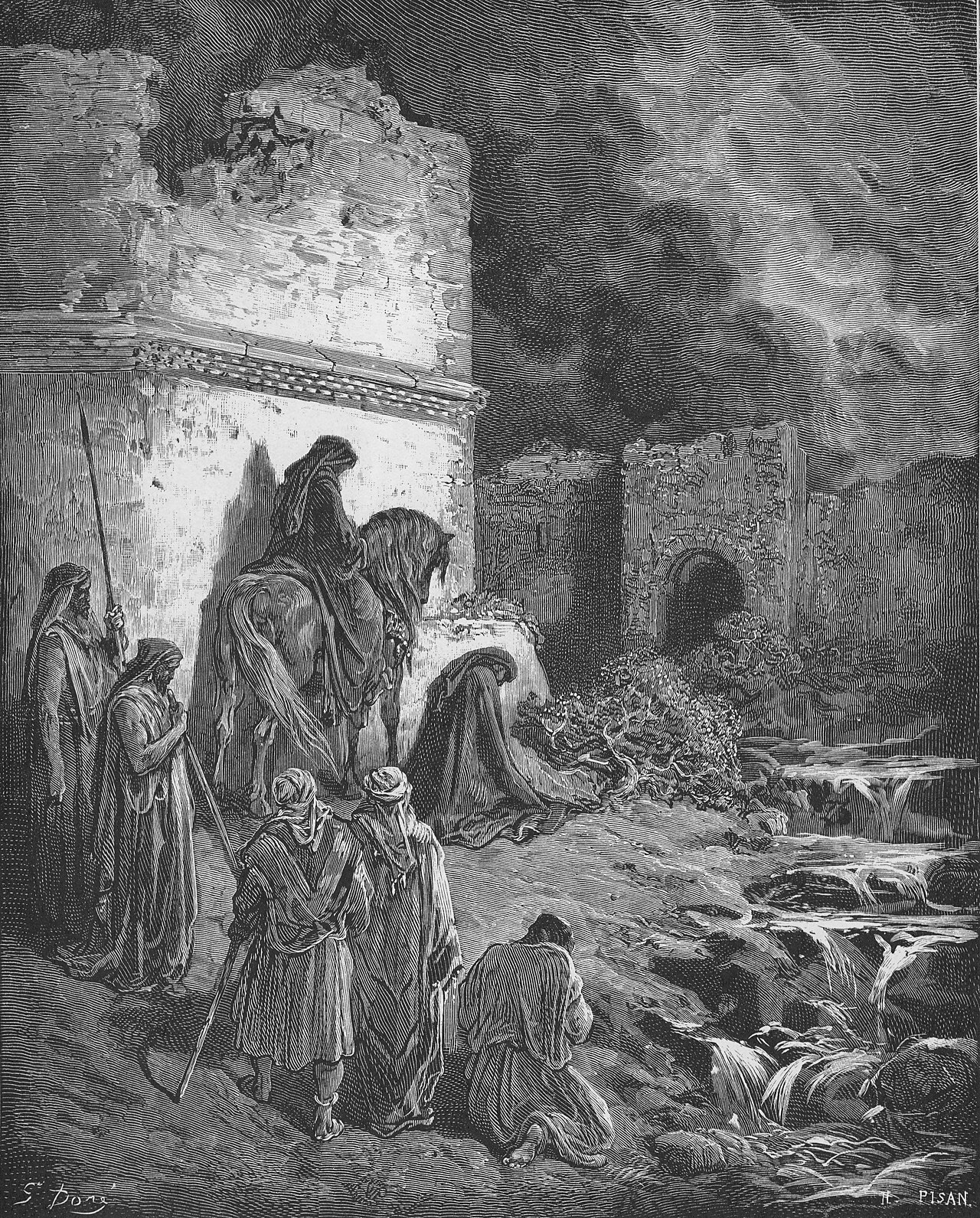
8 notes on this verseUntil the sun be hot - The meaning of this is, the gates were not to be opened before sunrise, and always shut at sunset. This is the custom to the present day in many of the cities of the East if a traveler arrives after sunset, he finds the gates shut; and on no consideration will they open them till the next morning, so that those who come late are obliged to lodge in the plain, or under the walls.
This site's exposition
Do not open the gates of Jerusalem
on Nehemiah 7:3-4
The gates stay shut "until the sun is hot," a city defending itself street by street. Verse 4 states the problem the roster answers. The wall had outrun the population, and Nehemiah moves to number who is there.
The record, by era
The Medieval Church1 voice
And I appointed watchmen from the inhabitants of Jerusalem, etc. The watchmen of souls are not from the neophytes, nor from the common crowd, but they are to be established from those who, having been liberated by the grace of God from the struggle with …
The Puritans and the Awakening3 voices
The city, in compass, was large and great. The walls enclosed the same ground as formerly; but much of it lay waste, for the houses were not built, few at least in comparison with what had been; so that Nehemiah walled the city in faith, and with an eye to that promise of the replenishing of it which God had lately made by the prophet, Zech. viii.
Hot - 'Till it be clear and broad day; when the people will be ready in case of an assault. They - The watches appointed to that end. Watches - Nehemiah was now about to return to the court, and left the charge of the city to these in his absence.
And I said unto them, let not the gates of Jerusalem be opened until the sun be hot,....
The Nineteenth Century1 voice
A commentator
Jamieson, Fausset & Brown1802–1910
Commentary Critical and Explanatory on the Whole Bible (1871)
proposed
Let not the gates of Jerusalem be opened until the sun be hot, &c.--In the East it is customary to open the gates of a city at sunrise, and to bar them at sunset--a rule which is very rarely, and not except to persons of authority, infringed upon.
1 more voice on this verse
The Nineteenth Century1 voice
A commentator
Albert Barnes1798–1870
Notes, Explanatory and Practical, on the Old and New Testaments (1832-1869)
proposed
Until the sun be hot - An unusual precaution. The ordinary practice in the East is to open town gates at sunrise.
How the passage was read
What the Jewish commentators add
until the sun becomes hot until midday, for the day was long.
This section is reception history: how the passage was read and kept in the Jewish tradition. Where a reading parts from an essential of the Christian faith, the section says so at that point.
Texts and citation data: Sefaria; each excerpt follows its version’s licence. 4 further sources are cited on this chapter that carry no English text this site may quote or only restate the verse.
The words behind it
24 Hebrew wordsEvery Hebrew word of this verse in the order it stands, with what it means and the door to its own study. The last column counts the times a word stands in the whole Bible: the rarer the word, the more the places it appears belong together.
| Hebrew | Sound | Meaning | Word study | In the Bible |
|---|---|---|---|---|
| וָאֹמַ֣ר | vaiyomer | and I said | H559 → | 5305 times |
| לָהֶ֗ם | lahem | to them | ||
| לֹ֣א | lo' | not | H3808 → | 5168 times |
| יִפָּֽתְח֞וּ | yipatechu | they will be opened | H6605 → | 144 times |
| שַׁעֲרֵ֤י | shaarei | [the] gates of | H8179 → | 374 times |
| יְרוּשָׁלִַ֙ם֙ | yerushalim | Jerusalem | H3389 → | 643 times |
| עַד־ | ʾad- | until | H5704 → | 1261 times |
| חֹ֣ם | chom | is hot | H2552 → | |
| הַשֶּׁ֔מֶשׁ | hashemesh | the sun | H8121 → | |
| וְעַ֨ד | vead | and until | H5704 → | 1261 times |
| הֵ֥ם | hem | they | H1992 → | 553 times |
| עֹמְדִ֛ים | ʾomedim | [are] standing guard | H5975 → | 521 times |
| יָגִ֥יפוּ | yagifu | let them shut | H1479 → | |
| הַדְּלָת֖וֹת | hadelatot | the doors | H1817 → | 88 times |
| וֶאֱחֹ֑זוּ | veechozu | and bolt [them] | H270 → | |
| וְהַעֲמֵ֗יד | vehaameid | and appoint | H5975 → | 521 times |
| מִשְׁמְרוֹת֙ | mishmerot | <the> guards of | H4931 → | 78 times |
| יֹשְׁבֵ֣י | yoshevei | [the] inhabitants of | H3427 → | 1079 times |
| יְרוּשָׁלִַ֔ם | yerushalim | Jerusalem | H3389 → | 643 times |
| אִ֚ישׁ | ʾish | someone | H376 → | 1663 times |
| בְּמִשְׁמָר֔וֹ | bemishmaro | at guard post his | H4929 → | 22 times |
| וְאִ֖ישׁ | veish | and someone | H376 → | 1663 times |
| נֶ֥גֶד | neged | before | H5048 → | 151 times |
| בֵּיתֽוֹ׃ | beito | house his | H1004 → | 2046 times |
וָאֹמַ֣רand I said
vaiyomerH559 →5305 times
לָהֶ֗םto them
lahem
לֹ֣אnot
lo'H3808 →5168 times
יִפָּֽתְח֞וּthey will be opened
yipatechuH6605 →144 times
שַׁעֲרֵ֤י[the] gates of
shaareiH8179 →374 times
יְרוּשָׁלִַ֙ם֙Jerusalem
yerushalimH3389 →643 times
עַד־until
ʾad-H5704 →1261 times
חֹ֣םis hot
chomH2552 →
הַשֶּׁ֔מֶשׁthe sun
hashemeshH8121 →
וְעַ֨דand until
veadH5704 →1261 times
הֵ֥םthey
hemH1992 →553 times
עֹמְדִ֛ים[are] standing guard
ʾomedimH5975 →521 times
יָגִ֥יפוּlet them shut
yagifuH1479 →
הַדְּלָת֖וֹתthe doors
hadelatotH1817 →88 times
וֶאֱחֹ֑זוּand bolt [them]
veechozuH270 →
וְהַעֲמֵ֗ידand appoint
vehaameidH5975 →521 times
מִשְׁמְרוֹת֙<the> guards of
mishmerotH4931 →78 times
יֹשְׁבֵ֣י[the] inhabitants of
yosheveiH3427 →1079 times
יְרוּשָׁלִַ֔םJerusalem
yerushalimH3389 →643 times
אִ֚ישׁsomeone
ʾishH376 →1663 times
בְּמִשְׁמָר֔וֹat guard post his
bemishmaroH4929 →22 times
וְאִ֖ישׁand someone
veishH376 →1663 times
נֶ֥גֶדbefore
negedH5048 →151 times
בֵּיתֽוֹ׃house his
beitoH1004 →2046 times
A shaded row is a word that stands 400 times or fewer in the Bible.
The walk
8 stopsEach card is a verse this one points to, and under it the verses that one points to in turn. Where several paths arrive at the same place, that place is listed first: the text keeps returning to it.
Through
Psalms 127:1Unless the LORD builds the house, its builders labor in vain; unless the LORD protects the city, its watchmen stand guard in vain.
it leads to
- Proverbs 16:9
A man’s heart plans his course, but the LORD determines his steps.
- 1 Corinthians 3:7
So neither he who plants nor he who waters is anything, but only God, who makes things grow.
- Proverbs 21:30–31
There is no wisdom, no understanding, no counsel that can prevail against the LORD.
- 1 Corinthians 3:9–15
For we are God’s fellow workers; you are God’s field, God’s building.
- Psalms 33:16–18
No king is saved by his vast army; no warrior is delivered by his great strength.
- Proverbs 16:9
Through
Matthew 10:16Behold, I am sending you out like sheep among wolves; therefore be as shrewd as snakes and as innocent as doves.
it leads to
- Philippians 2:15
so that you may be blameless and pure, children of God without fault in a crooked and perverse generation, in which you shine as lights in the world
- Luke 10:3
Go! I am sending you out like lambs among wolves.
- 1 Corinthians 14:20
Brothers, stop thinking like children. In regard to evil be infants, but in your thinking be mature.
- Philippians 2:15
Where this verse is studied
On this page
Studies1
About Nehemiah
Who and where
1 name in this verse with a page on the site.
This page draws on Adam Clarke, Commentary on the Bible; Albert Barnes, Notes, Explanatory and Practical, on the Old and New Testaments (1832-1869); Bede, Commentary on Ezra and Nehemiah; Jamieson Fausset and Brown, Commentary Critical and Explanatory on the Whole Bible; Jamieson, Fausset & Brown, Commentary Critical and Explanatory on the Whole Bible; John Gill, Exposition of the Old Testament (1748-1763); John Wesley, Explanatory Notes upon the Old Testament and Matthew Henry, Commentary on the Whole Bible.