
Nehemiah 5:13
in Nehemiah 5I also shook out the folds of my robe and said, “May God likewise shake out of His house and possession every man who does not keep this promise. May such a man be shaken out and have nothing!” The whole assembly said, “Amen,” and they praised the LORD. And the people did as they had promised.
BSB
The same verse in ASV and KJV ▾
ASV
Also I shook out my lap, and said, So God shake out every man from his house, and from his labor, that performeth not this promise; even thus be he shaken out, and emptied. And all the assembly said, Amen, and praised Jehovah. And the people did according to this promise.
KJV
Also I shook my lap, and said, So God shake out every man from his house, and from his labour, that performeth not this promise, even thus be he shaken out, and emptied. And all the congregation said, Amen, and praised the Lord. And the people did according to this promise.
⋯
This verse in Nehemiah 5
Commentary
9 notes on this verseA commentator
Albert Barnes1798–1870
Notes, Explanatory and Practical, on the Old and New Testaments (1832-1869)
I shook my lap - Compare the marginal references. By “lap” is meant a fold in the bosom of the dress, capable of serving as a pocket. Compare Isa 49:22 margin.
This site's exposition
required of the nobles and officials an oath
on Nehemiah 5:12-13
The nobles agree in one sentence, "We will restore it," yet Nehemiah summons the priests and takes an oath of them. He acts out the curse: "May God likewise shake out of His house and possession every man who does not keep this promise" (5:13).
This site's exposition
shook out the folds of my robe
Barnes takes the folds of the robe as a pocket, shaken out as a picture of the man God would shake out. Wesley calls it a form of oath then in use. Henry notes the people did as they had promised, where their fathers released slaves and took them back.
The record, by era
The Medieval Church2 voices
Moreover, I shook out the fold of my garment, and said, etc. For whoever either refuses to give mercy to the poor, or does not blush to demand back what they do not have, as if justly, this person is shaken out of his house, …
And all the multitude said, Amen, etc. For when, having heard his testimony, all responded Amen, and praising God, they did what was commanded; it is evident, indeed, that they received his words not compelled by fear, but with the deep affection of their heart.
The Puritans and the Awakening3 voices
My lap - The extreme parts of my garment, which I first folded together, and then shook it and scattered it asunder. This was a form of swearing then in use.
This cheerfulness in promising was well, but that which follows was better: They did according to this promise, and adhered to what they had done, not as their ancestors in a like case, who re-enslaved those whom a little before they had released, Jer. xxxiv. Good promises are good things, but good performances are all in all.
Also I shook my lap,....
1 more voice on this verse
The Nineteenth Century1 voice
Also I shook my lap - This was a significant action frequent among the Hebrews; and something of the same nature was practiced among other nations. “When the Roman ambassadors entered the senate of Carthage, they had their toga gathered up in their bosom. They said, We carry here peace and war; you may have which you will. The senate answered, You may give which you please. They then shook their toga, and said, We bring you war. To which all the senate answered, We cheerfully accept it.” See Livy. lib. xxi., cap. 18; and see Calmet.
How the passage was read
What the Jewish commentators add
On the verses either side of this one
And they said, “We shall return” And they said [that they were willing] to return and to relinquish all.
This section is reception history: how the passage was read and kept in the Jewish tradition. Where a reading parts from an essential of the Christian faith, the section says so at that point.
Texts and citation data: Sefaria; each excerpt follows its version’s licence. 2 further sources are cited on this chapter that carry no English text this site may quote or only restate the verse.
The words behind it
33 Hebrew wordsEvery Hebrew word of this verse in the order it stands, with what it means and the door to its own study. The last column counts the times a word stands in the whole Bible: the rarer the word, the more the places it appears belong together.
| Hebrew | Sound | Meaning | Word study | In the Bible |
|---|---|---|---|---|
| גַּם־ | gam- | also | H1571 → | 769 times |
| חָצְנִ֣י | chatzeni | bosom my | H2684 → | |
| נָעַ֗רְתִּי | naarti | I shook out | H5287 → | 11 times |
| וָֽאֹמְרָ֡ה | vaomerah | and I said ! | H559 → | 5305 times |
| כָּ֣כָה | kakhah | thus | H3602 → | |
| יְנַעֵ֪ר | yenaer | may he shake out | H5287 → | 11 times |
| הָֽאֱלֹהִ֟ים | haelohim | <the> God | H430 → | 2601 times |
| אֶת־ | ʾet- | <obj.> | H853 → | 10935 times |
| כָּל־ | kol- | every | H3605 → | 5413 times |
| הָאִישׁ֩ | haish | <the> person | H376 → | 1663 times |
| אֲשֶׁ֨ר | ʾasher | who | H834 → | 5497 times |
| לֹֽא־ | lo'- | not | H3808 → | 5168 times |
| יָקִ֜ים | yakim | he will carry out | H6965 → | 628 times |
| אֶת־ | ʾet- | <obj.> | H853 → | 10935 times |
| הַדָּבָ֣ר | hadavar | the word | H1697 → | 1440 times |
| הַזֶּ֗ה | hazeh | <the> this | H2088 → | 1180 times |
| מִבֵּיתוֹ֙ | mibeito | from house his | H1004 → | 2046 times |
| וּמִ֣יגִיע֔וֹ | umigio | and from property his | H3018 → | |
| וְכָ֛כָה | vekhakhah | and thus | H3602 → | |
| יִהְיֶ֥ה | yihyeh | may he be | H1961 → | 3559 times |
| נָע֖וּר | naur | shaken out | H5287 → | 11 times |
| וָרֵ֑ק | varek | and empty | H7386 → | |
| וַיֹּאמְר֨וּ | vaiyomeru | and they said | H559 → | 5305 times |
| כָֽל־ | khol- | all | H3605 → | 5413 times |
| הַקָּהָ֜ל | hakahal | the assembly | H6951 → | 123 times |
| אָמֵ֗ן | ʾamen | amen | H543 → | 30 times |
| וַֽיְהַלְלוּ֙ | vayhalu | and they praised | H1984 → | |
| אֶת־ | ʾet- | <obj.> | H853 → | 10935 times |
| יְהוָ֔ה | yahweh | Yahweh | H3068 → | 6520 times |
| וַיַּ֥עַשׂ | vaiyaas | and it did | H6213 → | 2628 times |
| הָעָ֖ם | haam | the people | H5971 → | 1873 times |
| כַּדָּבָ֥ר | kadavar | according to the manner | H1697 → | 1440 times |
| הַזֶּֽה׃ | hazeh | <the> this | H2088 → | 1180 times |
גַּם־also
gam-H1571 →769 times
חָצְנִ֣יbosom my
chatzeniH2684 →
נָעַ֗רְתִּיI shook out
naartiH5287 →11 times
וָֽאֹמְרָ֡הand I said !
vaomerahH559 →5305 times
כָּ֣כָהthus
kakhahH3602 →
יְנַעֵ֪רmay he shake out
yenaerH5287 →11 times
הָֽאֱלֹהִ֟ים<the> God
haelohimH430 →2601 times
אֶת־<obj.>
ʾet-H853 →10935 times
כָּל־every
kol-H3605 →5413 times
הָאִישׁ֩<the> person
haishH376 →1663 times
אֲשֶׁ֨רwho
ʾasherH834 →5497 times
לֹֽא־not
lo'-H3808 →5168 times
יָקִ֜יםhe will carry out
yakimH6965 →628 times
אֶת־<obj.>
ʾet-H853 →10935 times
הַדָּבָ֣רthe word
hadavarH1697 →1440 times
הַזֶּ֗ה<the> this
hazehH2088 →1180 times
מִבֵּיתוֹ֙from house his
mibeitoH1004 →2046 times
וּמִ֣יגִיע֔וֹand from property his
umigioH3018 →
וְכָ֛כָהand thus
vekhakhahH3602 →
יִהְיֶ֥הmay he be
yihyehH1961 →3559 times
נָע֖וּרshaken out
naurH5287 →11 times
וָרֵ֑קand empty
varekH7386 →
וַיֹּאמְר֨וּand they said
vaiyomeruH559 →5305 times
כָֽל־all
khol-H3605 →5413 times
הַקָּהָ֜לthe assembly
hakahalH6951 →123 times
אָמֵ֗ןamen
ʾamenH543 →30 times
וַֽיְהַלְלוּ֙and they praised
vayhaluH1984 →
אֶת־<obj.>
ʾet-H853 →10935 times
יְהוָ֔הYahweh
yahwehH3068 →6520 times
וַיַּ֥עַשׂand it did
vaiyaasH6213 →2628 times
הָעָ֖םthe people
haamH5971 →1873 times
כַּדָּבָ֥רaccording to the manner
kadavarH1697 →1440 times
הַזֶּֽה׃<the> this
hazehH2088 →1180 times
A shaded row is a word that stands 400 times or fewer in the Bible.
The walk
8 stopsEach card is a verse this one points to, and under it the verses that one points to in turn. Where several paths arrive at the same place, that place is listed first: the text keeps returning to it.
Through
Matthew 10:14And if anyone will not welcome you or heed your words, shake the dust off your feet when you leave that home or town.
it leads to
- Acts 13:51
So they shook the dust off their feet in protest against them and went to Iconium.
Reached by 2 separate paths from here.
- Acts 18:6
But when they opposed and insulted him, he shook out his garments and told them, “Your blood be on your own heads! I am innocent of it. From now on I will go to…
- Luke 10:10–11
But if you enter a town and they do not welcome you, go into the streets and declare,
- Mark 6:11
If anyone will not welcome you or listen to you, shake the dust off your feet when you leave that place, as a testimony against them.”
- Luke 9:5
If anyone does not welcome you, shake the dust off your feet when you leave that town, as a testimony against them.”
- Acts 13:51
Through
Acts 18:6But when they opposed and insulted him, he shook out his garments and told them, “Your blood be on your own heads! I am innocent of it. From now on I will go to…
it leads to
- Ezekiel 33:4
Then if anyone hears the sound of the horn but fails to heed the warning, and the sword comes and takes him away, his blood will be on his own head.
- 2 Samuel 1:16
For David had said to the Amalekite, “Your blood be on your own head because your own mouth has testified against you, saying, ‘I killed the LORD’s anointed.’”
- Ezekiel 33:8–9
If I say to the wicked, ‘O wicked man, you will surely die,’ but you do not speak out to dissuade him from his way, then that wicked man will die in his iniquity,…
- Ezekiel 33:4
Where this verse is studied
On this page
About Nehemiah
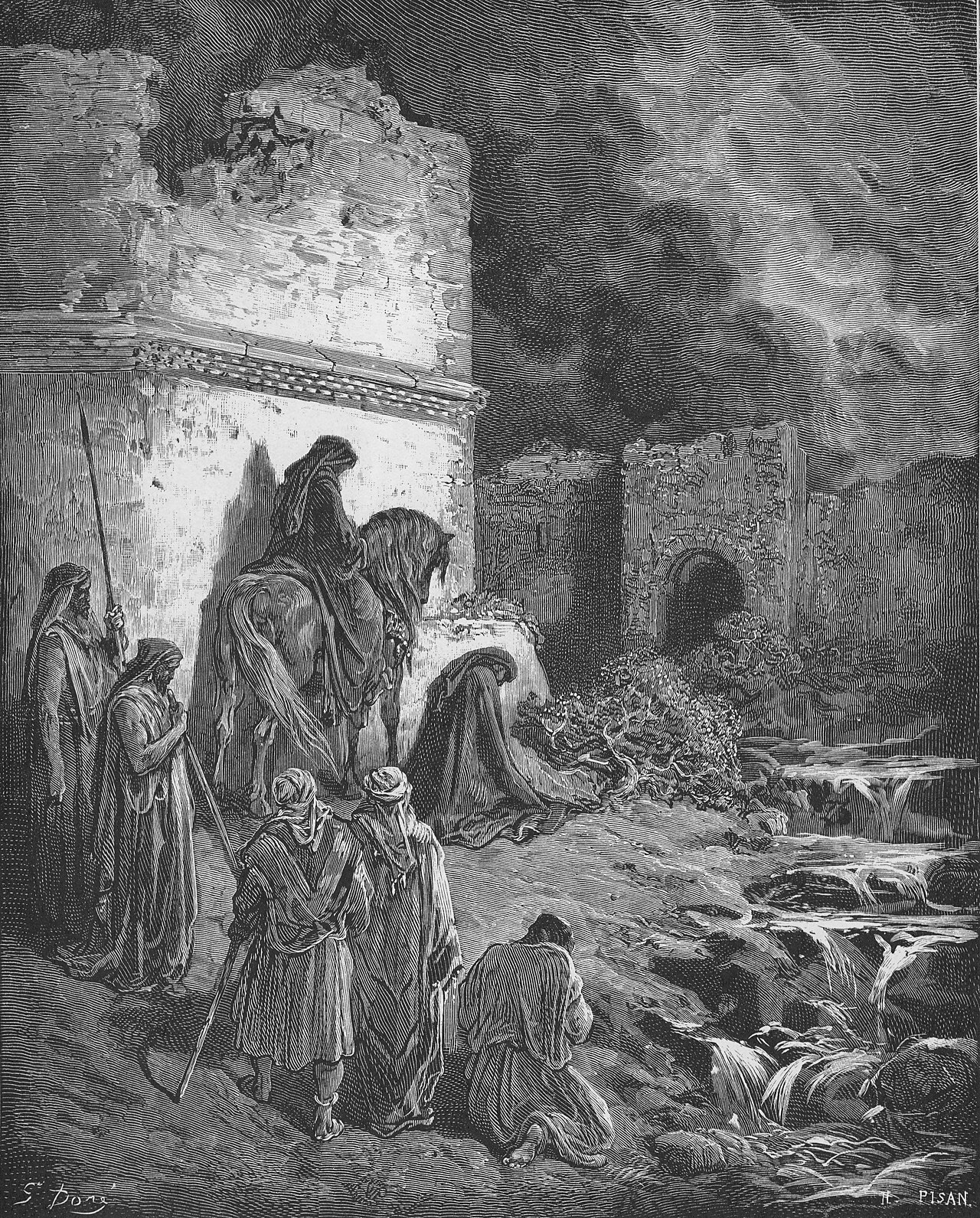
This page draws on Adam Clarke, Commentary on the Bible; Albert Barnes, Notes, Explanatory and Practical, on the Old and New Testaments (1832-1869); Bede, Commentary on Ezra and Nehemiah; John Gill, Exposition of the Old Testament (1748-1763); John Wesley, Explanatory Notes upon the Old Testament and Matthew Henry, Commentary on the Whole Bible.