
Nehemiah 5:6
in Nehemiah 5When I heard their outcry and these complaints, I became extremely angry,
BSB
The same verse in ASV and KJV ▾
ASV
And I was very angry when I heard their cry and these words.
KJV
And I was very angry when I heard their cry and these words.
⋯
This verse in Nehemiah 5
Commentary
4 notes on this verseThis site's exposition
I became extremely angry
on Nehemiah 5:6-7
Nehemiah becomes "extremely angry," but he acts only "after serious thought," deliberation placed between the provocation and the act. He charges the nobles and officials, "You are exacting usury from your own brothers!" He answers a private wrong with a public remedy: "So I called a large assembly against them."
The record, by era
The Puritans and the Awakening2 voices
); he expressed a great displeasure at it, as a very bad thing. Note, It well becomes rulers to show themselves angry at sin, that by the anger itself they may be excited to their duty, and by the expressions of it others may be deterred from evil.
quarantine:debris (2026-07-29) — leading-punctuation+unbalanced-parens
And I was very angry when I heard their cry, and these words. Their complaint expressed in this manner; it not only raised pity and compassion in his breast towards these poor distressed people, but indignation at the rich that oppressed them.
The Nineteenth Century1 voice
A commentator
Jamieson, Fausset & Brown1802–1910
Commentary Critical and Explanatory on the Whole Bible (1871)
proposed
I was very angry when I heard their cry and these words--When such disorders came to the knowledge of the governor, his honest indignation was roused against the perpetrators of the evil.
The words behind it
10 Hebrew wordsEvery Hebrew word of this verse in the order it stands, with what it means and the door to its own study. The last column counts the times a word stands in the whole Bible: the rarer the word, the more the places it appears belong together.
| Hebrew | Sound | Meaning | Word study | In the Bible |
|---|---|---|---|---|
| וַיִּ֥חַר | vaiyichar | and it burned | H2734 → | 91 times |
| לִ֖י | li | to me | ||
| מְאֹ֑ד | meod | exceedingly | H3966 → | 300 times |
| כַּאֲשֶׁ֤ר | kaasher | <just> when | H834 → | 5497 times |
| שָׁמַ֙עְתִּי֙ | shama'ti | I heard | H8085 → | 1159 times |
| אֶת־ | ʾet- | <obj.> | H853 → | 10935 times |
| זַֽעֲקָתָ֔ם | zaakatam | outcry their | H2201 → | |
| וְאֵ֖ת | veet | and <obj.> | H853 → | 10935 times |
| הַדְּבָרִ֥ים | hadevarim | the words | H1697 → | 1440 times |
| הָאֵֽלֶּה׃ | haeleh | <the> these | H428 → | 746 times |
וַיִּ֥חַרand it burned
vaiyicharH2734 →91 times
לִ֖יto me
li
מְאֹ֑דexceedingly
meodH3966 →300 times
כַּאֲשֶׁ֤ר<just> when
kaasherH834 →5497 times
שָׁמַ֙עְתִּי֙I heard
shama'tiH8085 →1159 times
אֶת־<obj.>
ʾet-H853 →10935 times
זַֽעֲקָתָ֔םoutcry their
zaakatamH2201 →
וְאֵ֖תand <obj.>
veetH853 →10935 times
הַדְּבָרִ֥יםthe words
hadevarimH1697 →1440 times
הָאֵֽלֶּה׃<the> these
haelehH428 →746 times
A shaded row is a word that stands 400 times or fewer in the Bible.
The walk
8 stopsEach card is a verse this one points to, and under it the verses that one points to in turn. Where several paths arrive at the same place, that place is listed first: the text keeps returning to it.
Through
Ephesians 4:26“Be angry, yet do not sin.” Do not let the sun set upon your anger,
it leads to
- James 1:19
My beloved brothers, understand this: Everyone should be quick to listen, slow to speak, and slow to anger,
- Psalms 4:4
Be angry, yet do not sin; on your bed, search your heart and be still. Selah
- Psalms 37:8
Refrain from anger and abandon wrath; do not fret—it can only bring harm.
- Ephesians 4:31–32
Get rid of all bitterness, rage and anger, outcry and slander, along with every form of malice.
- Ecclesiastes 7:9
Do not be quickly provoked in your spirit, for anger settles in the lap of a fool.
- James 1:19
Through
Exodus 11:8And all these officials of yours will come and bow before me, saying, ‘Go, you and all the people who follow you!’ After that, I will depart.” And hot with anger, Moses left Pharaoh’s…
it leads to
- Exodus 12:31–33
Then Pharaoh summoned Moses and Aaron by night and said, “Get up, leave my people, both you and the Israelites! Go, worship the LORD as you have requested.
- Exodus 12:31–33
Through
Numbers 16:15Then Moses became very angry and said to the LORD, “Do not regard their offering. I have not taken one donkey from them or mistreated a single one of them.”
it leads to
- Genesis 4:4–5
while Abel brought the best portions of the firstborn of his flock. And the LORD looked with favor on Abel and his offering,
- Genesis 4:4–5
Through
Nehemiah 13:25I rebuked them and called down curses on them. I beat some of these men and pulled out their hair. Then I made them take an oath before God and said, “You must not…
it leads to
- Ezra 10:5
So Ezra got up and made the leading priests, Levites, and all Israel take an oath to do what had been said. And they took the oath.
- Ezra 10:5
Where this verse is studied
On this page
About Nehemiah
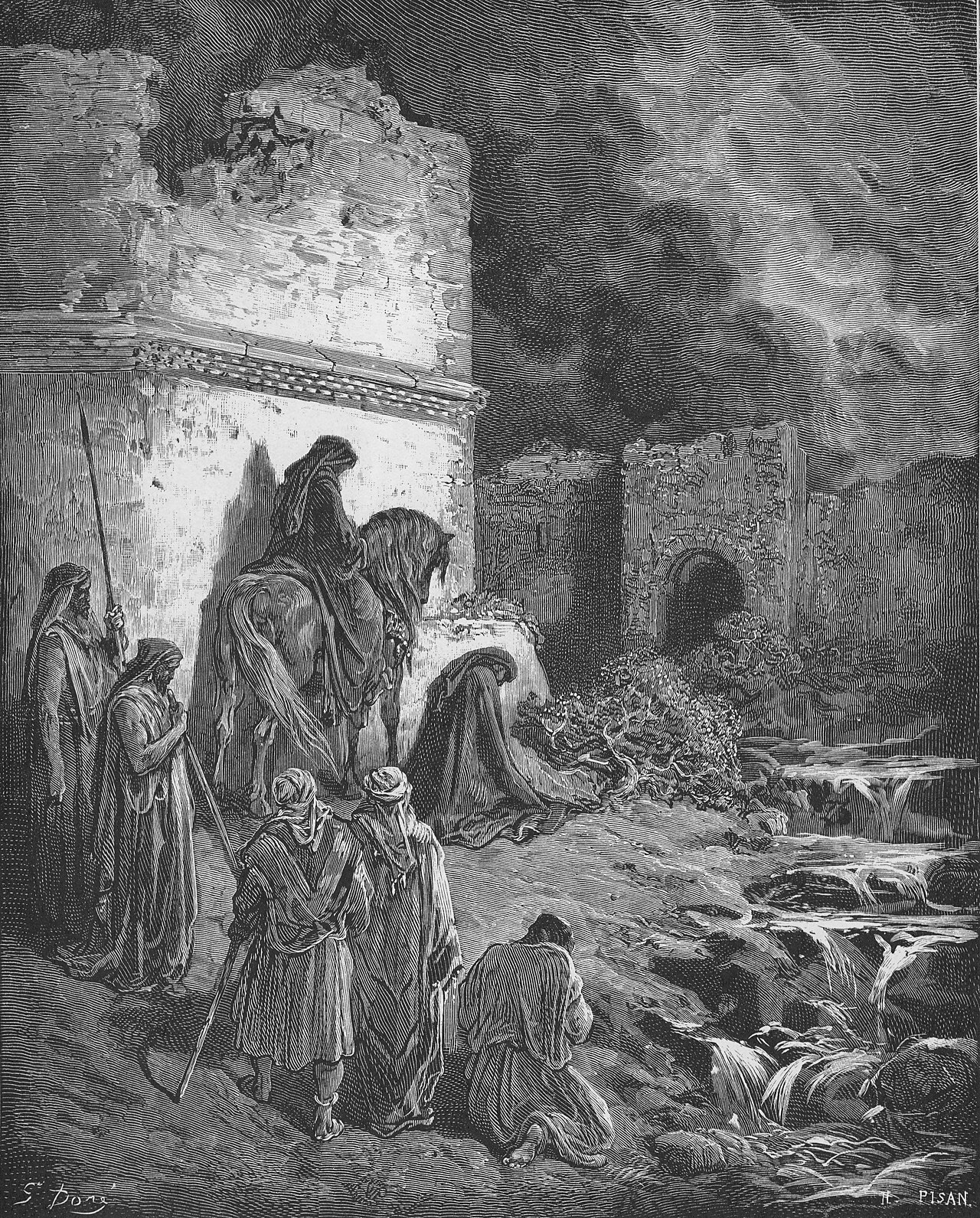
This page draws on Jamieson, Fausset & Brown, Commentary Critical and Explanatory on the Whole Bible; John Gill, Exposition of the Old Testament (1748-1763); John Wesley, Explanatory Notes upon the Old Testament and Matthew Henry, Commentary on the Whole Bible.