
Nehemiah 5:16
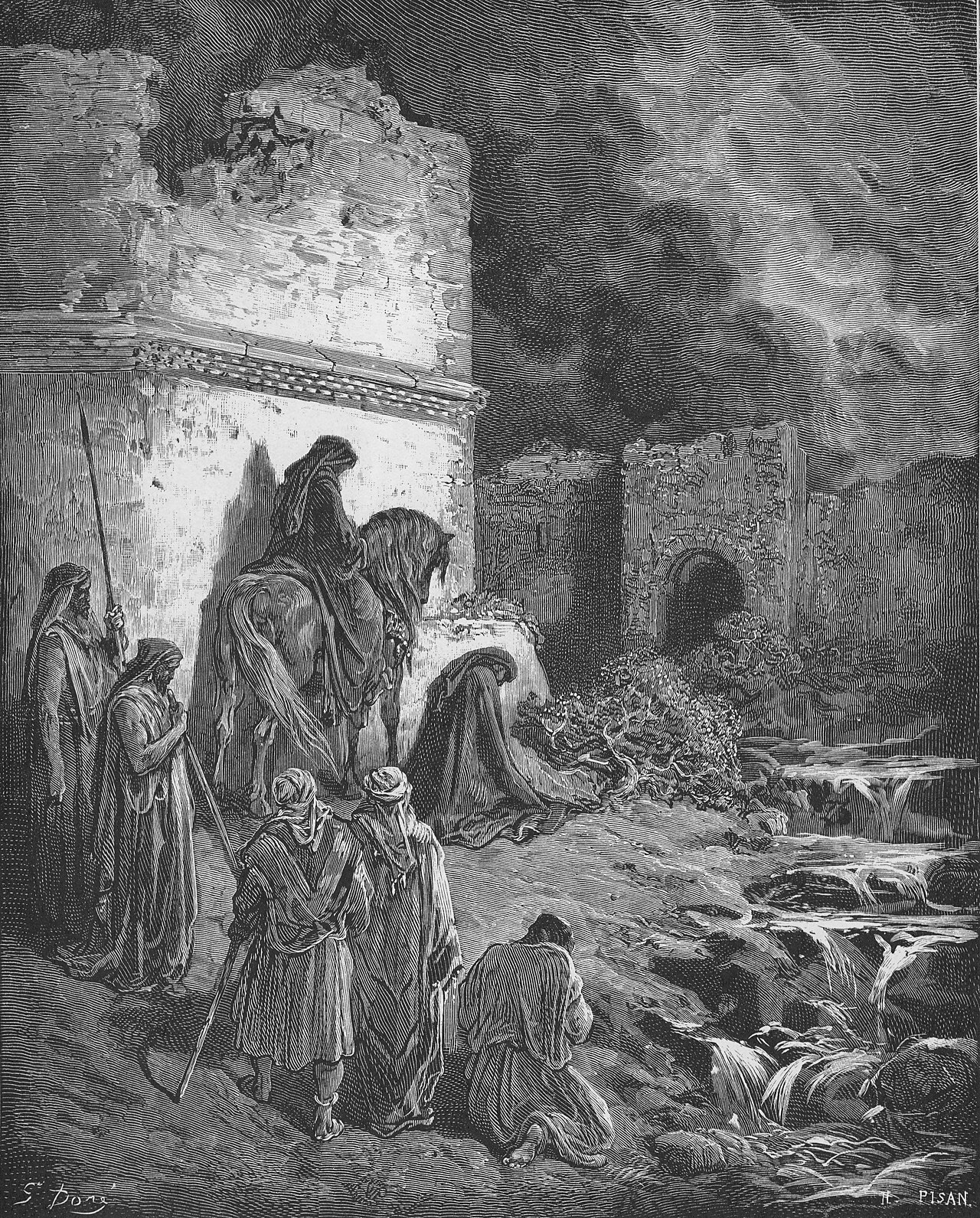
in Nehemiah 5Instead, I devoted myself to the construction of the wall, and all my servants were gathered there for the work; we did not acquire any land.
BSB
The same verse in ASV and KJV ▾
ASV
Yea, also I continued in the work of this wall, neither bought we any land: and all my servants were gathered thither unto the work.
KJV
Yea, also I continued in the work of this wall, neither bought we any land: and all my servants were gathered thither unto the work.
⋯
This verse in Nehemiah 5
Commentary
8 notes on this verseYea, also I continued in the work of this wall,.... Of building the wall of Jerusalem; here he gave his constant attendance to direct and encourage the workmen, and see that they kept to their work, and did it well: neither bought we any land; neither he nor the principal men with him, though they could have bought it cheap, but they chose not to take the advantage of the poverty of the people: and all my servants were gathered thither unto the work: all were employed in it, taking no wages for their work, being maintained at his expense.
This site's exposition
twelve years total
on Nehemiah 5:14-16
Nehemiah turns to his own twelve years in office: "neither I nor my brothers ate the food allotted to the governor" (5:14). Former governors took "bread and wine plus forty shekels of silver," but Nehemiah gives his reason: "because of my fear of God" (5:15).
This site's exposition
devoted myself to the construction
Gill pictures Nehemiah at the wall every day, directing the work and the servants gathered there. His household acquired no land while others were mortgaging theirs. Matthew Henry recalls the word of Jesus that giving is more blessed than receiving (Acts 20:35).
The record, by era
The Puritans and the Awakening3 voices
Say not then that he was a bad husband, but that he was a good governor, who aimed not to feather his own nest. Let us remember the words of the Lord, how he said, It is more blessed to give than to receive, Acts xx.
5 Yet now our flesh is as the flesh of our brethren, our children as their children: and, lo, we bring into bondage our sons and our daughters to be servants, and some of our daughters are brought unto bondage already: neither is it in our power to redeem them; for other men have our lands and vineyards.
quarantine:scripture (2026-07-29) — verbatim-scripture
I continued - Overseeing, directing, and encouraging the workmen, which was my whole business; and this at my own cost. Bought - Of our poor brethren, whose necessities gave abundant opportunity of enriching myself with good bargains.
The Nineteenth Century2 voices
Neither bought we any land - Neither he nor his officers took any advantage of the necessities of the people, to buy their lands, etc. He even made his own servants to work at the wall.
A commentator
Albert Barnes1798–1870
Notes, Explanatory and Practical, on the Old and New Testaments (1832-1869)
proposed
I continued ... land - i. e. - “I took my share in the work of the wall, as general superintendent. I did not take advantage of the general poverty to buy poor men’s plots of ground.”
The words behind it
14 Hebrew wordsEvery Hebrew word of this verse in the order it stands, with what it means and the door to its own study. The last column counts the times a word stands in the whole Bible: the rarer the word, the more the places it appears belong together.
| Hebrew | Sound | Meaning | Word study | In the Bible |
|---|---|---|---|---|
| וְ֠גַם | vegam | and also | H1571 → | 769 times |
| בִּמְלֶ֜אכֶת | bimlekhet | on [the] work of | H4399 → | 167 times |
| הַחוֹמָ֤ה | hachomah | the wall | H2346 → | 133 times |
| הַזֹּאת֙ | hazot | <the> this | H2063 → | 603 times |
| הֶחֱזַ֔קְתִּי | hechezakti | I kept hold | H2388 → | 291 times |
| וְשָׂדֶ֖ה | vesadeh | and a field | H7704 → | 334 times |
| לֹ֣א | lo' | not | H3808 → | 5168 times |
| קָנִ֑ינוּ | kaninu | we acquired | H7069 → | |
| וְכָל־ | vekhol | and all | H3605 → | 5413 times |
| נְעָרַ֔י | nearai | servants my | H5288 → | 239 times |
| קְבוּצִ֥ים | kevutzim | [were] assembled | H6908 → | 127 times |
| שָׁ֖ם | sham | there | H8033 → | 834 times |
| עַל־ | ʾal- | on | H5921 → | 5755 times |
| הַמְּלָאכָֽה׃ | hamelakhah | the work | H4399 → | 167 times |
וְ֠גַםand also
vegamH1571 →769 times
בִּמְלֶ֜אכֶתon [the] work of
bimlekhetH4399 →167 times
הַחוֹמָ֤הthe wall
hachomahH2346 →133 times
הַזֹּאת֙<the> this
hazotH2063 →603 times
הֶחֱזַ֔קְתִּיI kept hold
hechezaktiH2388 →291 times
וְשָׂדֶ֖הand a field
vesadehH7704 →334 times
לֹ֣אnot
lo'H3808 →5168 times
קָנִ֑ינוּwe acquired
kaninuH7069 →
וְכָל־and all
vekholH3605 →5413 times
נְעָרַ֔יservants my
nearaiH5288 →239 times
קְבוּצִ֥ים[were] assembled
kevutzimH6908 →127 times
שָׁ֖םthere
shamH8033 →834 times
עַל־on
ʾal-H5921 →5755 times
הַמְּלָאכָֽה׃the work
hamelakhahH4399 →167 times
A shaded row is a word that stands 400 times or fewer in the Bible.
The walk
8 stopsEach card is a verse this one points to, and under it the verses that one points to in turn. Where several paths arrive at the same place, that place is listed first: the text keeps returning to it.
Through
Galatians 6:9Let us not grow weary in well-doing, for in due time we will reap a harvest if we do not give up.
it leads to
- 1 Corinthians 15:58
Therefore, my beloved brothers, be steadfast and immovable. Always excel in the work of the Lord, because you know that your labor in the Lord is not in vain.
- 2 Thessalonians 3:13
But as for you, brothers, do not grow weary in well-doing.
- Isaiah 40:30–31
Even youths grow tired and weary, and young men stumble and fall.
- Hebrews 10:35–39
So do not throw away your confidence; it holds a great reward.
- 1 Corinthians 15:58
Through
1 Corinthians 15:58Therefore, my beloved brothers, be steadfast and immovable. Always excel in the work of the Lord, because you know that your labor in the Lord is not in vain.
it leads to
- Galatians 6:9
Let us not grow weary in well-doing, for in due time we will reap a harvest if we do not give up.
- 2 Chronicles 15:7
But as for you, be strong; do not be discouraged, for your work will be rewarded.”
- Hebrews 6:10
For God is not unjust. He will not forget your work and the love you have shown for His name as you have ministered to the saints and continue to do so.
- Philippians 2:16
as you hold forth the word of life, in order that I may boast on the day of Christ that I did not run or labor in vain.
- Galatians 6:9
Where this verse is studied
On this page
About Nehemiah
This page draws on Adam Clarke, Commentary on the Bible; Albert Barnes, Notes, Explanatory and Practical, on the Old and New Testaments (1832-1869); John Gill, Exposition of the Old Testament (1748-1763); John Wesley, Explanatory Notes upon the Old Testament and Matthew Henry, Commentary on the Whole Bible.