
Nehemiah 3:15
in Nehemiah 3The Fountain Gate was repaired by Shallun son of Col-hozeh, ruler of the district of Mizpah. He rebuilt it, roofed it, and installed its doors, bolts, and bars. He also repaired the wall of the Pool of Shelah near the king’s garden, as far as the stairs that descend from the City of David.
BSB
The same verse in ASV and KJV ▾
ASV
And the fountain gate repaired Shallun the son of Col-hozeh, the ruler of the district of Mizpah; he built it, and covered it, and set up the doors thereof, the bolts thereof, and the bars thereof, and the wall of the pool of Shelah by the king’s garden, even unto the stairs that go down from the city of David.
KJV
But the gate of the fountain repaired Shallun the son of Col–hozeh, the ruler of part of Mizpah; he built it, and covered it, and set up the doors thereof, the locks thereof, and the bars thereof, and the wall of the pool of Siloah by the king’s garden, and unto the stairs that go down from the city of David.
⋯
This verse in Nehemiah 3
Commentary
9 notes on this verseAnd the walls of the pool of Siloam in the garden of the king, etc. Therefore, Siloa, which is interpreted as the sent one, where the man born blind and was illuminated, signifies the Lord Savior, who was sent by God the Father for our …
This site's exposition
The valley gate
on Nehemiah 3:13-15
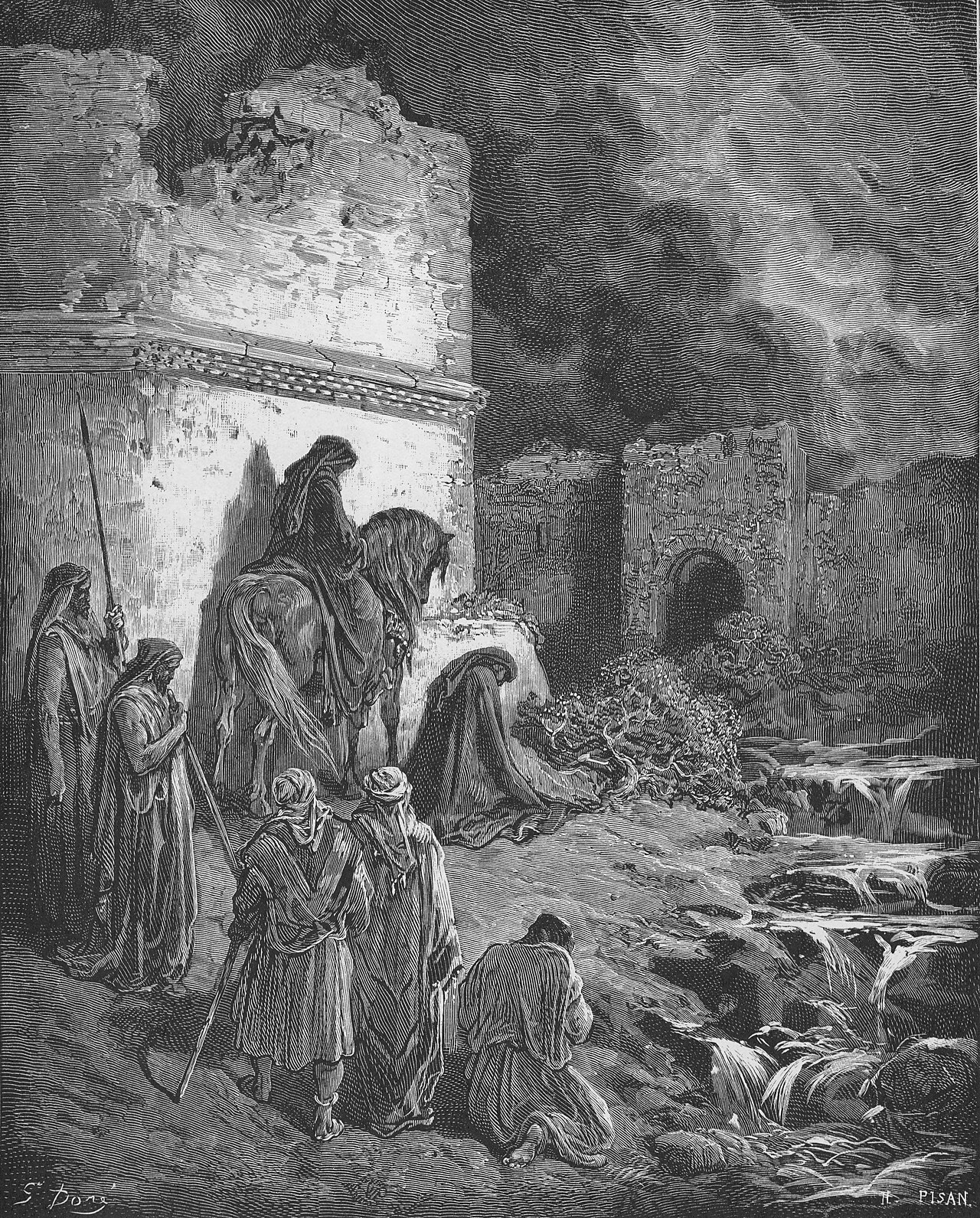
The gates name the city's working anatomy: the valley gate Nehemiah rode out of by night in chapter 2, a thousand cubits of wall to the dung gate where the refuse left, and the gate of the fountain with the wall of the pool of Siloah by the king's garden and the stairs that go down from the city of David. The topography is real and excavated: Siloam's pool and the stepped descent of the old city survive, and the roll reads as a walking survey of ground a visitor can still trace. The dung gate gets its builder's name recorded with the same dignity as the sheep gate's.
The record, by era
The Medieval Church1 voice
And Shallun built the gate of the fountain, etc. "Pagos" in Greek signifies a village in Latin. But writers tell that from that front of Mount Zion, which faces the eastern region with a steep rock, within the walls, and at the roots of the …
The Puritans and the Awakening2 voices
They did not think their callings excused them, nor plead that they could not leave their shops to attend the public business, knowing that what they lost would certainly be made up to them by the blessing of God upon their callings. Some ladies are spoken of as helping forward this work-- Shallum and his daughters (
quarantine:debris (2026-07-29) — unbalanced-parens
But the gate of the fountain,....
The Nineteenth Century2 voices
A commentator
Albert Barnes1798–1870
Notes, Explanatory and Practical, on the Old and New Testaments (1832-1869)
The “pool of Siloah” lies at the southwestern foot of the temple hill, near the lower end of the Tyropoeon. It appears to have been at all times beyond the line of the city wall, but was perhaps joined to the city by a fortification of its own. The king’s gardens - See 2Ki 25:4 note. The stairs - A flight of steps, still to be seen, led from the low valley of the Tyropoeon up the steep sides of Ophel to the “city of David,” which it reached probably at a point not far south of the temple.
THERE have been many very famous king's gardens, such as those "hanging gardens" in Nineveh, in which Sardanapalus delighted himself, and that remarkable garden of Cyrus in which he took such great interest, because, as he said, every tree and every plant in it had been both planted and tended by his own royal hand. Imagination might bid you wander among the beauties of the celebrated villas and gardens of the Roman emperors, or make you linger amid the roses and lilies of the voluptuous gardens of the Persian caliphs but we have nobler work in hand.
2 more voices on this verse
The Nineteenth Century2 voices
THERE have been many very famous king's gardens, such as those "hanging gardens" in Nineveh, in which Sardanapalus delighted himself, and that remarkable garden of Cyrus in which he took such great interest, because, as he said, every tree and every plant in it had been both planted and tended by his own royal hand. Imagination might bid you wander among the beauties of the celebrated villas and gardens of the Roman emperors, or make you linger amid the roses and lilies of the voluptuous gardens of the Persian caliphs but we have nobler work in hand. I call you to come with me to orchards of pomegranates, to beds of spices, camphor with spikenard, calamus and cinnamon, myrrh and aloes, and trees of frankincense. I am not about to speak of the gardens of any earthly monarch, for we can find far fairer flowers and rarer fruits in the gardens of the King of kings, the resorts of His Son, the Prince Immanuel. There are six of these "king's gardens" to which I shall conduct you, but we shall not have time to tarry in more than one of them. I. The first of these king's gardens was THE GARDEN OF PARADISE, which was situated in the midst of Eden. You will read of it in the book of Genesis. It was doubtless a fairer place than we have ever seen and much more marvelous for beauty than we can imagine. It was full of all manner of delights—a fruitful spot in which the man who was set to keep it would have no need to toil, but would find it a happy and refreshing exercise to train the luxurious plants. No sweat was ever seen upon his happy brow, for he cultivated a virgin soil. Abundance of luscious fruits ministered to his necessities. He could stretch himself upon soft couches of moss and no inclement weather disturbed his repose.
The pool of Siloah - This is probably the same as that mentioned by the evangelists. The stairs that go down from the city of David - Jerusalem being built on very uneven ground, and some hills being taken within the walls; there was a necessity that there should be in different places steps by which they could ascend and descend: probably similar to what we see in the city of Bristol.
How the passage was read
What the Jewish commentators add
the ruler of the district of Mizpah the prince and duke of Mizpah.
This section is reception history: how the passage was read and kept in the Jewish tradition. Where a reading parts from an essential of the Christian faith, the section says so at that point.
Texts and citation data: Sefaria; each excerpt follows its version’s licence. 2 further sources are cited on this chapter that carry no English text this site may quote or only restate the verse.
The words behind it
29 Hebrew wordsEvery Hebrew word of this verse in the order it stands, with what it means and the door to its own study. The last column counts the times a word stands in the whole Bible: the rarer the word, the more the places it appears belong together.
| Hebrew | Sound | Meaning | Word study | In the Bible |
|---|---|---|---|---|
| וְאֵת֩ | veet | and <obj.> | H853 → | 10935 times |
| שַׁ֨עַר | shaar | [the] gate of | H8179 → | 374 times |
| הָעַ֜יִן | haayin | the spring | H5869 → | 887 times |
| הֶ֠חֱזִיק | hechezik | he repaired | H2388 → | 291 times |
| שַׁלּ֣וּן | shalun | Shallun | H7968 → | |
| בֶּן־ | ben- | [the] son of | H1121 → | 4930 times |
| כָּל־ | kol- | Col- | H3626 → | 4 times |
| חֹזֶה֮ | chozeh | Hozeh | H3626 → | 4 times |
| שַׂ֣ר | sar | [the] official of | H8269 → | 421 times |
| פֶּ֣לֶךְ | pelekh | [the] district of | H6418 → | 10 times |
| הַמִּצְפָּה֒ | hamitzpah | <the> Mizpah | H4709 → | 40 times |
| ה֤וּא | hu' | he | H1931 → | 1879 times |
| יִבְנֶ֙נּוּ֙ | yivnenu | he rebuilt it | H1129 → | 376 times |
| וִיטַֽלְלֶ֔נּוּ | vitallenu | and he roofed over it | H2926 → | |
| וְיַעֲמִיד֙ | veyaamidu | so he may set up | H5975 → | 521 times |
| דַּלְתֹתָ֔יו | daltotav | doors its | H1817 → | 88 times |
| מַנְעֻלָ֖יו | manulav | bolts its | H4514 → | 6 times |
| וּבְרִיחָ֑יו | uverichav | and bars its | H1280 → | 40 times |
| וְ֠אֵת | veet | and <obj.> | H853 → | 10935 times |
| חוֹמַ֞ת | chomat | [the] wall of | H2346 → | 133 times |
| בְּרֵכַ֤ת | berekhat | [the] pool of | H1295 → | 17 times |
| הַשֶּׁ֙לַח֙ | hashelach | <the> Shelah | H7975 → | |
| לְגַן־ | legan- | of [the] garden of | H1588 → | |
| הַמֶּ֔לֶךְ | hamelekh | the king | H4428 → | 2525 times |
| וְעַד־ | vead- | and to | H5704 → | 1261 times |
| הַֽמַּעֲל֔וֹת | hamaalot | the steps | H4609 → | |
| הַיּוֹרְד֖וֹת | haiyordot | which go down | H3381 → | 381 times |
| מֵעִ֥יר | meir | from [the] city of | H5892 → | 1090 times |
| דָּוִֽיד׃ ס | david | David | H1732 → | 999 times |
וְאֵת֩and <obj.>
veetH853 →10935 times
שַׁ֨עַר[the] gate of
shaarH8179 →374 times
הָעַ֜יִןthe spring
haayinH5869 →887 times
הֶ֠חֱזִיקhe repaired
hechezikH2388 →291 times
שַׁלּ֣וּןShallun
shalunH7968 →
בֶּן־[the] son of
ben-H1121 →4930 times
כָּל־Col-
kol-H3626 →4 times
חֹזֶה֮Hozeh
chozehH3626 →4 times
שַׂ֣ר[the] official of
sarH8269 →421 times
פֶּ֣לֶךְ[the] district of
pelekhH6418 →10 times
הַמִּצְפָּה֒<the> Mizpah
hamitzpahH4709 →40 times
ה֤וּאhe
hu'H1931 →1879 times
יִבְנֶ֙נּוּ֙he rebuilt it
yivnenuH1129 →376 times
וִיטַֽלְלֶ֔נּוּand he roofed over it
vitallenuH2926 →
וְיַעֲמִיד֙so he may set up
veyaamiduH5975 →521 times
דַּלְתֹתָ֔יוdoors its
daltotavH1817 →88 times
מַנְעֻלָ֖יוbolts its
manulavH4514 →6 times
וּבְרִיחָ֑יוand bars its
uverichavH1280 →40 times
וְ֠אֵתand <obj.>
veetH853 →10935 times
חוֹמַ֞ת[the] wall of
chomatH2346 →133 times
בְּרֵכַ֤ת[the] pool of
berekhatH1295 →17 times
הַשֶּׁ֙לַח֙<the> Shelah
hashelachH7975 →
לְגַן־of [the] garden of
legan-H1588 →
הַמֶּ֔לֶךְthe king
hamelekhH4428 →2525 times
וְעַד־and to
vead-H5704 →1261 times
הַֽמַּעֲל֔וֹתthe steps
hamaalotH4609 →
הַיּוֹרְד֖וֹתwhich go down
haiyordotH3381 →381 times
מֵעִ֥ירfrom [the] city of
meirH5892 →1090 times
דָּוִֽיד׃ סDavid
davidH1732 →999 times
A shaded row is a word that stands 400 times or fewer in the Bible.
The walk
8 stopsEach card is a verse this one points to, and under it the verses that one points to in turn. Where several paths arrive at the same place, that place is listed first: the text keeps returning to it.
Through
John 9:7Then He told him, “Go, wash in the Pool of Siloam” (which means “Sent”). So the man went and washed, and came back seeing.
it leads to
- Isaiah 35:5
Then the eyes of the blind will be opened and the ears of the deaf unstopped.
- John 11:37
But some of them asked, “Could not this man who opened the eyes of the blind also have kept Lazarus from dying?”
- John 9:11
He answered, “The man they call Jesus made some mud and anointed my eyes, and He told me to go to Siloam and wash. So I went and washed and received my sight.”
- Isaiah 8:6
“Because this people has rejected the gently flowing waters of Shiloah and rejoiced in Rezin and the son of Remaliah,
- Isaiah 35:5
Through
Nehemiah 2:14Then I went on to the Fountain Gate and the King’s Pool, but there was no room for the animal under me to get through;
it leads to
- 2 Kings 20:20
As for the rest of the acts of Hezekiah, along with all his might and how he constructed the pool and the tunnel to bring water into the city, are they not written in…
- 2 Kings 20:20
Through
Nehemiah 12:37At the Fountain Gate they climbed the steps of the City of David on the ascent to the wall and passed above the house of David to the Water Gate on the east.
it leads to
- Nehemiah 2:14
Then I went on to the Fountain Gate and the King’s Pool, but there was no room for the animal under me to get through;
- Nehemiah 3:26
and the temple servants living on the hill of Ophel made repairs opposite the Water Gate toward the east and the tower that juts out.
- Nehemiah 2:14
Through
Isaiah 8:6“Because this people has rejected the gently flowing waters of Shiloah and rejoiced in Rezin and the son of Remaliah,
it leads to
- John 9:7
Then He told him, “Go, wash in the Pool of Siloam” (which means “Sent”). So the man went and washed, and came back seeing.
- John 9:7
Where this verse is studied
On this page
Studies1
About Nehemiah
Who and where
1 name in this verse with a page on the site.
This page draws on Adam Clarke, Commentary on the Bible; Albert Barnes, Notes, Explanatory and Practical, on the Old and New Testaments (1832-1869); Bede, Commentary on Ezra and Nehemiah; Charles Spurgeon, The Metropolitan Tabernacle Pulpit, Sermon No. 790: “King's Gardens” (lightly modernized text, CCEL edition); Jamieson Fausset and Brown, Commentary Critical and Explanatory on the Whole Bible; John Gill, Exposition of the Old Testament (1748-1763); Keil, The Books of Ezra, Nehemiah, and Esther and Matthew Henry, Commentary on the Whole Bible.