
Joshua 4:6
in Joshua 4to serve as a sign among you. In the future, when your children ask, ‘What do these stones mean to you?’
BSB
The same verse in ASV and KJV ▾
ASV
that this may be a sign among you, that, when your children ask in time to come, saying, What mean ye by these stones?
KJV
That this may be a sign among you, that when your children ask their fathers in time to come, saying, What mean ye by these stones?
⋯
This verse in Joshua 4
Commentary
3 notes on this verseThat this may be a sign among you,.... A commemorative one: that when your children ask their fathers in time to come; or "tomorrow" (g) and so in all time, or any time hereafter: saying, what mean you by these stones? what is the reason of setting them up, and in this place, and being just of such a number? (g) מחר αυριον, Sept. "eras", Pagninus, Montanus.
This site's exposition
Joshua called the twelve men
on Joshua 4:4-7
Verse 6 gives the reason for the pile before the pile exists, that a child will ask what the stones mean and get told. The same shape is set down twice in the Torah, at Exodus 12:26 for the passover and Deuteronomy 6:20 for the statutes, and each time the question comes from the child and the answer is a piece of history rather than a rule. Israel is told to leave an object strange enough on that flat ground to make somebody ask.
The record, by era
The Medieval Church1 voice
on Joshua 4:5-6
Images are of two kinds: either they are words written in a book … or else they are material images such as the twelve stones which he commanded to be taken from the Jordan for a second memorial (such a mystery, truly the greatest ever to befall the faithful people!) of the carrying of the ark and the parting of the waters. Therefore we now set up images in remembrance of valiant men, that we may zealously desire to follow their example.
The words behind it
14 Hebrew wordsEvery Hebrew word of this verse in the order it stands, with what it means and the door to its own study. The last column counts the times a word stands in the whole Bible: the rarer the word, the more the places it appears belong together.
| Hebrew | Sound | Meaning | Word study | In the Bible |
|---|---|---|---|---|
| לְמַ֗עַן | lemaan | so that | H4616 → | 272 times |
| תִּֽהְיֶ֛ה | tihyeh | it may be | H1961 → | 3559 times |
| זֹ֥את | zot | this | H2063 → | 603 times |
| א֖וֹת | ʾot | a sign | H226 → | 80 times |
| בְּקִרְבְּכֶ֑ם | bekirbekhem | in midst your | H7130 → | 227 times |
| כִּֽי־ | ki- | if | H3588 → | 4482 times |
| יִשְׁאָל֨וּן | yishalun | they will ask ! | H7592 → | 171 times |
| בְּנֵיכֶ֤ם | beneikhem | children your | H1121 → | 4930 times |
| מָחָר֙ | machar | tomorrow | H4279 → | 52 times |
| לֵאמֹ֔ר | lemor | <to> saying | H559 → | 5305 times |
| מָ֛ה | mah | what? | H4100 → | 752 times |
| הָאֲבָנִ֥ים | haavanim | [are] the stones | H68 → | 273 times |
| הָאֵ֖לֶּה | haeleh | <the> these | H428 → | 746 times |
| לָכֶֽם׃ | lakhem | to <the> you |
לְמַ֗עַןso that
lemaanH4616 →272 times
תִּֽהְיֶ֛הit may be
tihyehH1961 →3559 times
זֹ֥אתthis
zotH2063 →603 times
א֖וֹתa sign
ʾotH226 →80 times
בְּקִרְבְּכֶ֑םin midst your
bekirbekhemH7130 →227 times
כִּֽי־if
ki-H3588 →4482 times
יִשְׁאָל֨וּןthey will ask !
yishalunH7592 →171 times
בְּנֵיכֶ֤םchildren your
beneikhemH1121 →4930 times
מָחָר֙tomorrow
macharH4279 →52 times
לֵאמֹ֔ר<to> saying
lemorH559 →5305 times
מָ֛הwhat?
mahH4100 →752 times
הָאֲבָנִ֥ים[are] the stones
haavanimH68 →273 times
הָאֵ֖לֶּה<the> these
haelehH428 →746 times
לָכֶֽם׃to <the> you
lakhem
A shaded row is a word that stands 400 times or fewer in the Bible.
The walk
8 stopsEach card is a verse this one points to, and under it the verses that one points to in turn. Where several paths arrive at the same place, that place is listed first: the text keeps returning to it.
Through
Deuteronomy 11:19Teach them to your children, speaking about them when you sit at home and when you walk along the road, when you lie down and when you get up.
it leads to
- Deuteronomy 6:7
And you shall teach them diligently to your children and speak of them when you sit at home and when you walk along the road, when you lie down and when you get up.
- Psalms 34:11
Come, children, listen to me; I will teach you the fear of the LORD.
- Deuteronomy 4:9–10
Only be on your guard and diligently watch yourselves, so that you do not forget the things your eyes have seen, and so that they do not slip from your heart as long as…
- Isaiah 38:19
The living, only the living, can thank You, as I do today; fathers will tell their children about Your faithfulness.
- Proverbs 2:1
My son, if you accept my words and hide my commandments within you,
- Deuteronomy 6:7
Through
Psalms 44:1We have heard with our ears, O God; our fathers have told us the work You did in their days, in the days of old.
it leads to
- Psalms 78:3–6
that we have heard and known and our fathers have relayed to us.
- Exodus 13:14–15
In the future, when your son asks you, ‘What does this mean?’ you are to tell him, ‘With a mighty hand the LORD brought us out of Egypt, out of the house of slavery.
- Joel 1:3
Tell it to your children; let your children tell it to their children, and their children to the next generation.
- Psalms 78:3–6
About Joshua
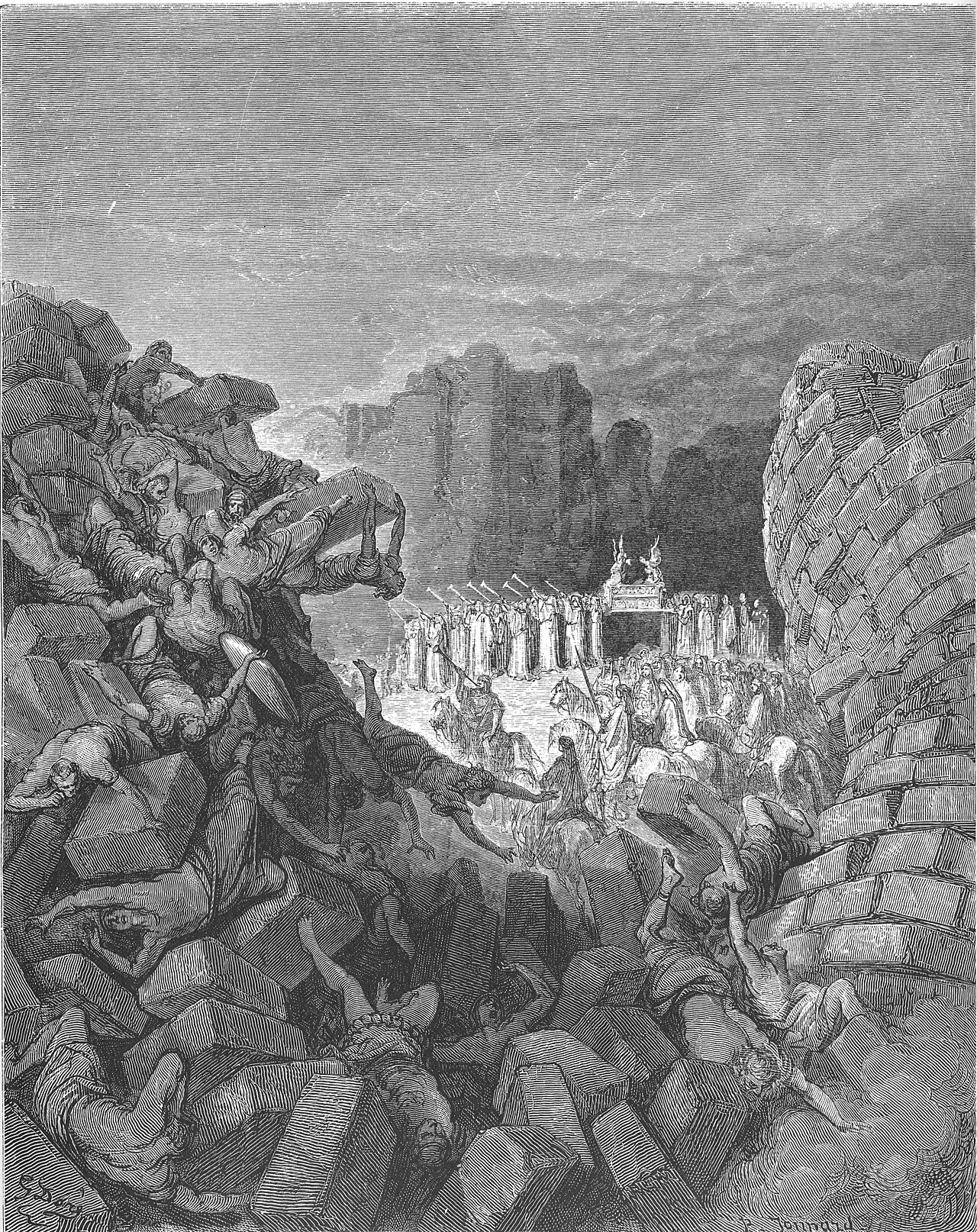
This page draws on John Damascene, ON DIVINE IMAGES 3.23; John Gill, Exposition of the Old Testament (1748-1763); John Gill, Exposition of the Old Testament and Matthew Henry, Commentary on the Whole Bible.