
Jeremiah 28:1
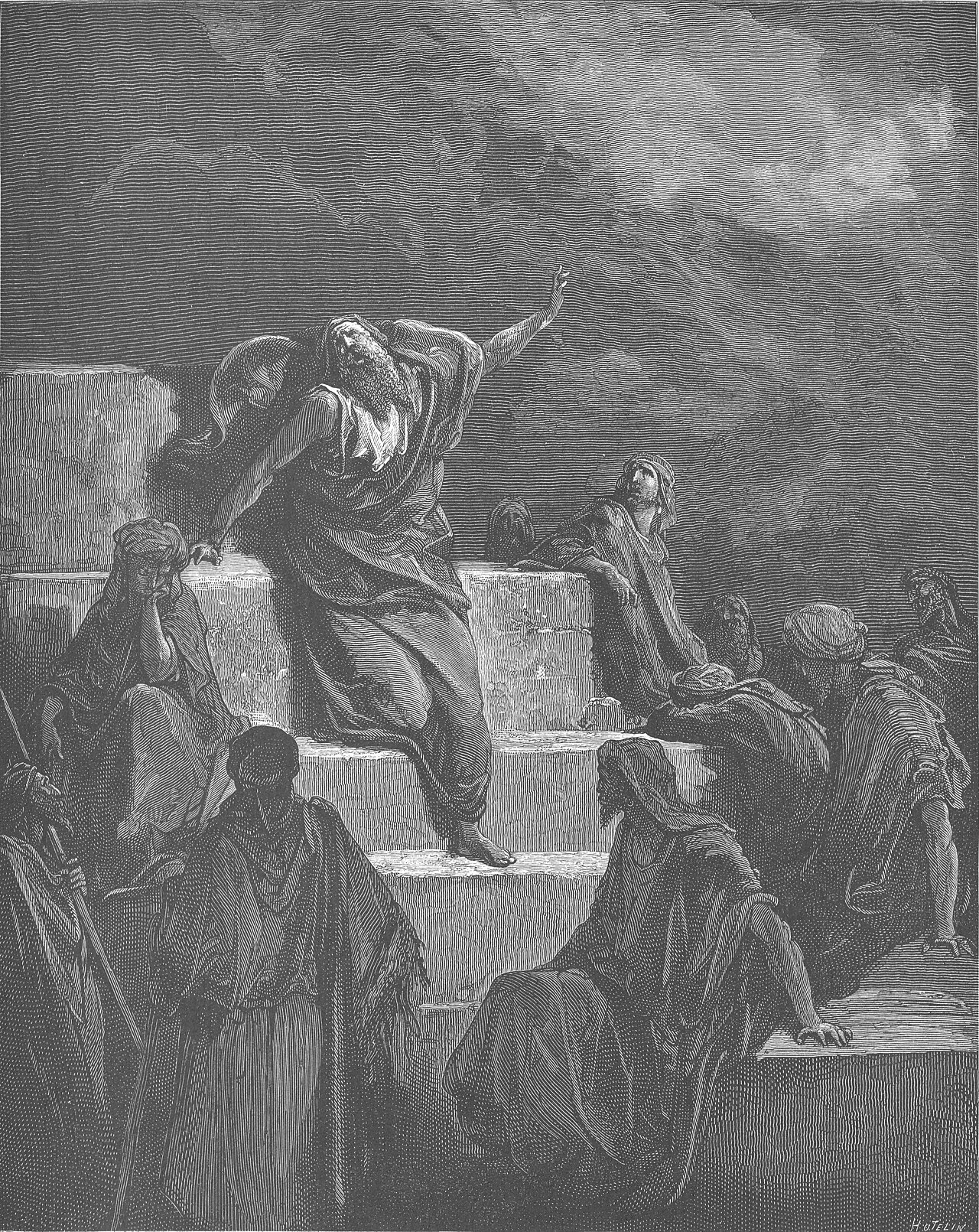
in Jeremiah 28In the fifth month of that same year, the fourth year, near the beginning of the reign of King Zedekiah of Judah, the prophet Hananiah son of Azzur, who was from Gibeon, said to me in the house of the LORD in the presence of the priests and all the people:
BSB
The same verse in ASV and KJV ▾
ASV
And it came to pass the same year, in the beginning of the reign of Zedekiah king of Judah, in the fourth year, in the fifth month, that Hananiah the son of Azzur, the prophet, who was of Gibeon, spake unto me in the house of Jehovah, in the presence of the priests and of all the people, saying,
KJV
And it came to pass the same year, in the beginning of the reign of Zedekiah king of Judah, in the fourth year, and in the fifth month, that Hananiah the son of Azur the prophet, which was of Gibeon, spake unto me in the house of the Lord, in the presence of the priests and of all the people, saying,
⋯
This verse in Jeremiah 28
Commentary
9 notes on this verseA commentator
Albert Barnes1798–1870
Notes, Explanatory and Practical, on the Old and New Testaments (1832-1869)
In the beginning ... Zedekiah - Probably a gloss put into the margin to explain “the same year,” from where it has crept into the text. Gibeon - A city of priests Jos 21:17. Hananiah was probably a priest as well as a prophet. He chose either a Sabbath or a new moon, that he might confront Jeremiah not only in the presence of the priests, but also of all the people. He used Jer 28:2 the solemn formula which claims direct inspiration.
This site's exposition
Hananiah the son of Azur the prophet, which was of Gibeon
The date is precise, the fourth year and fifth month of Zedekiah, and the setting is public, the house of the Lord, in the presence of the priests and of all the people, the same courtyard where Jeremiah had worn the yoke of chapter 27. Hananiah is named as of Gibeon, a levitical city, which the bench takes as a hint he may have come from priestly stock himself before turning false prophet, though the text does not say so directly. The confrontation is staged to happen in the open, prophet against prophet before the same witnesses.
The record, by era
The Church Fathers1 voice
(Chapter 28, Verses 1 onwards) In that year, at the beginning of the reign of King Zedekiah of Judah, in the fourth year, in the fifth month, Ananias son of Azur, a prophet from Gibeon, spoke to me in the house of the Lord, in the presence of the priests and all the people. He said: Thus says the Lord of hosts, the God of Israel: I have broken the yoke of the king of Babylon. Within two years, I will bring back all the vessels of the Lord to this place.
The Reformation1 voice
And it came to pass the same year, in the beginning of the reign of Zedekiah king of Judah, in the fourth year, and in the fifth month, that Hananiah the son of Azur the prophet, which was of Gibeon, spake unto me in the house of the LORD, in the presence of the priests, and of all the people, saying,
quarantine:scripture (2026-07-29) — verbatim-scripture
The Puritans and the Awakening3 voices
The fourth year - Perhaps the fourth year of the sabbatical course is here intended. Of Gibeon - it is probable from the place where he lived, which was one of the cities of the priests; that he was a priest.
) and his death the seventh. Good men may perhaps be suddenly taken off by death in the midst of their days, and in mercy to them, as Josiah was; but this being foretold as the punishment of his sin, and coming to pass accordingly, it may safely be construed as a testimony from Heaven against him and a confirmation of Jeremiah's mission.
quarantine:debris (2026-07-29) — leading-punctuation+unbalanced-parens
And it came to pass the same year,....
2 more voices on this verse
The Nineteenth Century2 voices
A commentator
Jamieson, Fausset & Brown1802–1910
Commentary Critical and Explanatory on the Whole Bible (1871)
proposed
Hananiah--Another of this name was one of the three godly youths who braved Nebuchadnezzar's wrath in the fear of God (Da 1:6, 7; Probably a near relation, for Azariah is associated with him; as Azur with the Hananiah here. The godly and ungodly are often in the same family (Eze 18:14-20).
quarantine:debris (2026-07-29) — unbalanced-parens
And it came to pass the same year - the fifth month - Which commenced with the first new moon of August, according to our calendar. This verse gives the precise date of the prophecy in the preceding chapter; and proves that Zedekiah, not Jehoiakim, is the name that should be read in the first verse of that chapter. Hananiah the son of Azur the prophet - One who called himself a prophet; who pretended to be in commerce with the Lord, and to receive revelations from him. He was probably a priest; for he was of Gibeon, a sacerdotal city in the tribe of Benjamin.
How the passage was read
What the Jewish commentators add
And it came to pass in that year When that time arrived that Nebuchadnezzar gave Zedekiah dominion over the five kings to whom Jeremiah stated his message and sent the thongs and the bars to the kings by the hand of their ambassadors.
This section is reception history: how the passage was read and kept in the Jewish tradition. Where a reading parts from an essential of the Christian faith, the section says so at that point.
Texts and citation data: Sefaria; each excerpt follows its version’s licence. 6 further sources are cited on this chapter that carry no English text this site may quote or only restate the verse.
The words behind it
27 Hebrew wordsEvery Hebrew word of this verse in the order it stands, with what it means and the door to its own study. The last column counts the times a word stands in the whole Bible: the rarer the word, the more the places it appears belong together.
| Hebrew | Sound | Meaning | Word study | In the Bible |
|---|---|---|---|---|
| וַיְהִ֣י׀ | vayhi | and it was | H1961 → | 3559 times |
| בַּשָּׁנָ֣ה | bashanah | in the year | H8141 → | 877 times |
| הַהִ֗יא | hahi' | <the> that | H1931 → | 1879 times |
| בְּרֵאשִׁית֙ | bereshit | in [the] beginning of | H7225 → | 51 times |
| מַמְלֶ֙כֶת֙ | mamlekhet | [the] reign of | H4467 → | 117 times |
| צִדְקִיָּ֣ה | tzidkiyah | Zedekiah | H6667 → | 63 times |
| מֶֽלֶךְ־ | melekh- | [the] king of | H4428 → | 2525 times |
| יְהוּדָ֔ה | yehudah | Judah | H3063 → | 819 times |
| בַּשָּׁנָה֙ | bishnat | in the year | H8141 → | 877 times |
| הָֽרְבִעִ֔ית | hareviit | <the> fourth | H7243 → | 56 times |
| בַּחֹ֖דֶשׁ | bachodesh | in the month | H2320 → | 284 times |
| הַחֲמִישִׁ֑י | hachamishi | <the> fifth | H2549 → | 45 times |
| אָמַ֣ר | ʾamar | he said | H559 → | 5305 times |
| אֵלַ֡י | ʾelai | to me | H413 → | 5510 times |
| חֲנַנְיָה֩ | chananyah | Hananiah | H2608 → | 29 times |
| בֶן־ | ven- | [the] son of | H1121 → | 4930 times |
| עַזּ֨וּר | ʾazur | Azzur | H5809 → | |
| הַנָּבִ֜יא | hanavi' | the prophet | H5030 → | 314 times |
| אֲשֶׁ֤ר | ʾasher | who | H834 → | 5497 times |
| מִגִּבְעוֹן֙ | migivon | [was] from Gibeon | H1391 → | 38 times |
| בְּבֵ֣ית | beveit | in [the] house of | H1004 → | 2046 times |
| יְהוָ֔ה | yahweh | Yahweh | H3068 → | 6520 times |
| לְעֵינֵ֧י | leeinei | to [the] eyes of | H5869 → | 887 times |
| הַכֹּהֲנִ֛ים | hakohanim | the priests | H3548 → | 750 times |
| וְכָל־ | vekhol | and all | H3605 → | 5413 times |
| הָעָ֖ם | haam | the people | H5971 → | 1873 times |
| לֵאמֹֽר׃ | lemor | <to> saying | H559 → | 5305 times |
וַיְהִ֣י׀and it was
vayhiH1961 →3559 times
בַּשָּׁנָ֣הin the year
bashanahH8141 →877 times
הַהִ֗יא<the> that
hahi'H1931 →1879 times
בְּרֵאשִׁית֙in [the] beginning of
bereshitH7225 →51 times
מַמְלֶ֙כֶת֙[the] reign of
mamlekhetH4467 →117 times
צִדְקִיָּ֣הZedekiah
tzidkiyahH6667 →63 times
מֶֽלֶךְ־[the] king of
melekh-H4428 →2525 times
יְהוּדָ֔הJudah
yehudahH3063 →819 times
בַּשָּׁנָה֙in the year
bishnatH8141 →877 times
הָֽרְבִעִ֔ית<the> fourth
hareviitH7243 →56 times
בַּחֹ֖דֶשׁin the month
bachodeshH2320 →284 times
הַחֲמִישִׁ֑י<the> fifth
hachamishiH2549 →45 times
אָמַ֣רhe said
ʾamarH559 →5305 times
אֵלַ֡יto me
ʾelaiH413 →5510 times
חֲנַנְיָה֩Hananiah
chananyahH2608 →29 times
בֶן־[the] son of
ven-H1121 →4930 times
עַזּ֨וּרAzzur
ʾazurH5809 →
הַנָּבִ֜יאthe prophet
hanavi'H5030 →314 times
אֲשֶׁ֤רwho
ʾasherH834 →5497 times
מִגִּבְעוֹן֙[was] from Gibeon
migivonH1391 →38 times
בְּבֵ֣יתin [the] house of
beveitH1004 →2046 times
יְהוָ֔הYahweh
yahwehH3068 →6520 times
לְעֵינֵ֧יto [the] eyes of
leeineiH5869 →887 times
הַכֹּהֲנִ֛יםthe priests
hakohanimH3548 →750 times
וְכָל־and all
vekholH3605 →5413 times
הָעָ֖םthe people
haamH5971 →1873 times
לֵאמֹֽר׃<to> saying
lemorH559 →5305 times
A shaded row is a word that stands 400 times or fewer in the Bible.
The walk
8 stopsEach card is a verse this one points to, and under it the verses that one points to in turn. Where several paths arrive at the same place, that place is listed first: the text keeps returning to it.
Through
Joshua 9:3But the people of Gibeon, having heard what Joshua had done to Jericho and Ai,
it leads to
- Joshua 10:2
So Adoni-zedek and his people were greatly alarmed, because Gibeon was a great city, like one of the royal cities; it was larger than Ai, and all its men were mighty.
- Joshua 9:17
So the Israelites set out and on the third day arrived at their cities—Gibeon, Chephirah, Beeroth, and Kiriath-jearim.
- 2 Samuel 21:1–2
During the reign of David there was a famine for three successive years, and David sought the face of the LORD. And the LORD said, “It is because of the blood shed by Saul…
- Joshua 10:2
Through
Jeremiah 27:12And to Zedekiah king of Judah I spoke the same message: “Put your necks under the yoke of the king of Babylon; serve him and his people, and live!
it leads to
- Jeremiah 38:17
Then Jeremiah said to Zedekiah, “This is what the LORD God of Hosts, the God of Israel, says: ‘If you indeed surrender to the officers of the king of Babylon, then you will live,…
- Proverbs 1:33
But whoever listens to me will dwell in safety, secure from the fear of evil.”
- Jeremiah 27:2–3
This is what the LORD said to me: “Make for yourself a yoke out of leather straps and put it on your neck.
- Jeremiah 38:17
Through
Jeremiah 28:11And in the presence of all the people Hananiah proclaimed, “This is what the LORD says: ‘In this way, within two years I will break the yoke of Nebuchadnezzar king of Babylon off the…
it leads to
- Proverbs 14:7
Stay away from a foolish man; you will gain no knowledge from his speech.
- 2 Chronicles 18:22–23
So you see, the LORD has put a lying spirit in the mouths of these prophets of yours, and the LORD has pronounced disaster against you.”
- Proverbs 14:7
Where this verse is studied
On this page
Studies1
About Jeremiah
Who and where
2 names in this verse with a page on the site.
- PersonPatriarchsJudahJacob's fourth son who pledges himself for Benjamin; the tribe that carries the scepter to Shiloh (49:10) and the line to Christ (…
- PersonExileZedekiahJudah's last king, who broke his oath to Babylon against Jeremiah's word; his sons slain before his eyes at Riblah, and the city a…
This page draws on 9 works. Open the list of works
This page draws on Adam Clarke, Commentary on the Bible; Albert Barnes, Notes, Explanatory and Practical, on the Old and New Testaments (1832-1869); Jamieson, Fausset & Brown, Commentary Critical and Explanatory on the Whole Bible; Jerome, Commentary on Jeremiah; John Calvin, Commentaries; John Gill, Exposition of the Old Testament; John Gill, Exposition of the Old Testament (1748-1763); John Wesley, Explanatory Notes upon the Old Testament and Matthew Henry, Commentary on the Whole Bible.