
Judges 14:18
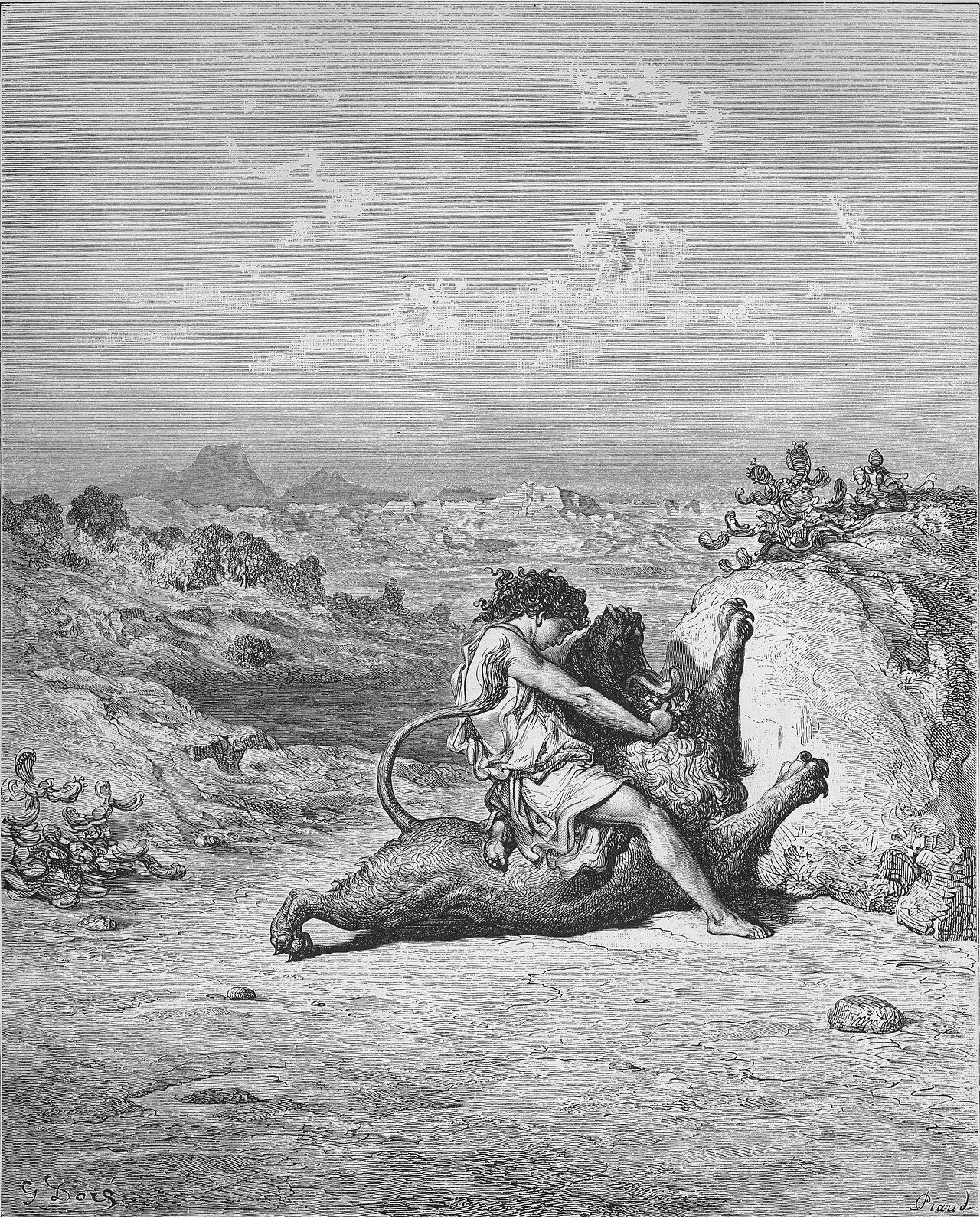
in Judges 14Before sunset on the seventh day, the men of the city said to Samson: “What is sweeter than honey? And what is stronger than a lion?” So he said to them: “If you had not plowed with my heifer, you would not have solved my riddle!”
BSB
The same verse in ASV and KJV ▾
ASV
And the men of the city said unto him on the seventh day before the sun went down, What is sweeter than honey? and what is stronger than a lion? And he said unto them, If ye had not plowed with my heifer, Ye had not found out my riddle.
KJV
And the men of the city said unto him on the seventh day before the sun went down, What is sweeter than honey? and what is stronger than a lion? And he said unto them, If ye had not plowed with my heifer, ye had not found out my riddle.
⋯
This verse in Judges 14
Commentary
11 notes on this verseIf ye had not ploughed with my heifer - If my wife had not been unfaithful to my bed, she would not have been unfaithful to my secret; and, you being her paramours, your interest was more precious to her than that of her husband. She has betrayed me through her attachment to you. Calmet has properly remarked, in quoting the Septuagint, that to plough with one’s heifer, or to plough in another man’s ground, are delicate turns of expression used both by the Greeks and Latins, as well as the Hebrews, to point out a wife’s infidelities.
This site's exposition
What is sweeter than honey
They answer in the riddle's own two-line shape, naming the honey and the lion and leaving out the carcass, as far as the wife's information could carry them. The wager stood until “Before sunset on the seventh day”. Adam Clarke takes “plowed with my heifer” as a charge of infidelity, while Keil and Delitzsch read the narrower charge that they worked on his wife to reach him.
The record, by era
The Church Fathers4 voices
Let us see further what kind of a parable Samson proposed to the strangers. "Out of the eater came forth food," he said, "and out of the strong came forth sweetness." This parable was revealed, carried to friends and solved. Samson was defeated. If he …
"What," answer they, "is sweeter than honey, and what is stronger than a lion?" To which he replied: "If ye had not farmed with my heifer, you would not have found out my riddle." O divine mystery! O manifest sacrament! we have escaped from the slayer, we have overcome the strong one. The food of life is now there, where before was the hunger of a miserable death. Dangers are changed into safety, bitterness into sweetness. Grace came forth from the offence, power from weakness, and life from death. There are, however, who think on the other hand that the wedlock could not have been established unless the lion of the tribe of Judah had been slain; and so in His body, that is, the Church, bees were found who store up the honey of wisdom, because after the Passion of the Lord the apostles believed more fully. This lion, then, Samson as a Jew slew, but in it he found honey, as in the figure of the heritage which was to be redeemed, that the remnant might be saved according to the election of grace. "And the Spirit of the Lord," it is said, "came upon him, and he went down to Ascalon, and smote thirty men of them." For he could not fail to carry off the victory who saw the mysteries. And so in the garments they receive the reward of wisdom, the badge of intercourse, who resolve and answer the riddle.
As to the question implied in the words "Out of the eater came forth food, and out of the strong came forth sweetness," what else does it signify but Christ rising from the dead? Truly, out of the eater, that is, from death which devours …
Who ever was mightier or more richly endowed from his very cradle with God's Spirit than Samson the Nazarite? Yet was he betrayed by a woman, and by her means failed to retain God's favour... But it happened on a certain day that a nuptial feast was held, and that the young men inspirited by the banquet provoked each other to sport by question and answer, and as they assailed each other with wanton jests, as is the wont on such occasions, the contest of pleasure waxed hot.
The Puritans and the Awakening1 voice
If ye had not &c. - If you had not employed my wife to find it out, as men plough up the ground with an heifer, thereby discovering its hidden parts; he calls her heifer, because she was joined with him in the same yoke.
4 more voices on this verse
The Puritans and the Awakening2 voices
): What is sweeter than honey, or a better meat? What is stronger than a lion, or a greater devourer? Samson generously owns they had won the wager, though he had good reason to dispute it, because they had not declared the riddle, as the bargain was (
quarantine:debris (2026-07-29) — leading-punctuation
And the men of the city said unto him, on the seventh day, before the sun went down,.... And so soon, enough to free them from the obligation they otherwise would have been under, to have given him the sheets and changes of raiment agreed unto: what is sweeter than honey? nothing, at least that was known, sugar not being invented. Julian the emperor (n), in commendation of figs, shows, from various authors, that nothing is sweeter than they, excepting honey: and what is stronger than a lion? no creature is, it is the strongest among beasts, Pro 30:
The Nineteenth Century2 voices
A commentator
Jamieson, Fausset & Brown1802–1910
Commentary Critical and Explanatory on the Whole Bible (1871)
I will now put forth a riddle--Riddles are a favorite Oriental amusement at festive entertainments of this nature, and rewards are offered to those who give the solution. Samson's riddle related to honey in the lion's carcass. The prize he offered was thirty sindinim, or shirts, and thirty changes of garments, probably woolen.
A commentator
Albert Barnes1798–1870
Notes, Explanatory and Practical, on the Old and New Testaments (1832-1869)
proposed
They try to give the answer in a way to make it appear that they had guessed it. Samson saw at once that she had betrayed him. He lets them know in a speech, which was of the nature of a riddle, that he had discovered the treachery.
How the passage was read
What the Jewish commentators add
On the verses either side of this one
The seven days. What remained of the seven days, after the fourth day.
This section is reception history: how the passage was read and kept in the Jewish tradition. Where a reading parts from an essential of the Christian faith, the section says so at that point.
Texts and citation data: Sefaria; each excerpt follows its version’s licence. 4 further sources are cited on this chapter that carry no English text this site may quote or only restate the verse.
The words behind it
23 Hebrew wordsEvery Hebrew word of this verse in the order it stands, with what it means and the door to its own study. The last column counts the times a word stands in the whole Bible: the rarer the word, the more the places it appears belong together.
| Hebrew | Sound | Meaning | Word study | In the Bible |
|---|---|---|---|---|
| וַיֹּ֣אמְרוּ | vaiyomeru | and they said | H559 → | 5305 times |
| לוֹ֩ | lo | to <the> him | ||
| אַנְשֵׁ֨י | ʾanshei | [the] men of | H582 → | 566 times |
| הָעִ֜יר | hair | the city | H5892 → | 1090 times |
| בַּיּ֣וֹם | baiyom | on the day | H3117 → | 2304 times |
| הַשְּׁבִיעִ֗י | hashevii | <the> seventh | H7637 → | 98 times |
| בְּטֶ֙רֶם֙ | beterem | <in> before | H2962 → | |
| יָבֹ֣א | yavo' | it went | H935 → | 2568 times |
| הַחַ֔רְסָה | hacharsah | the sun <towards> | H2775 → | |
| מַה־ | mah- | what? | H4100 → | 752 times |
| מָּת֣וֹק | matok | [is] sweet | H4966 → | |
| מִדְּבַ֔שׁ | midevash | more than honey | H1706 → | 54 times |
| וּמֶ֥ה | umeh | and what? | H4100 → | 752 times |
| עַ֖ז | ʾaz | [is] strong | H5794 → | |
| מֵאֲרִ֑י | meari | more than a lion | H738 → | 80 times |
| וַיֹּ֣אמֶר | vaiyomer | and he said | H559 → | 5305 times |
| לָהֶ֔ם | lahem | to <the> them | ||
| לוּלֵא֙ | lule' | if not | H3884 → | |
| חֲרַשְׁתֶּ֣ם | charashtem | you had plowed | H2790 → | 74 times |
| בְּעֶגְלָתִ֔י | beeglati | with heifer my | H5697 → | |
| לֹ֥א | lo' | not | H3808 → | 5168 times |
| מְצָאתֶ֖ם | metzatem | you found out | H4672 → | 455 times |
| חִידָתִֽי׃ | chidati | riddle my | H2420 → | 17 times |
וַיֹּ֣אמְרוּand they said
vaiyomeruH559 →5305 times
לוֹ֩to <the> him
lo
אַנְשֵׁ֨י[the] men of
ʾansheiH582 →566 times
הָעִ֜ירthe city
hairH5892 →1090 times
בַּיּ֣וֹםon the day
baiyomH3117 →2304 times
הַשְּׁבִיעִ֗י<the> seventh
hasheviiH7637 →98 times
בְּטֶ֙רֶם֙<in> before
beteremH2962 →
יָבֹ֣אit went
yavo'H935 →2568 times
הַחַ֔רְסָהthe sun <towards>
hacharsahH2775 →
מַה־what?
mah-H4100 →752 times
מָּת֣וֹק[is] sweet
matokH4966 →
מִדְּבַ֔שׁmore than honey
midevashH1706 →54 times
וּמֶ֥הand what?
umehH4100 →752 times
עַ֖ז[is] strong
ʾazH5794 →
מֵאֲרִ֑יmore than a lion
meariH738 →80 times
וַיֹּ֣אמֶרand he said
vaiyomerH559 →5305 times
לָהֶ֔םto <the> them
lahem
לוּלֵא֙if not
lule'H3884 →
חֲרַשְׁתֶּ֣םyou had plowed
charashtemH2790 →74 times
בְּעֶגְלָתִ֔יwith heifer my
beeglatiH5697 →
לֹ֥אnot
lo'H3808 →5168 times
מְצָאתֶ֖םyou found out
metzatemH4672 →455 times
חִידָתִֽי׃riddle my
chidatiH2420 →17 times
A shaded row is a word that stands 400 times or fewer in the Bible.
Where this verse is studied
On this page
Studies1
About Judges
Who and where
1 name in this verse with a page on the site.
This page draws on 11 works. Open the list of works
This page draws on Adam Clarke, Commentary on the Bible; Albert Barnes, Notes, Explanatory and Practical, on the Old and New Testaments (1832-1869); Ambrose of Milan, On the Holy Spirit 2, Introduction, 8-10; Ambrose of Milan, Letter 19.8,15-17; Caesarius of Arles, SERMON 118.2; Caesarius of Arles, SERMON 118.3; Jamieson, Fausset & Brown, Commentary Critical and Explanatory on the Whole Bible; John Gill, Exposition of the Old Testament (1748-1763); John Wesley, Explanatory Notes upon the Old Testament; Keil and Delitzsch, Biblical Commentary on the Old Testament: Joshua, Judges, Ruth and Matthew Henry, Commentary on the Whole Bible.