
Isaiah 7:23
in Isaiah 7And on that day, in every place that had a thousand vines worth a thousand shekels of silver, only briers and thorns will be found.
BSB
The same verse in ASV and KJV ▾
ASV
And it shall come to pass in that day, that every place, where there were a thousand vines at a thousand silverlings, shall be for briers and thorns.
KJV
And it shall come to pass in that day, that every place shall be, where there were a thousand vines at a thousand silverlings, it shall even be for briers and thorns.
⋯
This verse in Isaiah 7
Commentary
8 notes on this verseThird, from the scarcity of men. First, in the worthlessness of their property: every place where there were a thousand vines: buy a field for money, and take witnesses, whereas the city is given into the hands of the Chaldeans (Jer 32:25); I passed by …
This site's exposition
a thousand vines worth a thousand
on Isaiah 7:23-25
Land of "a thousand vines worth a thousand shekels of silver" will grow only "briers and thorns." Hills "once tilled by the hoe" return to pasture, farmland undone by the invasion. The oracle that opened with a king's fear of an army ends with the land gone back to wilderness.
The record, by era
The Church Fathers1 voice
(Verse 21 onwards) And it shall come to pass on that day, a man shall nurture a cow of oxen, and two sheep, and because of the abundance of milk, he shall eat butter; for everyone who is left in the midst of the land shall eat butter and honey. And it shall come to pass on that day, every place where a thousand vines were worth a thousand silver shekels, there shall be thorns and briers. With arrows and bows they shall come there, for thorns and briers shall cover the whole land.
The Puritans and the Awakening3 voices
And it shall come to pass in that day; that every place shall be,.... Barren and unfruitful, for want of men to till the ground: where there were a thousand vines at a thousand silverlings; which were so good, as to be sold or let out for so many silver shekels (m); or the fruit of them came to such a price; see Son 8:11, it shall even be for briers and thorns; for want of persons to stock the ground and cultivate it. (m) Which was about two shillings and sixpence of our money.
Note, God can soon turn a fruitful land into barrenness; and it is just with him to turn vines into briers if we, instead of bringing forth grapes to him, bring forth wild grapes, ch.
The prophet Isaiah had his commission renewed in the year that king Uzziah died, ch. vi. Jotham his son reigned, and reigned well, sixteen years. All that time, no doubt, Isaiah prophesied as he was commanded, and yet we have not in this book any of his prophecies dated in the reign of Jotham; but this, which is put first, was in the days of Ahaz the son of Jotham.
The Nineteenth Century1 voice
A commentator
Albert Barnes1798–1870
Notes, Explanatory and Practical, on the Old and New Testaments (1832-1869)
The remainder of this chapter is a description of great desolation produced by the invasion of the Assyrians. “Where there were a thousand vines.” Where there was a valuable vineyard. In every place, that is, that was well cultivated and valuable. At a thousand silverlings - The word rendered ‘silvertings’ here - כסף keseph - denotes, properly, silver, of any amount. But it is also used to denote the silver coin which was in use among the Jews, the shekel.
1 more voice on this verse
The Nineteenth Century1 voice
A commentator
Jamieson, Fausset & Brown1802–1910
Commentary Critical and Explanatory on the Whole Bible (1871)
proposed
where there were, &c.--where up to that time there was so valuable a vineyard as to have in it a 1000 vines, worth a silverling (shekel, about 2s. 3d.; a large price) each, there shall be only briers (So 8:11). Vineyards are estimated by the number of the vines, and the goodness of the kind of vine.
quarantine:debris (2026-07-29) — starts-lowercase
The words behind it
16 Hebrew wordsEvery Hebrew word of this verse in the order it stands, with what it means and the door to its own study. The last column counts the times a word stands in the whole Bible: the rarer the word, the more the places it appears belong together.
| Hebrew | Sound | Meaning | Word study | In the Bible |
|---|---|---|---|---|
| וְהָיָה֙ | vehayah | and it will be | H1961 → | 3559 times |
| בַּיּ֣וֹם | baiyom | in the day | H3117 → | 2304 times |
| הַה֔וּא | hahu' | <the> that | H1931 → | 1879 times |
| יִֽהְיֶ֣ה | yihyeh | it will be | H1961 → | 3559 times |
| כָל־ | khol- | every | H3605 → | 5413 times |
| מָק֗וֹם | makom | place | H4725 → | 401 times |
| אֲשֶׁ֧ר | ʾasher | where | H834 → | 5497 times |
| יִֽהְיֶה־ | yihyeh- | it was | H1961 → | 3559 times |
| שָּׁ֛ם | sham | there | H8033 → | 834 times |
| אֶ֥לֶף | ʾelef | a thousand | H505 → | 505 times |
| גֶּ֖פֶן | gefen | vine[s] | H1612 → | 55 times |
| בְּאֶ֣לֶף | beelef | for a thousand | H505 → | 505 times |
| כָּ֑סֶף | kasef | silver | H3701 → | 403 times |
| לַשָּׁמִ֥יר | lashamir | <into> the thorn[s] | H8068 → | 11 times |
| וְלַשַּׁ֖יִת | velashayit | and <into> the> bush[es] | H7898 → | 7 times |
| יִֽהְיֶֽה׃ | yihyeh | it will become | H1961 → | 3559 times |
וְהָיָה֙and it will be
vehayahH1961 →3559 times
בַּיּ֣וֹםin the day
baiyomH3117 →2304 times
הַה֔וּא<the> that
hahu'H1931 →1879 times
יִֽהְיֶ֣הit will be
yihyehH1961 →3559 times
כָל־every
khol-H3605 →5413 times
מָק֗וֹםplace
makomH4725 →401 times
אֲשֶׁ֧רwhere
ʾasherH834 →5497 times
יִֽהְיֶה־it was
yihyeh-H1961 →3559 times
שָּׁ֛םthere
shamH8033 →834 times
אֶ֥לֶףa thousand
ʾelefH505 →505 times
גֶּ֖פֶןvine[s]
gefenH1612 →55 times
בְּאֶ֣לֶףfor a thousand
beelefH505 →505 times
כָּ֑סֶףsilver
kasefH3701 →403 times
לַשָּׁמִ֥יר<into> the thorn[s]
lashamirH8068 →11 times
וְלַשַּׁ֖יִתand <into> the> bush[es]
velashayitH7898 →7 times
יִֽהְיֶֽה׃it will become
yihyehH1961 →3559 times
A shaded row is a word that stands 400 times or fewer in the Bible.
The walk
8 stopsEach card is a verse this one points to, and under it the verses that one points to in turn. Where several paths arrive at the same place, that place is listed first: the text keeps returning to it.
Through
Matthew 21:33Listen to another parable: There was a landowner who planted a vineyard. He put a wall around it, dug a winepress in it, and built a tower. Then he rented it out to some…
it leads to
- Isaiah 5:1–4
I will sing for my beloved a song of his vineyard: My beloved had a vineyard on a very fertile hill.
- Mark 12:1–12
Then Jesus began to speak to them in parables: “A man planted a vineyard. He put a wall around it, dug a wine vat, and built a watchtower. Then he rented it out to…
- Luke 20:9–19
Then He proceeded to tell the people this parable: “A man planted a vineyard, rented it out to some tenants, and went away for a long time.
- Jeremiah 2:21
I had planted you like a choice vine from the very best seed. How could you turn yourself before Me into a rotten, wild vine?
- Song of Solomon 8:11–12
Solomon had a vineyard in Baal-hamon. He leased it to the tenants. For its fruit, each was to bring a thousand shekels of silver.
- Isaiah 5:1–4
Through
Isaiah 5:6I will make it a wasteland, neither pruned nor cultivated, and thorns and briers will grow up. I will command the clouds that rain shall not fall on it.”
it leads to
- Isaiah 7:23–25
And on that day, in every place that had a thousand vines worth a thousand shekels of silver, only briers and thorns will be found.
- Jeremiah 25:11
And this whole land will become a desolate wasteland, and these nations will serve the king of Babylon for seventy years.
- Isaiah 7:23–25
Through
Jeremiah 4:26I looked, and the fruitful land was a desert. All its cities were torn down before the LORD, before His fierce anger.
it leads to
- Psalms 107:34
and fruitful land into fields of salt, because of the wickedness of its dwellers.
- Psalms 107:34
Where this verse is studied
On this page
Studies10
About Isaiah
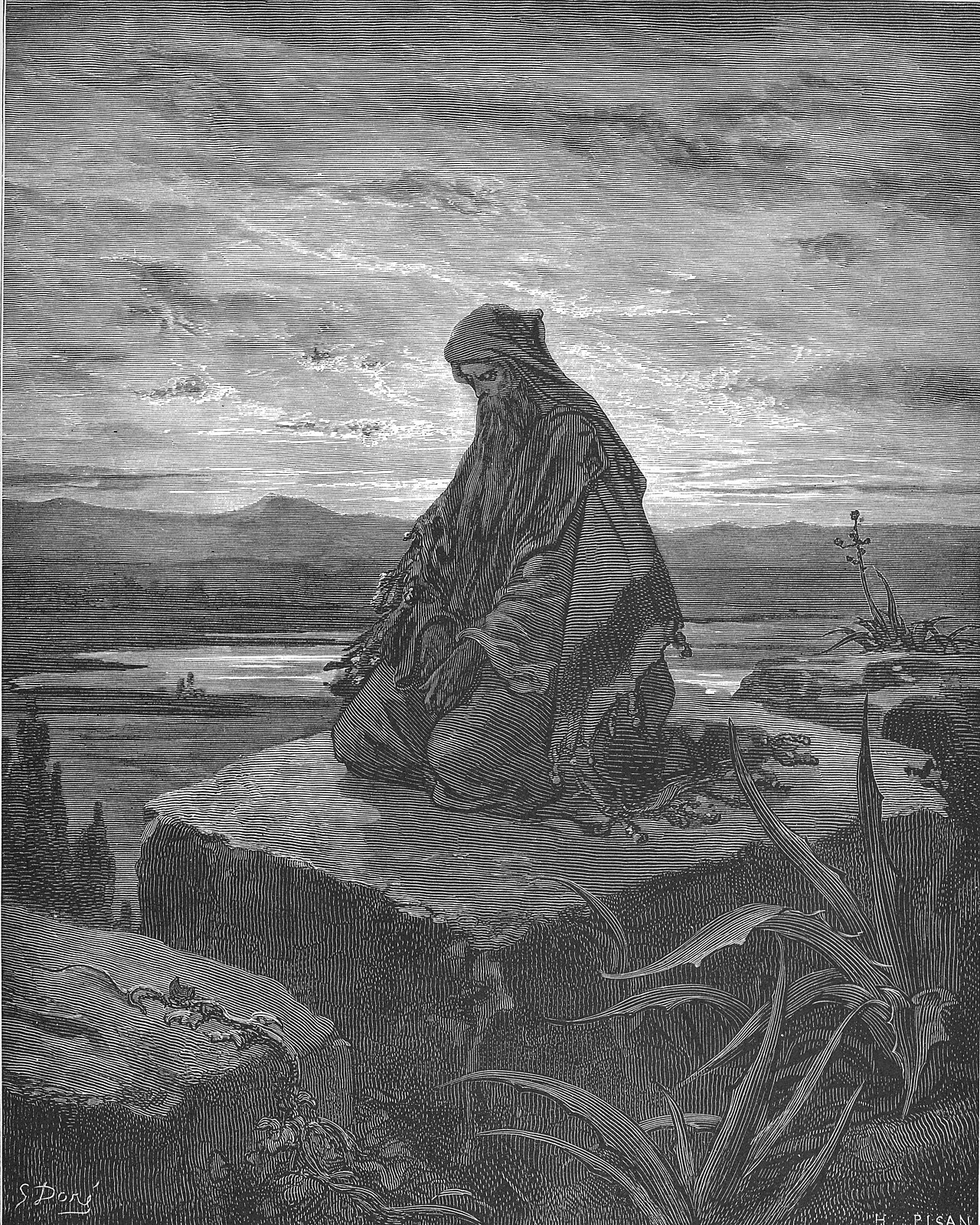
This page draws on Albert Barnes, Notes, Explanatory and Practical, on the Old and New Testaments (1832-1869); Jamieson, Fausset & Brown, Commentary Critical and Explanatory on the Whole Bible; Jerome, Commentary on Isaiah; John Gill, Exposition of the Old Testament; John Gill, Exposition of the Old Testament (1748-1763); Matthew Henry, Commentary on the Whole Bible and Thomas Aquinas, Commentary on Isaiah.