
Isaiah 54:2
in Isaiah 54“Enlarge the site of your tent, stretch out the curtains of your dwellings, do not hold back. Lengthen your ropes and drive your stakes in deep.
BSB
The same verse in ASV and KJV ▾
ASV
Enlarge the place of thy tent, and let them stretch forth the curtains of thy habitations; spare not: lengthen thy cords, and strengthen thy stakes.
KJV
Enlarge the place of thy tent, and let them stretch forth the curtains of thine habitations: spare not, lengthen thy cords, and strengthen thy stakes;
⋯
This verse in Isaiah 54
Commentary
8 notes on this verseLet us come to spiritual understanding. He who is in a tabernacle does not possess a firm and permanent dwelling; but he always changes places and hastens to go further, saying in the psalm: 'I will pass to the place of the wonderful tabernacle' (Ps. XLI, 5), forgetting the things that are past and extending himself into the future, until he reaches the reward of the heavenly calling. We read about this tabernacle and in another place: How lovely are your dwelling places, O LORD of hosts!
This site's exposition
Sing, O barren
on Isaiah 54:1-3
The command to sing falls on a woman who has neither borne children nor been married, and Paul quotes the verse at Galatians 4:27 of Sarah and the heavenly Jerusalem, a reading the New Testament itself supplies for the barren singing. The desolate woman's children are promised to outnumber the married wife's, an image the older commentators connect to Israel's return from exile and to a people gathered from the nations without setting the two readings against each other. Verse 2 answers the promise with a command to enlarge the tent and lengthen the cords, preparing room before the increase arrives rather than after it.
The record, by era
The Church Fathers1 voice
(Vers. 2, 3.) Dilata locum tentorii tui, et pelles tabernaculorum tuorum extende: ne parcas: longos fac funiculos tuos, et clavos tuos consolida. Ad dexteram enim et ad laevam penetrabis, et semen tuum gentes haereditabit, et civitates desertas inhabitabit. LXX: Dilata locum tabernaculi tui, et pelles aulaeorum tuorum fige, ne parcas. Protende funiculos, et clavos tuos conforta adhuc in dextris, et in sinistris dilata, et semen tuum possidebit gentes, et civitates desertas habitare facies. To whom he had said: Praise, O barren one, who does not bear; break the bonds by which you were previously bound, and shout in confession of the Lord, whom you did not have children with, now you are commanded the same as the likeness of the tent of Moses, which he once had (Exodus 36) in the desert, to expand his tent and stretch out his skins; and make longer cords and fix nails, with which the entire tent is formed, so that it may be firmly set and strengthened, lest it be dispersed by the blasts of the wind. And it should extend to both the right and the left, and by no means should it imitate the narrowness of the Jewish tabernacle, which measured one hundred cubits in length and fifty in width, nor should it be constrained by the brevity of the Temple, which had sixty cubits in length and twenty in width. But it should continue to have space on the right and on the left. (Exodus 27). And so that we may not think this can be said in vain concerning the frivolous contention of the Hebrews about Zion, which is to be restored to its ancient state by the Lord, he explains more clearly what was hidden: And your offspring shall inherit the nations. About which we also read in the Gospel: 'He went out who sows to sow' (Matthew XIII, 3); and again: 'Did you not sow good seed in your field?' (Ibid., 27)? […]
The Medieval Church1 voice
978. Second, he exhorts them to enlarge their place under the metaphor of a tent: enlarge the place, as to the ground over which the tent is extended; and stretch out the skins, with which it is covered; lengthen your cords, with which the stakes …
The Puritans and the Awakening3 voices
Thus it was in the first preaching of the gospel; it was the business of the apostles to disciple all nations, to stretch forth the curtains of the church's habitation, to preach the gospel where Christ had not yet been named ( Rom. xv.
quarantine:debris (2026-07-29) — unbalanced-parens
Enlarge the place of thy tent,....
That though sometimes God might seem to withdraw from her, and suspend the tokens of his favour, he would return in mercy and would not return to contend with them any more,
1 more voice on this verse
The Nineteenth Century1 voice
A commentator
Albert Barnes1798–1870
Notes, Explanatory and Practical, on the Old and New Testaments (1832-1869)
Enlarge the place of thy tent - The same idea occurs in Isa 49:19-20 (see the notes at that chapter). The curtains of thy habitations. The word ‘curtain’ does not quite express the sense here. It is commonly with us used to denote the cloth hanging round. a bed or at a window, which may be spread or drawn aside at pleasure, or the hanging in theaters to conceal the stage from the spectators.
How the passage was read
What the Jewish commentators add
On the verses either side of this one
Sing, you barren woman Jerusalem, who was as though she had not borne.
1 more on this passage, in their own words ▾
Sing, O Jerusalem, who was like a barren woman that beareth not; rejoice with praise and be glad, who was like a woman that conceiveth not: for more shall be the children of Jerusalem that was laid desolate, than of the inhabited city, saith the Lord.
This section is reception history: how the passage was read and kept in the Jewish tradition. Where a reading parts from an essential of the Christian faith, the section says so at that point.
Texts and citation data: Sefaria; each excerpt follows its version’s licence. 4 further sources are cited on this chapter that carry no English text this site may quote or only restate the verse.
The words behind it
12 Hebrew wordsEvery Hebrew word of this verse in the order it stands, with what it means and the door to its own study. The last column counts the times a word stands in the whole Bible: the rarer the word, the more the places it appears belong together.
| Hebrew | Sound | Meaning | Word study | In the Bible |
|---|---|---|---|---|
| הַרְחִ֣יבִי׀ | harchivi | enlarge | H7337 → | 25 times |
| מְק֣וֹם | mekom | [the] place of | H4725 → | 401 times |
| אָהֳלֵ֗ךְ | ʾoholekh | tent your | H168 → | 345 times |
| וִירִיע֧וֹת | viriot | and [the] tent curtains of | H3407 → | |
| מִשְׁכְּנוֹתַ֛יִךְ | mishkenotayikh | dwellings your | H4908 → | 139 times |
| יַטּ֖וּ | yatu | may people stretch out | H5186 → | 214 times |
| אַל־ | ʾal- | may not | H408 → | 724 times |
| תַּחְשֹׂ֑כִי | tachsokhi | you refrain | H2820 → | 28 times |
| הַאֲרִ֙יכִי֙ | haarikhi | make long | H748 → | 34 times |
| מֵֽיתָרַ֔יִךְ | meitarayikh | tent cords your | H4340 → | |
| וִיתֵדֹתַ֖יִךְ | vitedotayikh | and tent pegs your | H3489 → | 25 times |
| חַזֵּֽקִי׃ | chazeki | make strong | H2388 → | 291 times |
הַרְחִ֣יבִי׀enlarge
harchiviH7337 →25 times
מְק֣וֹם[the] place of
mekomH4725 →401 times
אָהֳלֵ֗ךְtent your
ʾoholekhH168 →345 times
וִירִיע֧וֹתand [the] tent curtains of
viriotH3407 →
מִשְׁכְּנוֹתַ֛יִךְdwellings your
mishkenotayikhH4908 →139 times
יַטּ֖וּmay people stretch out
yatuH5186 →214 times
אַל־may not
ʾal-H408 →724 times
תַּחְשֹׂ֑כִיyou refrain
tachsokhiH2820 →28 times
הַאֲרִ֙יכִי֙make long
haarikhiH748 →34 times
מֵֽיתָרַ֔יִךְtent cords your
meitarayikhH4340 →
וִיתֵדֹתַ֖יִךְand tent pegs your
vitedotayikhH3489 →25 times
חַזֵּֽקִי׃make strong
chazekiH2388 →291 times
A shaded row is a word that stands 400 times or fewer in the Bible.
The walk
8 stopsEach card is a verse this one points to, and under it the verses that one points to in turn. Where several paths arrive at the same place, that place is listed first: the text keeps returning to it.
Through
Jeremiah 10:20My tent is destroyed, and all its ropes are snapped. My sons have departed from me and are no more. I have no one left to pitch my tent or set up my curtains.
it leads to
- Jeremiah 4:20
Disaster after disaster is proclaimed, for the whole land is laid waste. My tents are destroyed in an instant, my curtains in a moment.
- Jeremiah 31:15
This is what the LORD says: “A voice is heard in Ramah, mourning and great weeping, Rachel weeping for her children, and refusing to be comforted, because they are no more.”
- Isaiah 49:20–22
Yet the children of your bereavement will say in your hearing, ‘This place is too small for us; make room for us to live here.’
- Jeremiah 4:20
Through
Exodus 35:18the tent pegs for the tabernacle and for the courtyard, along with their ropes;
it leads to
- Exodus 27:19
All the utensils of the tabernacle for every use, including all its tent pegs and the tent pegs of the courtyard, shall be made of bronze.
- Exodus 27:19
Through
Isaiah 33:20Look upon Zion, the city of our appointed feasts. Your eyes will see Jerusalem, a peaceful pasture, a tent that does not wander; its tent pegs will not be pulled up, nor will any…
it leads to
- Psalms 46:5
God is within her; she will not be moved. God will help her when morning dawns.
- Isaiah 32:18
Then my people will dwell in a peaceful place, in safe and secure places of rest.
- Psalms 78:68–69
But He chose the tribe of Judah, Mount Zion, which He loved.
- Psalms 128:5
May the LORD bless you from Zion, that you may see the prosperity of Jerusalem all the days of your life,
- Psalms 46:5
Where this verse is studied
On this page
About Isaiah
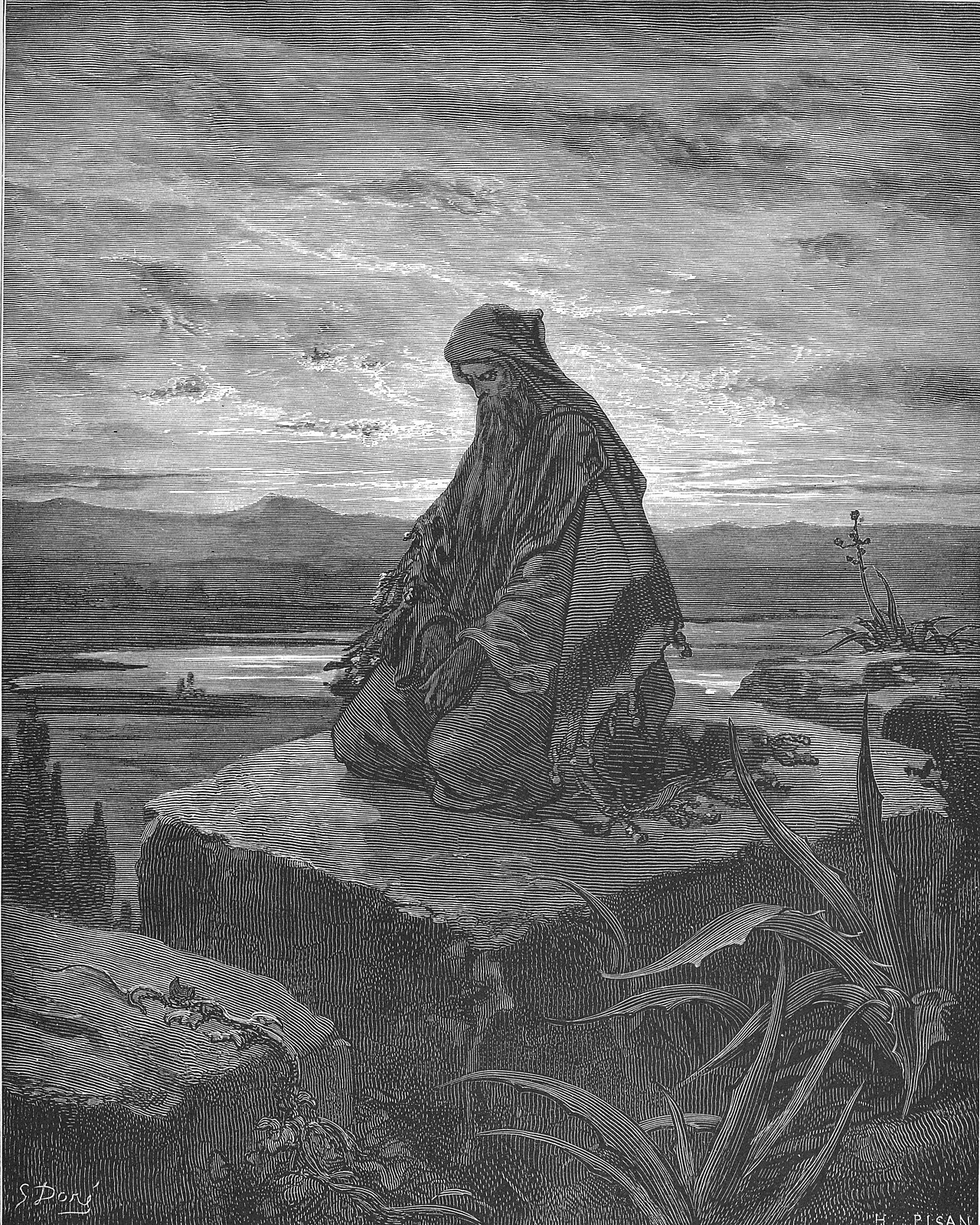
This page draws on Albert Barnes, Notes, Explanatory and Practical, on the Old and New Testaments (1832-1869); Franz Delitzsch, Biblical Commentary on the Prophecies of Isaiah; Jerome, Commentary on Isaiah; John Gill, Exposition of the Old Testament (1748-1763); Matthew Henry, Commentary on the Whole Bible and Thomas Aquinas, Commentary on Isaiah.