
Genesis 12:20
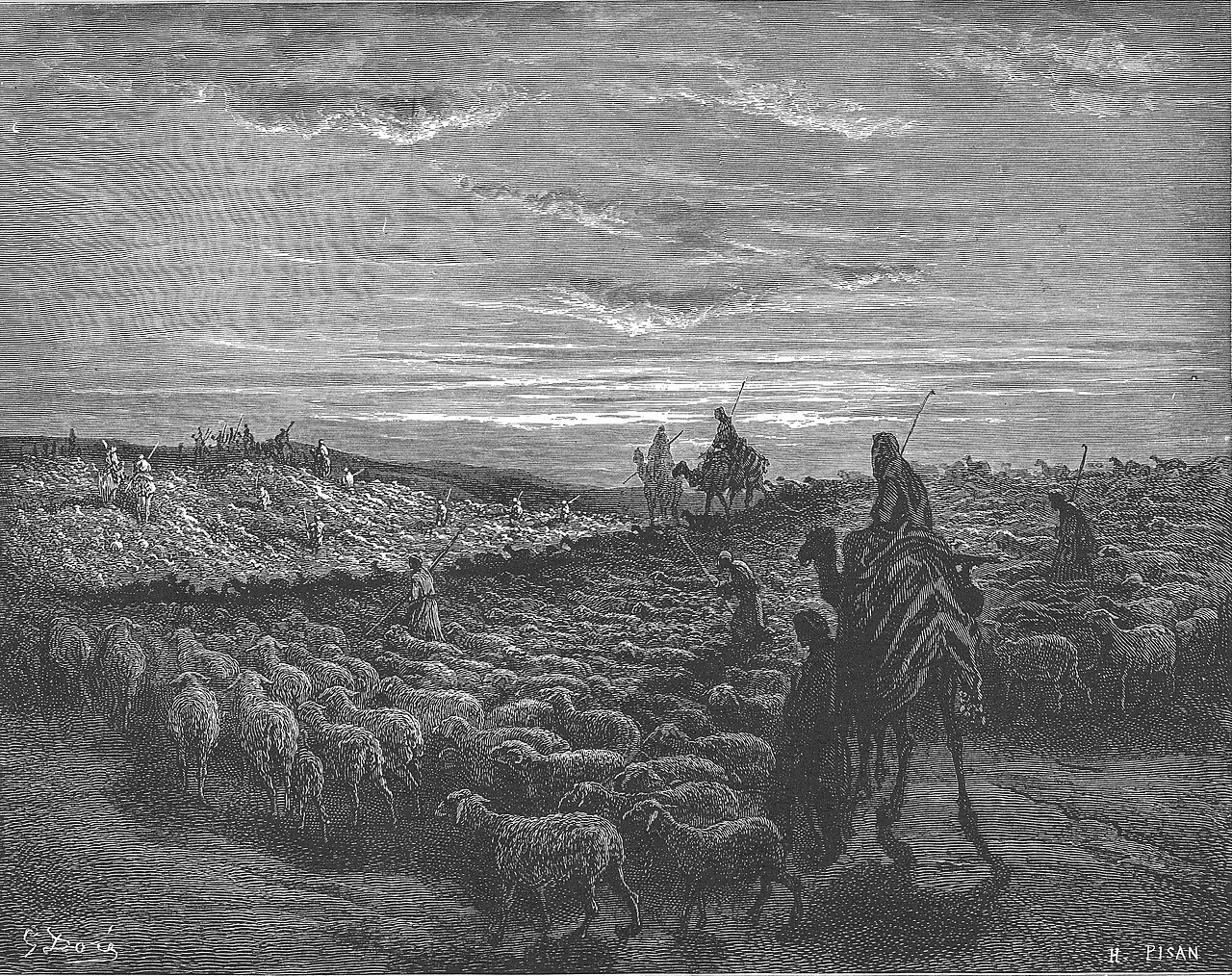
in Genesis 12Then Pharaoh gave his men orders concerning Abram, and they sent him away with his wife and all his possessions.
BSB
The same verse in ASV and KJV ▾
ASV
And Pharaoh gave men charge concerning him: and they brought him on the way, and his wife, and all that he had.
KJV
And Pharaoh commanded his men concerning him: and they sent him away, and his wife, and all that he had.
⋯
This verse in Genesis 12
Commentary
9 notes on this verseCommanded his men concerning him - Gave particular and strict orders to afford Abram and his family every accommodation for their journey; for having received a great increase of cattle and servants, it was necessary that he should have the favor of the king, and his permission to remove from Egypt with so large a property; hence, a particular charge is given to the officers of Pharaoh to treat him with respect, and to assist him in his intended departure. The weighty and important contents of this chapter demand our most attentive consideration.
This site's exposition
What have you done to me
on Genesis 12:18-20
The rebuke in this chapter comes from Pharaoh, and it is aimed at the man God had called. Pharaoh asks three questions and gives one order, take her and go. Abram answers nothing, and Scripture records no word from him here. Pharaoh's men send him out of Egypt with his wife and all he owned.
This site's exposition
they sent him away with his wife
John Wesley reads Pharaoh's orders as a guard, charging his men to do Abram no harm and to escort him out of the country. Adam Clarke adds that a man leaving Egypt with so much property needed the king's leave. Psalm 105:14 remembers God rebuking kings for them.
The record, by era
The Church Fathers1 voice
You would be right in applying to this just man those words that blessed David used of those who returned from the captivity in Babylon: "Though they sow in tears, they will reap in joy. They went their way and wept as they cast their seed, but in returning they will come in joy, carrying their sheaves aloft." Did you see his downward journey to be beset with worry and fear, with the fear of death heavy upon him? Now see his return marked by great prosperity and distinction! The just man now, you see, was an object of respect to everyone in Egypt and in Palestine. After all, who would have failed to show respect for the one who so enjoyed God's protection and was accorded such wonderful care? Quite likely what befell the king and his household escaped no one's attention. His purpose, you see, in permitting everything and in allowing the just man's trials to reach such a point was that his endurance might appear more conspicuous, his achievement might win the attention of the whole world, and no one would be unaware of the good man's virtue.Do you see, dearly beloved, the magnitude of the benefit coming from his trials? Do you see the greatness of the reward for his endurance? Do you see man and wife, advanced in age though they were, giving evidence of so much good sense, so much courage, so much affection for one another, such a bond of love? Let us all imitate this and never become dispirited or consider the onset of tribulations to be a mark of abandonment on God's part or an index of scorn. Rather, let us treat it as the clearest demonstration of God's providential care for us.
The Puritans and the Awakening4 voices
And Pharaoh commanded his men concerning him - That is, he charged them not to injure him in any thing. And he appointed them, when Abram was disposed to return home, after the famine, to conduct him safe out of the country, as his convoy.
Note, It is not enough for those in authority to do no hurt themselves, but they must restrain their servants, and those about them, from doing hurt. Or, [2.] He appointed them, when Abram was disposed to return home, after the famine, to conduct him safely out of the country, as his convoy.
quarantine:debris (2026-07-29) — unbalanced-parens
And Pharaoh commanded his men concerning him - That is, he charged them not to injure him in any thing. And he appointed them, when Abram was disposed to return home, after the famine, to conduct him safe out of the country, as his convoy.
And Pharaoh commanded his men concerning him,....
1 more voice on this verse
The Nineteenth Century1 voice
A commentator
Jamieson, Fausset & Brown1802–1910
Commentary Critical and Explanatory on the Whole Bible (1871)
Here is a most humiliating rebuke, and Abram deserved it. Had not God interfered, he might have been tempted to stay in Egypt and forget the promise (Ps 105:13, 15). Often still does God rebuke His people and remind them through enemies that this world is not their rest.
The words behind it
12 Hebrew wordsEvery Hebrew word of this verse in the order it stands, with what it means and the door to its own study. The last column counts the times a word stands in the whole Bible: the rarer the word, the more the places it appears belong together.
| Hebrew | Sound | Meaning | Word study | In the Bible |
|---|---|---|---|---|
| וַיְצַ֥ו | vaytzav | and he commanded | H6680 → | 494 times |
| עָלָ֛יו | ʾalav | on him | H5921 → | 5755 times |
| פַּרְעֹ֖ה | paroh | Pharaoh | H6547 → | 274 times |
| אֲנָשִׁ֑ים | ʾanashim | men | H582 → | 566 times |
| וַֽיְשַׁלְּח֥וּ | vayshalechu | and they sent away | H7971 → | 845 times |
| אֹת֛וֹ | ʾoto | <obj.> him | H853 → | 10935 times |
| וְאֶת־ | veet | and <obj.> | H853 → | 10935 times |
| אִשְׁתּ֖וֹ | ʾishto | wife his | H802 → | 781 times |
| וְאֶת־ | veet | and <obj.> | H853 → | 10935 times |
| כָּל־ | kol- | all | H3605 → | 5413 times |
| אֲשֶׁר־ | ʾasher- | that | H834 → | 5497 times |
| לֽוֹ׃ | lo | [belonged] to <the> him |
וַיְצַ֥וand he commanded
vaytzavH6680 →494 times
עָלָ֛יוon him
ʾalavH5921 →5755 times
פַּרְעֹ֖הPharaoh
parohH6547 →274 times
אֲנָשִׁ֑יםmen
ʾanashimH582 →566 times
וַֽיְשַׁלְּח֥וּand they sent away
vayshalechuH7971 →845 times
אֹת֛וֹ<obj.> him
ʾotoH853 →10935 times
וְאֶת־and <obj.>
veetH853 →10935 times
אִשְׁתּ֖וֹwife his
ʾishtoH802 →781 times
וְאֶת־and <obj.>
veetH853 →10935 times
כָּל־all
kol-H3605 →5413 times
אֲשֶׁר־that
ʾasher-H834 →5497 times
לֽוֹ׃[belonged] to <the> him
lo
A shaded row is a word that stands 400 times or fewer in the Bible.
The walk
8 stopsEach card is a verse this one points to, and under it the verses that one points to in turn. Where several paths arrive at the same place, that place is listed first: the text keeps returning to it.
Through
Proverbs 21:1The king’s heart is a waterway in the hand of the LORD; He directs it where He pleases.
it leads to
- Proverbs 16:9
A man’s heart plans his course, but the LORD determines his steps.
- Ezra 6:22
For seven days they kept the Feast of Unleavened Bread with joy, because the LORD had made them joyful and turned the heart of the king of Assyria toward them to strengthen their hands…
- Proverbs 20:24
A man’s steps are from the LORD, so how can anyone understand his own way?
- Acts 7:10
and rescued him from all his troubles. He granted Joseph favor and wisdom in the sight of Pharaoh king of Egypt, who appointed him ruler over Egypt and all his household.
- Proverbs 16:1
The plans of the heart belong to man, but the reply of the tongue is from the LORD.
- Proverbs 16:9
Through
Exodus 18:27Then Moses sent his father-in-law on his way, and Jethro returned to his own land.
it leads to
- Numbers 10:29–30
Then Moses said to Hobab, the son of Moses’ father-in-law Reuel the Midianite, “We are setting out for the place of which the LORD said: ‘I will give it to you.’ Come with us,…
- Judges 19:9
When the man got up to depart with his concubine and his servant, his father-in-law, the girl’s father, said to him, “Look, the day is drawing to a close. Please spend the night. See,…
- Genesis 31:55
Early the next morning, Laban got up and kissed his grandchildren and daughters and blessed them. Then he left to return home.
- Numbers 10:29–30
Where this verse is studied
On this page
Studies10
About Genesis
This page draws on Adam Clarke, Commentary on the Bible; Jamieson, Fausset & Brown, Commentary Critical and Explanatory on the Whole Bible; John Chrysostom, HOMILIES ON GENESIS 32.24-25; John Gill, Exposition of the Old Testament; John Gill, Exposition of the Old Testament (1748-1763); John Wesley, Explanatory Notes upon the Old Testament and Matthew Henry, Commentary on the Whole Bible.