
Ezra 9:15
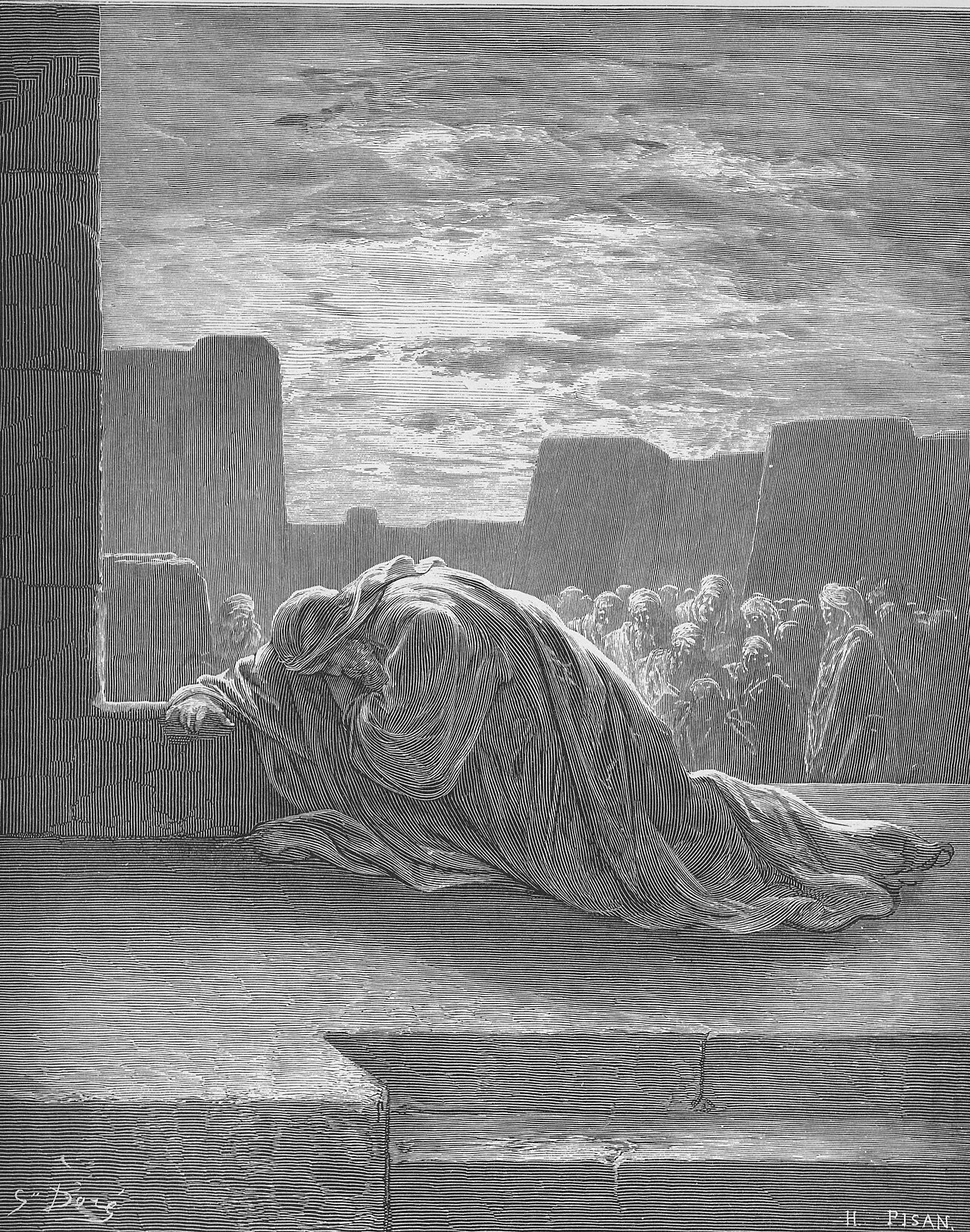
in Ezra 9O LORD, God of Israel, You are righteous! For we remain this day as a remnant. Here we are before You in our guilt, though because of it no one can stand before You.”
BSB
The same verse in ASV and KJV ▾
ASV
O Jehovah, the God of Israel, thou art righteous; for we are left a remnant that is escaped, as it is this day: behold, we are before thee in our guiltiness; for none can stand before thee because of this.
KJV
O Lord God of Israel, thou art righteous: for we remain yet escaped, as it is this day: behold, we are before thee in our trespasses: for we cannot stand before thee because of this.
⋯
This verse in Ezra 9
Commentary
3 notes on this verseA commentator
Albert Barnes1798–1870
Notes, Explanatory and Practical, on the Old and New Testaments (1832-1869)
Some take “righteous” to mean here “kind” or “merciful.” Others give it the more usual sense of “just,” and understand the full meaning of the passage to be, “Thou art righteous, and hast punished us, because of our sin, the contraction of forbidden marriages, so that we are a mere remnant of what was once a great people.”
This site's exposition
punished us less than our iniquities deserve
on Ezra 9:13-15
The confession names grace exactly: after all that is come upon us for our evil deeds and for our great trespass, thou our God hast punished us less than our iniquities deserve. Ezra asks the question the whole chapter has been building toward, should we again break thy commandments and join in affinity with the people of these abominations, and answers it himself: God's anger would leave no remnant nor escaping. The prayer ends without petition or resolution, O Lord God of Israel, thou art righteous, for we remain yet escaped and we cannot stand before thee because of this; the covenant's response comes only in the chapter that follows.
The record, by era
The Puritans and the Awakening1 voice
We are - We are here in thy presence, and so are all our sins; we are arraigning ourselves before thy tribunal, acknowledging thee to be just, if thou destroy us. Before thee - In judgment, as that word is often used, we must needs fall and perish at thy presence.
How the passage was read
What the Jewish commentators add
for we cannot lit. for there is nothing; i.e., we do not have the power of good deeds to stand and exist before You, because of this transgression.
This section is reception history: how the passage was read and kept in the Jewish tradition. Where a reading parts from an essential of the Christian faith, the section says so at that point.
Texts and citation data: Sefaria; each excerpt follows its version’s licence. 3 further sources are cited on this chapter that carry no English text this site may quote or only restate the verse.
The words behind it
19 Hebrew wordsEvery Hebrew word of this verse in the order it stands, with what it means and the door to its own study. The last column counts the times a word stands in the whole Bible: the rarer the word, the more the places it appears belong together.
| Hebrew | Sound | Meaning | Word study | In the Bible |
|---|---|---|---|---|
| יְהוָ֞ה | yahweh | O Yahweh | H3068 → | 6520 times |
| אֱלֹהֵ֤י | ʾelohei | [the] God of | H430 → | 2601 times |
| יִשְׂרָאֵל֙ | yisrael | Israel | H3478 → | 2507 times |
| צַדִּ֣יק | tzadik | [are] righteous | H6662 → | |
| אַ֔תָּה | ʾatah | you | H859 → | 1094 times |
| כִּֽי־ | ki- | for | H3588 → | 4482 times |
| נִשְׁאַ֥רְנוּ | nisharnu | we are left | H7604 → | 133 times |
| פְלֵיטָ֖ה | feleitah | an escaped remnant | H6413 → | 28 times |
| כְּהַיּ֣וֹם | kehaiyom | as the day | H3117 → | 2304 times |
| הַזֶּ֑ה | hazeh | <the> this | H2088 → | 1180 times |
| הִנְנ֤וּ | hinu | here we | H2005 → | |
| לְפָנֶ֙יךָ֙ | lefaneikha | [are] <to> before you | H6440 → | 2123 times |
| בְּאַשְׁמָתֵ֔ינוּ | beashmateinu | in guilt our | H819 → | 19 times |
| כִּ֣י | ki | for | H3588 → | 4482 times |
| אֵ֥ין | ʾein | not | H369 → | 789 times |
| לַעֲמ֛וֹד | laamod | to stand | H5975 → | 521 times |
| לְפָנֶ֖יךָ | lefaneikha | <to> before you | H6440 → | 2123 times |
| עַל־ | ʾal- | on | H5921 → | 5755 times |
| זֹֽאת׃ פ | zot | this | H2063 → | 603 times |
יְהוָ֞הO Yahweh
yahwehH3068 →6520 times
אֱלֹהֵ֤י[the] God of
ʾeloheiH430 →2601 times
יִשְׂרָאֵל֙Israel
yisraelH3478 →2507 times
צַדִּ֣יק[are] righteous
tzadikH6662 →
אַ֔תָּהyou
ʾatahH859 →1094 times
כִּֽי־for
ki-H3588 →4482 times
נִשְׁאַ֥רְנוּwe are left
nisharnuH7604 →133 times
פְלֵיטָ֖הan escaped remnant
feleitahH6413 →28 times
כְּהַיּ֣וֹםas the day
kehaiyomH3117 →2304 times
הַזֶּ֑ה<the> this
hazehH2088 →1180 times
הִנְנ֤וּhere we
hinuH2005 →
לְפָנֶ֙יךָ֙[are] <to> before you
lefaneikhaH6440 →2123 times
בְּאַשְׁמָתֵ֔ינוּin guilt our
beashmateinuH819 →19 times
כִּ֣יfor
kiH3588 →4482 times
אֵ֥יןnot
ʾeinH369 →789 times
לַעֲמ֛וֹדto stand
laamodH5975 →521 times
לְפָנֶ֖יךָ<to> before you
lefaneikhaH6440 →2123 times
עַל־on
ʾal-H5921 →5755 times
זֹֽאת׃ פthis
zotH2063 →603 times
A shaded row is a word that stands 400 times or fewer in the Bible.
The walk
8 stopsEach card is a verse this one points to, and under it the verses that one points to in turn. Where several paths arrive at the same place, that place is listed first: the text keeps returning to it.
Through
John 8:24That is why I told you that you would die in your sins. For unless you believe that I am He, you will die in your sins.”
it leads to
- John 3:36
Whoever believes in the Son has eternal life. Whoever rejects the Son will not see life. Instead, the wrath of God remains on him.”
- Mark 16:16
Whoever believes and is baptized will be saved, but whoever does not believe will be condemned.
- John 3:18
Whoever believes in Him is not condemned, but whoever does not believe has already been condemned, because he has not believed in the name of God’s one and only Son.
- Hebrews 10:26–29
If we deliberately go on sinning after we have received the knowledge of the truth, no further sacrifice for sins remains,
- Hebrews 12:25
See to it that you do not refuse Him who speaks. For if the people did not escape when they refused Him who warned them on earth, how much less will we escape if…
- John 3:36
Through
Psalms 130:3If You, O LORD, kept track of iniquities, then who, O Lord, could stand?
it leads to
- Psalms 143:2
Do not bring Your servant into judgment, for no one alive is righteous before You.
- Psalms 143:2
Through
Romans 3:19Now we know that whatever the law says, it says to those who are under the law, so that every mouth may be silenced and the whole world held accountable to God.
it leads to
- Galatians 3:10
All who rely on works of the law are under a curse. For it is written: “Cursed is everyone who does not continue to do everything written in the Book of the Law.”
- Galatians 3:22–23
But the Scripture pronounces all things confined by sin, so that by faith in Jesus Christ the promise might be given to those who believe.
- Galatians 3:10
Where this verse is studied
On this page
Studies1
About Ezra
This page draws on Adam Clarke, Commentary on the Bible; Albert Barnes, Notes, Explanatory and Practical, on the Old and New Testaments (1832-1869) and John Wesley, Explanatory Notes upon the Old Testament.