
Ezra 1:7
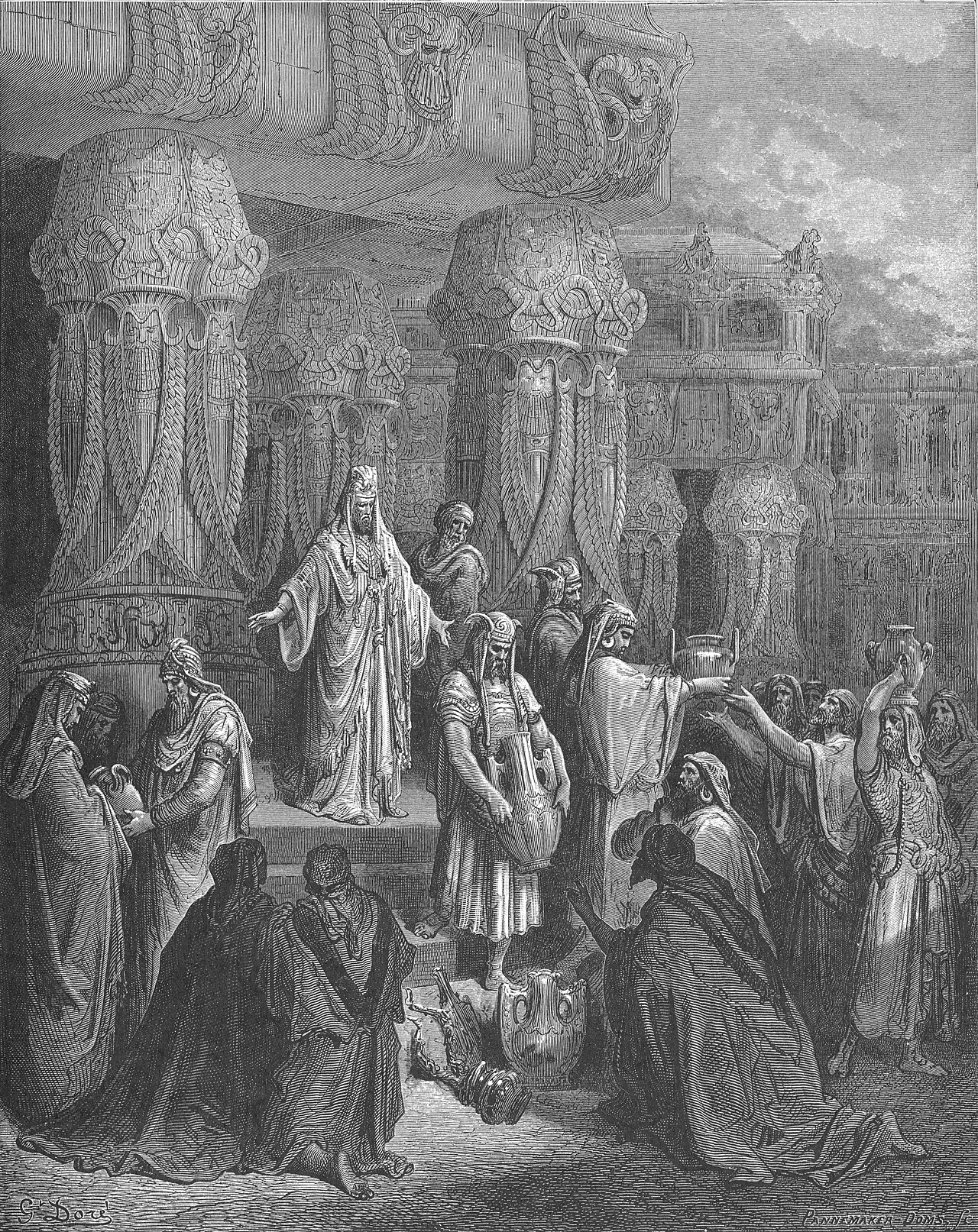
in Ezra 1King Cyrus also brought out the articles belonging to the house of the LORD that Nebuchadnezzar had carried away from Jerusalem and placed in the temple of his gods.
BSB
The same verse in ASV and KJV ▾
ASV
Also Cyrus the king brought forth the vessels of the house of Jehovah, which Nebuchadnezzar had brought forth out of Jerusalem, and had put in the house of his gods;
KJV
Also Cyrus the king brought forth the vessels of the house of the Lord, which Nebuchadnezzar had brought forth out of Jerusalem, and had put them in the house of his gods;
⋯
This verse in Ezra 1
Commentary
8 notes on this verseKing Cyrus also brought forth the vessels of the temple of the Lord, etc. Nebuchadnezzar took the vessels of the Lord from Jerusalem, as any unclean spirit, snatching certain of the faithful from the Church, deprives them of the joy of internal peace. Moreover, he …
This site's exposition
the vessels of the house of the Lord
on Ezra 1:7-8
Cyrus brings out the vessels of the house of the Lord that Nebuchadnezzar had carried off and set in the house of his own gods, the temple vessels that survived seventy years in pagan storage. Mithredath the treasurer hands them over by count to Sheshbazzar, the prince of Judah, so the return begins with an inventory rather than a sermon. The list answers the list at 2 Ki 25:13-17, where the same vessels are catalogued going out of Jerusalem broken and carried away; here they are catalogued coming home.
The record, by era
The Puritans and the Awakening3 voices
1 , &c.), and which perhaps was shown to him by those about him. His name (some say) in the Persian language signifies the sun, for he brought light and healing to the church of God, and was an eminent type of Christ the Sun of righteousness. Some was that his name signifies a father, and Christ is the everlasting Father.
quarantine:debris (2026-07-29) — unbalanced-parens
And Cyrus brought forth the vessels of the house of the Lord,.... Or ordered them to be brought forth: which Nebuchadnezzar had brought forth out of Jerusalem; out of the temple there, when he took it and burnt it: and had put them in the house of his gods; in the temple of Belus at Babylon, see 2Ch 36:7, by which means they were providentially preserved.
How careful Providence was of the vessels of the temple, that they were not lost, melted down, or so mixed with other vessels that they could not be known, but that they were all now forthcoming. Such care God has of the living vessels of mercy, vessels of honour, of whom it is said ( 2 Tim. ii. 19, 20 ), The Lord knows those that are his, and they shall none of them perish.
The Nineteenth Century2 voices
A commentator
Jamieson, Fausset & Brown1802–1910
Commentary Critical and Explanatory on the Whole Bible (1871)
Cyrus . . . brought forth the vessels of the house of the Lord--Though it is said (2Ki 24:13) that these were cut in pieces, that would not be done to the large and magnificent vases; and, if they had been divided, the parts could be reunited. But it may be doubted whether the Hebrew word rendered cut in pieces, does not signify merely cut off, that is, from further use in the temple.
The king brought forth the vessels - See on Ezr 1:9-11 (note).
1 more voice on this verse
The Nineteenth Century1 voice
A commentator
Albert Barnes1798–1870
Notes, Explanatory and Practical, on the Old and New Testaments (1832-1869)
proposed
The house of his gods - Rather, “of his god” Dan 1:2, i. e., Merodach, “his lord” (see 2Ch 36:7 note).
The words behind it
14 Hebrew wordsEvery Hebrew word of this verse in the order it stands, with what it means and the door to its own study. The last column counts the times a word stands in the whole Bible: the rarer the word, the more the places it appears belong together.
| Hebrew | Sound | Meaning | Word study | In the Bible |
|---|---|---|---|---|
| וְהַמֶּ֣לֶךְ | vehamelekh | and the king | H4428 → | 2525 times |
| כּ֔וֹרֶשׁ | koresh | Cyrus | H3566 → | 15 times |
| הוֹצִ֖יא | hotzi' | he brought out | H3318 → | 1067 times |
| אֶת־ | ʾet- | <obj.> | H853 → | 10935 times |
| כְּלֵ֣י | kelei | [the] vessels of | H3627 → | 325 times |
| בֵית־ | veit- | [the] house of | H1004 → | 2046 times |
| יְהוָ֑ה | yahweh | Yahweh | H3068 → | 6520 times |
| אֲשֶׁ֨ר | ʾasher | which | H834 → | 5497 times |
| הוֹצִ֤יא | hotzi' | he had brought out | H3318 → | 1067 times |
| נְבֽוּכַדְנֶצַּר֙ | nevukhadnetzar | Nebuchadnezzar | H5019 → | |
| מִיר֣וּשָׁלִַ֔ם | mirushalim | from Jerusalem | H3389 → | 643 times |
| וַֽיִּתְּנֵ֖ם | vaiyitenem | and he had put them | H5414 → | 2011 times |
| בְּבֵ֥ית | beveit | in [the] house of | H1004 → | 2046 times |
| אֱלֹהָֽיו׃ | ʾelohav | gods his | H430 → | 2601 times |
וְהַמֶּ֣לֶךְand the king
vehamelekhH4428 →2525 times
כּ֔וֹרֶשׁCyrus
koreshH3566 →15 times
הוֹצִ֖יאhe brought out
hotzi'H3318 →1067 times
אֶת־<obj.>
ʾet-H853 →10935 times
כְּלֵ֣י[the] vessels of
keleiH3627 →325 times
בֵית־[the] house of
veit-H1004 →2046 times
יְהוָ֑הYahweh
yahwehH3068 →6520 times
אֲשֶׁ֨רwhich
ʾasherH834 →5497 times
הוֹצִ֤יאhe had brought out
hotzi'H3318 →1067 times
נְבֽוּכַדְנֶצַּר֙Nebuchadnezzar
nevukhadnetzarH5019 →
מִיר֣וּשָׁלִַ֔םfrom Jerusalem
mirushalimH3389 →643 times
וַֽיִּתְּנֵ֖םand he had put them
vaiyitenemH5414 →2011 times
בְּבֵ֥יתin [the] house of
beveitH1004 →2046 times
אֱלֹהָֽיו׃gods his
ʾelohavH430 →2601 times
A shaded row is a word that stands 400 times or fewer in the Bible.
The walk
8 stopsEach card is a verse this one points to, and under it the verses that one points to in turn. Where several paths arrive at the same place, that place is listed first: the text keeps returning to it.
Through
2 Kings 24:13As the LORD had declared, Nebuchadnezzar also carried off all the treasures from the house of the LORD and the royal palace, and he cut into pieces all the gold articles that Solomon king…
it leads to
- Isaiah 39:6
The time will surely come when everything in your palace and all that your fathers have stored up until this day will be carried off to Babylon. Nothing will be left, says the LORD.
- 2 Kings 20:17
The time will surely come when everything in your palace and all that your fathers have stored up until this day will be carried off to Babylon. Nothing will be left, says the LORD.
- Jeremiah 20:5
I will give away all the wealth of this city—all its products and valuables, and all the treasures of the kings of Judah—to their enemies. They will plunder them, seize them, and carry them…
- Isaiah 39:6
Through
Ezra 6:5Furthermore, the gold and silver articles of the house of God, which Nebuchadnezzar took from the temple in Jerusalem and carried to Babylon, must also be returned to the temple in Jerusalem and deposited…
it leads to
- Daniel 5:2
Under the influence of the wine, Belshazzar gave orders to bring in the gold and silver vessels that Nebuchadnezzar his father had taken from the temple in Jerusalem, so that the king could drink…
- Ezra 5:14
He also removed from the temple of Babylon the gold and silver articles belonging to the house of God, which Nebuchadnezzar had taken and carried there from the temple in Jerusalem. King Cyrus gave…
- Daniel 5:2
Through
2 Chronicles 36:7Nebuchadnezzar also took to Babylon some of the articles from the house of the LORD, and he put them in his temple in Babylon.
it leads to
- 2 Kings 24:13
As the LORD had declared, Nebuchadnezzar also carried off all the treasures from the house of the LORD and the royal palace, and he cut into pieces all the gold articles that Solomon king…
- 2 Kings 24:13
Through
Ezra 5:14He also removed from the temple of Babylon the gold and silver articles belonging to the house of God, which Nebuchadnezzar had taken and carried there from the temple in Jerusalem. King Cyrus gave…
it leads to
- Ezra 6:5
Furthermore, the gold and silver articles of the house of God, which Nebuchadnezzar took from the temple in Jerusalem and carried to Babylon, must also be returned to the temple in Jerusalem and deposited…
- Ezra 6:5
Through
2 Chronicles 36:10In the spring, King Nebuchadnezzar summoned Jehoiachin and brought him to Babylon, along with the articles of value from the house of the LORD. And he made Jehoiachin’s relative Zedekiah king over Judah and…
it leads to
- Jeremiah 37:1
Nebuchadnezzar king of Babylon made Zedekiah son of Josiah the king of Judah, and he reigned in place of Coniah son of Jehoiakim.
- Jeremiah 37:1
Where this verse is studied
On this page
About Ezra
Who and where
1 name in this verse with a page on the site.
This page draws on Adam Clarke, Commentary on the Bible; Albert Barnes, Notes, Explanatory and Practical, on the Old and New Testaments (1832-1869); Bede, Commentary on Ezra and Nehemiah; Jamieson Fausset and Brown, Commentary Critical and Explanatory on the Whole Bible; Jamieson, Fausset & Brown, Commentary Critical and Explanatory on the Whole Bible; John Gill, Exposition of the Old Testament; John Gill, Exposition of the Old Testament (1748-1763) and Matthew Henry, Commentary on the Whole Bible.